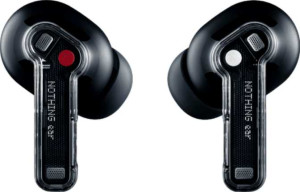
At the infrastructure level, these two earbuds are virtually identical — both run Bluetooth 5.4, share a 10 m range, support USB-C, AAC, and fast pairing, and neither offers NFC pairing, aptX variants, or Bluetooth LE Audio. The meaningful fork in the road comes down to a single codec choice: the Nothing Ear 3 supports LDAC, while the Realme Buds Air 7 Pro opts for LDHC.
Both are high-resolution wireless audio codecs designed to transmit significantly more data than standard SBC or AAC, but they come from different ecosystems. LDAC is Sony's widely adopted codec, natively supported across a large range of Android devices and streaming apps — making it immediately practical for most users. LDHC (also known as HWA) is a competing high-res codec with comparable bitrate potential, but its device compatibility is considerably narrower, meaning real-world high-res playback depends entirely on whether a user's source device supports it. For the majority of listeners, LDAC's broader ecosystem support translates to a more reliable path to actually hearing the codec's benefits.
The Nothing Ear 3 holds a practical edge in connectivity due to LDAC's vastly wider compatibility. The Realme's LDHC is technically capable, but its limited adoption makes it a less dependable high-res option for most users. If neither device you pair with supports either codec natively, both earbuds fall back to AAC — at which point they are completely tied.