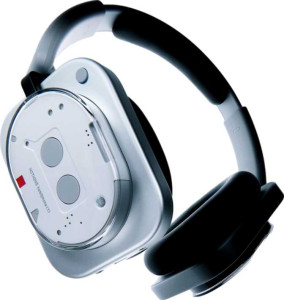
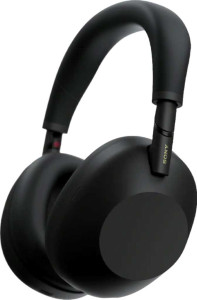
At a glance, these two headphones share a solid sound quality foundation: both deliver ANC, passive noise reduction, spatial audio support, and an identical 40,000 Hz upper frequency ceiling. For most listeners, these shared traits mean neither is outright deficient. The real story, though, lies in the sub-bass extension and driver engineering.
The Sony WH-1000XM6 reaches down to 4 Hz on the low end — well below the threshold of human hearing (typically 20 Hz) — compared to the Nothing Headphone 1's 20 Hz floor. In practice, this means the Sony is engineered to reproduce deep sub-bass pressure and physical rumble that you feel as much as hear, which matters for cinematic content, electronic music, and immersive spatial audio experiences. Additionally, the Sony uses a neodymium magnet in its driver, a material known for high magnetic efficiency that typically enables tighter transient response and more precise dynamic control. The Nothing Headphone 1 does not list this feature. Counterintuitively, the Nothing Headphone 1 has the larger driver at 40 mm versus the Sony's 30 mm, but driver size alone is not a reliable predictor of sound quality — magnet type, diaphragm material, and tuning all play larger roles.
On sound quality specs, the Sony WH-1000XM6 holds a meaningful edge: its significantly wider low-frequency extension and neodymium driver engineering suggest a more technically capable acoustic platform, particularly for bass-rich and spatially complex content. The Nothing Headphone 1 is competitive in the fundamentals but does not match the Sony's documented hardware advantages in this category.