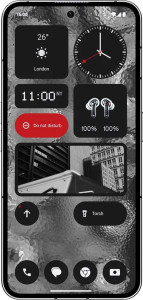
Nothing Phone 3
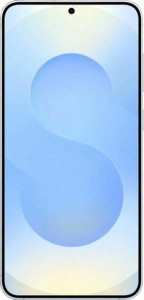
Samsung Galaxy S25

Nothing Phone 3 Samsung Galaxy S25

Overview

Choosing between the Nothing Phone 3 and the Samsung Galaxy S25 is no straightforward task — these two Android flagships take distinctly different approaches to what a premium smartphone should be. From their physical footprints and display characteristics to raw processing power and battery strategy, the two devices offer compelling but contrasting packages. In this detailed spec comparison, we examine the key battlegrounds including performance benchmarks, camera capabilities, charging speeds, and everyday usability features to help you decide which phone truly fits your needs.

Common Features

  • Both phones are waterproof with an IP68 ingress protection rating.
  • Neither phone has a rugged build.
  • Neither phone can be folded.
  • Both phones feature an OLED/AMOLED display.
  • Both phones support a 120Hz refresh rate.
  • Both phones have branded damage-resistant glass.
  • HDR10 support is available on both phones.
  • HDR10+ support is available on both phones.
  • Always-On Display is available on both phones.
  • Dolby Vision support is not available on either phone.
  • Neither phone has a secondary screen.
  • Both phones come with 512GB of internal storage.
  • Both phones run Android 15.
  • Both phones have clipboard warnings, location privacy options, and camera/microphone privacy options.
  • Mail Privacy Protection is not available on either phone.
  • Cross-site tracking blocking is not available on either phone.
  • Both phones support wireless charging at 15W and reverse wireless charging.
  • Neither phone comes with a charger in the box.
  • Neither phone has a removable battery.
  • Both phones support fast charging.
  • Neither phone has a 3.5mm audio jack.
  • Both phones have stereo speakers.
  • Both phones support aptX, LDAC, and aptX Adaptive audio codecs.
  • Neither phone has a radio.
  • Both phones support 5G, NFC, and USB Type-C.
  • Neither phone has an external memory slot.
  • Both phones have a fingerprint scanner.
  • Both phones have an upload speed of 3500 MBits/s.
  • Emergency SOS via satellite is not available on either phone.
  • Crash detection is not available on either phone.
  • Both phones have a video light.
  • Neither phone has a sapphire glass display.
  • Neither phone has a curved or e-paper display.

Main Differences

  • Weight is 218g on Nothing Phone 3 and 162g on Samsung Galaxy S25.
  • Thickness is 9mm on Nothing Phone 3 and 7.2mm on Samsung Galaxy S25.
  • Width is 75.6mm on Nothing Phone 3 and 70.5mm on Samsung Galaxy S25.
  • Height is 160.6mm on Nothing Phone 3 and 146.9mm on Samsung Galaxy S25.
  • Volume is 109.27 cm³ on Nothing Phone 3 and 74.57 cm³ on Samsung Galaxy S25.
  • Screen size is 6.67″ on Nothing Phone 3 and 6.2″ on Samsung Galaxy S25.
  • Pixel density is 460 ppi on Nothing Phone 3 and 416 ppi on Samsung Galaxy S25.
  • Resolution is 1260 x 2800 px on Nothing Phone 3 and 1080 x 2340 px on Samsung Galaxy S25.
  • Touch sampling rate is 1000Hz on Nothing Phone 3 and 240Hz on Samsung Galaxy S25.
  • Typical brightness is 800 nits on Nothing Phone 3 and 2600 nits on Samsung Galaxy S25.
  • The display is protected by Gorilla Glass 7i on Nothing Phone 3 and Gorilla Glass Victus 2 on Samsung Galaxy S25.
  • RAM is 16GB on Nothing Phone 3 and 12GB on Samsung Galaxy S25.
  • The chipset is Qualcomm Snapdragon 8s Gen 4 on Nothing Phone 3 and Qualcomm Snapdragon 8 Elite on Samsung Galaxy S25.
  • AnTuTu benchmark score is 2,084,000 on Nothing Phone 3 and 3,050,000 on Samsung Galaxy S25.
  • Geekbench 6 multi-core score is 6,833 on Nothing Phone 3 and 10,050 on Samsung Galaxy S25.
  • Geekbench 6 single-core score is 2,041 on Nothing Phone 3 and 3,175 on Samsung Galaxy S25.
  • The GPU is Adreno 825 on Nothing Phone 3 and Adreno 830 on Samsung Galaxy S25.
  • Semiconductor size is 4nm on Nothing Phone 3 and 3nm on Samsung Galaxy S25.
  • Maximum memory bandwidth is 76.8 GB/s on Nothing Phone 3 and 85.1 GB/s on Samsung Galaxy S25.
  • Main camera megapixels are 50 & 50 & 50 MP on Nothing Phone 3 and 50 & 12 & 10 MP on Samsung Galaxy S25.
  • Front camera resolution is 50MP on Nothing Phone 3 and 12MP on Samsung Galaxy S25.
  • Maximum video recording resolution is 2160p at 60fps on Nothing Phone 3 and 4320p at 30fps on Samsung Galaxy S25.
  • Wi-Fi password sharing is available on Nothing Phone 3 but not on Samsung Galaxy S25.
  • The ability to be used as a PC is available on Samsung Galaxy S25 but not on Nothing Phone 3.
  • Battery capacity is 5150 mAh on Nothing Phone 3 and 4000 mAh on Samsung Galaxy S25.
  • Wired charging speed is 65W on Nothing Phone 3 and 25W on Samsung Galaxy S25.
  • Reverse wireless charging speed is 5W on Nothing Phone 3 and 4.5W on Samsung Galaxy S25.
  • aptX HD support is available on Nothing Phone 3 but not on Samsung Galaxy S25.
  • Nothing Phone 3 has 3 microphones while Samsung Galaxy S25 has 2.
  • Wi-Fi 6E support is available on Samsung Galaxy S25 but not on Nothing Phone 3.
  • SIM card support is 2 SIM and 1 eSIM on Nothing Phone 3 and 2 SIM and 2 eSIM on Samsung Galaxy S25.
  • Bluetooth version is 6 on Nothing Phone 3 and 5.4 on Samsung Galaxy S25.
  • Download speed is 4200 MBits/s on Nothing Phone 3 and 10,000 MBits/s on Samsung Galaxy S25.
  • A barometer is present on Samsung Galaxy S25 but not on Nothing Phone 3.
Specs Comparison
Nothing Phone 3

Nothing Phone 3

Samsung Galaxy S25

Samsung Galaxy S25

Design:
water resistance Waterproof Waterproof
weight 218 g 162 g
thickness 9 mm 7.2 mm
width 75.6 mm 70.5 mm
height 160.6 mm 146.9 mm
volume 109.27224 cm³ 74.56644 cm³
Ingress Protection (IP) rating IP68 IP68
has a rugged build
can be folded

Both phones share the same IP68 waterproofing rating, meaning neither has an advantage in water and dust resistance — both can handle submersion in everyday scenarios equally well. Neither features a rugged build or a foldable form factor, so that common ground is quickly established.

Where the two diverge significantly is in their physical footprint. The Nothing Phone 3 is a noticeably larger and heavier device, measuring 160.6 × 75.6 × 9 mm and weighing 218 g, giving it a volume of roughly 109 cm³. The Samsung Galaxy S25, by contrast, is considerably more compact at 146.9 × 70.5 × 7.2 mm and weighs just 162 g — nearly 56 g lighter and occupying roughly 32% less volume. In practice, that weight gap is immediately perceptible: the S25 will feel noticeably easier to hold one-handed for extended periods, slip more naturally into a pocket, and cause less fatigue during long sessions.

The Samsung Galaxy S25 holds a clear design edge here, primarily driven by its substantially lighter weight and slimmer, more pocketable profile. The Nothing Phone 3's larger frame may appeal to users who prefer a bigger canvas, but purely on ergonomics and portability, the S25 is the more refined physical package.

Display:
Display type OLED/AMOLED OLED/AMOLED
screen size 6.67" 6.2"
pixel density 460 ppi 416 ppi
resolution 1260 x 2800 px 1080 x 2340 px
refresh rate 120Hz 120Hz
touch sampling rate 1000Hz 240Hz
brightness (typical) 800 nits 2600 nits
has branded damage-resistant glass
Gorilla Glass version Gorilla Glass 7i Gorilla Glass Victus 2
supports HDR10
supports HDR10+
Always-On Display
supports Dolby Vision
Has a secondary screen
has a touch screen

On the surface, these two displays share a lot of DNA — both are OLED/AMOLED panels running at 120Hz, with HDR10+ support and Always-On Display functionality. But dig into the numbers and meaningful differences emerge. The Nothing Phone 3 sports a larger 6.67″ screen with a sharper 460 ppi pixel density at 1260 × 2800 resolution, compared to the S25's 6.2″ panel at 416 ppi and 1080 × 2340. In practice, the Nothing Phone 3 offers more screen real estate and visibly crisper text and fine detail — a genuine advantage for media consumption and reading.

The most dramatic gap, however, runs in the opposite direction: the Samsung Galaxy S25 achieves a typical brightness of 2600 nits against the Nothing Phone 3's 800 nits. That is not a marginal difference — it means the S25 will remain easily legible under direct sunlight where the Nothing Phone 3 may struggle. For outdoor users, this is a decisive practical advantage. The S25 also uses Gorilla Glass Victus 2, a newer and more drop-resistant glass generation than the Gorilla Glass 7i on the Nothing Phone 3, offering better long-term scratch and crack protection. The Nothing Phone 3's 1000Hz touch sampling rate versus the S25's 240Hz is a spec that matters primarily in competitive gaming, and has negligible impact for typical users.

This group ends in a split: the Nothing Phone 3 wins on screen size and pixel density, making it the better choice for immersive viewing and detail work. But the Samsung Galaxy S25 takes the overall display edge thanks to its overwhelmingly superior brightness and tougher glass, which have a far broader real-world impact across daily use scenarios.

Performance:
internal storage 512GB 512GB
RAM 16GB 12GB
AnTuTu benchmark score 2084000 3050000
Chipset (SoC) name Qualcomm Snapdragon 8s Gen 4 Qualcomm Snapdragon 8 Elite
GPU name Adreno 825 Adreno 830
CPU speed 3 x 3.01 & 2 x 2.8 & 2 x 2.02 & 1 x 3.21 GHz 2 x 4.47 & 6 x 3.53 GHz
Geekbench 6 result (multi) 6833 10050
Geekbench 6 result (single) 2041 3175
GPU clock speed 1150 MHz 1200 MHz
Has integrated LTE
RAM speed 4800 MHz 5300 MHz
semiconductor size 4 nm 3 nm
Supports 64-bit
DirectX version DirectX 12 DirectX 12
Has integrated graphics
OpenGL version 3.3 3.2
OpenGL ES version 3.2 3.2
Uses big.LITTLE technology
CPU threads 8 threads 8 threads
Has TrustZone
maximum memory bandwidth 76.8 GB/s 85.1 GB/s
OpenCL version 2 3
L2 cache 6 MB 12 MB
maximum memory amount 24GB 24GB
uses multithreading
Thermal Design Power (TDP) 12.5W 8.2W
DDR memory version 5 5
supported displays 1 2
L3 cache 8 MB 8 MB

The chipset gap here is the central story. The Samsung Galaxy S25 runs on the Snapdragon 8 Elite — Qualcomm's top-tier flagship silicon — while the Nothing Phone 3 uses the Snapdragon 8s Gen 4, a capable but deliberately stepped-down derivative of the same family. The benchmark results reflect this clearly: the S25 scores approximately 3,050,000 on AnTuTu versus 2,084,000 for the Nothing Phone 3, a gap of nearly 50%. Geekbench 6 tells the same story, with the S25 posting 10,050 multi-core and 3,175 single-core against the Nothing Phone 3's 6,833 and 2,041 respectively. In everyday use both phones will feel fluid, but under sustained load — heavy gaming, video rendering, or complex multitasking — the S25 has substantially more headroom.

Two specs partially complicate that picture. The Nothing Phone 3 ships with 16 GB of RAM versus the S25's 12 GB, which can translate into more apps retained in memory simultaneously and smoother switching between heavy applications. That said, the S25's RAM runs at a faster 5300 MHz versus 4800 MHz, and its memory bandwidth of 85.1 GB/s outpaces the Nothing Phone 3's 76.8 GB/s. The S25 also benefits from a more advanced 3 nm process node versus 4 nm, which directly translates to its lower TDP of 8.2W compared to 12.5W — meaning the S25 delivers more performance while generating less heat and consuming less power, a combination that matters greatly for sustained workloads and battery endurance under load.

The Samsung Galaxy S25 is the clear winner in this category. Its raw performance advantage across every benchmark is substantial, and its superior power efficiency means it sustains that performance more reliably. The Nothing Phone 3's RAM advantage is real but not enough to offset the fundamental difference in silicon tier.

Cameras:
megapixels (main camera) 50 & 50 & 50 MP 50 & 12 & 10 MP
wide aperture (main camera) 1.68 & 2.68 & 2.2f 1.8 & 2.2 & 2.4f
Has a dual-lens (or multi-lens) main camera
megapixels (front camera) 50MP 12MP
has built-in optical image stabilization
video recording (main camera) 2160 x 60 fps 4320 x 30 fps
Has a dual-tone LED flash
number of flash LEDs 2 2
has a CMOS sensor
has continuous autofocus when recording movies
Has phase-detection autofocus for photos
supports slow-motion video recording
has a built-in HDR mode
has manual exposure
has a flash
optical zoom 3x 3x
has manual ISO
has a serial shot mode
has manual focus
has a front camera
Has laser autofocus
Shoots 360° panorama
has manual white balance
shoots raw
has touch autofocus
can create panoramas in-camera
wide aperture (front camera) 2.2f 2.2f
Has timelapse function
Has a front-facing LED flash
has a dual-lens (or multi-lens) front camera
Has a RGB LED flash

The rear camera systems take two philosophically different approaches. The Nothing Phone 3 deploys a uniform 50 MP + 50 MP + 50 MP triple-camera array, ensuring consistent resolution across all three lenses — main, ultrawide, and telephoto. The Samsung Galaxy S25, by contrast, pairs its 50 MP main sensor with a 12 MP ultrawide and a 10 MP telephoto. In raw resolving power, Nothing's approach means cropping and detail retention stay consistent regardless of which lens you switch to, while Samsung's lower-resolution secondary sensors are a more conventional trade-off. On aperture, the Nothing Phone 3's main lens at f/1.68 is notably wider than the S25's f/1.8, which translates to a measurable advantage in low-light capture — a wider aperture lets in more light before computational processing even enters the picture. Both offer 3x optical zoom and OIS, so zoom reach and stabilization are evenly matched.

Video tells a different story. The Samsung Galaxy S25 tops out at 8K (4320p) at 30 fps, a meaningful ceiling above the Nothing Phone 3's 4K (2160p) at 60 fps. For users who prioritize maximum resolution footage — archiving, professional cropping — the S25 has a clear ceiling advantage. However, 4K at 60 fps produces smoother motion and is often more practical for everyday sharing and editing, so this trade-off depends on use case. The selfie gap is harder to dismiss: the Nothing Phone 3 packs a 50 MP front camera against the S25's 12 MP, a substantial difference for users who rely on the front camera for portraits, video calls, or content creation.

This category is genuinely split by use case. The Samsung Galaxy S25 edges ahead for video-focused users thanks to 8K recording. But the Nothing Phone 3 holds a real advantage for photography — a wider main aperture, consistent high-resolution across all three rear lenses, and a front camera that is in a different class entirely. Taken as a whole, Nothing Phone 3 has the broader photographic edge, while the S25 leads specifically on video ceiling.
Operating system:
Android version Android 15 Android 15
has clipboard warnings
has location privacy options
has camera/microphone privacy options
has Mail Privacy Protection
has theme customization
can block app tracking
blocks cross-site tracking
has on-device machine learning
has notification permissions
has media picker
Can play games while they download
has dark mode
has Wi-Fi password sharing
has battery health check
has an extra dim mode
has focus modes
has dynamic theming
can offload apps
Has customizable notifications
has Live Text
has full-page screenshots
supports split screen
gets direct OS updates
has PiP
Can be used as a PC
Has sharing intents
has a child lock
Supports widgets
Is free and open source
Has offline voice recognition
has voice commands
Tracks the current position of a mobile device
is a multi-user system
has Quick Start

Running the same Android 15 foundation, these two phones are remarkably aligned on software features. Privacy controls, dark mode, dynamic theming, split-screen, Picture-in-Picture, customizable notifications, offline voice recognition, and on-device machine learning are all present on both. For the vast majority of day-to-day software interactions, users switching between these phones would find the feature landscape nearly identical at the OS level.

Zooming in on the few points of divergence: the Nothing Phone 3 supports Wi-Fi password sharing, a genuinely convenient feature that lets you share your network credentials with guests without reading out a long passphrase — something the S25 lacks. The Samsung Galaxy S25, on the other hand, supports PC mode, allowing the phone to function as a desktop computing environment when connected to a monitor and peripherals. This is a meaningful productivity differentiator for power users who want to consolidate their workflow around a single device, though it is a niche use case for most consumers.

At the OS specification level, this is essentially a tie. The two exclusive features — Wi-Fi password sharing on the Nothing Phone 3 and PC mode on the S25 — each serve different user profiles and neither represents a sweeping advantage. The software foundation is so closely matched that the decision between these phones will more logically rest on hardware differences covered in other categories.

Battery:
battery power 5150 mAh 4000 mAh
has wireless charging
Supports fast charging
charging speed 65W 25W
wireless charging speed 15W 15W
has reverse wireless charging
reverse wireless charging speed 5W 4.5W
comes with a charger
has a removable battery
has a battery level indicator
has a rechargeable battery

Battery capacity is where the Nothing Phone 3 establishes one of its clearest advantages in this comparison. Its 5150 mAh cell is substantially larger than the 4000 mAh unit in the Samsung Galaxy S25 — a 28% difference that, all else being equal, translates directly into more hours of use between charges. Paired with the S25's more power-efficient Snapdragon 8 Elite chip noted in the performance category, the real-world gap may be narrower than raw capacity suggests, but the Nothing Phone 3 still enters with a meaningful head start in the endurance race.

Charging speed compounds that advantage further. The Nothing Phone 3 supports 65W wired fast charging, more than double the S25's 25W. In practical terms, the Nothing Phone 3 not only has more battery to fill but refills it dramatically faster — a combination that significantly reduces charging anxiety for heavy users. Wireless charging is evenly matched at 15W on both devices, and reverse wireless charging is present on both at effectively equivalent speeds (5W vs 4.5W), making those features a wash. Neither phone ships with a charger in the box.

The Nothing Phone 3 wins this category decisively. A larger battery and substantially faster wired charging together make it the more capable device for users who prioritize all-day endurance and quick top-ups — two of the most practically impactful battery metrics for daily life.

Audio:
has a socket for a 3.5 mm audio jack
has stereo speakers
has aptX
has LDAC
has aptX HD
has aptX Adaptive
Has a radio
number of microphones 3 2

Both phones forgo the 3.5mm headphone jack and offer stereo speakers, so wired analog audio and speaker setup are an even playing field. Where wireless audio quality is concerned, both support aptX, aptX Adaptive, and LDAC — covering the major high-resolution Bluetooth audio codecs that audiophiles and enthusiast headphone users care about most. For the majority of users with wireless headphones, this shared codec support means no practical difference in audio quality over Bluetooth.

Two specifics tip the scales toward the Nothing Phone 3. First, it adds aptX HD support, which the Samsung Galaxy S25 lacks. While aptX Adaptive largely supersedes aptX HD in capability, the additional codec broadens compatibility with a wider range of existing headphones that support aptX HD but not Adaptive — a meaningful consideration for users with established audio gear. Second, the Nothing Phone 3 features 3 microphones versus the S25's 2. An extra microphone generally enables better spatial noise cancellation, more accurate voice pickup in windy or noisy environments, and improved call quality — advantages that matter for calls, voice recording, and video capture alike.

The Nothing Phone 3 takes a narrow but clear edge in this category. The aptX HD addition and the extra microphone are both real-world differentiators, particularly for users who care about call quality or own aptX HD-compatible headphones. The gap is not dramatic, but on every point of difference, Nothing Phone 3 comes out ahead.

Connectivity & Features:
release date July 2025 January 2025
has 5G support
Wi-Fi version Wi-Fi 6 (802.11ax), Wi-Fi 5 (802.11ac), Wi-Fi 4 (802.11n), Wi-Fi 7 (802.11be) Wi-Fi 4 (802.11n), Wi-Fi 6 (802.11ax), Wi-Fi 5 (802.11ac), Wi-Fi 7 (802.11be), Wi-Fi 6E (802.11ax)
SIM cards 2 SIM, 1 eSIM 2 SIM, 2 eSIM
Bluetooth version 6 5.4
has an external memory slot
Has USB Type-C
has NFC
download speed 4200 MBits/s 10000 MBits/s
upload speed 3500 MBits/s 3500 MBits/s
Has a fingerprint scanner
has emergency SOS via satellite
has crash detection
has a gyroscope
Has a heart rate monitor
has GPS
has a compass
supports Wi-Fi
Has an infrared sensor
has an accelerometer
has a cellular module
Has a barometer
Uses 3D facial recognition
Has an iris scanner
Stylus included
supports Galileo
Has motion tracking
Has optical tracking
Has a built-in projector

Cellular and Wi-Fi performance is where the Samsung Galaxy S25 pulls ahead most visibly. Its peak download speed of 10,000 Mbits/s dwarfs the Nothing Phone 3's 4,200 Mbits/s — a gap that reflects a more advanced modem and will matter in areas with dense 5G infrastructure, enabling faster large file downloads and more stable streaming under network load. The S25 also adds Wi-Fi 6E support on top of the shared Wi-Fi 7 compatibility, giving it access to the less congested 6 GHz band in environments where that spectrum is available. Upload speeds are identical at 3,500 Mbits/s on both devices.

The Nothing Phone 3 counters with Bluetooth 6, a newer standard than the S25's Bluetooth 5.4. Bluetooth 6 introduces improvements in connection reliability, latency, and positioning accuracy — advantages that will become more meaningful as peripheral ecosystems catch up to the newer standard. The S25 offers a second eSIM slot (2 eSIM vs Nothing's 1 eSIM), which is a practical benefit for frequent travelers who juggle multiple carrier profiles simultaneously. The S25 also includes a barometer absent on the Nothing Phone 3, useful for weather apps, elevation tracking, and GPS accuracy — a minor but genuine sensor advantage.

The Samsung Galaxy S25 holds the edge in this category, primarily on the strength of its substantially faster download speeds and broader Wi-Fi band support. The Nothing Phone 3's newer Bluetooth version is a forward-looking advantage, but the S25's connectivity lead across cellular and Wi-Fi is more impactful for most users today.

Miscellaneous:
has a video light
Has sapphire glass display
Has a curved display
Has an e-paper display

The miscellaneous specification group for these two devices is a complete draw — every data point is identical. Both feature a video light, and neither carries a sapphire glass display, a curved display, or an e-paper display. There is simply no differentiator to analyze here.

This is a tie by every available measure in this category. Any decision between the Nothing Phone 3 and the Samsung Galaxy S25 should rest entirely on the more substantive differences covered across the other specification groups.

Comparison Summary & Verdict

After a thorough look at the specs, both phones earn their flagship credentials but serve different kinds of users. The Nothing Phone 3 stands out with its larger 5150 mAh battery, blazing 65W wired charging, higher-resolution triple 50MP camera system, a 50MP selfie camera, a 1000Hz touch sampling rate, and more RAM at 16GB — making it a strong pick for power users who prioritize endurance and versatility. The Samsung Galaxy S25, on the other hand, counters with a significantly more powerful Snapdragon 8 Elite chipset, far superior benchmark scores, a much brighter 2600-nit display, 8K video recording, a lighter and more compact build, and the ability to function as a PC — advantages that matter greatly to users who demand top-tier processing performance and a premium pocketable form factor. Both share IP68 waterproofing, 120Hz OLED displays, and Android 15, so the decision ultimately comes down to battery and camera versatility versus raw speed and portability.

Nothing Phone 3
Buy Nothing Phone 3 if...

Buy the Nothing Phone 3 if you want a larger battery with much faster 65W wired charging, a triple 50MP camera setup including a 50MP front camera, and more RAM for demanding multitasking.

Samsung Galaxy S25
Buy Samsung Galaxy S25 if...

Buy the Samsung Galaxy S25 if you prioritize class-leading processing performance, a significantly brighter and more compact display, 8K video recording, and a lighter everyday carry.