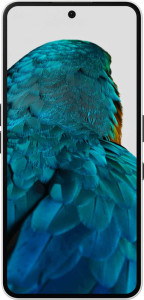
Nothing Phone (3a) Pro
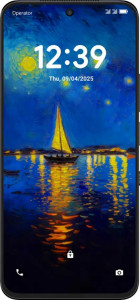
TCL NxtPaper 60 Ultra

Nothing Phone (3a) Pro TCL NxtPaper 60 Ultra

Overview

Welcome to our in-depth comparison of the Nothing Phone (3a) Pro and the TCL NxtPaper 60 Ultra — two Android 15 smartphones that take distinctly different approaches to the modern mobile experience. While both devices share a 120Hz refresh rate, 12GB of RAM, and multi-lens camera systems, they diverge significantly when it comes to display technology, battery and charging, and overall build philosophy. Read on to discover how these two contenders stack up across every major specification category.

Common Features

  • Neither device has a rugged build.
  • Neither device can be folded.
  • Both devices share a 120Hz refresh rate.
  • Neither device supports Dolby Vision.
  • Neither device has a secondary screen.
  • Both devices have a touch screen.
  • Both devices have 12GB of RAM.
  • Both devices have integrated LTE.
  • Both devices use a 4 nm semiconductor size.
  • Both devices support 64-bit processing.
  • Both devices support DirectX 12.
  • Both devices have integrated graphics.
  • Both devices use big.LITTLE technology.
  • Both devices have 8 CPU threads.
  • The main camera on both devices is 50 & 50 & 8 MP.
  • Both devices have a multi-lens main camera.
  • Both devices have built-in optical image stabilization.
  • Both devices record video at 2160 x 30 fps on the main camera.
  • Neither device has a dual-tone LED flash, with each having 1 flash LED.
  • Both devices have a CMOS sensor.
  • Both devices run Android 15.
  • Both devices have clipboard warnings.
  • Both devices have location privacy options.
  • Both devices have camera and microphone privacy options.
  • Neither device has Mail Privacy Protection.
  • Both devices have theme customization.
  • Both devices can block app tracking.
  • Neither device blocks cross-site tracking.
  • Neither device supports wireless charging.
  • Both devices support fast charging.
  • Neither device has a removable battery.
  • Both devices have a battery level indicator.
  • Both devices have a rechargeable battery.
  • Neither device has a 3.5 mm audio jack.
  • Both devices have stereo speakers.
  • Neither device supports aptX, LDAC, aptX HD, aptX Adaptive, aptX Lossless.
  • Both devices support 5G.
  • Both devices support Wi-Fi 4, Wi-Fi 5, and Wi-Fi 6.
  • Both devices have dual SIM support.
  • Both devices have Bluetooth 5.4.
  • Neither device has an external memory slot.
  • Both devices have USB Type-C with USB version 2.
  • Both devices have NFC.
  • Both devices have a video light.
  • Neither device has a sapphire glass display.
  • Neither device has a curved display.

Main Differences

  • Water resistance is rated IP64 (water resistant) on Nothing Phone (3a) Pro and IP68 (waterproof) on TCL NxtPaper 60 Ultra.
  • Weight is 211 g on Nothing Phone (3a) Pro and 227 g on TCL NxtPaper 60 Ultra.
  • Thickness is 8.4 mm on Nothing Phone (3a) Pro and 7.6 mm on TCL NxtPaper 60 Ultra.
  • Width is 77.5 mm on Nothing Phone (3a) Pro and 81.2 mm on TCL NxtPaper 60 Ultra.
  • Height is 163.5 mm on Nothing Phone (3a) Pro and 174.5 mm on TCL NxtPaper 60 Ultra.
  • Volume is 106.4385 cm³ on Nothing Phone (3a) Pro and 107.68744 cm³ on TCL NxtPaper 60 Ultra.
  • Display type is OLED/AMOLED on Nothing Phone (3a) Pro and LCD IPS on TCL NxtPaper 60 Ultra.
  • Screen size is 6.77″ on Nothing Phone (3a) Pro and 7.2″ on TCL NxtPaper 60 Ultra.
  • Pixel density is 387 ppi on Nothing Phone (3a) Pro and 358 ppi on TCL NxtPaper 60 Ultra.
  • Resolution is 1080 x 2392 px on Nothing Phone (3a) Pro and 1080 x 2340 px on TCL NxtPaper 60 Ultra.
  • Brightness (typical) is 800 nits on Nothing Phone (3a) Pro and 780 nits on TCL NxtPaper 60 Ultra.
  • Branded damage-resistant glass is present on TCL NxtPaper 60 Ultra but not available on Nothing Phone (3a) Pro.
  • HDR10 support is available on Nothing Phone (3a) Pro but not on TCL NxtPaper 60 Ultra.
  • HDR10+ support is available on Nothing Phone (3a) Pro but not on TCL NxtPaper 60 Ultra.
  • Always-On Display is available on Nothing Phone (3a) Pro but not on TCL NxtPaper 60 Ultra.
  • Internal storage is 256GB on Nothing Phone (3a) Pro and 512GB on TCL NxtPaper 60 Ultra.
  • The GPU is Adreno 710 on Nothing Phone (3a) Pro and Mali G615 MC2 on TCL NxtPaper 60 Ultra.
  • CPU speed is 1 x 2.5 & 3 x 2.4 & 4 x 1.8 GHz on Nothing Phone (3a) Pro and 4 x 2.6 & 4 x 2 GHz on TCL NxtPaper 60 Ultra.
  • GPU clock speed is 1050 MHz on Nothing Phone (3a) Pro and 1047 MHz on TCL NxtPaper 60 Ultra.
  • RAM speed is 3200 MHz on Nothing Phone (3a) Pro and 6400 MHz on TCL NxtPaper 60 Ultra.
  • Wide aperture on the main camera is 1.9 & 2 & 2.2f on Nothing Phone (3a) Pro and 1.8 & 2.4 & 2.2f on TCL NxtPaper 60 Ultra.
  • Front camera resolution is 50MP on Nothing Phone (3a) Pro and 32MP on TCL NxtPaper 60 Ultra.
  • Wide aperture on the front camera is 2.2f on Nothing Phone (3a) Pro and 2f on TCL NxtPaper 60 Ultra.
  • Battery power is 5000 mAh on Nothing Phone (3a) Pro and 5200 mAh on TCL NxtPaper 60 Ultra.
  • Charging speed is 50W on Nothing Phone (3a) Pro and 33W on TCL NxtPaper 60 Ultra.
  • A charger is not included with Nothing Phone (3a) Pro but is included with TCL NxtPaper 60 Ultra.
  • Number of microphones is 3 on Nothing Phone (3a) Pro and 2 on TCL NxtPaper 60 Ultra.
  • An infrared sensor is absent on Nothing Phone (3a) Pro but present on TCL NxtPaper 60 Ultra.
  • A barometer is absent on Nothing Phone (3a) Pro but present on TCL NxtPaper 60 Ultra.
  • An e-paper display is absent on Nothing Phone (3a) Pro but present on TCL NxtPaper 60 Ultra.
Specs Comparison
Nothing Phone (3a) Pro

Nothing Phone (3a) Pro

TCL NxtPaper 60 Ultra

TCL NxtPaper 60 Ultra

Design:
water resistance Water resistant Waterproof
weight 211 g 227 g
thickness 8.4 mm 7.6 mm
width 77.5 mm 81.2 mm
height 163.5 mm 174.5 mm
volume 106.4385 cm³ 107.68744 cm³
Ingress Protection (IP) rating IP64 IP68
has a rugged build
can be folded

The most significant design differentiator between these two phones lies in their water protection. The Nothing Phone (3a) Pro carries an IP64 rating, which means it can handle splashes and dust but is not rated for full submersion. The TCL NxtPaper 60 Ultra, by contrast, holds an IP68 rating — meaning it can withstand being submerged in water at depth for a defined period. In practical terms, the TCL can survive a drop in the sink or pool; the Nothing Phone cannot. This is a clear and meaningful real-world advantage for the TCL.

On physical dimensions, the two phones tell a different story. The Nothing Phone (3a) Pro is notably lighter at 211 g versus the TCL's 227 g, and more compact across height and width (163.5 × 77.5 mm vs 174.5 × 81.2 mm). That 16 g weight difference and the tighter footprint make the Nothing Phone noticeably easier to handle one-handed over long periods. The TCL partially compensates by being slimmer at 7.6 mm thick compared to the Nothing's 8.4 mm, giving it a sleeker profile in the hand despite its larger frame.

Overall, neither phone has a rugged build or foldable form factor. The TCL NxtPaper 60 Ultra holds a clear edge in water protection — IP68 is a meaningfully superior standard for everyday durability — while the Nothing Phone (3a) Pro wins on portability with its lighter weight and more compact size. Which advantage matters more depends on the user: those prioritizing durability and peace of mind near water should lean TCL; those valuing one-handed comfort and pocketability will prefer the Nothing.

Display:
Display type OLED/AMOLED LCD, IPS
screen size 6.77" 7.2"
pixel density 387 ppi 358 ppi
resolution 1080 x 2392 px 1080 x 2340 px
refresh rate 120Hz 120Hz
brightness (typical) 800 nits 780 nits
has branded damage-resistant glass
supports HDR10
supports HDR10+
Always-On Display
supports Dolby Vision
Has a secondary screen
has a touch screen

The panel technology gap here is fundamental. The Nothing Phone (3a) Pro uses an OLED/AMOLED display, which delivers true blacks, superior contrast, and more vibrant colors by lighting pixels individually. The TCL NxtPaper 60 Ultra relies on an LCD IPS panel — a technology that requires a backlight and cannot match OLED for contrast depth or power efficiency when displaying dark content. For media consumption, gaming, or anything with rich visuals, the Nothing's screen will look more immersive and punchy in direct comparison.

Where the TCL pushes back is in screen real estate and durability. Its 7.2″ display is meaningfully larger than the Nothing's 6.77″, making it better suited for reading, browsing, or split-screen multitasking. It also features branded damage-resistant glass — a notable omission on the Nothing Phone — offering more confidence against everyday scratches and drops. The Nothing Phone counters with HDR10+ support and an Always-On Display, two features absent on the TCL, enabling richer tone-mapped content and glanceable notifications without fully waking the screen.

Both screens share a 120Hz refresh rate and near-identical brightness around 800 nits, so neither has an edge in smoothness or outdoor legibility. Overall, the Nothing Phone (3a) Pro holds a clear display quality advantage thanks to its OLED panel, HDR10+ support, and Always-On Display. The TCL NxtPaper 60 Ultra is the better pick only if screen size and scratch resistance are the user's top priorities.

Performance:
internal storage 256GB 512GB
RAM 12GB 12GB
Chipset (SoC) name Qualcomm Snapdragon 7s Gen 3
GPU name Adreno 710 Mali G615 MC2
CPU speed 1 x 2.5 & 3 x 2.4 & 4 x 1.8 GHz 4 x 2.6 & 4 x 2 GHz
GPU clock speed 1050 MHz 1047 MHz
Has integrated LTE
RAM speed 3200 MHz 6400 MHz
semiconductor size 4 nm 4 nm
Supports 64-bit
DirectX version DirectX 12 DirectX 12
Has integrated graphics
Uses big.LITTLE technology
CPU threads 8 threads 8 threads
Uses HMP
maximum memory bandwidth 25.6 GB/s 25.6 GB/s
maximum memory amount 16GB 16GB
DDR memory version 5 5

At the heart of this comparison is a notable transparency gap: the Nothing Phone (3a) Pro is powered by a named, identifiable Qualcomm Snapdragon 7s Gen 3, while the TCL NxtPaper 60 Ultra's chipset field is unlisted. This matters because a named SoC allows users and reviewers to benchmark expectations and compare against known devices — the absence of that information on the TCL side makes it harder to assess real-world performance potential from specs alone.

Where the TCL does pull ahead on paper is in two areas: storage and RAM speed. It ships with 512GB of internal storage versus the Nothing's 256GB — a doubling that is genuinely useful for users who store large media libraries or avoid cloud services. Its RAM also runs at 6400 MHz, twice the Nothing's 3200 MHz, which in theory allows faster data transfers between memory and processor. That said, both phones share the same 25.6 GB/s maximum memory bandwidth figure, 12GB of RAM, a 4 nm process node, and DDR5 memory — so the practical day-to-day gap may be smaller than the clock speed difference suggests.

GPU clock speeds are effectively tied at around 1050 MHz, though the Nothing's Adreno 710 is a known quantity in its class while the TCL's Mali G615 MC2 is less established in this segment. On balance, the Nothing Phone (3a) Pro holds the edge for buyers who value a transparent, well-documented platform, while the TCL NxtPaper 60 Ultra offers a practical storage advantage that will appeal to heavy local storage users.

Cameras:
megapixels (main camera) 50 & 50 & 8 MP 50 & 50 & 8 MP
wide aperture (main camera) 1.9 & 2 & 2.2f 1.8 & 2.4 & 2.2f
Has a dual-lens (or multi-lens) main camera
megapixels (front camera) 50MP 32MP
has built-in optical image stabilization
video recording (main camera) 2160 x 30 fps 2160 x 30 fps
Has a dual-tone LED flash
number of flash LEDs 1 1
has a BSI sensor
has a CMOS sensor
has continuous autofocus when recording movies
Has phase-detection autofocus for photos
supports slow-motion video recording
has a built-in HDR mode
has manual exposure
has a flash
optical zoom 3x 3x
has manual ISO
has a serial shot mode
has manual focus
has a front camera
Has laser autofocus
Shoots 360° panorama
has manual white balance
has touch autofocus
has manual shutter speed
can create panoramas in-camera
wide aperture (front camera) 2.2f 2f
Has timelapse function
Has a front-facing LED flash
has a dual-lens (or multi-lens) front camera
supports HDR10 recording
supports Dolby Vision recording
has a front-facing camera under the display
Has a RGB LED flash
has 3D photo/video recording capabilities

These two phones are remarkably well-matched on paper across their rear camera systems. Both sport an identical 50 & 50 & 8 MP triple-lens configuration with 3x optical zoom, OIS, 4K/30fps video, and the same autofocus and manual control feature set. The one subtle rear-camera difference is in aperture: the TCL's primary lens opens to f/1.8 versus the Nothing's f/1.9, which means marginally more light reaches the sensor in low-light conditions — a small but real edge for night shots. Conversely, the Nothing's telephoto aperture is f/2.0 compared to the TCL's f/2.4, meaning the Nothing lets in more light at zoom distances, which is where it counts most for detail retention in dim settings.

The clearest differentiator in this category is the front camera. The Nothing Phone (3a) Pro packs a 50MP selfie shooter at f/2.2, while the TCL NxtPaper 60 Ultra offers a 32MP front camera with a wider f/2.0 aperture. The Nothing's higher resolution allows for more detail and greater flexibility to crop selfies, while the TCL's slightly wider aperture gives it a low-light advantage despite the lower pixel count. Which trade-off matters more depends on the user's selfie habits.

Given how closely aligned these systems are overall, there is no sweeping winner here — this is a genuine near-tie. The Nothing Phone (3a) Pro earns a marginal edge for selfie resolution and telephoto light intake, while the TCL NxtPaper 60 Ultra nudges ahead on primary lens aperture. Buyers who prioritize selfie quality will lean toward the Nothing; those focused purely on main-camera low-light performance may prefer the TCL.

Operating system:
Android version Android 15 Android 15
has clipboard warnings
has location privacy options
has camera/microphone privacy options
has Mail Privacy Protection
has theme customization
can block app tracking
blocks cross-site tracking
has on-device machine learning
has notification permissions
has media picker
Can play games while they download
has dark mode
has Wi-Fi password sharing
has battery health check
has an extra dim mode
has focus modes
has dynamic theming
can offload apps
Has customizable notifications
has Live Text
has full-page screenshots
supports split screen
gets direct OS updates
has PiP
Can be used as a PC
Has sharing intents
has a child lock
Supports widgets
Is free and open source
Has offline voice recognition
has voice commands
Tracks the current position of a mobile device
is a multi-user system
has Quick Start

Rarely does a spec group produce such a clean result: every single data point in this category is identical between the Nothing Phone (3a) Pro and the TCL NxtPaper 60 Ultra. Both run Android 15, both lack direct OS updates, and both share the exact same feature set across privacy controls, productivity tools, and system capabilities.

From a practical standpoint, users of either phone get a solid and modern Android experience — including on-device machine learning, dynamic theming, split-screen multitasking, Picture-in-Picture, and a full suite of privacy options such as camera/microphone controls and app tracking blocks. The shared absence of features like Wi-Fi password sharing, focus modes, and direct OS updates applies equally to both, so neither phone is disadvantaged relative to the other in this group.

This is a complete tie. The operating system category offers zero differentiation between these two devices based on the provided specs, and should carry no weight in a buying decision between them.

Battery:
battery power 5000 mAh 5200 mAh
has wireless charging
Supports fast charging
charging speed 50W 33W
comes with a charger
has a removable battery
has a battery level indicator
has a rechargeable battery

Both phones carry large batteries in the same ballpark — 5000 mAh for the Nothing Phone (3a) Pro and 5200 mAh for the TCL NxtPaper 60 Ultra. The 200 mAh difference is marginal in practice and unlikely to translate into a noticeable gap in daily endurance for most users. Neither phone supports wireless charging, so that distinction does not factor in here.

Where the two diverge more meaningfully is in charging speed and in-box contents. The Nothing Phone charges at 50W versus the TCL's 33W, which in real terms means the Nothing refills its battery significantly faster — a genuine convenience advantage for users who charge in short bursts throughout the day. However, the TCL ships with a charger included in the box, while the Nothing does not. That means Nothing buyers face an additional purchase to take full advantage of the 50W speed, partially offsetting the advantage.

On balance, this category is a nuanced trade-off rather than a clear sweep. The Nothing Phone (3a) Pro wins on charging speed, which is the more impactful day-to-day spec, but the TCL NxtPaper 60 Ultra offsets with a slightly larger battery and the practical value of an included charger. Users who already own a fast charger will prefer the Nothing; those who want a complete out-of-the-box experience may appreciate the TCL's approach.

Audio:
has a socket for a 3.5 mm audio jack
has stereo speakers
has aptX
has LDAC
has aptX HD
has aptX Adaptive
has aptX Lossless
number of microphones 3 2

Audio hardware is largely aligned between these two phones, with both dropping the 3.5mm headphone jack and offering stereo speakers — so wired audio purists will need an adapter or Bluetooth headphones on either device, and both deliver a spatial, dual-channel listening experience for media. Neither phone supports any high-resolution Bluetooth audio codec, including aptX, aptX HD, LDAC, or their variants, meaning wireless audio quality is capped at standard Bluetooth performance on both.

The sole differentiator in this category is the microphone count. The Nothing Phone (3a) Pro features 3 microphones compared to the TCL's 2. An additional microphone enables more precise noise cancellation, better spatial audio capture for video recording, and improved voice clarity during calls — particularly in noisy environments where multi-mic beamforming makes a tangible difference.

Given the near-identical feature set, the Nothing Phone (3a) Pro holds a narrow but genuine edge here, solely on the strength of its third microphone. For most casual listeners the gap is small, but for anyone who frequently records video, takes calls in busy settings, or uses voice-to-text heavily, that extra microphone has real practical value.

Connectivity & Features:
release date March 2025 September 2025
has 5G support
Wi-Fi version Wi-Fi 4 (802.11n), Wi-Fi 5 (802.11ac), Wi-Fi 6 (802.11ax) Wi-Fi 4 (802.11n), Wi-Fi 5 (802.11ac), Wi-Fi 6 (802.11ax)
SIM cards 2 SIM 2 SIM
Bluetooth version 5.4 5.4
has an external memory slot
Has USB Type-C
USB version 2 2
has NFC
Has a fingerprint scanner
has emergency SOS via satellite
has crash detection
is DLNA-certified
has a gyroscope
supports ANT+
Has a heart rate monitor
has GPS
has a compass
supports Wi-Fi
Has an infrared sensor
has an accelerometer
has a cellular module
Has a barometer
has an HDMI output
Uses 3D facial recognition
Has an iris scanner
Stylus included
supports Galileo
Has motion tracking
Has optical tracking
Has a built-in projector

Connectivity fundamentals are identical across the board: both phones offer 5G, Wi-Fi 6, Bluetooth 5.4, NFC, dual SIM, USB Type-C, and GPS with Galileo support. This is a well-rounded modern baseline — Bluetooth 5.4 in particular brings improved connection stability and energy efficiency over older versions, and Wi-Fi 6 ensures both phones are ready for faster home and office networks.

The only meaningful differences in this category sit with the TCL NxtPaper 60 Ultra's two additional sensors: an infrared sensor and a barometer. The infrared sensor allows the TCL to function as a universal remote control for TVs and home appliances — a niche but genuinely useful feature that the Nothing Phone (3a) Pro simply lacks. The barometer enables more accurate altitude readings and can improve GPS precision, which matters for fitness tracking, hiking, or navigation in areas with variable elevation.

Everything else — including USB version, fingerprint scanner, gyroscope, accelerometer, and compass — is shared between the two. The TCL NxtPaper 60 Ultra takes a clear, if narrow, edge in this category purely on the basis of those two extra sensors, which add tangible real-world utility that the Nothing Phone cannot replicate.

Miscellaneous:
has a video light
Has sapphire glass display
Has a curved display
Has an e-paper display

This is a short spec group, but it contains one genuinely distinctive feature. Both phones share a video light and neither has a sapphire glass or curved display — those data points are evenly matched and unremarkable. The single differentiator is that the TCL NxtPaper 60 Ultra has an e-paper display capability, while the Nothing Phone (3a) Pro does not.

An e-paper mode is a meaningful addition for a specific type of user. It renders the screen in a low-power, high-contrast style that is significantly easier on the eyes during extended reading sessions, and it drastically reduces display power consumption when active. For anyone who reads long-form content, e-books, or documents on their phone regularly, this feature transforms the TCL into a more versatile device that can double as a reader-friendly screen — something the Nothing Phone simply cannot offer.

The TCL NxtPaper 60 Ultra wins this category outright. The e-paper display is not a universally compelling feature — users who do not read extensively on their phone will rarely use it — but for those who do, it is a unique and practical differentiator that the Nothing Phone (3a) Pro has no equivalent for.

Comparison Summary & Verdict

After a thorough comparison, the right choice between these two phones comes down to your priorities. The Nothing Phone (3a) Pro stands out with its vibrant OLED display, HDR10 and HDR10+ support, Always-On Display, a sharper 50MP front camera, and notably faster 50W charging — making it ideal for media lovers and users who value display quality and quick top-ups. The TCL NxtPaper 60 Ultra, on the other hand, offers a larger screen, a higher IP68 waterproof rating, double the internal storage at 512GB, a faster 6400 MHz RAM speed, an infrared sensor, a barometer, an e-paper display mode, and comes bundled with a charger in the box — making it the better pick for power users who need durability, extra storage, and versatile features.

Nothing Phone (3a) Pro
Buy Nothing Phone (3a) Pro if...

Buy the Nothing Phone (3a) Pro if you prioritize a vivid OLED display with HDR10+ and Always-On support, a higher-resolution front camera, and significantly faster 50W charging.

TCL NxtPaper 60 Ultra
Buy TCL NxtPaper 60 Ultra if...

Buy the TCL NxtPaper 60 Ultra if you need a waterproof IP68 build, double the internal storage, a larger screen, an e-paper display, and the convenience of a charger included in the box.