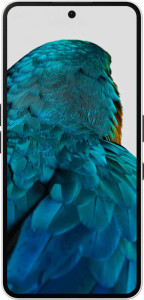
Nothing Phone (3a)
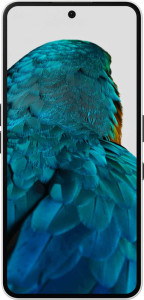
Nothing Phone (3a) Pro

Nothing Phone (3a) Nothing Phone (3a) Pro

Overview

Welcome to this in-depth spec comparison between the Nothing Phone (3a) and the Nothing Phone (3a) Pro. Both smartphones share a strong common foundation — from their OLED display and Snapdragon 7s Gen 3 chipset to their 5000 mAh battery and 50W fast charging — but a handful of targeted upgrades set them apart. In this comparison, we put their camera capabilities, display responsiveness, and imaging features under the microscope to help you decide which model best fits your needs.

Common Features

  • Both phones are water resistant with an IP64 ingress protection rating.
  • Both phones share the same dimensions: 8.4 mm thick, 77.5 mm wide, and 163.5 mm tall.
  • Neither phone has a rugged build.
  • Neither phone can be folded.
  • Both phones feature a 6.77″ OLED/AMOLED display.
  • Both phones have a pixel density of 387 ppi and a resolution of 1080 x 2392 px.
  • Both phones support a 120Hz refresh rate.
  • Typical brightness is 800 nits on both phones.
  • HDR10 support is available on both phones.
  • Damage-resistant branded glass is not present on either phone.
  • Both phones are powered by the Qualcomm Snapdragon 7s Gen 3 chipset with an Adreno 710 GPU.
  • Both phones come with 12GB of RAM and 256GB of internal storage.
  • Both phones scored 3239 on Geekbench 6 multi-core and 1162 on single-core.
  • Both phones feature a triple rear camera system with 50 & 50 & 8 MP sensors.
  • Optical image stabilization is available on both phones.
  • Both phones can record video at 2160p at 30 fps.
  • Both phones run Android 15.
  • Both phones have a 5000 mAh battery with 50W fast charging support.
  • Wireless charging is not available on either phone.
  • Neither phone comes with a charger in the box.
  • Both phones lack a 3.5 mm audio jack but feature stereo speakers.
  • Both phones support 5G, Wi-Fi 6 (802.11ax), Bluetooth 5.4, NFC, and USB Type-C (USB 2.0).
  • Both phones support dual SIM and do not have an external memory slot.
  • Neither phone supports aptX, aptX HD, aptX Adaptive, aptX Lossless, or LDAC audio codecs.
  • Location, camera, and microphone privacy options are available on both phones.
  • App tracking can be blocked on both phones.

Main Differences

  • Weight is 201 g on Nothing Phone (3a) and 211 g on Nothing Phone (3a) Pro.
  • Touch sampling rate is 240Hz on Nothing Phone (3a) and 1000Hz on Nothing Phone (3a) Pro.
  • AnTuTu benchmark score is 816384 on Nothing Phone (3a) and 750673 on Nothing Phone (3a) Pro.
  • Front camera resolution is 32MP on Nothing Phone (3a) and 50MP on Nothing Phone (3a) Pro.
  • Optical zoom is 2x on Nothing Phone (3a) and 3x on Nothing Phone (3a) Pro.
  • RAW photo capture is not available on Nothing Phone (3a) but is supported on Nothing Phone (3a) Pro.
Specs Comparison
Nothing Phone (3a)

Nothing Phone (3a)

Nothing Phone (3a) Pro

Nothing Phone (3a) Pro

Design:
water resistance Water resistant Water resistant
weight 201 g 211 g
thickness 8.4 mm 8.4 mm
width 77.5 mm 77.5 mm
height 163.5 mm 163.5 mm
volume 106.4385 cm³ 106.4385 cm³
Ingress Protection (IP) rating IP64 IP64
has a rugged build
can be folded

In terms of physical design, the Nothing Phone (3a) and the Nothing Phone (3a) Pro are remarkably similar. Both share identical dimensions — 163.5 × 77.5 × 8.4 mm — and the same IP64 ingress protection rating, meaning both resist dust and water splashes to the same degree. Neither has a rugged build or a foldable form factor, so they occupy the same category of standard candy-bar smartphones with a moderate level of environmental protection.

The only meaningful differentiator within this group is weight: the Phone (3a) comes in at 201 g while the Phone (3a) Pro is slightly heavier at 211 g — a 10 g difference. In absolute terms this gap is small, but over extended one-handed use or all-day carry, a lighter device is marginally more comfortable. That said, 10 g is unlikely to be a deciding factor for most users.

Overall, design is essentially a tie between the two phones. The Phone (3a) holds a slight practical edge due to its lower weight, but the advantage is minor. If design and portability are your primary concern, neither phone offers a meaningfully superior experience over the other.

Display:
Display type OLED/AMOLED OLED/AMOLED
screen size 6.77" 6.77"
pixel density 387 ppi 387 ppi
resolution 1080 x 2392 px 1080 x 2392 px
refresh rate 120Hz 120Hz
touch sampling rate 240Hz 1000Hz
brightness (typical) 800 nits 800 nits
has branded damage-resistant glass
supports HDR10
supports HDR10+
Always-On Display
supports Dolby Vision
contrast ratio 5000000:1 5000000:1
Has a secondary screen
has a touch screen

Both phones sport an identical OLED/AMOLED panel at 6.77 inches, with the same 1080 × 2392 px resolution, 387 ppi pixel density, 120Hz refresh rate, and 5,000,000:1 contrast ratio. HDR10+ and Always-On Display support round out a display package that is, by every visual metric, the same on both devices. For everyday content consumption — streaming, browsing, or reading — users will find no perceptible difference between the two screens.

The sole differentiator is the touch sampling rate: the Phone (3a) operates at 240Hz, while the Phone (3a) Pro steps up to 1000Hz. Touch sampling rate determines how frequently the display registers finger input per second. At 1000Hz, the Pro captures touch input far more granularly, which translates to noticeably lower input latency during fast interactions — most relevant in competitive mobile gaming, precise stylus-like drawing apps, or any scenario demanding rapid, accurate touch response. For standard daily use such as typing or scrolling, the gap between 240Hz and 1000Hz is largely imperceptible.

The Phone (3a) Pro holds a clear edge in this category, but it is a narrow, use-case-specific advantage. Casual users and non-gamers are unlikely to ever notice the difference. For mobile gamers or power users who prioritize touch responsiveness, however, the Pro's 1000Hz sampling rate is a meaningful and real upgrade.

Performance:
internal storage 256GB 256GB
RAM 12GB 12GB
AnTuTu benchmark score 816384 750673
Chipset (SoC) name Qualcomm Snapdragon 7s Gen 3 Qualcomm Snapdragon 7s Gen 3
GPU name Adreno 710 Adreno 710
CPU speed 1 x 2.5 & 3 x 2.4 & 4 x 1.8 GHz 1 x 2.5 & 3 x 2.4 & 4 x 1.8 GHz
Geekbench 6 result (multi) 3239 3239
Geekbench 6 result (single) 1162 1162
Geekbench 5 result (multi) 3242 3242
Geekbench 5 result (single) 893 893
GPU clock speed 1050 MHz 1050 MHz
Has integrated LTE
RAM speed 3200 MHz 3200 MHz
semiconductor size 4 nm 4 nm
Supports 64-bit
DirectX version DirectX 12 DirectX 12
Has integrated graphics
OpenGL version 3.2 3.2
OpenGL ES version 3.2 3.2
Uses big.LITTLE technology
CPU threads 8 threads 8 threads
Uses HMP
Has TrustZone
maximum memory bandwidth 25.6 GB/s 25.6 GB/s
OpenCL version 2 2
maximum memory amount 16GB 16GB
uses multithreading
Thermal Design Power (TDP) 5W 5W
DDR memory version 5 5
shading units 128 128
turbo clock speed 2.4GHz 2.4GHz

Under the hood, the two phones are virtually identical: both run on the Qualcomm Snapdragon 7s Gen 3 chipset, pair it with 12GB of LPDDR5 RAM and 256GB of internal storage, and share the same CPU configuration, GPU, clock speeds, and thermal envelope. Geekbench 6 scores — 1162 single-core and 3239 multi-core — are exactly the same across both devices, confirming that their raw computational muscle is indistinguishable in controlled conditions.

The one data point that breaks the symmetry is the AnTuTu benchmark score: the Phone (3a) registers 816,384 against the Pro's 750,673 — a gap of roughly 8.7%. AnTuTu is a composite score that aggregates CPU, GPU, memory, and UX performance, so a meaningful difference here on otherwise identical hardware is unusual. It most likely reflects software-level optimizations or thermal tuning differences between the two devices rather than a hardware distinction. That said, based strictly on the provided data, the standard Phone (3a) scores higher.

For real-world use, neither phone will feel faster or slower than the other in day-to-day tasks — the Snapdragon 7s Gen 3 handles everything from multitasking to casual gaming competently at this tier. The AnTuTu gap gives the Phone (3a) a narrow edge on paper, but it is unlikely to translate into a perceptible performance difference for the vast majority of users.

Cameras:
megapixels (main camera) 50 & 50 & 8 MP 50 & 50 & 8 MP
wide aperture (main camera) 1.9 & 2 & 2.2f 1.9 & 2 & 2.2f
Has a dual-lens (or multi-lens) main camera
megapixels (front camera) 32MP 50MP
has built-in optical image stabilization
video recording (main camera) 2160 x 30 fps 2160 x 30 fps
Has a dual-tone LED flash
number of flash LEDs 1 1
has a BSI sensor
has a CMOS sensor
has continuous autofocus when recording movies
Has phase-detection autofocus for photos
supports slow-motion video recording
has a built-in HDR mode
has manual exposure
has a flash
optical zoom 2x 3x
has manual ISO
has a serial shot mode
has manual focus
has a front camera
Has laser autofocus
Shoots 360° panorama
has manual white balance
shoots raw
has touch autofocus
has manual shutter speed
can create panoramas in-camera
wide aperture (front camera) 2.2f 2.2f
Has timelapse function
Has a front-facing LED flash
has a dual-lens (or multi-lens) front camera
supports HDR10 recording
supports Dolby Vision recording
has a front-facing camera under the display
Has a RGB LED flash
has 3D photo/video recording capabilities

The rear camera systems are built on the same foundation: a triple-lens array of 50 + 50 + 8 MP with matching apertures, optical image stabilization, phase-detection autofocus, and 4K 30fps video on both phones. For most shooting scenarios — daylight photography, portraits, or casual video — the rear camera experience will be effectively identical between the two devices.

Three distinctions tip the balance toward the Pro. First, its telephoto lens delivers 3x optical zoom versus the standard model's 2x — a genuinely useful difference when shooting distant subjects, as optical zoom preserves image quality in a way that digital zoom cannot. Second, the Pro's front camera jumps to 50MP from the Phone (3a)'s 32MP, offering more detail and greater cropping flexibility in selfies and video calls. Third, and most significant for enthusiast photographers, the Pro adds RAW file support — something the standard Phone (3a) lacks entirely. RAW capture preserves unprocessed sensor data, giving users far more latitude to edit exposure, color, and detail in post-processing software.

The Phone (3a) Pro is the clear winner in this category. The combination of a longer optical zoom, a higher-resolution front camera, and RAW shooting capability gives it a meaningful and practical edge — particularly for users who take mobile photography seriously. The standard Phone (3a) is no slouch on the basics, but the Pro offers noticeably more versatility and creative control.

Operating system:
Android version Android 15 Android 15
has clipboard warnings
has location privacy options
has camera/microphone privacy options
has Mail Privacy Protection
has theme customization
can block app tracking
blocks cross-site tracking
has on-device machine learning
has notification permissions
has media picker
Can play games while they download
has dark mode
has Wi-Fi password sharing
has battery health check
has an extra dim mode
has focus modes
has dynamic theming
can offload apps
Has customizable notifications
has Live Text
has full-page screenshots
supports split screen
gets direct OS updates
has PiP
Can be used as a PC
Has sharing intents
has a child lock
Supports widgets
Is free and open source
Has offline voice recognition
has voice commands
Tracks the current position of a mobile device
is a multi-user system
has Quick Start

When it comes to software, there is nothing to separate these two devices — every single specification in this category is identical. Both ship with Android 15 and run Nothing's custom OS layer on top, bringing the same feature set: dynamic theming, on-device machine learning, Live Text, Picture-in-Picture, split-screen multitasking, and a solid suite of privacy controls including app tracking blockers and granular camera and microphone permissions.

This is a complete tie. A user picking up either phone will have an indistinguishable software experience from day one, with no advantage on either side in terms of OS version, feature availability, or privacy tooling. The notable shared omissions — no direct OS updates, no Wi-Fi password sharing, no focus modes — apply equally to both, and should be weighed as a category-level consideration rather than a differentiator between the two models.

Battery:
battery power 5000 mAh 5000 mAh
has wireless charging
Supports fast charging
charging speed 50W 50W
comes with a charger
has a removable battery
has a battery level indicator
has a rechargeable battery

Battery is another category where the two phones are completely level. Both carry a 5000 mAh cell — a capacity that comfortably supports full-day use for most users — and both top up at 50W wired fast charging, which typically delivers a meaningful charge in under an hour. Neither device offers wireless charging, and neither ships with a charger in the box, so buyers will need to source their own compatible adapter.

This is a straight tie. There is no specification in this group that gives either phone an advantage over the other. Users choosing between the two can treat battery life and charging capability as a non-factor in their decision.

Audio:
has a socket for a 3.5 mm audio jack
has stereo speakers
has aptX
has LDAC
has aptX HD
has aptX Adaptive
has aptX Lossless
Has a radio
number of microphones 3 3

Audio hardware is identical across both phones. Each features stereo speakers, a 3-microphone array for voice capture and noise reduction, and no 3.5mm headphone jack — meaning wired listening requires a USB-C adapter or dongle. Notably, neither device supports any high-resolution Bluetooth audio codec, including aptX, aptX HD, aptX Adaptive, or LDAC, which limits wireless audio quality to standard SBC or AAC depending on the connected headphones.

This is a complete tie with no differentiators between the two models. The absence of hi-res Bluetooth codecs is a shared limitation worth flagging for audiophiles considering either device, but it does not factor into choosing one over the other.

Connectivity & Features:
release date March 2025 March 2025
has 5G support
Wi-Fi version Wi-Fi 4 (802.11n), Wi-Fi 5 (802.11ac), Wi-Fi 6 (802.11ax) Wi-Fi 4 (802.11n), Wi-Fi 5 (802.11ac), Wi-Fi 6 (802.11ax)
SIM cards 2 SIM 2 SIM
Bluetooth version 5.4 5.4
has an external memory slot
Has USB Type-C
USB version 2 2
has NFC
download speed 2900 MBits/s 2900 MBits/s
Has a fingerprint scanner
has emergency SOS via satellite
has crash detection
is DLNA-certified
has a gyroscope
supports ANT+
Has a heart rate monitor
has GPS
has a compass
supports Wi-Fi
Has an infrared sensor
has an accelerometer
has a cellular module
Has a barometer
has an HDMI output
Uses 3D facial recognition
Has an iris scanner
Stylus included
supports Galileo
Has motion tracking
Has optical tracking
Has a built-in projector

Connectivity is yet another area where the two phones are perfectly matched. Both support 5G, Wi-Fi 6 (802.11ax), Bluetooth 5.4, and NFC, with a maximum download speed of 2900 Mbits/s and dual SIM capability. For day-to-day connectivity — fast mobile data, reliable wireless networking, contactless payments, and low-latency Bluetooth peripherals — the experience will be identical on either device.

The sensor suite is equally uniform: both include GPS with Galileo support, a gyroscope, accelerometer, and compass, covering navigation and motion-sensing needs comprehensively. Worth noting as a shared limitation is the USB 2.0 standard on the Type-C port, which constrains wired data transfer speeds and rules out video output — a consideration for users who frequently move large files via cable.

This category is a complete tie. There is not a single connectivity or feature specification that distinguishes the Phone (3a) from the Phone (3a) Pro, so this group carries no weight in the buying decision between the two.

Miscellaneous:
has a video light
Has sapphire glass display
Has a curved display
Has an e-paper display

The miscellaneous specs for both phones are identical across every data point in this group. Neither device features a sapphire glass display, a curved screen, or an e-paper panel — all of which are premium or niche traits found at higher price points or in specialized devices. Both do include a video light, which is a practical addition for recording in low-light environments.

This is a complete tie with no differentiators. None of the specifications here favor one model over the other, and this category has no bearing on the choice between the two phones.

Comparison Summary & Verdict

After examining the full spec sheet, the verdict comes down to what you value most. The Nothing Phone (3a) is the lighter device at 201 g and posts a higher AnTuTu benchmark score of 816,384, making it a compelling pick for everyday users who want a capable, no-frills experience at a lower price point. The Nothing Phone (3a) Pro, however, earns its upgrade badge through meaningful camera enhancements: a 50MP front camera (versus 32MP), a 3x optical zoom (versus 2x), and RAW photo capture support. Add to that a significantly more responsive 1000Hz touch sampling rate versus 240Hz, and the Pro clearly targets users who demand sharper selfies, greater photographic control, and a more fluid touch experience. Choose the standard model for value; choose the Pro for photography and responsiveness.

Nothing Phone (3a)
Buy Nothing Phone (3a) if...

Buy the Nothing Phone (3a) if you prefer a lighter handset and want to maximize benchmark performance for everyday tasks without paying a premium.

Nothing Phone (3a) Pro
Buy Nothing Phone (3a) Pro if...

Buy the Nothing Phone (3a) Pro if you prioritize superior camera versatility — including a 50MP front camera, 3x optical zoom, and RAW capture — along with a much faster 1000Hz touch sampling rate.