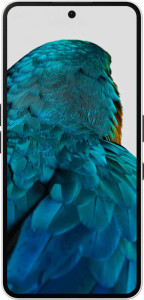
Nothing Phone (3a)
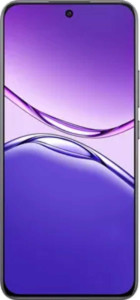
Oppo K13 5G

Nothing Phone (3a) Oppo K13 5G

Overview

When it comes to choosing between the Nothing Phone (3a) and the Oppo K13 5G, the decision is far from straightforward. Both mid-range smartphones share a surprising amount of common ground, yet each carves out a distinct identity in areas like camera versatility, battery capacity, and everyday performance. Whether you care most about display quality, charging speeds, or connectivity features, this head-to-head comparison breaks it all down so you can find the phone that truly fits your needs.

Common Features

  • Both phones are water resistant.
  • Neither phone has a rugged build.
  • Neither phone can be folded.
  • Both phones feature an OLED/AMOLED display.
  • Both phones have a 120Hz refresh rate.
  • Neither phone has branded damage-resistant glass.
  • Both phones support Always-On Display.
  • Neither phone supports Dolby Vision.
  • Neither phone has a secondary screen.
  • Both phones have a touchscreen.
  • Both phones offer 256GB of internal storage.
  • Both phones have integrated LTE.
  • Both phones use a 4nm semiconductor.
  • Both phones support 64-bit processing.
  • Both phones support DirectX 12.
  • Both phones have integrated graphics.
  • Both phones use big.LITTLE technology.
  • Both phones use OpenGL ES version 3.2.
  • Both phones run Android 15.
  • Both phones have clipboard warnings.
  • Both phones have location privacy options.
  • Both phones have camera and microphone privacy options.
  • Neither phone has Mail Privacy Protection.
  • Both phones support theme customization.
  • Both phones can block app tracking.
  • Neither phone blocks cross-site tracking.
  • Neither phone supports wireless charging.
  • Both phones support fast charging.
  • Neither phone has a removable battery.
  • Both phones have a battery level indicator.
  • Both phones have a rechargeable battery.
  • Neither phone has a 3.5mm audio jack.
  • Both phones have stereo speakers.
  • Neither phone supports aptX, LDAC, aptX HD, aptX Adaptive, aptX Lossless, or radio.
  • Both phones support 5G.
  • Both phones have dual SIM support.
  • Neither phone has an external memory slot.
  • Both phones use USB Type-C with USB version 2.
  • Both phones have a download speed of 2900 MBits/s.
  • Both phones have a fingerprint scanner.
  • Neither phone has emergency SOS via satellite.
  • Both phones have a video light.
  • Neither phone has a sapphire glass display.
  • Neither phone has a curved display.
  • Neither phone has an e-paper display.
  • Both phones record main camera video at 2160 x 30 fps.
  • Neither phone has a dual-tone LED flash.
  • Both phones have a single LED flash.
  • Neither phone has a BSI sensor.
  • Both phones have a CMOS sensor.
  • Both phones support continuous autofocus when recording movies.
  • Both phones have phase-detection autofocus for photos.

Main Differences

  • Weight is 201g on the Nothing Phone (3a) and 208g on the Oppo K13 5G.
  • Thickness is 8.4mm on the Nothing Phone (3a) and 8.5mm on the Oppo K13 5G.
  • Width is 77.5mm on the Nothing Phone (3a) and 76.1mm on the Oppo K13 5G.
  • Height is 163.5mm on the Nothing Phone (3a) and 163.2mm on the Oppo K13 5G.
  • Volume is 106.44 cm³ on the Nothing Phone (3a) and 105.57 cm³ on the Oppo K13 5G.
  • The Ingress Protection rating is IP64 on the Nothing Phone (3a) and IP65 on the Oppo K13 5G.
  • Screen size is 6.77″ on the Nothing Phone (3a) and 6.67″ on the Oppo K13 5G.
  • Pixel density is 387 ppi on the Nothing Phone (3a) and 395 ppi on the Oppo K13 5G.
  • Resolution is 1080 x 2392 px on the Nothing Phone (3a) and 1080 x 2400 px on the Oppo K13 5G.
  • Typical brightness is 800 nits on the Nothing Phone (3a) and 600 nits on the Oppo K13 5G.
  • HDR10 support is present on the Nothing Phone (3a) but not available on the Oppo K13 5G.
  • HDR10+ support is present on the Nothing Phone (3a) but not available on the Oppo K13 5G.
  • RAM is 12GB on the Nothing Phone (3a) and 8GB on the Oppo K13 5G.
  • AnTuTu benchmark score is 816384 on the Nothing Phone (3a) and 790000 on the Oppo K13 5G.
  • The chipset is Qualcomm Snapdragon 7s Gen 3 on the Nothing Phone (3a) and Qualcomm Snapdragon 6 Gen 4 on the Oppo K13 5G.
  • The GPU is Adreno 710 on the Nothing Phone (3a) and Adreno 810 on the Oppo K13 5G.
  • CPU speed is 1 x 2.5 & 3 x 2.4 & 4 x 1.8 GHz on the Nothing Phone (3a) and 1 x 2.3 & 3 x 2.2 & 4 x 1.8 GHz on the Oppo K13 5G.
  • GPU clock speed is 1050 MHz on the Nothing Phone (3a) and 800 MHz on the Oppo K13 5G.
  • RAM speed is 3200 MHz on the Nothing Phone (3a) and 2750 MHz on the Oppo K13 5G.
  • Maximum memory bandwidth is 25.6 GB/s on the Nothing Phone (3a) and 12 GB/s on the Oppo K13 5G.
  • Thermal Design Power is 5W on the Nothing Phone (3a) and 7W on the Oppo K13 5G.
  • Main camera setup is 50 & 50 & 8 MP on the Nothing Phone (3a) and 50 & 2 MP on the Oppo K13 5G.
  • Main camera wide aperture is f/1.9, f/2, and f/2.2 on the Nothing Phone (3a) and f/2.4 and f/1.9 on the Oppo K13 5G.
  • Front camera resolution is 32MP on the Nothing Phone (3a) and 16MP on the Oppo K13 5G.
  • Optical image stabilization is present on the Nothing Phone (3a) but not available on the Oppo K13 5G.
  • Optical zoom is 2x on the Nothing Phone (3a) and 0x on the Oppo K13 5G.
  • Front camera aperture is f/2.2 on the Nothing Phone (3a) and f/2.5 on the Oppo K13 5G.
  • Battery capacity is 5000 mAh on the Nothing Phone (3a) and 7000 mAh on the Oppo K13 5G.
  • Charging speed is 50W on the Nothing Phone (3a) and 80W on the Oppo K13 5G.
  • Wi-Fi support includes Wi-Fi 6 (802.11ax) on the Nothing Phone (3a) but the Oppo K13 5G tops out at Wi-Fi 5 (802.11ac).
  • Bluetooth version is 5.4 on the Nothing Phone (3a) and 5.2 on the Oppo K13 5G.
  • NFC is present on the Nothing Phone (3a) but not available on the Oppo K13 5G.
  • An infrared sensor is present on the Oppo K13 5G but not available on the Nothing Phone (3a).
Specs Comparison
Nothing Phone (3a)

Nothing Phone (3a)

Oppo K13 5G

Oppo K13 5G

Design:
water resistance Water resistant Water resistant
weight 201 g 208 g
thickness 8.4 mm 8.5 mm
width 77.5 mm 76.1 mm
height 163.5 mm 163.2 mm
volume 106.4385 cm³ 105.56592 cm³
Ingress Protection (IP) rating IP64 IP65
has a rugged build
can be folded

In terms of overall form factor, the two phones are remarkably close. Both stand at nearly identical heights (163.5 mm vs 163.2 mm) and sport similar thinness (8.4 mm vs 8.5 mm), meaning neither will feel noticeably slimmer or taller in the hand. The one subtle ergonomic difference is width: the Oppo K13 5G is slightly narrower at 76.1 mm compared to the Nothing Phone (3a)'s 77.5 mm, which can matter for one-handed use, especially for users with smaller hands.

On weight, the Nothing Phone (3a) comes in at 201 g versus the Oppo K13's 208 g. A 7-gram difference is barely perceptible in isolation, but over a full day of use — calls, scrolling, photography — the slightly lighter Nothing can reduce hand fatigue marginally. Neither phone qualifies as lightweight by modern standards, but neither is unusually heavy either.

The clearest differentiator in this group is the IP rating. The Oppo K13 5G holds an IP65 rating, while the Nothing Phone (3a) carries IP64. Both protect against water jets, but IP65 adds resistance to low-pressure water jets from any direction, whereas IP64 is limited to water splashes. In practical terms, the Oppo handles accidental exposure to running water — like a sink splash or light rain — with slightly more confidence. This gives the Oppo K13 5G a clear edge in durability within this category, even though both phones are otherwise near-identical in physical dimensions and build philosophy.

Display:
Display type OLED/AMOLED OLED/AMOLED
screen size 6.77" 6.67"
pixel density 387 ppi 395 ppi
resolution 1080 x 2392 px 1080 x 2400 px
refresh rate 120Hz 120Hz
brightness (typical) 800 nits 600 nits
has branded damage-resistant glass
supports HDR10
supports HDR10+
Always-On Display
supports Dolby Vision
Has a secondary screen
has a touch screen

Both phones use OLED/AMOLED panels with a 120Hz refresh rate, so the fundamental display technology and smoothness of scrolling are on equal footing. Where they diverge is screen size and brightness. The Nothing Phone (3a) offers a larger 6.77″ panel versus the Oppo K13's 6.67″, making it the better pick for media consumption and reading. The Oppo counters with a marginally higher pixel density — 395 ppi versus 387 ppi — but this difference is imperceptible to the human eye at normal viewing distances.

The more meaningful gap is brightness. The Nothing Phone (3a) achieves 800 nits typical brightness compared to the Oppo K13's 600 nits. That 200-nit difference is significant in outdoor conditions: a brighter display cuts through sunlight glare far more effectively, making the Nothing considerably easier to read on a sunny day. For anyone who uses their phone frequently outside, this is a practical daily advantage, not just a spec sheet number.

HDR support further widens the gap. The Nothing Phone (3a) supports both HDR10 and HDR10+, enabling richer contrast and a wider color range when streaming compatible content on platforms like Netflix or YouTube. The Oppo K13 lacks HDR support entirely, meaning it cannot render that enhanced dynamic range even when the content supports it. Combined with the brightness and size advantages, the Nothing Phone (3a) holds a clear display edge in this comparison.

Performance:
internal storage 256GB 256GB
RAM 12GB 8GB
AnTuTu benchmark score 816384 790000
Chipset (SoC) name Qualcomm Snapdragon 7s Gen 3 Qualcomm Snapdragon 6 Gen 4
GPU name Adreno 710 Adreno 810
CPU speed 1 x 2.5 & 3 x 2.4 & 4 x 1.8 GHz 1 x 2.3 & 3 x 2.2 & 4 x 1.8 GHz
GPU clock speed 1050 MHz 800 MHz
Has integrated LTE
RAM speed 3200 MHz 2750 MHz
semiconductor size 4 nm 4 nm
Supports 64-bit
DirectX version DirectX 12 DirectX 12
Has integrated graphics
OpenGL ES version 3.2 3.2
Uses big.LITTLE technology
CPU threads 8 threads 8 threads
Has TrustZone
maximum memory bandwidth 25.6 GB/s 12 GB/s
OpenCL version 2 2
maximum memory amount 16GB 16GB
Thermal Design Power (TDP) 5W 7W
DDR memory version 5 5

Under the hood, the Nothing Phone (3a) runs on the Snapdragon 7s Gen 3 while the Oppo K13 5G uses the Snapdragon 6 Gen 4 — both built on a 4 nm process, but from different tiers of Qualcomm's lineup. The AnTuTu scores reflect this: Nothing scores approximately 816,000 versus the Oppo's 790,000, a meaningful but not dramatic gap. In day-to-day tasks like app switching, browsing, and casual gaming, both phones will feel fluid, but the Nothing has a tangible advantage under sustained load or with demanding applications.

RAM tells a more pointed story. The Nothing Phone (3a) ships with 12 GB of RAM running at 3,200 MHz, compared to the Oppo's 8 GB at 2,750 MHz. More RAM means more apps stay resident in the background without being reloaded, and the faster speed reduces latency for memory-intensive tasks. The memory bandwidth gap amplifies this further: Nothing's 25.6 GB/s versus the Oppo's 12 GB/s is a stark difference that benefits everything from GPU-accelerated workloads to large file operations.

One nuance worth noting is thermal efficiency. The Nothing Phone (3a) has a TDP of 5W versus the Oppo's 7W, suggesting the Snapdragon 7s Gen 3 achieves its performance while drawing less power — a combination that typically translates to less heat and better sustained performance over longer sessions. Taken together, the Nothing Phone (3a) holds a clear performance advantage in this group, with superior RAM, faster memory throughput, and a more efficient chipset.
Cameras:
megapixels (main camera) 50 & 50 & 8 MP 50 & 2 MP
wide aperture (main camera) 1.9 & 2 & 2.2f 2.4 & 1.9f
Has a dual-lens (or multi-lens) main camera
megapixels (front camera) 32MP 16MP
has built-in optical image stabilization
video recording (main camera) 2160 x 30 fps 2160 x 30 fps
Has a dual-tone LED flash
number of flash LEDs 1 1
has a BSI sensor
has a CMOS sensor
has continuous autofocus when recording movies
Has phase-detection autofocus for photos
supports slow-motion video recording
has a built-in HDR mode
has manual exposure
has a flash
optical zoom 2x 0x
has manual ISO
has a serial shot mode
has manual focus
has a front camera
Has laser autofocus
Shoots 360° panorama
has manual white balance
has touch autofocus
has manual shutter speed
can create panoramas in-camera
wide aperture (front camera) 2.2f 2.5f
Has timelapse function
Has a front-facing LED flash
has a dual-lens (or multi-lens) front camera
supports HDR10 recording
supports Dolby Vision recording
has a front-facing camera under the display
Has a RGB LED flash
has 3D photo/video recording capabilities

The camera systems diverge significantly here. The Nothing Phone (3a) features a genuine triple-camera setup — 50 MP + 50 MP + 8 MP — while the Oppo K13 5G pairs its 50 MP main sensor with a 2 MP secondary lens, which in practice functions as little more than a depth helper rather than a versatile shooter. More importantly, Nothing's main sensor carries a wider f/1.9 aperture versus the Oppo's f/2.4, meaning it lets in noticeably more light — an advantage that directly translates to sharper, less noisy shots in dim environments like indoor events or evening scenes.

Two further gaps are hard to overlook. The Nothing Phone (3a) includes optical image stabilization (OIS) and 2x optical zoom, both of which the Oppo K13 entirely lacks. OIS compensates for hand tremor during handheld shooting and is especially valuable for video, reducing that shaky-cam quality that plagues footage shot on phones without it. Optical zoom, as opposed to digital cropping, preserves actual detail when shooting subjects at a distance — the Oppo's 0x optical zoom means any zoom is purely digital and results in quality loss.

On the selfie side, the Nothing Phone (3a) again leads with a 32 MP front camera at f/2.2, compared to the Oppo's 16 MP at f/2.5. Higher resolution combined with a wider aperture gives Nothing a clear advantage for portrait selfies and video calls in lower light. Across every meaningful camera dimension — versatility, low-light capability, stabilization, and zoom — the Nothing Phone (3a) holds a commanding advantage in this group.

Operating system:
Android version Android 15 Android 15
has clipboard warnings
has location privacy options
has camera/microphone privacy options
has Mail Privacy Protection
has theme customization
can block app tracking
blocks cross-site tracking
has on-device machine learning
has notification permissions
has media picker
Can play games while they download
has dark mode
has Wi-Fi password sharing
has battery health check
has an extra dim mode
has focus modes
has dynamic theming
can offload apps
Has customizable notifications
has Live Text
has full-page screenshots
supports split screen
gets direct OS updates
has PiP
Can be used as a PC
Has sharing intents
has a child lock
Supports widgets
Is free and open source
Has offline voice recognition
has voice commands
Tracks the current position of a mobile device
is a multi-user system
has Quick Start

This is a rare case of complete parity. Both the Nothing Phone (3a) and the Oppo K13 5G launch on Android 15 and share an identical feature set across every tracked software specification — from privacy controls like location and camera/microphone permissions, to productivity features like split-screen multitasking, Picture-in-Picture, and widget support. Neither phone gets direct OS updates, and both lack focus modes and Wi-Fi password sharing.

The privacy toolkit on both devices is well-rounded for Android 15, covering app tracking controls, clipboard warnings, and on-device machine learning — meaning sensitive tasks like voice recognition can run without sending data to external servers. These are meaningful modern safeguards, and users of either phone benefit equally from them.

With no differentiating data point across the entire group, this category is a complete tie. A buyer's software experience will depend far more on each manufacturer's custom Android skin and update cadence — factors that fall outside the provided specs — than on any inherent OS-level difference between these two phones.

Battery:
battery power 5000 mAh 7000 mAh
has wireless charging
Supports fast charging
charging speed 50W 80W
has a removable battery
has a battery level indicator
has a rechargeable battery

Battery capacity is where the Oppo K13 5G makes its most decisive statement in this entire comparison. Its 7000 mAh cell is a substantial 40% larger than the Nothing Phone (3a)'s 5000 mAh — a difference that, in real-world terms, can translate to an extra full day of moderate use. For heavy users, frequent travelers, or anyone who struggles to find a charger, that gap is genuinely significant and not merely a numbers advantage.

The charging story also favors the Oppo. At 80W, it charges considerably faster than the Nothing's 50W, which helps offset the larger battery's longer absolute charge time. In practice, the Oppo can replenish a meaningful portion of its larger cell in roughly the same time it takes the Nothing to top up its smaller one — a combination that keeps the Oppo competitive on convenience as well as endurance. Neither phone supports wireless charging, so both are on equal footing there.

This group has a clear winner: the Oppo K13 5G leads decisively, offering both a much larger battery and faster wired charging. For users who prioritize longevity between charges above other factors, this advantage alone could be a deciding factor in the overall purchase decision.

Audio:
has a socket for a 3.5 mm audio jack
has stereo speakers
has aptX
has LDAC
has aptX HD
has aptX Adaptive
has aptX Lossless
Has a radio

Audio is another category of complete parity. Both the Nothing Phone (3a) and the Oppo K13 5G feature stereo speakers and drop the 3.5 mm headphone jack, reflecting a now-common trade-off in mid-range smartphones. Stereo speakers matter most for media consumption — videos, games, and speakerphone calls all benefit from the wider soundstage compared to a single mono driver.

Neither phone supports any high-resolution Bluetooth audio codec — no aptX, aptX HD, aptX Adaptive, LDAC, or aptX Lossless. This means wireless headphone users are limited to standard Bluetooth audio quality (typically SBC or AAC), which is adequate for casual listening but falls short of what audiophiles or quality-conscious listeners might want from a wired or hi-res wireless setup. Both phones are equally constrained here.

With every tracked specification identical across the board, this group is a complete tie. Neither phone offers a meaningful audio advantage over the other based on the available data.

Connectivity & Features:
release date March 2025 April 2025
has 5G support
Wi-Fi version Wi-Fi 4 (802.11n), Wi-Fi 5 (802.11ac), Wi-Fi 6 (802.11ax) Wi-Fi 4 (802.11n), Wi-Fi 5 (802.11ac)
SIM cards 2 SIM 2 SIM
Bluetooth version 5.4 5.2
has an external memory slot
Has USB Type-C
USB version 2 2
has NFC
download speed 2900 MBits/s 2900 MBits/s
Has a fingerprint scanner
has emergency SOS via satellite
has crash detection
is DLNA-certified
has a gyroscope
supports ANT+
Has a heart rate monitor
has GPS
has a compass
supports Wi-Fi
Has an infrared sensor
has an accelerometer
has a cellular module
Has a barometer
has an HDMI output
Uses 3D facial recognition
Has an iris scanner
Stylus included
supports Galileo
Has motion tracking
Has optical tracking
Has a built-in projector

Wireless connectivity splits meaningfully between these two. The Nothing Phone (3a) supports Wi-Fi 6 (802.11ax), while the Oppo K13 5G tops out at Wi-Fi 5 (802.11ac). Wi-Fi 6 brings real-world benefits in congested environments — think airports, offices, or households with many connected devices — delivering better throughput stability and reduced latency. The Nothing also runs Bluetooth 5.4 versus the Oppo's 5.2, a newer version that offers modest improvements in connection reliability and efficiency, particularly relevant for users with multiple paired wireless accessories.

The NFC question is a decisive one for many buyers. The Nothing Phone (3a) includes NFC; the Oppo K13 5G does not. NFC underpins contactless payments (Google Pay and equivalents), quick Bluetooth pairing, and transit card emulation — everyday conveniences that, once relied upon, are hard to give up. The Oppo counters with one exclusive: an infrared sensor, which allows the phone to function as a universal remote for TVs, air conditioners, and other IR-controlled appliances. It's a niche but genuinely useful feature for the right user.

On balance, the Nothing Phone (3a) has the stronger connectivity profile for most users — Wi-Fi 6, newer Bluetooth, and NFC together represent a more broadly impactful set of upgrades than the Oppo's IR blaster. The Oppo's infrared sensor may tip the scales for users who specifically value home appliance control, but as a general connectivity package, Nothing leads this group.

Miscellaneous:
has a video light
Has sapphire glass display
Has a curved display
Has an e-paper display

The miscellaneous specs tracked here offer no basis for differentiation. Both the Nothing Phone (3a) and the Oppo K13 5G share identical values across every data point in this group — both include a video light, and neither features a sapphire glass display, curved screen, or e-paper panel.

This group is a complete tie by the available data. Any meaningful distinction between these two phones lies in the other specification categories rather than here.

Comparison Summary & Verdict

After examining every spec, the Nothing Phone (3a) and the Oppo K13 5G emerge as two compelling but distinctly different mid-range choices. The Nothing Phone (3a) stands out with its brighter 800-nit display, HDR10 and HDR10+ support, a more versatile triple-camera system with optical zoom and OIS, higher RAM, NFC, and Wi-Fi 6 connectivity — making it the stronger pick for users who prioritize multimedia quality and a richer feature set. The Oppo K13 5G, on the other hand, counters with a larger 7000 mAh battery, faster 80W charging, a higher IP65 water resistance rating, and an infrared sensor, appealing to users who need exceptional endurance and all-day reliability. Both run Android 15 and deliver solid overall performance, but they serve different priorities clearly.

Nothing Phone (3a)
Buy Nothing Phone (3a) if...

Buy the Nothing Phone (3a) if you want a brighter display with HDR10+ support, a more versatile triple-camera setup with optical zoom and image stabilization, more RAM, NFC, and Wi-Fi 6.

Oppo K13 5G
Buy Oppo K13 5G if...

Buy the Oppo K13 5G if long battery life and faster charging are your top priorities, or if you need a higher IP65 water resistance rating and a built-in infrared sensor.