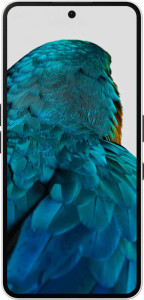
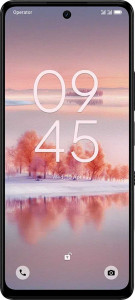
Across the broad connectivity landscape, these two phones are remarkably well-matched — both support 5G, dual SIM, Bluetooth 5.4, NFC, USB Type-C, and the same suite of core sensors including GPS, gyroscope, and compass. The most consequential wireless differentiator is Wi-Fi generation: the Nothing Phone (3a) supports Wi-Fi 6 (802.11ax) in addition to Wi-Fi 4 and 5, while the TCL 60 NxtPaper tops out at Wi-Fi 5 (802.11ac). Wi-Fi 6 delivers better performance in congested environments — such as homes with many connected devices or busy public networks — through improved channel efficiency and reduced latency, not just raw speed alone.
Interestingly, despite its older Wi-Fi standard, the TCL reports a higher stated peak download speed of 3300 Mbits/s versus the Nothing's 2900 Mbits/s — a difference attributable to cellular modem capabilities rather than Wi-Fi. In practice, both figures far exceed what real-world 5G networks typically deliver, so this gap is largely theoretical for most users. More tangibly, the TCL includes a microSD card slot for expandable storage, which the Nothing lacks entirely. For users who need to store large media libraries or want a cost-effective way to expand capacity beyond the built-in 256 GB, that slot is a genuine practical advantage.
The TCL also adds a barometer — useful for weather apps, altitude tracking, and certain fitness use cases — which the Nothing does not include. Taken together, this category lands as a narrow edge for the TCL 60 NxtPaper: its expandable storage and barometer offer real utility, and its download speed lead, while largely academic, does not hurt. The Nothing's Wi-Fi 6 support is a meaningful counter, but for the majority of users, storage flexibility is the more impactful day-to-day differentiator.