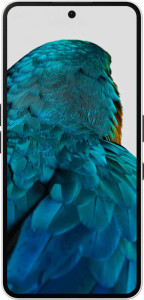
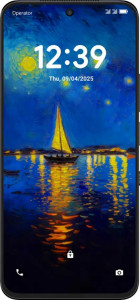
Remarkably, these two phones share an identical camera configuration on paper: a triple-lens rear system of 50 & 50 & 8 MP, OIS on the main shooter, phase-detection autofocus, 4K/30fps video, and a 32 MP front camera. The feature parity extends deep into manual controls as well — both offer manual ISO, manual focus, manual exposure, HDR mode, and slow-motion recording. For most everyday shooting scenarios, users of either phone are working with structurally equivalent hardware on the spec sheet.
Dig into the details, though, and two meaningful separators emerge. On the main lens aperture, the TCL's f/1.8 is slightly wider than the Nothing's f/1.9, which theoretically allows marginally more light in low-light conditions. More decisively, the TCL pulls ahead with 3x optical zoom versus the Nothing Phone (3a)'s 2x — a genuine real-world difference. Optical zoom preserves image quality when shooting distant subjects, whereas pushing past the optical limit forces digital zoom and noticeable quality loss. The Nothing counters on the secondary (ultrawide) lens, where its f/2.0 aperture is meaningfully wider than the TCL's f/2.4, letting in more light for wide-angle shots.
On balance, the TCL NxtPaper 60 Ultra has a narrow but tangible edge in this group, driven primarily by its superior 3x optical zoom — a practical advantage that directly affects shot quality in telephoto situations. The Nothing Phone (3a) reclaims some ground with its brighter ultrawide lens, making the gap closer than the zoom figure alone suggests, but for users who frequently shoot at a distance, the TCL's reach is the deciding factor here.