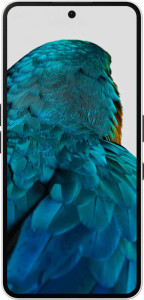
Nothing Phone (3a)
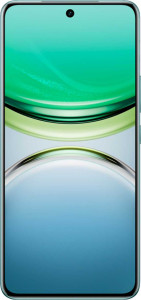
Vivo T4 5G

Nothing Phone (3a) Vivo T4 5G

Overview

Welcome to our in-depth comparison of the Nothing Phone (3a) and the Vivo T4 5G — two compelling mid-range smartphones that share a surprising amount of common ground, yet diverge in some meaningful ways. Both devices run on the same Snapdragon 7s Gen 3 chipset, sport identical 6.77″ OLED displays at 120Hz, and arrive with 12GB of RAM and 256GB of storage. But dig deeper and you will find real differences in battery capacity, camera versatility, audio, and connectivity that could make one a far better fit for your lifestyle than the other.

Common Features

  • Both phones are water resistant.
  • Neither phone has a rugged build.
  • Neither phone can be folded.
  • Both phones have an OLED/AMOLED display.
  • Both phones share the same screen size of 6.77″.
  • Both phones have a resolution of 1080 x 2392 px.
  • Both phones support a 120Hz refresh rate.
  • Always-On Display is available on both phones.
  • Dolby Vision support is not available on either phone.
  • Neither phone has a secondary screen.
  • Both phones have a touchscreen.
  • Both phones come with 256GB of internal storage and 12GB of RAM.
  • Both phones are powered by the Qualcomm Snapdragon 7s Gen 3 chipset.
  • Both phones achieved the same Geekbench 6 multi-core score of 3239 and single-core score of 1162.
  • Both phones feature a multi-lens main camera system with a 32MP front camera.
  • Optical image stabilization is available on both phones.
  • Both phones can record video at 2160p at 30 fps.
  • Both phones run Android 15.
  • Fast charging is supported on both phones.
  • Neither phone supports wireless charging.
  • Neither phone has a removable battery.
  • Neither phone has a 3.5mm audio jack.
  • Both phones support 5G connectivity.
  • Both phones support Wi-Fi 6 (802.11ax) along with Wi-Fi 4 and Wi-Fi 5.
  • Both phones have dual SIM card slots.
  • Neither phone has an external memory slot.
  • Both phones have USB Type-C with USB 2.0.
  • Both phones have a fingerprint scanner.
  • Neither phone has a curved or e-paper display.

Main Differences

  • Weight is 201 g on Nothing Phone (3a) and 199 g on Vivo T4 5G.
  • Thickness is 8.4 mm on Nothing Phone (3a) and 7.9 mm on Vivo T4 5G.
  • Width is 77.5 mm on Nothing Phone (3a) and 76.4 mm on Vivo T4 5G.
  • Ingress Protection rating is IP64 on Nothing Phone (3a) and IP65 on Vivo T4 5G.
  • Typical brightness is 800 nits on Nothing Phone (3a) and 1300 nits on Vivo T4 5G.
  • Damage-resistant glass is present on Vivo T4 5G but not available on Nothing Phone (3a).
  • HDR10 support is available on Nothing Phone (3a) but not on Vivo T4 5G.
  • HDR10+ support is available on Nothing Phone (3a) but not on Vivo T4 5G.
  • The main camera setup is 50 & 50 & 8 MP on Nothing Phone (3a) and 50 & 2 MP on Vivo T4 5G.
  • Main camera wide aperture is f/1.9, f/2.0, and f/2.2 on Nothing Phone (3a) and f/2.4 and f/1.8 on Vivo T4 5G.
  • Optical zoom is 2x on Nothing Phone (3a) and not available on Vivo T4 5G.
  • Front camera aperture is f/2.2 on Nothing Phone (3a) and f/2.0 on Vivo T4 5G.
  • Battery capacity is 5000 mAh on Nothing Phone (3a) and 7300 mAh on Vivo T4 5G.
  • Charging speed is 50W on Nothing Phone (3a) and 90W on Vivo T4 5G.
  • Stereo speakers are present on Nothing Phone (3a) but not available on Vivo T4 5G.
  • Bluetooth version is 5.4 on Nothing Phone (3a) and 5.2 on Vivo T4 5G.
  • NFC is present on Nothing Phone (3a) but not available on Vivo T4 5G.
  • An infrared sensor is present on Vivo T4 5G but not available on Nothing Phone (3a).
Specs Comparison
Nothing Phone (3a)

Nothing Phone (3a)

Vivo T4 5G

Vivo T4 5G

Design:
water resistance Water resistant Water resistant
weight 201 g 199 g
thickness 8.4 mm 7.9 mm
width 77.5 mm 76.4 mm
height 163.5 mm 163.4 mm
volume 106.4385 cm³ 98.621704 cm³
Ingress Protection (IP) rating IP64 IP65
has a rugged build
can be folded

Both phones share the same overall footprint in terms of height — 163.5 mm vs 163.4 mm — and weigh virtually the same at 201 g and 199 g respectively, making neither a clear winner on sheer size or heft. In day-to-day handling, these differences are imperceptible. Where the gap becomes more tangible is thickness: the Vivo T4 5G is measurably slimmer at 7.9 mm compared to the Nothing Phone (3a)'s 8.4 mm, a 0.5 mm difference that, combined with its slightly narrower width, yields a noticeably smaller total volume (98.6 cm³ vs 106.4 cm³). That roughly 8% reduction in volume gives the Vivo a more compact, premium-feeling profile in the hand.

On water and dust resistance, both carry an IP6X rating for dust, but the second digit tells a different story. The Nothing Phone (3a) is rated IP64, meaning it resists water splashing from any direction — fine for rain or an accidental sink splash. The Vivo T4 5G steps up to IP65, which adds protection against sustained, low-pressure water jets. In practical terms, this means the Vivo can handle a more aggressive rinse under a tap without concern, while the Nothing Phone (3a) should be kept away from direct streams of water.

The Vivo T4 5G holds a clear edge in this category. Its slimmer, more compact build and superior IP65 rating make it the more refined and resilient of the two from a design standpoint, even if the differences in weight and height are essentially irrelevant in real-world use.

Display:
Display type OLED/AMOLED OLED/AMOLED
screen size 6.77" 6.77"
pixel density 387 ppi 388 ppi
resolution 1080 x 2392 px 1080 x 2392 px
refresh rate 120Hz 120Hz
brightness (typical) 800 nits 1300 nits
has branded damage-resistant glass
supports HDR10
supports HDR10+
Always-On Display
supports Dolby Vision
Has a secondary screen
has a touch screen

At the panel level, these two phones are essentially identical: both feature a 6.77″ OLED/AMOLED display running at 1080 x 2392 px, 120Hz, and a pixel density so close — 387 vs 388 ppi — that it is a non-factor. The shared foundation means both deliver the same punchy colors, deep blacks, and smooth scrolling you expect from a mid-range AMOLED in 2024.

The differentiators, however, pull in opposite directions. The Vivo T4 5G pulls ahead on outdoor usability with a typical brightness of 1300 nits, a significant step above the Nothing Phone (3a)'s 800 nits. That 62% brightness advantage translates directly to better legibility in sunlight — a spec that matters every single day. The Vivo also includes branded damage-resistant glass, adding a layer of real-world durability the Nothing Phone (3a) lacks. On the other side of the ledger, the Nothing Phone (3a) supports HDR10 and HDR10+, enabling richer tone-mapping and a wider dynamic range when streaming compatible content — something the Vivo entirely foregoes.

The edge ultimately goes to the Vivo T4 5G. Brightness and screen durability are everyday concerns, while HDR10+ content — though genuinely beneficial — is less consistently impactful in typical usage. For most users, the Vivo's superior brightness and glass protection will matter more, more often.

Performance:
internal storage 256GB 256GB
RAM 12GB 12GB
Chipset (SoC) name Qualcomm Snapdragon 7s Gen 3 Qualcomm Snapdragon 7s Gen 3
GPU name Adreno 710 Adreno 710
CPU speed 1 x 2.5 & 3 x 2.4 & 4 x 1.8 GHz 1 x 2.5 & 3 x 2.4 & 4 x 1.8 GHz
Geekbench 6 result (multi) 3239 3239
Geekbench 6 result (single) 1162 1162
Geekbench 5 result (multi) 3242 3242
Geekbench 5 result (single) 893 893
GPU clock speed 1050 MHz 1050 MHz
Has integrated LTE
RAM speed 3200 MHz 3200 MHz
semiconductor size 4 nm 4 nm
Supports 64-bit
DirectX version DirectX 12 DirectX 12
Has integrated graphics
OpenGL version 3.2 3.2
OpenGL ES version 3.2 3.2
Uses big.LITTLE technology
CPU threads 8 threads 8 threads
Uses HMP
Has TrustZone
maximum memory bandwidth 25.6 GB/s 25.6 GB/s
OpenCL version 2 2
maximum memory amount 16GB 16GB
uses multithreading
Thermal Design Power (TDP) 5W 5W
DDR memory version 5 5
shading units 128 128
turbo clock speed 2.4GHz 2.4GHz

This is a rare case of a complete dead heat. Both phones run on the Qualcomm Snapdragon 7s Gen 3 — a capable 4nm mid-range chip — paired with 12GB of RAM and 256GB of internal storage. The benchmark numbers confirm what the shared silicon implies: identical Geekbench 6 multi-core scores of 3239 and single-core scores of 1162, with no measurable daylight between them across any test.

Every meaningful performance variable — GPU model, clock speeds, memory bandwidth, TDP, DDR version — is duplicated exactly. Users can expect the same experience whether they are multitasking, gaming, or running demanding apps. Neither phone will throttle differently, run cooler, or sustain peak performance longer than the other, at least as far as the provided specs indicate.

This category is an unambiguous tie. Performance cannot be a deciding factor between these two phones — the hardware is, for all practical purposes, the same.

Cameras:
megapixels (main camera) 50 & 50 & 8 MP 50 & 2 MP
wide aperture (main camera) 1.9 & 2 & 2.2f 2.4 & 1.8f
Has a dual-lens (or multi-lens) main camera
megapixels (front camera) 32MP 32MP
has built-in optical image stabilization
video recording (main camera) 2160 x 30 fps 2160 x 30 fps
Has a dual-tone LED flash
number of flash LEDs 1 1
has a BSI sensor
has a CMOS sensor
has continuous autofocus when recording movies
Has phase-detection autofocus for photos
supports slow-motion video recording
has a built-in HDR mode
has manual exposure
has a flash
optical zoom 2x 0x
has manual ISO
has a serial shot mode
has manual focus
has a front camera
Has laser autofocus
Shoots 360° panorama
has manual white balance
shoots raw
has touch autofocus
has manual shutter speed
can create panoramas in-camera
wide aperture (front camera) 2.2f 2f
Has timelapse function
Has a front-facing LED flash
has a dual-lens (or multi-lens) front camera
supports HDR10 recording
supports Dolby Vision recording
has a front-facing camera under the display
Has a RGB LED flash
has 3D photo/video recording capabilities

The camera systems diverge significantly in ambition. The Nothing Phone (3a) fields a triple rear camera setup (50 + 50 + 8 MP) against the Vivo T4 5G's dual-lens system (50 + 2 MP). The Vivo's secondary 2MP sensor is effectively a depth assistant — it contributes little on its own. The Nothing, by contrast, pairs its main 50MP shooter with a second full-resolution 50MP lens, and adds an 8MP wide for scene flexibility. That second 50MP sensor is also what enables the Nothing's 2x optical zoom, a genuine hardware zoom that preserves detail when shooting at distance — a capability the Vivo entirely lacks, rated at 0x optical zoom.

Shared ground includes OIS on both, identical 4K/30fps video ceilings, phase-detection autofocus, and a matching 32MP front camera. The front aperture slightly favors the Vivo at f/2.0 vs the Nothing's f/2.2, which in theory allows marginally more light in low-light selfie situations — a minor but real advantage in dimmer environments.

The Nothing Phone (3a) wins this category clearly. A versatile triple-camera array, a dedicated high-resolution telephoto lens, and genuine optical zoom give it a meaningfully broader photographic range. The Vivo's camera system is competent for everyday shots but cannot match the Nothing's flexibility across different shooting scenarios.

Operating system:
Android version Android 15 Android 15
has clipboard warnings
has location privacy options
has camera/microphone privacy options
has Mail Privacy Protection
has theme customization
can block app tracking
blocks cross-site tracking
has on-device machine learning
has notification permissions
has media picker
Can play games while they download
has dark mode
has Wi-Fi password sharing
has battery health check
has an extra dim mode
has focus modes
has dynamic theming
can offload apps
Has customizable notifications
has Live Text
has full-page screenshots
supports split screen
gets direct OS updates
has PiP
Can be used as a PC
Has sharing intents
has a child lock
Supports widgets
Is free and open source
Has offline voice recognition
has voice commands
Tracks the current position of a mobile device
is a multi-user system
has Quick Start

When two phones share not just an OS version but every single feature flag in the dataset, the comparison becomes a statement in itself. Both run Android 15 and match each other point for point across privacy controls, productivity features, and system capabilities — from on-device machine learning and dynamic theming to split-screen multitasking, Picture-in-Picture, and offline voice recognition.

This is a complete tie. Based strictly on the provided specifications, there is no software feature that distinguishes one phone from the other. A user prioritizing any particular OS capability — privacy, customization, accessibility, or productivity — will find identical support on both devices.

Battery:
battery power 5000 mAh 7300 mAh
has wireless charging
Supports fast charging
charging speed 50W 90W
has a removable battery
has a battery level indicator
has a rechargeable battery

Battery is where the Vivo T4 5G makes its most emphatic statement. Its 7300 mAh cell is an exceptionally large capacity for a mid-range phone — 46% larger than the Nothing Phone (3a)'s already-respectable 5000 mAh. In practical terms, a battery of that size on the same 4nm chipset points strongly toward multi-day endurance for moderate users, and a meaningful buffer even under heavy loads like gaming or navigation. The Nothing's 5000 mAh is a solid industry-standard figure that reliably delivers a full day, but it simply cannot compete at this scale.

The charging story compounds the Vivo's advantage further. At 90W, it charges nearly twice as fast as the Nothing Phone (3a)'s 50W — and it starts from a much larger tank. That combination means the Vivo spends less time tethered to a cable despite having more capacity to fill. Neither phone supports wireless charging, so that is a wash.

The Vivo T4 5G wins this category decisively. A larger battery and faster wired charging together represent a genuinely meaningful real-world advantage — one that affects daily routine in ways that most spec differences simply do not.

Audio:
has a socket for a 3.5 mm audio jack
has stereo speakers
has aptX
has LDAC
has aptX HD
has aptX Adaptive
has aptX Lossless
Has a radio

The audio specs are lean on both sides, but one distinction stands out: the Nothing Phone (3a) has stereo speakers, while the Vivo T4 5G does not. Stereo output — sound from two separate drivers — creates a noticeably wider soundstage for media consumption, gaming, and speakerphone calls. On a mono speaker, all audio collapses to a single point of origin, which makes the experience feel comparatively flat, especially when watching video content in landscape orientation.

Everything else is shared territory, and not particularly flattering for either phone. Neither offers a 3.5mm headphone jack, lossless Bluetooth audio codecs like LDAC or aptX, or an FM radio. Wired audio users will need a USB-C adapter, and Bluetooth audiophiles get no high-fidelity codec support on either device.

The Nothing Phone (3a) takes a clear edge here solely on the strength of its stereo speaker setup. It is a single but meaningful differentiator — one that affects everyday media use far more than the absence of features both phones equally lack.

Connectivity & Features:
release date March 2025 April 2025
has 5G support
Wi-Fi version Wi-Fi 4 (802.11n), Wi-Fi 5 (802.11ac), Wi-Fi 6 (802.11ax) Wi-Fi 4 (802.11n), Wi-Fi 5 (802.11ac), Wi-Fi 6 (802.11ax)
SIM cards 2 SIM 2 SIM
Bluetooth version 5.4 5.2
has an external memory slot
Has USB Type-C
USB version 2 2
has NFC
download speed 2900 MBits/s 2900 MBits/s
Has a fingerprint scanner
has emergency SOS via satellite
has crash detection
is DLNA-certified
has a gyroscope
supports ANT+
Has a heart rate monitor
has GPS
has a compass
supports Wi-Fi
Has an infrared sensor
has an accelerometer
has a cellular module
Has a barometer
has an HDMI output
Uses 3D facial recognition
Has an iris scanner
Stylus included
supports Galileo
Has motion tracking
Has optical tracking
Has a built-in projector

The connectivity foundations are identical: both phones support 5G, Wi-Fi 6, dual SIM, USB Type-C, and GPS with Galileo. Where they diverge is in two features that swap advantages between the devices. The Nothing Phone (3a) includes NFC — essential for contactless payments, transit cards, and device pairing — while the Vivo T4 5G omits it entirely. For users who rely on tap-to-pay or NFC-based workflows, this is a daily-use gap that cannot be worked around. The Nothing also runs Bluetooth 5.4 against the Vivo's 5.2, a newer version that brings modest improvements to connection stability and efficiency, though the practical difference in everyday use is minor.

The Vivo counters with an infrared sensor, which lets the phone function as a universal remote for TVs, air conditioners, and other IR-controlled appliances — a convenience feature the Nothing Phone (3a) lacks. It is genuinely useful for those who want it, but it serves a narrower set of use cases compared to NFC.

The Nothing Phone (3a) edges ahead in this category. NFC is a broadly relevant, frequently used feature in modern smartphone life, and its absence on the Vivo is a more consequential omission than the lack of an IR blaster on the Nothing. The newer Bluetooth version is a secondary but directionally consistent advantage for the Nothing as well.

Miscellaneous:
has a video light
Has sapphire glass display
Has a curved display
Has an e-paper display

The miscellaneous specs offer nothing to separate these two phones — every data point is identical. Both have a video light, neither features sapphire glass, a curved display, or an e-paper panel. This is a straightforward tie with no differentiating factor present in the provided data.

Comparison Summary & Verdict

After examining every specification, it is clear that both phones target a similar audience but with different priorities. The Nothing Phone (3a) stands out for multimedia enthusiasts, offering HDR10 and HDR10+ support, stereo speakers, a versatile triple-camera system with 2x optical zoom, and NFC for contactless payments. It is the stronger pick for users who value a richer media experience and broader connectivity. The Vivo T4 5G, on the other hand, is built for endurance and practicality: its 7300 mAh battery paired with 90W fast charging is a decisive advantage for heavy users, and its brighter 1300-nit display with damage-resistant glass adds real-world durability. If battery life and screen resilience are your top concerns, the Vivo T4 5G is the more practical daily companion.

Nothing Phone (3a)
Buy Nothing Phone (3a) if...

Buy the Nothing Phone (3a) if you want a versatile triple-camera setup with optical zoom, stereo speakers, NFC support, and HDR10+ display capabilities for a richer multimedia experience.

Vivo T4 5G
Buy Vivo T4 5G if...

Buy the Vivo T4 5G if long battery life and fast recharging are your top priorities, or if you need a brighter, more durable display for everyday use.