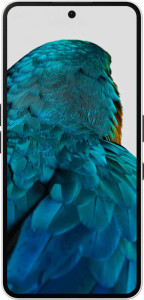
Nothing Phone (3a)
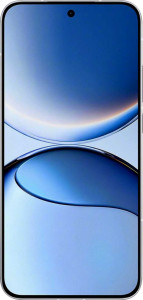
Xiaomi Redmi Turbo 4 Pro

Nothing Phone (3a) Xiaomi Redmi Turbo 4 Pro

Overview

When comparing the Nothing Phone (3a) and the Xiaomi Redmi Turbo 4 Pro, two very different philosophies emerge from similarly sized mid-to-upper-range smartphones. Both share an OLED display, 120Hz refresh rate, dual-SIM 5G support, and Android 15, yet they diverge sharply on key battlegrounds including raw processing power, battery capacity, display brightness, and water resistance. Read on to see how every specification stacks up between these two compelling devices.

Common Features

  • Neither product has a rugged build.
  • Neither product can be folded.
  • Both products feature an OLED/AMOLED display.
  • Both products have a 120Hz refresh rate.
  • Neither product has branded damage-resistant glass.
  • HDR10 support is available on both products.
  • HDR10+ support is available on both products.
  • Always-On Display is available on both products.
  • Neither product has a secondary screen.
  • Both products have a touchscreen.
  • Both products have integrated LTE.
  • Both products use a 4 nm semiconductor.
  • Both products support 64-bit processing.
  • Both products support DirectX 12.
  • Both products have integrated graphics.
  • Both products use big.LITTLE technology.
  • Both products have 8 CPU threads.
  • Neither product has a dual-tone LED flash.
  • Neither product has a BSI sensor.
  • Both products have a CMOS sensor.
  • Both products support continuous autofocus when recording movies.
  • Both products have phase-detection autofocus for photos.
  • Both products support slow-motion video recording.
  • Both products run Android 15.
  • Both products have clipboard warnings.
  • Both products have location privacy options.
  • Both products have camera and microphone privacy options.
  • Neither product has Mail Privacy Protection.
  • Both products have theme customization.
  • Both products can block app tracking.
  • Neither product blocks cross-site tracking.
  • Neither product supports wireless charging.
  • Both products support fast charging.
  • Neither product has a removable battery.
  • Both products have a battery level indicator.
  • Both products have a rechargeable battery.
  • Neither product has a 3.5 mm audio jack.
  • Both products have stereo speakers.
  • Neither product has LDAC.
  • Neither product has aptX HD.
  • Neither product has aptX Adaptive.
  • Neither product has aptX Lossless.
  • Neither product has a radio.
  • Both products support 5G.
  • Both products support dual SIM.
  • Both products have Bluetooth 5.4.
  • Neither product has an external memory slot.
  • Both products have USB Type-C.
  • Both products use USB version 2.
  • Both products have NFC.
  • Both products have a fingerprint scanner.
  • Neither product has a sapphire glass display.
  • Neither product has a curved display.
  • Neither product has an e-paper display.
  • Both products have a video light.

Main Differences

  • Water resistance is rated as water resistant on Nothing Phone (3a) and waterproof on Xiaomi Redmi Turbo 4 Pro.
  • Weight is 201 g on Nothing Phone (3a) and 219 g on Xiaomi Redmi Turbo 4 Pro.
  • Thickness is 8.4 mm on Nothing Phone (3a) and 8 mm on Xiaomi Redmi Turbo 4 Pro.
  • Width is 77.5 mm on Nothing Phone (3a) and 77.9 mm on Xiaomi Redmi Turbo 4 Pro.
  • Height is 163.5 mm on Nothing Phone (3a) and 163.1 mm on Xiaomi Redmi Turbo 4 Pro.
  • Volume is 106.4385 cm³ on Nothing Phone (3a) and 101.64392 cm³ on Xiaomi Redmi Turbo 4 Pro.
  • IP rating is IP64 on Nothing Phone (3a) and IP68 on Xiaomi Redmi Turbo 4 Pro.
  • Screen size is 6.77″ on Nothing Phone (3a) and 6.83″ on Xiaomi Redmi Turbo 4 Pro.
  • Pixel density is 387 ppi on Nothing Phone (3a) and 447 ppi on Xiaomi Redmi Turbo 4 Pro.
  • Resolution is 1080 x 2392 px on Nothing Phone (3a) and 1280 x 2772 px on Xiaomi Redmi Turbo 4 Pro.
  • Touch sampling rate is 240Hz on Nothing Phone (3a) and 2560Hz on Xiaomi Redmi Turbo 4 Pro.
  • Typical brightness is 800 nits on Nothing Phone (3a) and 1800 nits on Xiaomi Redmi Turbo 4 Pro.
  • Dolby Vision support is present on Xiaomi Redmi Turbo 4 Pro but not available on Nothing Phone (3a).
  • Internal storage is 256GB on Nothing Phone (3a) and 1024GB on Xiaomi Redmi Turbo 4 Pro.
  • RAM is 12GB on Nothing Phone (3a) and 16GB on Xiaomi Redmi Turbo 4 Pro.
  • AnTuTu benchmark score is 816384 on Nothing Phone (3a) and 2406698 on Xiaomi Redmi Turbo 4 Pro.
  • Chipset is Qualcomm Snapdragon 7s Gen 3 on Nothing Phone (3a) and Qualcomm Snapdragon 8s Gen 4 on Xiaomi Redmi Turbo 4 Pro.
  • GPU is Adreno 710 on Nothing Phone (3a) and Adreno 825 on Xiaomi Redmi Turbo 4 Pro.
  • CPU speed is 1 x 2.5 & 3 x 2.4 & 4 x 1.8 GHz on Nothing Phone (3a) and 3 x 3.01 & 2 x 2.8 & 2 x 2.02 & 1 x 3.21 GHz on Xiaomi Redmi Turbo 4 Pro.
  • Geekbench 6 multi-core score is 3239 on Nothing Phone (3a) and 6880 on Xiaomi Redmi Turbo 4 Pro.
  • Geekbench 6 single-core score is 1162 on Nothing Phone (3a) and 2154 on Xiaomi Redmi Turbo 4 Pro.
  • GPU clock speed is 1050 MHz on Nothing Phone (3a) and 1150 MHz on Xiaomi Redmi Turbo 4 Pro.
  • RAM speed is 3200 MHz on Nothing Phone (3a) and 4800 MHz on Xiaomi Redmi Turbo 4 Pro.
  • OpenGL version is 3.2 on Nothing Phone (3a) and 3.3 on Xiaomi Redmi Turbo 4 Pro.
  • Maximum memory bandwidth is 25.6 GB/s on Nothing Phone (3a) and 76.8 GB/s on Xiaomi Redmi Turbo 4 Pro.
  • Main camera megapixels are 50 & 50 & 8 MP on Nothing Phone (3a) and 50 & 8 MP on Xiaomi Redmi Turbo 4 Pro.
  • Main camera wide aperture is f/1.9, f/2, f/2.2 on Nothing Phone (3a) and f/2.2, f/1.5 on Xiaomi Redmi Turbo 4 Pro.
  • Front camera resolution is 32MP on Nothing Phone (3a) and 20MP on Xiaomi Redmi Turbo 4 Pro.
  • Main camera video recording is 2160p at 30 fps on Nothing Phone (3a) and 2160p at 60 fps on Xiaomi Redmi Turbo 4 Pro.
  • Number of flash LEDs is 1 on Nothing Phone (3a) and 3 on Xiaomi Redmi Turbo 4 Pro.
  • Optical zoom is 2x on Nothing Phone (3a) and not available on Xiaomi Redmi Turbo 4 Pro.
  • Battery capacity is 5000 mAh on Nothing Phone (3a) and 7550 mAh on Xiaomi Redmi Turbo 4 Pro.
  • Charging speed is 50W on Nothing Phone (3a) and 90W on Xiaomi Redmi Turbo 4 Pro.
  • A charger is not included with Nothing Phone (3a) but is included with Xiaomi Redmi Turbo 4 Pro.
  • aptX support is not available on Nothing Phone (3a) but is present on Xiaomi Redmi Turbo 4 Pro.
  • Wi-Fi version support includes Wi-Fi 4, 5, and 6 on Nothing Phone (3a), and Wi-Fi 4, 5, 6, and 7 on Xiaomi Redmi Turbo 4 Pro.
  • Download speed is 2900 MBits/s on Nothing Phone (3a) and 4200 MBits/s on Xiaomi Redmi Turbo 4 Pro.
  • An infrared sensor is not present on Nothing Phone (3a) but is available on Xiaomi Redmi Turbo 4 Pro.
Specs Comparison
Nothing Phone (3a)

Nothing Phone (3a)

Xiaomi Redmi Turbo 4 Pro

Xiaomi Redmi Turbo 4 Pro

Design:
water resistance Water resistant Waterproof
weight 201 g 219 g
thickness 8.4 mm 8 mm
width 77.5 mm 77.9 mm
height 163.5 mm 163.1 mm
volume 106.4385 cm³ 101.64392 cm³
Ingress Protection (IP) rating IP64 IP68
has a rugged build
can be folded

In terms of physical footprint, these two phones are remarkably close. Both share nearly identical height and width — around 163 mm tall and 77–78 mm wide — placing them in the same large-screen ergonomic category. Where they diverge slightly is in thickness and weight: the Nothing Phone (3a) is marginally thicker at 8.4 mm versus the Redmi Turbo 4 Pro's 8 mm, while the Redmi is notably heavier at 219 g compared to the Nothing's 201 g. That 18-gram difference is perceptible in daily one-handed use — the Nothing Phone (3a) will feel meaningfully lighter over long sessions.

The most consequential design difference, however, is water protection. The Nothing Phone (3a) carries an IP64 rating, meaning it can resist water splashes and jets but is not submersion-proof. The Redmi Turbo 4 Pro steps up to IP68, which certifies full immersion protection — typically up to 1.5 meters for 30 minutes. In real-world terms, IP68 means peace of mind around pools, rain, or accidental drops in water, whereas IP64 covers everyday splashes but little more. This is a meaningful gap for users who want genuine waterproofing rather than just water resistance.

Overall, the Redmi Turbo 4 Pro holds a clear edge in water protection, which is arguably the most practically important design spec for durability. The Nothing Phone (3a) counters with a lighter build and a slightly slimmer volume, making it the more comfortable daily carry. Neither device offers a rugged build or folding form factor, so the choice within this group comes down to priorities: submersion-level waterproofing favors the Redmi, while lightweight comfort favors the Nothing.

Display:
Display type OLED/AMOLED OLED/AMOLED
screen size 6.77" 6.83"
pixel density 387 ppi 447 ppi
resolution 1080 x 2392 px 1280 x 2772 px
refresh rate 120Hz 120Hz
touch sampling rate 240Hz 2560Hz
brightness (typical) 800 nits 1800 nits
has branded damage-resistant glass
supports HDR10
supports HDR10+
Always-On Display
supports Dolby Vision
Has a secondary screen
has a touch screen

Both phones use OLED/AMOLED panels and share a 120Hz refresh rate, so the baseline viewing experience — deep blacks, vivid colors, smooth scrolling — is comparable. The screen sizes are also very close, at 6.77″ for the Nothing Phone (3a) versus 6.83″ for the Redmi Turbo 4 Pro, a difference that is essentially invisible in everyday use. Where things start to diverge significantly is in resolution and pixel density: the Redmi pushes a 1280 x 2772 px panel at 447 ppi, versus the Nothing's 1080 x 2392 px at 387 ppi. That 60-ppi gap is noticeable — text and fine details appear measurably crisper on the Redmi, particularly when reading small print or viewing high-resolution images up close.

The brightness disparity is arguably the most impactful real-world difference here. The Nothing Phone (3a) is rated at 800 nits typical brightness, while the Redmi Turbo 4 Pro more than doubles that at 1800 nits. In direct sunlight, the Redmi will remain far more legible — a practical advantage for outdoor users. The Redmi also adds Dolby Vision support on top of the shared HDR10 and HDR10+ certifications, which expands the range of streaming content that can render at its intended quality on platforms like Netflix and Apple TV+. The Nothing Phone (3a) misses out on Dolby Vision entirely.

The Redmi's 2560Hz touch sampling rate versus the Nothing's 240Hz is a spec worth contextualizing: in gaming scenarios requiring ultra-precise, rapid inputs, the higher sampling rate can reduce latency, though for general use the difference is imperceptible. Taken together, the Redmi Turbo 4 Pro holds a commanding display advantage — superior sharpness, dramatically higher brightness, and broader HDR format support make it the stronger panel in nearly every measurable dimension.

Performance:
internal storage 256GB 1024GB
RAM 12GB 16GB
AnTuTu benchmark score 816384 2406698
Chipset (SoC) name Qualcomm Snapdragon 7s Gen 3 Qualcomm Snapdragon 8s Gen 4
GPU name Adreno 710 Adreno 825
CPU speed 1 x 2.5 & 3 x 2.4 & 4 x 1.8 GHz 3 x 3.01 & 2 x 2.8 & 2 x 2.02 & 1 x 3.21 GHz
Geekbench 6 result (multi) 3239 6880
Geekbench 6 result (single) 1162 2154
GPU clock speed 1050 MHz 1150 MHz
Has integrated LTE
RAM speed 3200 MHz 4800 MHz
semiconductor size 4 nm 4 nm
Supports 64-bit
DirectX version DirectX 12 DirectX 12
Has integrated graphics
OpenGL version 3.2 3.3
OpenGL ES version 3.2 3.2
Uses big.LITTLE technology
CPU threads 8 threads 8 threads
Has TrustZone
maximum memory bandwidth 25.6 GB/s 76.8 GB/s
OpenCL version 2 2
maximum memory amount 16GB 24GB
uses multithreading
Thermal Design Power (TDP) 5W 12.5W
DDR memory version 5 5

The chipset gap here is not subtle. The Nothing Phone (3a) runs on the Snapdragon 7s Gen 3, a capable mid-range silicon, while the Redmi Turbo 4 Pro is powered by the Snapdragon 8s Gen 4 — a chip from an entirely different performance tier. The benchmark numbers confirm this decisively: the Redmi scores 2,406,698 on AnTuTu versus the Nothing's 816,384, nearly a 3x difference. In Geekbench 6, the Redmi's single-core score of 2154 outpaces the Nothing's 1162 by nearly double, and the multi-core gap is even wider at 6880 vs 3239. These are not marginal gains — they translate to meaningfully faster app launches, smoother multitasking under load, and a substantially better experience in demanding games or video editing workflows.

Memory architecture reinforces the performance story. The Redmi ships with 16GB of RAM at 4800 MHz and a maximum memory bandwidth of 76.8 GB/s, compared to the Nothing's 12GB at 3200 MHz with just 25.6 GB/s bandwidth. Higher bandwidth means data moves between the CPU, GPU, and RAM far more rapidly — critical for tasks like gaming, camera processing, and running multiple apps simultaneously without slowdown. The Redmi's 1TB of internal storage also dwarfs the Nothing's 256GB, a practical consideration for users who store large media libraries locally.

The Redmi's higher 12.5W TDP versus the Nothing's 5W signals that the more powerful chip runs hotter and draws more power under sustained load — a trade-off inherent to flagship-tier performance. For the Nothing Phone (3a), the lower TDP suggests better thermal efficiency and potentially more consistent sustained performance in extended sessions. That said, the Redmi Turbo 4 Pro wins the performance category comprehensively, and by a wide margin across every key metric — raw compute, memory throughput, and storage capacity.
Cameras:
megapixels (main camera) 50 & 50 & 8 MP 50 & 8 MP
wide aperture (main camera) 1.9 & 2 & 2.2f 2.2 & 1.5f
Has a dual-lens (or multi-lens) main camera
megapixels (front camera) 32MP 20MP
has built-in optical image stabilization
video recording (main camera) 2160 x 30 fps 2160 x 60 fps
Has a dual-tone LED flash
number of flash LEDs 1 3
has a BSI sensor
has a CMOS sensor
has continuous autofocus when recording movies
Has phase-detection autofocus for photos
supports slow-motion video recording
has a built-in HDR mode
has manual exposure
has a flash
optical zoom 2x 0x
has manual ISO
has a serial shot mode
has manual focus
has a front camera
Has laser autofocus
Shoots 360° panorama
has manual white balance
shoots raw
has touch autofocus
has manual shutter speed
can create panoramas in-camera
wide aperture (front camera) 2.2f 2.2f
Has timelapse function
Has a front-facing LED flash
has a dual-lens (or multi-lens) front camera
supports HDR10 recording
supports Dolby Vision recording
has a front-facing camera under the display
Has a RGB LED flash
has 3D photo/video recording capabilities

Rear camera versatility tips clearly in favor of the Nothing Phone (3a). It fields a triple-camera system — two 50MP sensors and an 8MP unit — versus the Redmi Turbo 4 Pro's dual-camera setup of 50MP and 8MP. Crucially, the Nothing includes 2x optical zoom while the Redmi lists 0x optical zoom, meaning the Redmi relies entirely on digital crop for any telephoto framing. Optical zoom preserves genuine detail; digital zoom does not. For users who regularly shoot portraits or distant subjects, this is a tangible real-world gap. The Nothing's primary sensor also carries a wider aperture of f/1.9 compared to the Redmi's main lens at f/2.2 — a wider aperture gathers more light, which generally benefits low-light photography.

Video recording is where the Redmi punches back. It captures 4K footage at 60fps, versus the Nothing's cap of 4K at 30fps. That doubled frame rate produces noticeably smoother motion in fast-action scenes and provides more flexibility in post-production for slow-motion effects at full resolution. The Redmi also packs 3 flash LEDs against the Nothing's single LED, which can mean more even and powerful illumination for flash photography. On the selfie side, the Nothing counters with a 32MP front camera compared to the Redmi's 20MP, an advantage for users who prioritize selfie detail or video calls.

This category does not have a clean winner — the two phones make different trade-offs. The Nothing Phone (3a) holds the edge for photo versatility, offering optical zoom, a wider-aperture main sensor, and a higher-resolution front camera. The Redmi Turbo 4 Pro is the stronger video device, with smoother 4K@60fps capture and a more powerful flash array. The right choice here depends directly on whether stills or video is the higher priority.

Operating system:
Android version Android 15 Android 15
has clipboard warnings
has location privacy options
has camera/microphone privacy options
has Mail Privacy Protection
has theme customization
can block app tracking
blocks cross-site tracking
has on-device machine learning
has notification permissions
has media picker
Can play games while they download
has dark mode
has Wi-Fi password sharing
has battery health check
has an extra dim mode
has focus modes
has dynamic theming
can offload apps
Has customizable notifications
has Live Text
has full-page screenshots
supports split screen
gets direct OS updates
has PiP
Can be used as a PC
Has sharing intents
has a child lock
Supports widgets
Is free and open source
Has offline voice recognition
has voice commands
Tracks the current position of a mobile device
is a multi-user system
has Quick Start

Across every single data point in this category, the Nothing Phone (3a) and Xiaomi Redmi Turbo 4 Pro are in complete lockstep. Both ship with Android 15 and share an identical feature set — from privacy controls like location and camera/microphone permissions, to usability staples like split-screen multitasking, Picture-in-Picture, dynamic theming, and on-device machine learning. There is not a single differentiating spec in this group.

This is largely a consequence of both phones running the same underlying OS version. The privacy toolkit — clipboard warnings, app tracking controls, granular notification permissions — reflects Android 15's platform-level capabilities rather than anything either manufacturer has uniquely added or removed. Neither device gets direct OS updates, meaning both will depend on their respective manufacturers for Android version upgrades, a consideration that sits outside the provided data but is worth keeping in mind when evaluating long-term software support.

The verdict here is a complete tie. Based strictly on the provided specifications, no advantage exists for either product in this category. Users choosing between these two phones should look to the other specification groups — performance, display, cameras, and design — to inform their decision, as operating system features offer zero differentiation between them.

Battery:
battery power 5000 mAh 7550 mAh
has wireless charging
Supports fast charging
charging speed 50W 90W
comes with a charger
has a removable battery
has a battery level indicator
has a rechargeable battery

Battery capacity is where the Redmi Turbo 4 Pro makes one of its most striking statements. Its 7550 mAh cell is 51% larger than the Nothing Phone (3a)'s 5000 mAh — a difference that, in practice, can translate to an entire additional day of use for moderate users. While 5000 mAh is a perfectly respectable capacity for a mid-range phone in 2025, the Redmi's pack pushes well into power-user territory, making it a compelling option for heavy users, frequent travelers, or anyone who dreads hunting for an outlet.

Charging speed compounds the Redmi's advantage further. At 90W, it charges nearly twice as fast as the Nothing's 50W — and it does so from a significantly larger starting pool. Faster charging on a bigger battery means the Redmi can recover from low charge levels rapidly, reducing the penalty of its higher capacity. The Redmi also includes a charger in the box, while the Nothing Phone (3a) does not — a meaningful out-of-box difference that adds to the total cost of ownership for Nothing buyers who need one. Neither phone supports wireless charging, so both are limited to wired top-ups.

The Redmi Turbo 4 Pro wins this category decisively on every metric: more capacity, faster charging, and a bundled charger. The Nothing Phone (3a) offers nothing to offset these gaps within the battery spec group. For users who prioritize endurance above all else, the Redmi's battery setup is a compelling differentiator in its own right.

Audio:
has a socket for a 3.5 mm audio jack
has stereo speakers
has aptX
has LDAC
has aptX HD
has aptX Adaptive
has aptX Lossless
Has a radio

For the most part, audio hardware on these two phones is identical on paper: both drop the 3.5mm headphone jack, both feature stereo speakers, and neither supports LDAC, aptX HD, aptX Adaptive, or a radio tuner. The one differentiator is that the Redmi Turbo 4 Pro includes aptX Bluetooth codec support, which the Nothing Phone (3a) lacks entirely.

aptX matters specifically for wireless audio over Bluetooth headphones or earbuds that also support the codec. Where standard SBC compression can introduce audible artifacts, aptX reduces latency and preserves more audio detail — a genuine improvement for music listening and video watching through compatible wireless headphones. That said, the benefit is only realized if the paired headphones also support aptX; users with standard earbuds or LDAC-only devices will notice no difference at all.

This is a narrow category with limited data to work with. The Redmi Turbo 4 Pro holds a slim edge thanks to aptX support, which is a meaningful perk for wireless audio enthusiasts with the right gear. For everyone else, the two phones are functionally equivalent in audio output capability based on the provided specs, and neither stands out as a particularly audio-focused device.

Connectivity & Features:
release date March 2025 April 2025
has 5G support
Wi-Fi version Wi-Fi 4 (802.11n), Wi-Fi 5 (802.11ac), Wi-Fi 6 (802.11ax) Wi-Fi 4 (802.11n), Wi-Fi 6 (802.11ax), Wi-Fi 5 (802.11ac), Wi-Fi 7 (802.11be)
SIM cards 2 SIM 2 SIM
Bluetooth version 5.4 5.4
has an external memory slot
Has USB Type-C
USB version 2 2
has NFC
download speed 2900 MBits/s 4200 MBits/s
Has a fingerprint scanner
has emergency SOS via satellite
has crash detection
is DLNA-certified
has a gyroscope
supports ANT+
Has a heart rate monitor
has GPS
has a compass
supports Wi-Fi
Has an infrared sensor
has an accelerometer
has a cellular module
Has a barometer
has an HDMI output
Uses 3D facial recognition
Has an iris scanner
Stylus included
supports Galileo
Has motion tracking
Has optical tracking
Has a built-in projector

Shared foundations are strong across both devices — 5G, Bluetooth 5.4, NFC, dual SIM, USB-C, fingerprint scanner, and a solid sensor suite including GPS, gyroscope, and accelerometer. For the vast majority of connectivity use cases, these two phones are interchangeable. The meaningful gaps, however, are worth unpacking carefully.

The most consequential difference is Wi-Fi generation. The Nothing Phone (3a) tops out at Wi-Fi 6 (802.11ax), while the Redmi Turbo 4 Pro extends to Wi-Fi 7 (802.11be). Wi-Fi 7 delivers substantially higher throughput and lower latency on compatible routers — the peak download speed figures reflect this directly: 4200 Mbps for the Redmi versus 2900 Mbps for the Nothing. In practice, most users will not saturate Wi-Fi 6 speeds today, but Wi-Fi 7 represents better future-proofing as router infrastructure upgrades over the life of the device. The Redmi also includes an infrared sensor, which the Nothing omits entirely — a niche but genuinely useful feature that turns the phone into a universal remote for TVs, air conditioners, and other IR-controlled appliances without needing a separate app or device.

The Redmi Turbo 4 Pro takes a clear edge in connectivity, driven by Wi-Fi 7 support, higher peak wireless speeds, and the added utility of an infrared blaster. The Nothing Phone (3a) covers all essential connectivity bases competently, but offers nothing to distinguish itself within this category.

Miscellaneous:
has a video light
Has sapphire glass display
Has a curved display
Has an e-paper display

The miscellaneous category offers very little to analyze here — the provided specs are few, and both phones match on every single one. Both feature a video light, and neither has a sapphire glass display, a curved display, or an e-paper display. There is no differentiating data point in this group whatsoever.

This is an unambiguous tie. Users should weigh the other specification groups — particularly performance, display, battery, and design — when making their final decision, as this category contributes nothing to distinguish one phone from the other.

Comparison Summary & Verdict

After examining every specification, it is clear that both devices serve distinct audiences. The Xiaomi Redmi Turbo 4 Pro dominates on performance, delivering a vastly superior Snapdragon 8s Gen 4 chipset, a sharper and significantly brighter 1800-nit display with a 2560Hz touch sampling rate, a much larger 7550 mAh battery with 90W charging, full IP68 waterproofing, Wi-Fi 7, and up to 1TB of storage — making it the stronger all-round technical package. The Nothing Phone (3a), on the other hand, offers a notably lighter and more compact body, a triple-camera system with a dedicated 2x optical zoom lens, a higher-resolution 32MP front camera, and a cleaner price-to-usability proposition for those who do not need flagship-tier muscle. Choose the Nothing Phone (3a) for everyday versatility and a balanced camera setup; choose the Xiaomi Redmi Turbo 4 Pro if outright power, endurance, and display quality are your top priorities.

Nothing Phone (3a)
Buy Nothing Phone (3a) if...

Buy the Nothing Phone (3a) if you want a lighter, more pocketable phone with a versatile triple-camera system that includes optical zoom and a sharper selfie camera, without needing top-tier raw performance.

Xiaomi Redmi Turbo 4 Pro
Buy Xiaomi Redmi Turbo 4 Pro if...

Buy the Xiaomi Redmi Turbo 4 Pro if you demand the best possible performance, a much larger and longer-lasting battery with faster charging, a brighter high-resolution display, and full IP68 waterproofing.