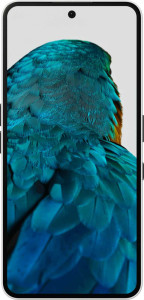
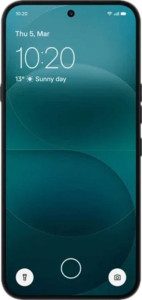
Nothing Phone (4a)
Nothing Phone (4a) Pro

Nothing Phone (4a) Nothing Phone (4a) Pro

Overview

Welcome to our in-depth specs comparison between the Nothing Phone (4a) and the Nothing Phone (4a) Pro. These two siblings share a surprising amount of DNA, yet diverge in meaningful ways across display performance, chipset capability, and a handful of design choices that could tip the scales for different types of users. Read on to discover exactly where each device pulls ahead.

Common Features

  • Both phones have an IP64 ingress protection rating and are water resistant.
  • Neither phone has a rugged build or can be folded.
  • Both phones feature an OLED/AMOLED display with a pixel density of 453 ppi and a resolution of 1260 x 2800 px.
  • Both phones have a touch sampling rate of 2500Hz and a typical brightness of 800 nits.
  • HDR10 and HDR10+ support is available on both phones.
  • Neither phone has branded damage-resistant glass.
  • Both phones come with 12GB of RAM and 256GB of internal storage.
  • Both phones use a 4 nm semiconductor and support 64-bit processing.
  • Integrated LTE and integrated graphics are present on both phones.
  • Both phones share the same triple camera setup with 50, 50, and 8 MP lenses and optical image stabilization.
  • Video recording on the main camera reaches 2160 x 30 fps on both phones.
  • Both phones run Android 16 and offer theme customization and the ability to block app tracking.
  • Both phones have location privacy options and camera/microphone privacy options.
  • Neither phone has Mail Privacy Protection or blocks cross-site tracking.
  • Both phones have a 5080 mAh battery with 50W fast charging, and neither supports wireless charging.
  • Neither phone comes with a charger in the box, and neither has a removable battery.
  • Both phones lack a 3.5mm audio jack but feature stereo speakers.
  • Both phones support 5G, Wi-Fi 6, Bluetooth 5.4, NFC, USB Type-C, and have a fingerprint scanner.
  • Neither phone has an external memory slot, and both use USB version 2.

Main Differences

  • The Nothing Phone (4a) weighs 205 g, while the Nothing Phone (4a) Pro weighs 210 g.
  • Thickness is 8.5 mm on the Nothing Phone (4a) and 7.9 mm on the Nothing Phone (4a) Pro.
  • The Nothing Phone (4a) is 77.5 mm wide, compared to 76.6 mm on the Nothing Phone (4a) Pro.
  • Screen size is 6.78″ on the Nothing Phone (4a) and 6.83″ on the Nothing Phone (4a) Pro.
  • The refresh rate is 120Hz on the Nothing Phone (4a) and 144Hz on the Nothing Phone (4a) Pro.
  • The Nothing Phone (4a) is powered by the Qualcomm Snapdragon 7s Gen 4, while the Nothing Phone (4a) Pro uses the Qualcomm Snapdragon 7 Gen 4.
  • CPU speed is 1 x 2.7 & 3 x 2.4 & 4 x 1.8 GHz on the Nothing Phone (4a) and 1 x 2.8 & 4 x 2.4 & 3 x 1.8 GHz on the Nothing Phone (4a) Pro.
  • GPU clock speed is 1050 MHz on the Nothing Phone (4a) and 1000 MHz on the Nothing Phone (4a) Pro.
  • RAM speed is 3200 MHz on the Nothing Phone (4a) and 4200 MHz on the Nothing Phone (4a) Pro.
  • Maximum memory bandwidth is 25.6 GB/s on the Nothing Phone (4a) and 33.6 GB/s on the Nothing Phone (4a) Pro.
  • Thermal Design Power (TDP) is 5W on the Nothing Phone (4a) and 6W on the Nothing Phone (4a) Pro.
  • eSIM support is present on the Nothing Phone (4a) Pro but not available on the Nothing Phone (4a), though both support 2 physical SIM cards.
Specs Comparison
Nothing Phone (4a)

Nothing Phone (4a)

Nothing Phone (4a) Pro

Nothing Phone (4a) Pro

Design:
water resistance Water resistant Water resistant
weight 205 g 210 g
thickness 8.5 mm 7.9 mm
width 77.5 mm 76.6 mm
height 163.9 mm 163.6 mm
volume 107.969125 cm³ 99.000904 cm³
Ingress Protection (IP) rating IP64 IP64
has a rugged build
can be folded

Both the Nothing Phone (4a) and the Nothing Phone (4a) Pro share a strong set of common design fundamentals: identical IP64 water and dust resistance, no ruggedized build, and nearly the same footprint in terms of height (163.9 mm vs 163.6 mm). For everyday use, IP64 means protection against splashes and light rain, which is adequate for most users — though it stops short of full submersion protection.

Where the two diverge is in their physical profile. The Pro is notably thinner at 7.9 mm versus the standard model's 8.5 mm, and also slightly narrower at 76.6 mm vs 77.5 mm. This translates into a meaningfully smaller overall volume — 99.0 cm³ compared to 108.0 cm³ — a difference of roughly 8%, which is perceptible in-hand and in a pocket. Interestingly, the Pro achieves this slimmer silhouette despite being 5 g heavier (210 g vs 205 g), suggesting denser internal components or materials.

On design, the Nothing Phone (4a) Pro has a clear edge for users who prioritize a sleeker, more compact feel — it is thinner, narrower, and occupies less space overall. The standard Phone (4a) counters with a marginally lighter weight, though the 5 g gap is unlikely to be felt in daily use. For those who value slim ergonomics, the Pro wins this category.

Display:
Display type OLED/AMOLED OLED/AMOLED
screen size 6.78" 6.83"
pixel density 453 ppi 453 ppi
resolution 1260 x 2800 px 1260 x 2800 px
refresh rate 120Hz 144Hz
touch sampling rate 2500Hz 2500Hz
brightness (typical) 800 nits 800 nits
has branded damage-resistant glass
supports HDR10
supports HDR10+
Always-On Display
supports Dolby Vision
contrast ratio 1000000:1 1000000:1
Has a secondary screen
has a touch screen

The two phones share a remarkably similar display foundation. Both use OLED/AMOLED panels with an identical 1260 x 2800 px resolution, landing at the same 453 ppi pixel density — sharp enough that individual pixels are indistinguishable at normal viewing distances. Add in a matching 1,000,000:1 contrast ratio, HDR10+ support, Always-On Display, and 800 nits typical brightness, and the two screens will look virtually identical in most everyday scenarios.

The single meaningful differentiator is the refresh rate. The Phone (4a) Pro steps up to 144Hz versus the standard model's 120Hz. In practice, 144Hz delivers slightly smoother scrolling and more fluid animations — a difference that is most noticeable in fast-paced gaming or rapid UI navigation, though it is subtle enough that casual users may not notice it at all. The screen size gap — 6.83″ on the Pro versus 6.78″ on the standard — is also real but marginal, amounting to a barely perceptible difference in content real estate.

The Nothing Phone (4a) Pro holds a narrow edge here, driven entirely by its higher refresh rate. For media consumption, productivity, or general use, both screens are functionally equivalent. The Pro's display advantage is most relevant to gamers or users who are particularly sensitive to motion smoothness — for everyone else, this category is effectively a tie.

Performance:
internal storage 256GB 256GB
RAM 12GB 12GB
Chipset (SoC) name Qualcomm Snapdragon 7s Gen 4 Qualcomm Snapdragon 7 Gen 4
CPU speed 1 x 2.7 & 3 x 2.4 & 4 x 1.8 GHz 1 x 2.8 & 4 x 2.4 & 3 x 1.8 GHz
GPU clock speed 1050 MHz 1000 MHz
Has integrated LTE
RAM speed 3200 MHz 4200 MHz
semiconductor size 4 nm 4 nm
Supports 64-bit
DirectX version DirectX 12 DirectX 12
Has integrated graphics
OpenGL ES version 3.2 3.2
Uses big.LITTLE technology
Has TrustZone
maximum memory bandwidth 25.6 GB/s 33.6 GB/s
OpenCL version 2 2
uses multithreading
Thermal Design Power (TDP) 5W 6W
DDR memory version 5 5

Scratch the surface and both phones look similar — 12GB of RAM, 256GB of storage, a shared 4nm manufacturing process, and DDR5 memory. But the chipset distinction is where the Pro pulls ahead meaningfully. The standard Phone (4a) runs a Snapdragon 7s Gen 4, while the Pro steps up to the Snapdragon 7 Gen 4 — the ″s″ suffix on the former signals a cost-optimized variant of the same generation, typically with reduced memory throughput and a trimmed CPU configuration.

The real-world gap shows up most clearly in memory performance. The Pro's RAM operates at 4200 MHz versus 3200 MHz on the standard model, and its maximum memory bandwidth reaches 33.6 GB/s compared to 25.6 GB/s — a 31% advantage. This translates to faster asset loading in games, snappier multitasking, and quicker large-file operations. The CPU configuration also slightly favors the Pro, with a higher peak core clock of 2.8 GHz and one more mid-range core. Interestingly, the standard model edges out the Pro in raw GPU clock speed (1050 MHz vs 1000 MHz), though the Pro's superior memory bandwidth largely offsets this in GPU-heavy workloads. The Pro's higher 6W TDP versus 5W indicates it can sustain greater performance headroom, at the cost of slightly more power draw under load.

The Nothing Phone (4a) Pro holds a clear performance advantage, driven by its faster memory subsystem and higher-tier chipset. For everyday tasks the gap may be modest, but users who push their phone with gaming, heavy multitasking, or demanding applications will notice the Pro's edge in sustained responsiveness.

Cameras:
megapixels (main camera) 50 & 50 & 8 MP 50 & 50 & 8 MP
wide aperture (main camera) 1.9 & 2.9 & 2f 1.9 & 2.9 & 2f
Has a dual-lens (or multi-lens) main camera
megapixels (front camera) 32MP 32MP
has built-in optical image stabilization
video recording (main camera) 2160 x 30 fps 2160 x 30 fps
Has a dual-tone LED flash
number of flash LEDs 1 1
has a BSI sensor
has a CMOS sensor
has continuous autofocus when recording movies
Has phase-detection autofocus for photos
supports slow-motion video recording
has a built-in HDR mode
has manual exposure
has a flash
optical zoom 3.5x 3.5x
has manual ISO
has a serial shot mode
has manual focus
pixel size (main camera) 1 & 0.64 & 1.12 µm 1 & 0.64 & 1.12 µm
has a front camera
Has laser autofocus
Shoots 360° panorama
has manual white balance
shoots raw
has touch autofocus
has manual shutter speed
can create panoramas in-camera
wide aperture (front camera) 2.2f 2.2f
Has timelapse function
Has a front-facing LED flash
has a dual-lens (or multi-lens) front camera
supports HDR10 recording
supports Dolby Vision recording
has a front-facing camera under the display
Has a RGB LED flash
has 3D photo/video recording capabilities

Rarely does a comparison come down so conclusively: every single camera specification provided for the Nothing Phone (4a) and the Nothing Phone (4a) Pro is identical. Both feature a triple-lens rear system at 50 & 50 & 8 MP with matching apertures, the same 3.5x optical zoom, OIS, phase-detection autofocus, and a 32MP front camera — right down to pixel sizes and video recording capability capped at 2160p at 30fps.

The shared feature set is competent for mid-range devices: OIS helps stabilize handheld shots and video, phase-detection autofocus ensures reliable subject locking, and the manual controls (ISO, exposure, focus, white balance) offer flexibility for users who like to shoot beyond auto mode. The absence of RAW shooting and a front-facing flash are the same limitation on both phones.

On cameras, this is an absolute tie. Based strictly on the provided specs, there is no basis to favor either model — a user choosing between these two phones should not let camera capability factor into their decision at all.

Operating system:
Android version Android 16 Android 16
has clipboard warnings
has location privacy options
has camera/microphone privacy options
has Mail Privacy Protection
has theme customization
can block app tracking
blocks cross-site tracking
has on-device machine learning
has notification permissions
has media picker
Can play games while they download
has dark mode
has Wi-Fi password sharing
has battery health check
has an extra dim mode
has focus modes
has dynamic theming
can offload apps
Has customizable notifications
has Live Text
has full-page screenshots
supports split screen
gets direct OS updates
has PiP
Can be used as a PC
Has sharing intents
has a child lock
Supports widgets
Is free and open source
Has offline voice recognition
has voice commands
Tracks the current position of a mobile device
is a multi-user system
has Quick Start

Much like the camera comparison, the operating system specs tell a story of complete parity. Both phones ship with Android 16 and carry an identical feature set across every single data point provided — from privacy controls (location, camera/microphone, app tracking) to usability features like split-screen, Picture-in-Picture, dynamic theming, and offline voice recognition.

The shared software package is well-rounded for the mid-range segment. Noteworthy inclusions are on-device machine learning, Live Text, full-page screenshots, and a battery health check — features that meaningfully enhance day-to-day usability. Neither phone gets direct OS updates, which is worth noting for users who prioritize long-term software support, though this limitation applies equally to both.

This category is a complete tie. Not a single software feature differentiates the two devices based on the provided data. Buyers making a decision between these two phones should look entirely to hardware differences — operating system experience will be indistinguishable between them.

Battery:
battery power 5080 mAh 5080 mAh
has wireless charging
Supports fast charging
charging speed 50W 50W
comes with a charger
has a removable battery
has a battery level indicator
has a rechargeable battery

Battery is yet another category where the two phones are spec-for-spec identical. Both pack a 5080 mAh cell — a healthy capacity for a mid-range device that should comfortably support a full day of mixed use for most users. Charging is handled at 50W on both, enabling reasonably quick top-ups without reaching the ultra-fast charging speeds found in flagship devices.

A few shared limitations are worth flagging equally for both phones: neither supports wireless charging, and neither comes bundled with a charger in the box. The absence of wireless charging is a notable omission for users who rely on charging pads, though it applies identically to both. The no-charger-in-box policy means buyers will need to source a compatible 50W USB adapter separately if they don't already own one.

There is no basis to favor either phone on battery — this is a complete tie across every provided metric. Differences in real-world battery life between the two will be determined by other factors such as the display refresh rate and chipset efficiency, which fall under separate specification groups.

Audio:
has a socket for a 3.5 mm audio jack
has stereo speakers
has aptX
has LDAC
has aptX HD
has aptX Adaptive
has aptX Lossless
Has a radio
number of microphones 2 2

Audio is a clean sweep of identical specs. Both the Nothing Phone (4a) and the Phone (4a) Pro feature stereo speakers, a dual-microphone setup, no 3.5mm headphone jack, and no support for any high-resolution Bluetooth audio codec — no aptX, no LDAC, no aptX Adaptive or Lossless. For wireless audio enthusiasts, the absence of these codecs means Bluetooth playback is limited to standard quality, which may disappoint users with hi-res wireless headphones that rely on LDAC or aptX HD.

The stereo speaker setup is a solid baseline for media consumption, and the dual-microphone configuration supports adequate voice capture for calls and recordings. The lack of a headphone jack is a shared trade-off that pushes users toward Bluetooth or USB-C audio adapters — again, equally on both devices.

This category is a complete tie with no differentiating factors between the two phones. Audio hardware and capabilities are indistinguishable based on the provided data, and neither model holds any advantage here.

Connectivity & Features:
release date March 2026 March 2026
has 5G support
Wi-Fi version Wi-Fi 4 (802.11n), Wi-Fi 5 (802.11ac), Wi-Fi 6 (802.11ax) Wi-Fi 4 (802.11n), Wi-Fi 5 (802.11ac), Wi-Fi 6 (802.11ax)
SIM cards 2 SIM 2 SIM, 1 eSIM
Bluetooth version 5.4 5.4
has an external memory slot
Has USB Type-C
USB version 2 2
has NFC
Has a fingerprint scanner
has emergency SOS via satellite
has crash detection
is DLNA-certified
has a gyroscope
supports ANT+
Has a heart rate monitor
has GPS
has a compass
supports Wi-Fi
Has an infrared sensor
has an accelerometer
has a cellular module
Has a barometer
has an HDMI output
Uses 3D facial recognition
Has an iris scanner
Stylus included
supports Galileo
Has motion tracking
Has optical tracking
Has a built-in projector

Across the broad connectivity landscape, these two phones are nearly identical. Both support 5G, Wi-Fi 6, Bluetooth 5.4, NFC, GPS with Galileo, and USB Type-C — a well-rounded mid-range feature set. The sensor suite is equally matched, covering the essentials: gyroscope, accelerometer, compass, and fingerprint scanner. Neither device supports more niche additions like a barometer, infrared sensor, or ANT+.

The sole differentiator in this entire category is SIM flexibility. The Nothing Phone (4a) supports dual physical SIM only, while the Phone (4a) Pro adds eSIM support alongside its two physical SIM slots. This is a genuinely practical advantage: eSIM allows users to activate a carrier plan digitally without a physical card, which is particularly useful for travelers who want to add a local data plan abroad, or for users who want to maintain a personal and work number without carrying two phones.

The Nothing Phone (4a) Pro takes a narrow but meaningful edge here thanks to its eSIM support. For users who never need eSIM functionality, the two phones are effectively tied in this category — but for frequent travelers or dual-line users, the Pro's added flexibility is a real-world advantage the standard model simply cannot match.

Miscellaneous:
has a video light
Has sapphire glass display
Has a curved display
Has an e-paper display

The miscellaneous category offers very little to analyze — all four provided data points are identical across both phones. Both include a video light, and neither features a sapphire glass display, curved display, or e-paper display. This is a complete tie with no differentiating factors whatsoever.

Comparison Summary & Verdict

After a thorough comparison, both phones prove to be closely matched mid-range contenders. The Nothing Phone (4a) stands out with its slimmer 8.5 mm profile and lighter 205 g frame, making it the more comfortable daily carry. The Nothing Phone (4a) Pro, however, counters with a 144Hz refresh rate versus 120Hz, a faster Qualcomm Snapdragon 7 Gen 4 chipset, significantly higher RAM speed of 4200 MHz, and greater maximum memory bandwidth of 33.6 GB/s. It also adds eSIM support for added connectivity flexibility. Cameras, battery, audio, and software are identical across both models. Choose the Nothing Phone (4a) if you value a lighter, thinner form factor at a likely lower price. Opt for the Nothing Phone (4a) Pro if smoother visuals, stronger sustained performance, and eSIM compatibility are priorities.

Nothing Phone (4a)
Buy Nothing Phone (4a) if...

Buy the Nothing Phone (4a) if you prefer a lighter and slimmer phone, and do not need eSIM support or a 144Hz display.

Nothing Phone (4a) Pro
Buy Nothing Phone (4a) Pro if...

Buy the Nothing Phone (4a) Pro if you want a smoother 144Hz display, faster RAM, greater memory bandwidth, a more powerful chipset, and eSIM support.