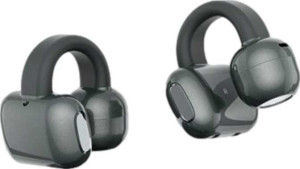
Nubia LiveClip
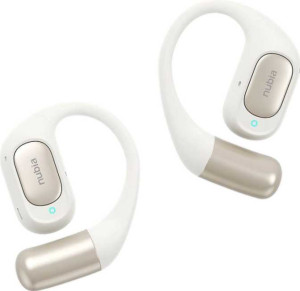
Nubia LiveFlip

Nubia LiveClip Nubia LiveFlip

Overview

Welcome to our in-depth comparison of the Nubia LiveClip and the Nubia LiveFlip — two open-ear, wireless earbuds that share a strong common foundation yet diverge in several meaningful ways. In this head-to-head, we put both models under the microscope, examining key battlegrounds such as battery endurance, driver unit size, and microphone capability to help you determine which earbud is the right fit for your everyday needs.

Common Features

  • Both products have an open-ear fit.
  • Neither product has wires or cables.
  • Neither product is a neckband earbud.
  • Neither product has RGB lighting.
  • Both products have stereo speakers.
  • Neither product has a UV light.
  • Neither product has a display.
  • Neither product has active noise cancellation (ANC).
  • Neither product has passive noise reduction.
  • Both products have a lowest frequency of 20 Hz.
  • Both products have a highest frequency of 20000 Hz.
  • Neither product supports spatial audio.
  • Neither product has Dolby Atmos.
  • Neither product has Dirac Virtuo.
  • Neither product has a neodymium magnet.
  • Neither product has wireless charging.
  • Neither product has a solar power battery.
  • Both products have a battery level indicator.
  • Both products have a rechargeable battery.
  • Neither product has fast pairing.
  • Both products have USB Type-C connectivity.
  • Both products use Bluetooth version 5.4.
  • Neither product has LDAC support.
  • Neither product has LDHC support.
  • Neither product has Bluetooth LE Audio support.
  • Neither product has aptX Adaptive support.
  • Neither product has aptX Low Latency support.
  • Neither product has an ambient sound mode.
  • Both products support fast charging.
  • Neither product can read notifications.
  • Both products have a mute function.
  • Both products can be used as a headset.
  • Both products have a control panel placed on the device.
  • Both products have voice prompts.
  • A travel bag is included with both products.
  • Both products have a noise-canceling microphone.

Main Differences

  • Wingtips are included with the Nubia LiveFlip but not with the Nubia LiveClip.
  • The driver unit size is 10 mm on the Nubia LiveClip and 15 mm on the Nubia LiveFlip.
  • Battery life is 5 hours on the Nubia LiveClip and 10 hours on the Nubia LiveFlip.
  • Battery life of the charging case is 15 hours on the Nubia LiveClip and 30 hours on the Nubia LiveFlip.
  • Charge time is 1 hour on the Nubia LiveClip and 1.5 hours on the Nubia LiveFlip.
  • The number of microphones is 0 on the Nubia LiveClip and 4 on the Nubia LiveFlip.
Specs Comparison
Nubia LiveClip

Nubia LiveClip

Nubia LiveFlip

Nubia LiveFlip

Design:
Fit Open-ear Open-ear
has no wires or cables
are neckband earbuds
wingtips included
has RGB lighting
has stereo speakers
has UV light
Has a display

Both the Nubia LiveClip and Nubia LiveFlip share a fundamentally similar design philosophy: open-ear, fully wireless form factors with no neckband, no RGB lighting, no display, and stereo speaker output. For users, this means both are designed for ambient awareness and a cable-free experience, with comparable core aesthetics and feature parity on most fronts.

The one meaningful differentiator in this group is that the LiveFlip includes wingtips while the LiveClip does not. Wingtips are small ear hooks or fins that anchor the earbuds more securely during movement, which matters considerably for active users or those with ears that struggle to retain open-ear earbuds. The LiveClip's lack of wingtips suggests it relies entirely on its fit geometry to stay in place, which may be sufficient for casual, stationary use but could be a concern during exercise or commuting.

Edge: The Nubia LiveFlip holds a modest but practical design advantage for users who prioritize fit security, thanks to its included wingtips. For sedentary or light-use scenarios, both products are effectively equivalent in design.

Sound quality:
has active noise cancellation (ANC)
has passive noise reduction
driver unit size 10 mm 15 mm
lowest frequency 20 Hz 20 Hz
highest frequency 20000 Hz 20000 Hz
supports spatial audio
has Dolby Atmos
has Dirac Virtuo
has a neodymium magnet

On noise isolation, both the LiveClip and LiveFlip offer identical — and notably absent — protection: no ANC and no passive noise reduction. As open-ear designs, this is expected, but it confirms that neither device is suited for loud environments where audio immersion matters. Users should go in with calibrated expectations.

The single standout differentiator here is driver size. The LiveFlip sports a 15 mm driver versus the LiveClip's 10 mm unit. In general, a larger driver moves more air, which tends to translate into stronger bass response and greater overall loudness potential — a meaningful gap in a category where both products share the same 20 Hz–20,000 Hz frequency range on paper. That said, driver size alone does not guarantee superior sound tuning; however, in the absence of any other distinguishing audio hardware — no spatial audio, no Dolby Atmos, no neodymium magnets on either side — it becomes the primary technical indicator of sonic capability.

Edge: The Nubia LiveFlip has a clear advantage in this group. Its larger driver is the only meaningful differentiator and, all else being equal, gives it a stronger foundation for richer, fuller sound reproduction compared to the LiveClip.

Power:
Battery life 5 hours 10 hours
Battery life of charging case 15 hours 30 hours
charge time 1 hours 1.5 hours
has wireless charging
Has a solar power battery
has a battery level indicator
has a rechargeable battery

Battery life is where the gap between these two products becomes impossible to ignore. The LiveFlip delivers 10 hours of continuous playback versus the LiveClip's 5 hours — exactly double. Combined with their respective charging cases, the LiveFlip's total system endurance reaches 30 hours compared to the LiveClip's 15 hours. For practical purposes, the LiveFlip can comfortably handle full-day use and multi-day travel without hunting for a power outlet, while the LiveClip is better suited to shorter, more predictable listening sessions.

The trade-off comes at charging time. The LiveFlip takes 1.5 hours to recharge versus the LiveClip's faster 1 hour. Given the LiveFlip's significantly larger battery reserves, this is a minor concession rather than a real inconvenience — users simply charge less frequently. Neither product supports wireless charging, and both feature a battery level indicator, so awareness of remaining charge is equally accessible on either device.

Edge: The Nubia LiveFlip wins this category decisively. Across every endurance metric — earbud runtime, case capacity, and total system life — it doubles the LiveClip's figures. The slightly longer charge time is a negligible trade-off for users who value sustained, uninterrupted listening.

Connectivity:
has fast pairing
Has USB Type-C
Bluetooth version 5.4 5.4
has LDAC
has LDHC
has Bluetooth LE Audio
has aptX Adaptive
has aptX Low Latency
has aptX HD
has aptX
has aptX Lossless
has aptX Voice
has Auracast
maximum Bluetooth range 10 m 10 m
supports Bluetooth pairing using NFC
Can be used wirelessly
has AAC

Connectivity is a clean tie between these two devices — every single spec in this group is identical. Both run Bluetooth 5.4, a modern version that brings improvements in connection stability, reduced latency, and energy efficiency over older iterations. Both are capped at a 10 m maximum range, which is standard for consumer earbuds and sufficient for typical use within the same room as a source device.

Worth noting is what neither product offers: no LDAC, no aptX variants, no AAC, and no Bluetooth LE Audio. This means audio transmission relies on the standard SBC codec by default, which is adequate for casual listening but falls short of the higher-fidelity streaming that codecs like LDAC or aptX HD can deliver. Audiophiles or users pairing with high-resolution audio sources should factor this in. Both products do include USB Type-C for wired charging, which is a practical modern standard.

Verdict: This group is a complete tie. There is no connectivity advantage on either side — users choosing between the LiveClip and LiveFlip will experience an identical wireless feature set and the same codec limitations regardless of which model they pick.

Features:
release date January 2025 January 2025
has ambient sound mode
Supports fast charging
can read notifications
has a mute function
can be used as a headset
control panel placed on a device
Has voice prompts
travel bag is included
Has an in-line control panel
Has a temperature sensor
Has a built-in camera remote control function

Much like connectivity, the features category yields no differentiators whatsoever — the LiveClip and LiveFlip are spec-for-spec identical across every data point here. Both support fast charging, which pairs well with the charging times noted in the power specs and means short top-up sessions can meaningfully extend usability. Both function as headsets for calls, include on-device controls, offer voice prompts, and ship with a travel bag — a small but appreciated inclusion for portability.

The mute function is a practical addition for call users, and the on-device control panel means users are not dependent on a companion app or inline remote to manage playback and calls. Notably, neither product offers ambient sound mode, notification readout, or any smart sensor features, which positions both firmly as straightforward, no-frills audio accessories rather than feature-rich wearables.

Verdict: This is another complete tie. Every feature present on one is present on the other, and every omission is equally shared. Users prioritizing a specific feature from this group will find no reason to choose one model over the other.

Microphone:
number of microphones 0 4
has a noise-canceling microphone

Microphone hardware is where a striking and unusual contrast emerges. The LiveFlip is equipped with 4 microphones, a multi-mic array that enables more sophisticated beamforming and noise-canceling algorithms — resulting in cleaner voice pickup during calls, particularly in noisy environments. More microphones give the system more reference points to isolate the speaker's voice from ambient sound, which is a meaningful real-world advantage for anyone who takes frequent calls or uses voice assistants.

The LiveClip's specs, however, present an internal inconsistency: it is listed with 0 microphones yet also flagged as having a noise-canceling microphone. Taken strictly at face value from the provided data, no conclusion can be drawn about the LiveClip's actual call performance — the figures conflict and cannot be reconciled without additional information.

Edge: Based solely on the available data, the Nubia LiveFlip holds a clear and unambiguous advantage here. Its 4-microphone setup is a well-defined hardware asset for call quality and voice clarity. The LiveClip's microphone specification is too contradictory to assess confidently, which itself is a reason for caution for call-focused buyers.

Comparison Summary & Verdict

Having reviewed every available specification, the Nubia LiveClip and Nubia LiveFlip emerge as two distinct takes on the same open-ear wireless formula. Both deliver Bluetooth 5.4 connectivity, USB-C charging, fast charging support, a mute function, and a travel bag — making either a capable daily companion. Yet the differences are decisive: the Nubia LiveFlip pulls ahead with a larger 15 mm driver, double the battery life at 10 hours (30 hours with its charging case), four noise-canceling microphones, and included wingtips for added stability. The Nubia LiveClip counters with a quicker 1-hour charge time and a leaner, more minimal design. If call clarity and listening endurance are your top priorities, the LiveFlip is the clear choice; if you value faster recharging and simplicity, the LiveClip is a perfectly solid option.

Nubia LiveClip
Buy Nubia LiveClip if...

Buy the Nubia LiveClip if you prioritize a faster 1-hour charge time and prefer a streamlined open-ear earbud experience without wingtips or extra microphones.

Nubia LiveFlip
Buy Nubia LiveFlip if...

Buy the Nubia LiveFlip if you need longer battery life, a larger 15 mm driver for fuller sound, and four microphones for reliable call and voice performance.