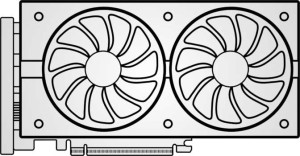
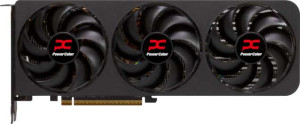
Much of this feature set is shared ground — both cards support ray tracing, multi-display output across up to 4 displays, OpenGL 4.6, and neither imposes hash-rate limiting. The meaningful divergences, however, are worth examining carefully. The RTX 5060 Ti supports DirectX 12 Ultimate, an extended feature tier above the standard DirectX 12 found on the RX 9070. DirectX 12 Ultimate mandates hardware support for features like mesh shaders and variable rate shading at a guaranteed level, which can matter for forward-looking titles that target the Ultimate feature set explicitly.
The single largest practical differentiator in this group is upscaling: the RTX 5060 Ti supports DLSS, Nvidia's AI-driven upscaling technology, while the RX 9070 does not — at least not natively. DLSS has broad adoption in modern games and can deliver meaningful frame rate uplift with minimal perceived quality loss, making it a significant real-world advantage for gaming workloads. The RX 9070's comparable technology, AMD's FSR, is not listed in the provided specs and cannot be considered here. On the compute side, the 5060 Ti also carries a newer OpenCL 3 implementation versus the RX 9070's OpenCL 2.2, which may benefit certain GPU compute applications that target newer OpenCL features.
Each card uses its respective platform's memory access optimization — Intel Resizable BAR on the 5060 Ti and AMD SAM on the RX 9070 — both serving the same purpose of allowing the CPU broader access to GPU memory for potential performance gains. These are functionally equivalent in intent. Overall, the RTX 5060 Ti holds a feature advantage in this group, driven primarily by its DLSS support and the broader DirectX 12 Ultimate compliance.