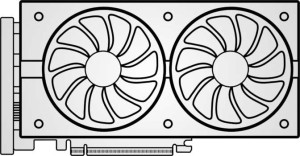
Nvidia GeForce RTX 5060 Ti 8GB
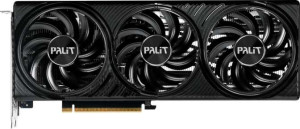
Palit GeForce RTX 5060 Ti Infinity 3 16GB

Nvidia GeForce RTX 5060 Ti 8GB Palit GeForce RTX 5060 Ti Infinity 3 16GB

Common Features

  • GPU memory speed is 1750 MHz on both products.
  • The number of shading units is 4608 on both products.
  • Texture mapping units are 144 on both products.
  • Render output units are 48 on both products.
  • Double precision floating point support is available on both products.
  • Effective memory speed is 28000 MHz on both products.
  • Maximum memory bandwidth is 448 GB per second on both products.
  • The GDDR version used is GDDR7 on both products.
  • Memory bus width is 128-bit on both products.
  • ECC memory support is available on both products.
  • DirectX version support is DirectX 12 Ultimate on both products.
  • Ray tracing support is available on both products.
  • Each product includes one HDMI output using HDMI version 2.1b.
  • The GPU architecture is Blackwell on both products.
  • Thermal Design Power is 180 watts on both products.

Main Differences

  • GPU clock speed is 2410 MHz on Nvidia GeForce RTX 5060 Ti 8GB and 2407 MHz on Palit GeForce RTX 5060 Ti Infinity 3 16GB.
  • GPU turbo speed is 2570 MHz on Nvidia GeForce RTX 5060 Ti 8GB and 2572 MHz on Palit GeForce RTX 5060 Ti Infinity 3 16GB.
  • Pixel rate is 123.4 GPixel per second on Nvidia GeForce RTX 5060 Ti 8GB and 123.5 GPixel per second on Palit GeForce RTX 5060 Ti Infinity 3 16GB.
  • Floating-point performance is 23.69 TFLOPS on Nvidia GeForce RTX 5060 Ti 8GB and 23.7 TFLOPS on Palit GeForce RTX 5060 Ti Infinity 3 16GB.
  • Texture rate is 370.1 GTexels per second on Nvidia GeForce RTX 5060 Ti 8GB and 370.4 GTexels per second on Palit GeForce RTX 5060 Ti Infinity 3 16GB.
  • VRAM capacity is 8GB on Nvidia GeForce RTX 5060 Ti 8GB and 16GB on Palit GeForce RTX 5060 Ti Infinity 3 16GB.
Specs Comparison
Nvidia GeForce RTX 5060 Ti 8GB

Nvidia GeForce RTX 5060 Ti 8GB

Palit GeForce RTX 5060 Ti Infinity 3 16GB

Palit GeForce RTX 5060 Ti Infinity 3 16GB

Performance:
GPU clock speed 2410 MHz 2407 MHz
GPU turbo 2570 MHz 2572 MHz
pixel rate 123.4 GPixel/s 123.5 GPixel/s
floating-point performance 23.69 TFLOPS 23.7 TFLOPS
texture rate 370.1 GTexels/s 370.4 GTexels/s
GPU memory speed 1750 MHz 1750 MHz
shading units 4608 4608
texture mapping units (TMUs) 144 144
render output units (ROPs) 48 48
Has Double Precision Floating Point (DPFP)

Both the Nvidia GeForce RTX 5060 Ti 8GB and the Palit GeForce RTX 5060 Ti Infinity 3 16GB feature similar core specifications. The GPU clock speeds are quite close, with the Nvidia card running at 2410 MHz, slightly ahead of the Palit at 2407 MHz. The turbo boost speeds also show a minimal difference, with the Nvidia reaching 2570 MHz and the Palit at 2572 MHz. The pixel rates are nearly identical as well, with the Nvidia card at 123.4 GPixel/s and the Palit just edging it out with 123.5 GPixel/s.

Floating-point performance is another area where the two products are almost identical, with the Nvidia offering 23.69 TFLOPS and the Palit providing 23.7 TFLOPS. Both cards have a texture rate of around 370 GTexels/s, with the Nvidia at 370.1 GTexels/s and the Palit at 370.4 GTexels/s. Their GPU memory speeds are also the same at 1750 MHz.

In terms of other architectural features, both cards come with 4608 shading units, 144 texture mapping units (TMUs), and 48 render output units (ROPs). Additionally, both models support Double Precision Floating Point (DPFP), ensuring compatibility with high-precision calculations. The most notable difference is in the amount of VRAM, where the Palit card offers 16GB, doubling the 8GB of the Nvidia card, but this comparison focuses strictly on performance, so that doesn’t directly influence the specs discussed here.

Memory:
effective memory speed 28000 MHz 28000 MHz
maximum memory bandwidth 448 GB/s 448 GB/s
VRAM 8GB 16GB
GDDR version GDDR7 GDDR7
memory bus width 128-bit 128-bit
Supports ECC memory

Both the Nvidia GeForce RTX 5060 Ti 8GB and the Palit GeForce RTX 5060 Ti Infinity 3 16GB share the same memory architecture. Both cards have an effective memory speed of 28000 MHz and a maximum memory bandwidth of 448 GB/s. They also use GDDR7 memory, and both have a 128-bit memory bus width, ensuring similar data transfer rates and memory performance.

However, the key difference lies in the amount of VRAM. The Nvidia card comes with 8GB of VRAM, while the Palit card offers 16GB of VRAM, which is double the amount of the Nvidia card. This could impact memory-intensive tasks, though this comparison is focused on the specifications provided.

Additionally, both cards support ECC memory, which enhances data integrity and reliability by correcting minor errors in memory, a feature useful for certain professional applications.

Features:
DirectX version DirectX 12 Ultimate DirectX 12 Ultimate
OpenGL version 4.6 4.6
OpenCL version 3 3
Supports multi-display technology
supports ray tracing
Supports 3D
supports DLSS
has XeSS (XMX)
AMD SAM / Intel Resizable BAR Intel Resizable BAR Intel Resizable BAR
has LHR
has RGB lighting
supported displays 4 4

The Nvidia GeForce RTX 5060 Ti 8GB and the Palit GeForce RTX 5060 Ti Infinity 3 16GB share identical features across the board. Both cards support DirectX 12 Ultimate, OpenGL 4.6, and OpenCL 3, providing full compatibility with the latest graphics APIs. They also both support multi-display technology, ray tracing, 3D, and DLSS, ensuring high-quality visual performance and smooth gaming experiences. Additionally, neither card supports XeSS (XMX), and both are equipped with Intel Resizable BAR (AMD SAM is not mentioned for either). Neither card includes RGB lighting, and both are free from LHR restrictions.

Each card is capable of supporting up to 4 displays, offering flexibility for multi-monitor setups.

Ports:
has an HDMI output
HDMI ports 1 1
HDMI version HDMI 2.1b HDMI 2.1b
DisplayPort outputs 3 3
USB-C ports 0 0
DVI outputs 0 0
mini DisplayPort outputs 0 0

The Nvidia GeForce RTX 5060 Ti 8GB and the Palit GeForce RTX 5060 Ti Infinity 3 16GB offer the same set of port features. Both cards include an HDMI 2.1b output with 1 HDMI port. They also provide 3 DisplayPort outputs, but neither has any USB-C, DVI, or mini DisplayPort outputs. This makes their port configurations identical in terms of available connectivity options.

Both products support HDMI 2.1b, which ensures compatibility with high-resolution displays and advanced features like variable refresh rates.

General info:
GPU architecture Blackwell Blackwell
release date April 2025 April 2025
Thermal Design Power (TDP) 180W 180W
PCI Express (PCIe) version 5 5
semiconductor size 5 nm 5 nm
number of transistors 21900 million 21900 million
Has air-water cooling

Both the Nvidia GeForce RTX 5060 Ti 8GB and the Palit GeForce RTX 5060 Ti Infinity 3 16GB share the same general specifications. They both utilize the Blackwell GPU architecture, ensuring a similar foundation for performance. Each card has a Thermal Design Power (TDP) of 180W, indicating the power consumption and cooling requirements are the same for both models. Additionally, both cards use PCI Express version 5 for high-speed connectivity with the motherboard.

Both products are built using a 5 nm semiconductor process and contain 21,900 million transistors, which reflects their advanced and efficient design.

Neither card includes air-water cooling, meaning both rely on traditional air cooling solutions for managing temperature.

Comparison Summary

This specification comparison between Nvidia GeForce RTX 5060 Ti 8GB and Palit GeForce RTX 5060 Ti Infinity 3 16GB highlights shared and differing features. Both GPUs have GPU memory speed of 1750 MHz, 4608 shading units, GDDR7 memory with 128-bit bus width, and DirectX 12 Ultimate support. Differences include GPU clock speed of 2410 MHz versus 2407 MHz, GPU turbo of 2570 MHz versus 2572 MHz, floating-point performance of 23.69 TFLOPS versus 23.7 TFLOPS, texture rate of 370.1 GTexels/s versus 370.4 GTexels/s, and VRAM capacity of 8GB versus 16GB, comparing Nvidia GeForce RTX 5060 Ti 8GB and Palit GeForce RTX 5060 Ti Infinity 3 16GB respectively.