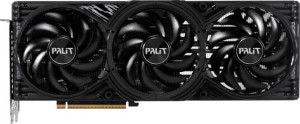
At first glance, the RTX 5060 Ti 8GB appears competitive on clock speeds, running a base of 2410 MHz and boosting to 2570 MHz, versus the RTX 5070 Ti GamingPro-S at 2295 MHz base and 2452 MHz boost. However, raw clock speed is only one dimension of GPU performance — and it is precisely where the 5060 Ti's advantage ends. Clock speed matters far less when the underlying hardware is significantly narrower, and that is the defining story of this comparison.
The 5070 Ti GamingPro-S nearly doubles the 5060 Ti across every throughput metric that drives real-world rendering workloads. With 8960 shading units versus 4608, 280 TMUs versus 144, and 96 ROPs versus 48, the 5070 Ti GamingPro-S fields roughly twice the parallel processing muscle. This directly translates into its 43.94 TFLOPS of floating-point performance — nearly 85% more than the 5060 Ti's 23.69 TFLOPS — and a pixel fill rate of 235.4 GPixel/s versus 123.4 GPixel/s. In practice, this gap means the 5070 Ti can push higher resolutions, sustain higher framerates under demanding scenes, and handle geometry-heavy or compute-intensive workloads far more comfortably. The memory speed is identical at 1750 MHz for both, and both support Double Precision Floating Point, so neither card holds an edge there.
The RTX 5070 Ti GamingPro-S holds a commanding and unambiguous performance advantage in this group. Despite the 5060 Ti's modest clock speed lead, the 5070 Ti's substantially larger shader and rasterization architecture produces throughput figures that are roughly twice as high across the board. For users prioritizing raw GPU horsepower — whether for high-resolution gaming, 3D rendering, or GPU compute tasks — the 5070 Ti GamingPro-S is the clear winner based on these specs alone.