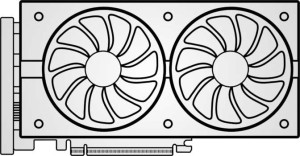
Nvidia GeForce RTX 5060 Ti 8GB
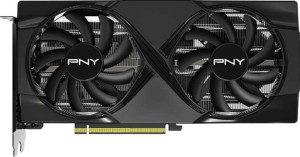
PNY GeForce RTX 5060 Ti OC Dual Fan 16GB

Nvidia GeForce RTX 5060 Ti 8GB PNY GeForce RTX 5060 Ti OC Dual Fan 16GB

Overview

Choosing between the Nvidia GeForce RTX 5060 Ti 8GB and the PNY GeForce RTX 5060 Ti OC Dual Fan 16GB is not straightforward. Both cards are rooted in the same Blackwell architecture and share a 180W TDP, yet they diverge in ways that could matter greatly depending on your use case. This head-to-head comparison examines their VRAM capacity, boost clock speeds, floating-point performance, and texture throughput to help you determine which card truly fits your needs.

Common Features

  • GPU memory speed is 1750 MHz on both products.
  • Both products have 4608 shading units.
  • Both products have 144 texture mapping units (TMUs).
  • Both products have 48 render output units (ROPs).
  • Double Precision Floating Point (DPFP) is supported on both products.
  • Effective memory speed is 28000 MHz on both products.
  • Maximum memory bandwidth is 448 GB/s on both products.
  • Both products use GDDR7 memory.
  • Memory bus width is 128-bit on both products.
  • ECC memory is supported on both products.
  • Both products support DirectX 12 Ultimate.
  • OpenGL version is 4.6 on both products.
  • OpenCL version is 3 on both products.
  • Multi-display technology is supported on both products.
  • Ray tracing is supported on both products.
  • 3D support is available on both products.
  • DLSS is supported on both products.
  • XeSS (XMX) is not available on either product.
  • Both products have 1 HDMI port with HDMI 2.1b.
  • Both products have 3 DisplayPort outputs and no USB-C, DVI, or mini DisplayPort outputs.
  • Both products are based on the Blackwell GPU architecture.
  • Thermal Design Power (TDP) is 180W on both products.
  • Both products use PCIe version 5.
  • Semiconductor size is 5 nm on both products.
  • Both products have 21900 million transistors.
  • Air-water cooling is not available on either product.

Main Differences

  • GPU clock speed is 2410 MHz on Nvidia GeForce RTX 5060 Ti 8GB and 2407 MHz on PNY GeForce RTX 5060 Ti OC Dual Fan 16GB.
  • GPU turbo speed is 2570 MHz on Nvidia GeForce RTX 5060 Ti 8GB and 2692 MHz on PNY GeForce RTX 5060 Ti OC Dual Fan 16GB.
  • Pixel rate is 123.4 GPixel/s on Nvidia GeForce RTX 5060 Ti 8GB and 129.2 GPixel/s on PNY GeForce RTX 5060 Ti OC Dual Fan 16GB.
  • Floating-point performance is 23.69 TFLOPS on Nvidia GeForce RTX 5060 Ti 8GB and 24.81 TFLOPS on PNY GeForce RTX 5060 Ti OC Dual Fan 16GB.
  • Texture rate is 370.1 GTexels/s on Nvidia GeForce RTX 5060 Ti 8GB and 387.6 GTexels/s on PNY GeForce RTX 5060 Ti OC Dual Fan 16GB.
  • VRAM is 8GB on Nvidia GeForce RTX 5060 Ti 8GB and 16GB on PNY GeForce RTX 5060 Ti OC Dual Fan 16GB.
Specs Comparison
Nvidia GeForce RTX 5060 Ti 8GB

Nvidia GeForce RTX 5060 Ti 8GB

PNY GeForce RTX 5060 Ti OC Dual Fan 16GB

PNY GeForce RTX 5060 Ti OC Dual Fan 16GB

Performance:
GPU clock speed 2410 MHz 2407 MHz
GPU turbo 2570 MHz 2692 MHz
pixel rate 123.4 GPixel/s 129.2 GPixel/s
floating-point performance 23.69 TFLOPS 24.81 TFLOPS
texture rate 370.1 GTexels/s 387.6 GTexels/s
GPU memory speed 1750 MHz 1750 MHz
shading units 4608 4608
texture mapping units (TMUs) 144 144
render output units (ROPs) 48 48
Has Double Precision Floating Point (DPFP)

At their core, these two cards share the same fundamental GPU silicon: identical 4608 shading units, 144 TMUs, and 48 ROPs, along with matching memory speeds of 1750 MHz. This means any performance difference between them is not architectural — it comes entirely from how aggressively each card is clocked. The base clocks are virtually indistinguishable (2410 MHz vs 2407 MHz), so the real story is in the boost.

The PNY OC 16GB carries a noticeably higher GPU turbo clock of 2692 MHz versus 2570 MHz on the reference-clocked 8GB model — a gap of 122 MHz, or roughly 4.7% higher. Because throughput metrics scale directly with clock speed on identical silicon, this boost advantage flows through uniformly: the PNY leads in floating-point performance (24.81 vs 23.69 TFLOPS), texture rate (387.6 vs 370.1 GTexels/s), and pixel rate (129.2 vs 123.4 GPixel/s) by that same ~4.7% margin. In practice, this translates to a modest but consistent frame rate advantage in GPU-bound scenarios — not a generational leap, but a real, measurable edge.

On raw performance for this spec group, the PNY OC 16GB holds a clear advantage, driven entirely by its higher factory boost clock. Both cards support Double Precision Floating Point, so neither has a unique compute credential here. If clock-for-clock throughput is your deciding factor, the PNY OC variant is the faster card of the two.

Memory:
effective memory speed 28000 MHz 28000 MHz
maximum memory bandwidth 448 GB/s 448 GB/s
VRAM 8GB 16GB
GDDR version GDDR7 GDDR7
memory bus width 128-bit 128-bit
Supports ECC memory

The memory subsystem of these two cards is built on an identical foundation: both use GDDR7 memory running at an effective 28000 MHz across a 128-bit bus, delivering the same peak bandwidth of 448 GB/s. That means neither card has a speed or throughput edge over the other — the pipeline moves data at exactly the same rate.

The sole but significant differentiator is capacity: 8GB of VRAM on the Nvidia reference card versus 16GB on the PNY OC. This distinction matters more than it might appear on a spec sheet. As modern games, AI-assisted rendering features, and high-resolution texture packs increasingly push beyond the 8GB threshold, a card with only 8GB can run into memory pressure — forcing assets to spill into slower system RAM and causing stuttering or texture pop-in that no amount of GPU clock speed can compensate for. The 16GB variant effectively future-proofs the card against this ceiling.

For memory, the PNY OC 16GB has a decisive advantage. Users targeting 1440p or 4K gaming with high-fidelity assets, or those using the card for memory-intensive workloads like AI inference or 3D rendering, will find the extra headroom genuinely impactful — not a marketing footnote.

Features:
DirectX version DirectX 12 Ultimate DirectX 12 Ultimate
OpenGL version 4.6 4.6
OpenCL version 3 3
Supports multi-display technology
supports ray tracing
Supports 3D
supports DLSS
has XeSS (XMX)
AMD SAM / Intel Resizable BAR Intel Resizable BAR Intel Resizable BAR
has LHR
has RGB lighting
supported displays 4 4

Every single feature in this group is a perfect match between the two cards. Both support DirectX 12 Ultimate — the current gold standard for gaming APIs, enabling hardware ray tracing, mesh shaders, and variable rate shading in compatible titles. They also share ray tracing support and DLSS, Nvidia's AI-driven upscaling technology, which is arguably one of the most practically valuable features on any modern GeForce card, allowing higher effective resolutions with a lower performance cost.

Neither card supports XeSS, which is an Intel-specific upscaling technology and not a meaningful omission for Nvidia hardware. Both include Intel Resizable BAR, which allows the CPU to access the full GPU frame buffer simultaneously — a feature that can yield noticeable performance gains in supported games at no extra cost. Multi-display support up to 4 simultaneous displays is also shared, making both equally capable for productivity or multi-monitor gaming setups.

This group is a complete tie. There is no feature available on one card that is absent from the other. The choice between these two products cannot be influenced by software capabilities or API support — buyers should weigh their decision entirely on the performance and memory differences covered in the other spec groups.

Ports:
has an HDMI output
HDMI ports 1 1
HDMI version HDMI 2.1b HDMI 2.1b
DisplayPort outputs 3 3
USB-C ports 0 0
DVI outputs 0 0
mini DisplayPort outputs 0 0

Port configurations are identical across both cards: one HDMI 2.1b output and three DisplayPort outputs, for a total of four display connections — consistent with the four-display limit noted in the Features group. The absence of USB-C, DVI, or mini DisplayPort outputs applies equally to both, so neither card has a connectivity advantage or limitation the other doesn't share.

The inclusion of HDMI 2.1b is worth noting for context. This version supports high refresh rates at 4K and beyond, as well as uncompressed 10K output, making both cards well-equipped for connecting to modern high-resolution displays and televisions without an adapter. The three DisplayPort outputs, meanwhile, make either card a practical choice for triple-monitor setups without occupying the HDMI port.

This is another complete tie — the port layout is a carbon copy between the two products. Connectivity preferences will not be a deciding factor in choosing between these cards.

General info:
GPU architecture Blackwell Blackwell
release date April 2025 April 2025
Thermal Design Power (TDP) 180W 180W
PCI Express (PCIe) version 5 5
semiconductor size 5 nm 5 nm
number of transistors 21900 million 21900 million
Has air-water cooling

Underneath, both cards are the same chip in every measurable way. The shared Blackwell architecture, fabbed on a 5 nm process with 21.9 billion transistors, establishes a common foundation — meaning any differences between these products are purely the result of binning, firmware, and board design choices by the manufacturer, not any difference in the underlying silicon generation or manufacturing quality.

Equally important for system builders is the identical 180W TDP. Both cards will place the same thermal and power delivery demands on a system, so there is no scenario where one requires a more robust PSU or produces meaningfully more heat than the other. The shared PCIe 5.0 interface ensures both are ready for current-generation motherboards while remaining backward compatible with PCIe 4.0 and 3.0 slots — a non-issue for most users but worth knowing for longevity.

This group is a complete tie across every specification. Both products are built on identical silicon, consume the same power, and use the same interface. General hardware characteristics offer no basis for choosing one over the other.

Comparison Summary & Verdict

The Nvidia GeForce RTX 5060 Ti 8GB and the PNY GeForce RTX 5060 Ti OC Dual Fan 16GB share the same Blackwell architecture, 180W TDP, GDDR7 memory type, 128-bit bus, and a full feature set including ray tracing and DLSS. Where they part ways is on VRAM and raw compute headroom: the PNY card doubles memory to 16GB and pulls ahead with a higher GPU turbo clock of 2692 MHz, a floating-point performance of 24.81 TFLOPS versus 23.69 TFLOPS, and a stronger texture rate of 387.6 GTexels/s. For mainstream gaming at standard resolutions where 8GB of VRAM is sufficient, the Nvidia card holds its own. For users tackling memory-intensive workloads, higher-resolution assets, or those looking to future-proof their build, the PNY 16GB variant offers a clear and measurable advantage.

Nvidia GeForce RTX 5060 Ti 8GB
Buy Nvidia GeForce RTX 5060 Ti 8GB if...

Buy the Nvidia GeForce RTX 5060 Ti 8GB if 8GB of VRAM is sufficient for your workloads and you want a card built on the same Blackwell foundation without the added capacity of the PNY model.

PNY GeForce RTX 5060 Ti OC Dual Fan 16GB
Buy PNY GeForce RTX 5060 Ti OC Dual Fan 16GB if...

Buy the PNY GeForce RTX 5060 Ti OC Dual Fan 16GB if you need 16GB of VRAM and want the higher GPU turbo clock, better floating-point performance, and stronger texture throughput for demanding or memory-intensive tasks.