Nvidia GeForce RTX 5070 Laptop
Nvidia RTX Pro 2000 Blackwell

Nvidia GeForce RTX 5070 Laptop Nvidia RTX Pro 2000 Blackwell

Overview

Welcome to this in-depth specification face-off between the Nvidia GeForce RTX 5070 Laptop and the Nvidia RTX Pro 2000 Blackwell. Both cards share the same Blackwell architecture and a strong feature set including ray tracing and DLSS support, yet they diverge in meaningful ways across raw compute throughput, memory capacity, and power envelope. Whether you are evaluating gaming muscle, creative workstation performance, or professional reliability, this comparison breaks down every key metric to help you make the right call.

Common Features

  • Both products support Double Precision Floating Point (DPFP).
  • Both products use GDDR7 memory.
  • Both products have a 128-bit memory bus width.
  • Both products support ECC memory.
  • Both products are based on the Blackwell GPU architecture.
  • Both products use PCIe version 5.
  • Both products support DirectX 12 Ultimate.
  • Both products support OpenGL version 4.6.
  • Both products support OpenCL version 3.
  • Both products support multi-display technology.
  • Both products support ray tracing.
  • Both products support 3D.
  • Both products support DLSS.
  • XeSS (XMX) support is not available on either product.

Main Differences

  • GPU base clock speed is 2235 MHz on Nvidia GeForce RTX 5070 Laptop and 790 MHz on Nvidia RTX Pro 2000 Blackwell.
  • GPU turbo clock speed is 2520 MHz on Nvidia GeForce RTX 5070 Laptop and 1950 MHz on Nvidia RTX Pro 2000 Blackwell.
  • Pixel rate is 121 GPixel/s on Nvidia GeForce RTX 5070 Laptop and 124.8 GPixel/s on Nvidia RTX Pro 2000 Blackwell.
  • Floating-point performance is 23.22 TFLOPS on Nvidia GeForce RTX 5070 Laptop and 16.97 TFLOPS on Nvidia RTX Pro 2000 Blackwell.
  • Texture rate is 362.9 GTexels/s on Nvidia GeForce RTX 5070 Laptop and 265.2 GTexels/s on Nvidia RTX Pro 2000 Blackwell.
  • GPU memory speed is 2000 MHz on Nvidia GeForce RTX 5070 Laptop and 1125 MHz on Nvidia RTX Pro 2000 Blackwell.
  • Shading units count is 4608 on Nvidia GeForce RTX 5070 Laptop and 4352 on Nvidia RTX Pro 2000 Blackwell.
  • Texture mapping units (TMUs) number is 144 on Nvidia GeForce RTX 5070 Laptop and 136 on Nvidia RTX Pro 2000 Blackwell.
  • Render output units (ROPs) count is 48 on Nvidia GeForce RTX 5070 Laptop and 64 on Nvidia RTX Pro 2000 Blackwell.
  • Effective memory speed is 25400 MHz on Nvidia GeForce RTX 5070 Laptop and 18000 MHz on Nvidia RTX Pro 2000 Blackwell.
  • Maximum memory bandwidth is 405.8 GB/s on Nvidia GeForce RTX 5070 Laptop and 288 GB/s on Nvidia RTX Pro 2000 Blackwell.
  • VRAM capacity is 8 GB on Nvidia GeForce RTX 5070 Laptop and 16 GB on Nvidia RTX Pro 2000 Blackwell.
  • Thermal Design Power (TDP) is 50W on Nvidia GeForce RTX 5070 Laptop and 70W on Nvidia RTX Pro 2000 Blackwell.
  • Semiconductor size is 4 nm on Nvidia GeForce RTX 5070 Laptop and 5 nm on Nvidia RTX Pro 2000 Blackwell.
Specs Comparison
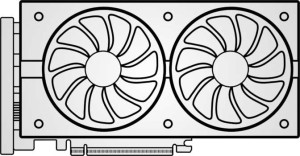
Nvidia GeForce RTX 5070 Laptop

Nvidia GeForce RTX 5070 Laptop

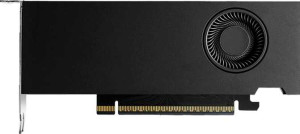
Nvidia RTX Pro 2000 Blackwell

Nvidia RTX Pro 2000 Blackwell

Performance:
GPU clock speed 2235 MHz 790 MHz
GPU turbo 2520 MHz 1950 MHz
pixel rate 121 GPixel/s 124.8 GPixel/s
floating-point performance 23.22 TFLOPS 16.97 TFLOPS
texture rate 362.9 GTexels/s 265.2 GTexels/s
GPU memory speed 2000 MHz 1125 MHz
shading units 4608 4352
texture mapping units (TMUs) 144 136
render output units (ROPs) 48 64
Has Double Precision Floating Point (DPFP)

In raw compute throughput, the RTX 5070 Laptop holds a commanding lead. Its 23.22 TFLOPS of floating-point performance outpaces the RTX Pro 2000 Blackwell's 16.97 TFLOPS by roughly 37%, which translates directly to faster shader-heavy workloads — think real-time ray tracing, AI-accelerated rendering, and compute tasks like simulation or inference. The 5070 Laptop also has a significantly higher texture fill rate (362.9 GTexels/s vs 265.2 GTexels/s), meaning it can process complex, highly textured scenes more efficiently, a notable advantage in gaming and 3D visualization pipelines.

The clock speed story is nuanced. The 5070 Laptop's base clock of 2235 MHz is dramatically higher than the Pro 2000's 790 MHz, but professional mobile GPUs like the Pro 2000 are often architected to run conservatively at base to prioritize stability and thermal control in workstation environments. Under sustained load, the turbo gap narrows considerably — 2520 MHz vs 1950 MHz — though the 5070 Laptop still maintains the edge. Memory bandwidth also favors the 5070 Laptop, with a 2000 MHz memory speed versus 1125 MHz, supporting faster data movement to feed its larger shader array.

The one area where the RTX Pro 2000 Blackwell pushes back is rasterization output: it packs 64 ROPs versus the 5070 Laptop's 48, which contributes to its slightly higher pixel fill rate (124.8 GPixel/s vs 121 GPixel/s). In practice, this can benefit high-resolution rendering tasks that are ROP-bound — such as outputting to 4K+ displays with heavy anti-aliasing — where the Pro 2000 may hold its own. Both GPUs support Double Precision Floating Point, relevant for scientific or engineering workloads. Overall, the RTX 5070 Laptop has a clear performance advantage in compute and texture throughput, while the Pro 2000 offers a modest edge in pixel output capacity.
Memory:
effective memory speed 25400 MHz 18000 MHz
maximum memory bandwidth 405.8 GB/s 288 GB/s
VRAM 8GB 16GB
GDDR version GDDR7 GDDR7
memory bus width 128-bit 128-bit
Supports ECC memory

The Nvidia GeForce RTX 5070 Laptop and Nvidia RTX Pro 2000 Blackwell have several differences in memory specifications. The 5070 Laptop features an effective memory speed of 25400 MHz, while the 2000 Blackwell is lower at 18000 MHz. In terms of maximum memory bandwidth, the 5070 Laptop has 405.8 GB/s, which is higher than the 288 GB/s of the 2000 Blackwell.

When it comes to VRAM, the 5070 Laptop has 8GB, while the 2000 Blackwell has a more substantial 16GB. Both products use GDDR7 memory and have a memory bus width of 128-bit. Additionally, both support Error Correcting Code (ECC) memory, ensuring reliable performance in critical tasks.

Overall, the 5070 Laptop excels in memory speed and bandwidth, but the 2000 Blackwell offers more VRAM, which may benefit applications requiring more memory capacity.

Features:
DirectX version DirectX 12 Ultimate DirectX 12 Ultimate
OpenGL version 4.6 4.6
OpenCL version 3 3
Supports multi-display technology
supports ray tracing
Supports 3D
supports DLSS
has XeSS (XMX)
AMD SAM / Intel Resizable BAR Intel Resizable BAR Intel Resizable BAR
has LHR
supported displays 4 4

The Nvidia GeForce RTX 5070 Laptop and Nvidia RTX Pro 2000 Blackwell share identical features in several areas. Both support DirectX 12 Ultimate, OpenGL 4.6, and OpenCL 3, offering compatibility with the latest graphics and compute APIs. Additionally, both cards support multi-display technology, ray tracing, and 3D capabilities, enhancing their overall performance in various applications.

For additional features, both products also support DLSS, ensuring improved image quality and performance in supported games and applications. Neither of the two products includes XeSS (XMX) support. Both feature Intel Resizable BAR (AMD SAM is not mentioned for either), and neither product has LHR (Lite Hash Rate) functionality.

Finally, both the 5070 Laptop and 2000 Blackwell are capable of supporting up to four displays, providing flexibility for users with multi-monitor setups.

General info:
GPU architecture Blackwell Blackwell
release date January 2025 August 2025
Thermal Design Power (TDP) 50W 70W
PCI Express (PCIe) version 5 5
semiconductor size 4 nm 5 nm

The Nvidia GeForce RTX 5070 Laptop and Nvidia RTX Pro 2000 Blackwell both feature the Blackwell GPU architecture, indicating they share the same foundational technology. However, there are differences in several general specifications. The 5070 Laptop has a lower Thermal Design Power (TDP) of 50W, compared to the 2000 Blackwell's 70W, which could imply a difference in power consumption and cooling requirements. Both products use PCI Express (PCIe) version 5, ensuring high-speed connectivity for compatible systems.

In terms of semiconductor size, the 5070 Laptop uses a more advanced 4 nm process, while the 2000 Blackwell is built on a 5 nm process. The smaller semiconductor size in the 5070 Laptop suggests it could offer more efficiency in terms of power usage and performance per watt.

Overall, the two products share the same GPU architecture and PCIe version, but the 5070 Laptop has a lower TDP and a smaller semiconductor size, which may make it more power-efficient compared to the 2000 Blackwell.

Comparison Summary & Verdict

After examining every specification, a clear picture emerges for each GPU. The Nvidia GeForce RTX 5070 Laptop leads decisively in floating-point performance at 23.22 TFLOPS, texture rate, memory bandwidth, and effective memory speed, making it the stronger choice for raw throughput-heavy workloads within a slim 50W power budget. The Nvidia RTX Pro 2000 Blackwell, on the other hand, counters with a notably larger 16 GB VRAM pool, more render output units at 64 ROPs, and a higher pixel rate, advantages that matter greatly in professional visualization and memory-intensive workloads. Its 5 nm process and 70W TDP suggest a desktop or workstation context where sustained professional reliability is prioritized over peak speed. Neither card is universally superior; the right pick depends entirely on your specific workload and platform requirements.

Nvidia GeForce RTX 5070 Laptop
Buy Nvidia GeForce RTX 5070 Laptop if...

Buy the Nvidia GeForce RTX 5070 Laptop if you need higher raw compute throughput, faster memory bandwidth, and greater texture performance while keeping power consumption low at 50W.

Nvidia RTX Pro 2000 Blackwell
Buy Nvidia RTX Pro 2000 Blackwell if...

Buy the Nvidia RTX Pro 2000 Blackwell if your workloads demand a larger 16 GB VRAM capacity and more render output units, particularly for professional visualization or memory-intensive applications.