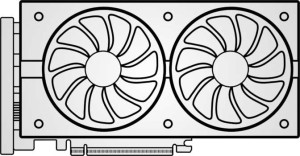
Nvidia GeForce RTX 5070 Laptop
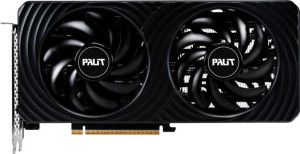
Palit GeForce RTX 5060 Dual OC

Nvidia GeForce RTX 5070 Laptop Palit GeForce RTX 5060 Dual OC

Overview

Welcome to our in-depth spec comparison between the Nvidia GeForce RTX 5070 Laptop and the Palit GeForce RTX 5060 Dual OC. Both GPUs share the same Blackwell architecture and an identical 8GB GDDR7 memory configuration, yet they target very different users. In this comparison, we examine the key battlegrounds of raw compute performance, memory bandwidth, power consumption, and silicon design to help you make the most informed decision possible.

Common Features

  • Both GPUs have 48 render output units (ROPs).
  • Both GPUs support Double Precision Floating Point (DPFP).
  • Both GPUs come with 8GB of VRAM.
  • Both GPUs use GDDR7 memory.
  • Both GPUs have a 128-bit memory bus width.
  • Both GPUs support ECC memory.
  • Both GPUs support DirectX 12 Ultimate.
  • Both GPUs support OpenGL version 4.6.
  • Both GPUs support OpenCL version 3.
  • Both GPUs support multi-display technology.
  • Both GPUs support ray tracing.
  • Both GPUs support 3D technology.
  • Both GPUs support DLSS.
  • XeSS (XMX) support is not available on either GPU.
  • Both GPUs are built on the Blackwell architecture.
  • Both GPUs use PCIe version 5.

Main Differences

  • GPU clock speed is 2235 MHz on Nvidia GeForce RTX 5070 Laptop and 2280 MHz on Palit GeForce RTX 5060 Dual OC.
  • GPU turbo speed is 2520 MHz on Nvidia GeForce RTX 5070 Laptop and 2535 MHz on Palit GeForce RTX 5060 Dual OC.
  • Pixel rate is 121 GPixel/s on Nvidia GeForce RTX 5070 Laptop and 121.7 GPixel/s on Palit GeForce RTX 5060 Dual OC.
  • Floating-point performance is 23.22 TFLOPS on Nvidia GeForce RTX 5070 Laptop and 19.47 TFLOPS on Palit GeForce RTX 5060 Dual OC.
  • Texture rate is 362.9 GTexels/s on Nvidia GeForce RTX 5070 Laptop and 304.2 GTexels/s on Palit GeForce RTX 5060 Dual OC.
  • GPU memory speed is 2000 MHz on Nvidia GeForce RTX 5070 Laptop and 1750 MHz on Palit GeForce RTX 5060 Dual OC.
  • Shading units count is 4608 on Nvidia GeForce RTX 5070 Laptop and 3840 on Palit GeForce RTX 5060 Dual OC.
  • Texture mapping units (TMUs) count is 144 on Nvidia GeForce RTX 5070 Laptop and 120 on Palit GeForce RTX 5060 Dual OC.
  • Effective memory speed is 25400 MHz on Nvidia GeForce RTX 5070 Laptop and 28000 MHz on Palit GeForce RTX 5060 Dual OC.
  • Maximum memory bandwidth is 405.8 GB/s on Nvidia GeForce RTX 5070 Laptop and 448 GB/s on Palit GeForce RTX 5060 Dual OC.
  • Thermal Design Power (TDP) is 50W on Nvidia GeForce RTX 5070 Laptop and 145W on Palit GeForce RTX 5060 Dual OC.
  • Semiconductor size is 4 nm on Nvidia GeForce RTX 5070 Laptop and 5 nm on Palit GeForce RTX 5060 Dual OC.
Specs Comparison
Nvidia GeForce RTX 5070 Laptop

Nvidia GeForce RTX 5070 Laptop

Palit GeForce RTX 5060 Dual OC

Palit GeForce RTX 5060 Dual OC

Performance:
GPU clock speed 2235 MHz 2280 MHz
GPU turbo 2520 MHz 2535 MHz
pixel rate 121 GPixel/s 121.7 GPixel/s
floating-point performance 23.22 TFLOPS 19.47 TFLOPS
texture rate 362.9 GTexels/s 304.2 GTexels/s
GPU memory speed 2000 MHz 1750 MHz
shading units 4608 3840
texture mapping units (TMUs) 144 120
render output units (ROPs) 48 48
Has Double Precision Floating Point (DPFP)

At first glance, the clock speeds of these two GPUs look nearly identical — the Palit RTX 5060 actually edges out the Nvidia RTX 5070 Laptop with a slightly higher base clock (2280 MHz vs 2235 MHz) and turbo (2535 MHz vs 2520 MHz). However, raw clock speed tells only a small part of the story; what matters far more is how many execution units those clocks are driving.

This is where the RTX 5070 Laptop pulls decisively ahead. Its 4608 shading units and 144 TMUs versus the 5060's 3840 shading units and 120 TMUs translate directly into a 19% advantage in floating-point throughput (23.22 TFLOPS vs 19.47 TFLOPS) and a roughly 19% lead in texture fill rate (362.9 vs 304.2 GTexels/s). In practice, this gap shows up in compute-heavy workloads like ray tracing, AI-accelerated rendering, and complex shader scenes. The 5070 Laptop also benefits from faster GPU memory at 2000 MHz versus the 5060's 1750 MHz, which helps sustain that higher throughput under pressure. The one area that remains genuinely tied is pixel output: both GPUs share 48 ROPs and deliver essentially identical pixel rates (~121 GPixel/s), meaning neither has an advantage in raw rasterization output at the final rendering stage.

The RTX 5070 Laptop holds a clear overall performance edge in this group. The 5060's marginally higher clocks are outweighed by the 5070 Laptop's substantially larger shader array, higher memory bandwidth, and superior compute throughput — making it the stronger choice for demanding 3D and compute workloads.

Memory:
effective memory speed 25400 MHz 28000 MHz
maximum memory bandwidth 405.8 GB/s 448 GB/s
VRAM 8GB 8GB
GDDR version GDDR7 GDDR7
memory bus width 128-bit 128-bit
Supports ECC memory

The Nvidia GeForce RTX 5070 Laptop and Palit GeForce RTX 5060 Dual OC have some key differences in their memory specifications. Both products feature 8GB of VRAM, with GDDR7 memory and a 128-bit memory bus width. This makes the memory configuration quite similar between the two, but there are distinctions in other areas.

In terms of effective memory speed, the RTX 5070 Laptop operates at 25400 MHz, while the 5060 Dual OC has a faster effective memory speed of 28000 MHz. This difference in memory speed could impact overall memory performance, with the 5060 having a slight edge in this regard. The maximum memory bandwidth also reflects this, with the 5070 Laptop providing 405.8 GB/s compared to the 5060’s 448 GB/s, again showing a performance gap favoring the 5060.

Both products support ECC memory, which helps with error correction, ensuring data integrity during use. The VRAM size, GDDR version, and memory bus width match perfectly between the two, so the primary differences lie in the effective memory speed and maximum memory bandwidth, where the 5060 Dual OC demonstrates a slight advantage.

Features:
DirectX version DirectX 12 Ultimate DirectX 12 Ultimate
OpenGL version 4.6 4.6
OpenCL version 3 3
Supports multi-display technology
supports ray tracing
Supports 3D
supports DLSS
has XeSS (XMX)
AMD SAM / Intel Resizable BAR Intel Resizable BAR Intel Resizable BAR
has LHR
supported displays 4 4

The Nvidia GeForce RTX 5070 Laptop and Palit GeForce RTX 5060 Dual OC are quite similar in terms of features. Both products support DirectX 12 Ultimate, OpenGL 4.6, and OpenCL 3, providing compatibility with modern graphics and computational technologies. Additionally, both GPUs support multi-display technology, ray tracing, and 3D, which enhances their graphical capabilities for a variety of use cases.

When it comes to DLSS (Deep Learning Super Sampling), both the RTX 5070 Laptop and the 5060 Dual OC support this feature, providing improved performance in supported games through AI-driven upscaling. Neither of the two GPUs supports XeSS (XMX), which is an Intel technology aimed at optimizing visual quality with AI.

Regarding other features, both products have identical specifications. They both support Intel Resizable BAR, a feature that enhances GPU performance with compatible processors. Neither product features LHR (Lite Hash Rate) limitations, and both support up to 4 displays. Overall, in this group, the specifications are nearly identical for both GPUs.

General info:
GPU architecture Blackwell Blackwell
release date January 2025 May 2025
Thermal Design Power (TDP) 50W 145W
PCI Express (PCIe) version 5 5
semiconductor size 4 nm 5 nm

The Nvidia GeForce RTX 5070 Laptop and Palit GeForce RTX 5060 Dual OC share the same GPU architecture, which is Blackwell, but there are differences in several other general specifications. The 5070 Laptop has a Thermal Design Power (TDP) of 50W, while the 5060 Dual OC has a much higher TDP of 145W, indicating that the 5060 is designed to handle significantly more power, possibly leading to higher performance but also requiring more cooling and power supply.

Both products support PCI Express (PCIe) version 5, ensuring high-speed data transfer between the GPU and the rest of the system. The 5070 Laptop uses a 4 nm semiconductor size, which is smaller than the 5 nm semiconductor size used in the 5060 Dual OC. The smaller semiconductor size in the 5070 Laptop could result in better efficiency and lower power consumption in comparison to the 5060 Dual OC.

Overall, while both GPUs share the same architecture and PCIe version, the 5060 Dual OC has a significantly higher TDP and a slightly larger semiconductor size, indicating differences in power consumption and design considerations between the two products.

Comparison Summary & Verdict

After examining all the evidence, a clear picture emerges for each GPU. The Nvidia GeForce RTX 5070 Laptop stands out with its significantly higher floating-point performance at 23.22 TFLOPS, more shading units, and a remarkably low 50W TDP, making it the ideal choice for users who need capable, power-efficient graphics in a thin-and-light laptop. Its refined 4nm semiconductor process further reinforces its efficiency credentials. The Palit GeForce RTX 5060 Dual OC, on the other hand, answers with superior memory bandwidth of 448 GB/s and a higher effective memory speed of 28000 MHz, which can benefit memory-intensive workloads on a desktop. Its 145W TDP reflects a full desktop power envelope designed for maximum sustained throughput.

Nvidia GeForce RTX 5070 Laptop
Buy Nvidia GeForce RTX 5070 Laptop if...

Buy the Nvidia GeForce RTX 5070 Laptop if you need strong compute performance with a very low 50W power draw, particularly in a portable laptop form factor built on an efficient 4nm process.

Palit GeForce RTX 5060 Dual OC
Buy Palit GeForce RTX 5060 Dual OC if...

Buy the Palit GeForce RTX 5060 Dual OC if you prioritize maximum memory bandwidth and higher effective memory speed in a desktop environment where power consumption is less of a concern.