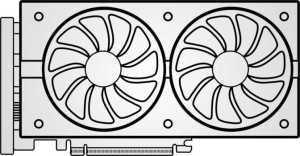
Nvidia GeForce RTX 5070 Ti
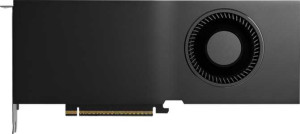
Nvidia RTX Pro 5000 Blackwell

Nvidia GeForce RTX 5070 Ti Nvidia RTX Pro 5000 Blackwell

Overview

When choosing between the Nvidia GeForce RTX 5070 Ti and the Nvidia RTX Pro 5000 Blackwell, the decision goes well beyond brand recognition. Both cards share the same Blackwell architecture, 5 nm manufacturing process, and a 300W TDP, yet they diverge sharply when it comes to raw compute power, VRAM capacity, and display connectivity. This comparison breaks down exactly where each GPU excels, helping you make a fully informed decision for your specific needs.

Common Features

  • GPU memory speed is 1750 MHz on both products.
  • Both products support Double Precision Floating Point (DPFP).
  • Effective memory speed is 28000 MHz on both products.
  • Both products use GDDR7 memory.
  • Both products support ECC memory.
  • OpenGL version is 4.6 on both products.
  • OpenCL version is 3 on both products.
  • Multi-display technology is supported on both products.
  • Ray tracing is supported on both products.
  • 3D support is available on both products.
  • DLSS is supported on both products.
  • XeSS (XMX) is not available on either product.
  • Both products support Intel Resizable BAR.
  • Neither product has any USB-C ports.
  • Neither product has any DVI outputs.
  • Neither product has any mini DisplayPort outputs.
  • Both products are built on the Blackwell GPU architecture.
  • Thermal Design Power (TDP) is 300W on both products.
  • Both products use PCIe version 5.
  • Both products are manufactured on a 5 nm semiconductor process.
  • Air-water cooling is not available on either product.

Main Differences

  • GPU base clock speed is 2300 MHz on Nvidia GeForce RTX 5070 Ti and 1590 MHz on Nvidia RTX Pro 5000 Blackwell.
  • GPU turbo clock speed is 2450 MHz on Nvidia GeForce RTX 5070 Ti and 2617 MHz on Nvidia RTX Pro 5000 Blackwell.
  • Pixel rate is 235.2 GPixel/s on Nvidia GeForce RTX 5070 Ti and 460.6 GPixel/s on Nvidia RTX Pro 5000 Blackwell.
  • Floating-point performance is 43.94 TFLOPS on Nvidia GeForce RTX 5070 Ti and 73.69 TFLOPS on Nvidia RTX Pro 5000 Blackwell.
  • Texture rate is 686.6 GTexels/s on Nvidia GeForce RTX 5070 Ti and 1151 GTexels/s on Nvidia RTX Pro 5000 Blackwell.
  • Shading units number 8960 on Nvidia GeForce RTX 5070 Ti and 14080 on Nvidia RTX Pro 5000 Blackwell.
  • Texture mapping units (TMUs) total 280 on Nvidia GeForce RTX 5070 Ti and 440 on Nvidia RTX Pro 5000 Blackwell.
  • Render output units (ROPs) total 96 on Nvidia GeForce RTX 5070 Ti and 176 on Nvidia RTX Pro 5000 Blackwell.
  • Maximum memory bandwidth is 896 GB/s on Nvidia GeForce RTX 5070 Ti and 1344 GB/s on Nvidia RTX Pro 5000 Blackwell.
  • VRAM is 16GB on Nvidia GeForce RTX 5070 Ti and 48GB on Nvidia RTX Pro 5000 Blackwell.
  • Memory bus width is 256-bit on Nvidia GeForce RTX 5070 Ti and 384-bit on Nvidia RTX Pro 5000 Blackwell.
  • DirectX version is DirectX 12 Ultimate on Nvidia GeForce RTX 5070 Ti and DirectX 12 on Nvidia RTX Pro 5000 Blackwell.
  • An HDMI output is present on Nvidia GeForce RTX 5070 Ti but not available on Nvidia RTX Pro 5000 Blackwell.
  • DisplayPort outputs number 3 on Nvidia GeForce RTX 5070 Ti and 4 on Nvidia RTX Pro 5000 Blackwell.
  • Number of transistors is 45600 million on Nvidia GeForce RTX 5070 Ti and 92200 million on Nvidia RTX Pro 5000 Blackwell.
  • Card width is 304 mm on Nvidia GeForce RTX 5070 Ti and 266.7 mm on Nvidia RTX Pro 5000 Blackwell.
  • Card height is 137 mm on Nvidia GeForce RTX 5070 Ti and 111.8 mm on Nvidia RTX Pro 5000 Blackwell.
Specs Comparison
Nvidia GeForce RTX 5070 Ti

Nvidia GeForce RTX 5070 Ti

Nvidia RTX Pro 5000 Blackwell

Nvidia RTX Pro 5000 Blackwell

Performance:
GPU clock speed 2300 MHz 1590 MHz
GPU turbo 2450 MHz 2617 MHz
pixel rate 235.2 GPixel/s 460.6 GPixel/s
floating-point performance 43.94 TFLOPS 73.69 TFLOPS
texture rate 686.6 GTexels/s 1151 GTexels/s
GPU memory speed 1750 MHz 1750 MHz
shading units 8960 14080
texture mapping units (TMUs) 280 440
render output units (ROPs) 96 176
Has Double Precision Floating Point (DPFP)

At first glance, the RTX 5070 Ti appears competitive with its higher base clock of 2300 MHz versus the RTX Pro 5000 Blackwell's 1590 MHz. However, base clock alone is a misleading metric here. The Pro 5000 Blackwell is built on a far larger die: it carries 14,080 shading units compared to the 5070 Ti's 8,960 — a roughly 57% advantage — and that fundamental difference cascades through every downstream performance figure.

The real-world impact becomes clear when looking at compute throughput and rasterization capacity. The Pro 5000 Blackwell achieves 73.69 TFLOPS of floating-point performance versus 43.94 TFLOPS for the 5070 Ti, a ~68% lead that directly translates to faster shader-heavy workloads, compute tasks, and AI-assisted rendering. Its 176 ROPs (versus 96) and resulting pixel rate of 460.6 GPixel/s (versus 235.2) mean it can resolve nearly twice as many pixels per second, which matters at high resolutions and for fill-rate-bound scenarios. Texture throughput follows the same pattern: 1,151 GTexels/s against 686.6. Notably, both cards share an identical GPU memory speed of 1750 MHz and both support Double Precision Floating Point, so neither holds an architectural edge on those fronts.

The RTX Pro 5000 Blackwell holds a decisive performance advantage in this group across every major compute and rasterization metric. The 5070 Ti's higher base clock does not compensate for the Pro's substantially larger GPU with far more execution resources and a slightly higher turbo ceiling of 2617 MHz as well. Users prioritizing raw throughput — whether for rendering, simulation, or graphics workloads — will find the Pro 5000 Blackwell the clearly more capable card based on these specs.

Memory:
effective memory speed 28000 MHz 28000 MHz
maximum memory bandwidth 896 GB/s 1344 GB/s
VRAM 16GB 48GB
GDDR version GDDR7 GDDR7
memory bus width 256-bit 384-bit
Supports ECC memory

Both the Nvidia GeForce RTX 5070 Ti and the Nvidia RTX Pro 5000 Blackwell feature an effective memory speed of 28000 MHz, ensuring the same speed of data processing. However, the maximum memory bandwidth differs significantly. The RTX 5070 Ti offers 896 GB/s, while the RTX Pro 5000 Blackwell delivers a much higher 1344 GB/s, indicating a notable difference in the rate at which the memory can transfer data.

In terms of VRAM, the RTX 5070 Ti has 16GB, whereas the RTX Pro 5000 Blackwell boasts a considerably larger 48GB of VRAM. Both products use the GDDR7 memory type, ensuring the same generation of memory technology. Additionally, both GPUs have a memory bus width of 256-bit for the RTX 5070 Ti and 384-bit for the RTX Pro 5000 Blackwell, further indicating a wider memory interface in the Pro 5000 Blackwell, which likely contributes to its higher bandwidth.

Both GPUs support Error Correction Code (ECC) memory, ensuring reliability and data integrity during high-performance computing tasks, a feature that is present in both models without any difference.

Features:
DirectX version DirectX 12 Ultimate DirectX 12
OpenGL version 4.6 4.6
OpenCL version 3 3
Supports multi-display technology
supports ray tracing
Supports 3D
supports DLSS
has XeSS (XMX)
AMD SAM / Intel Resizable BAR Intel Resizable BAR Intel Resizable BAR
has LHR
has RGB lighting
supported displays 4 4

Both the Nvidia GeForce RTX 5070 Ti and the Nvidia RTX Pro 5000 Blackwell support DirectX 12 Ultimate, but the RTX Pro 5000 Blackwell only supports DirectX 12, making the 5070 Ti more advanced in this respect. Both products support OpenGL version 4.6 and OpenCL version 3, with no difference between them. They also share support for multi-display technology, ray tracing, and 3D features, ensuring both GPUs offer robust graphical capabilities.

Both GPUs support DLSS (Deep Learning Super Sampling), which enhances gaming performance by upscaling lower resolution images. Neither of them includes XeSS (XMX), an Intel feature, indicating that both rely on other forms of upscaling. Additionally, both products support Intel Resizable BAR, a feature that improves performance by providing better access to memory bandwidth.

Neither the RTX 5070 Ti nor the RTX Pro 5000 Blackwell features LHR (Lite Hash Rate) restrictions, meaning both are fully capable of mining cryptocurrency without reduced performance. Finally, both products lack RGB lighting, offering a more utilitarian design. They also support up to 4 displays each, allowing for extensive multi-monitor setups.

Ports:
has an HDMI output
DisplayPort outputs 3 4
USB-C ports 0 0
DVI outputs 0 0
mini DisplayPort outputs 0 0

The Nvidia GeForce RTX 5070 Ti includes an HDMI output, while the Nvidia RTX Pro 5000 Blackwell does not. Both cards offer DisplayPort outputs, but the RTX 5070 Ti provides 3 DisplayPort connections, while the RTX Pro 5000 Blackwell supports 4. Neither of the two GPUs includes USB-C ports, DVI outputs, or mini DisplayPort outputs, meaning they have identical lack of support for these specific connection types.

Overall, the key difference lies in the number of DisplayPort outputs, with the RTX Pro 5000 Blackwell offering one more compared to the RTX 5070 Ti. Additionally, the presence of an HDMI output on the RTX 5070 Ti, but not on the RTX Pro 5000 Blackwell, is another distinct difference between the two models.

General info:
GPU architecture Blackwell Blackwell
release date January 2025 March 2025
Thermal Design Power (TDP) 300W 300W
PCI Express (PCIe) version 5 5
semiconductor size 5 nm 5 nm
number of transistors 45600 million 92200 million
Has air-water cooling
width 304 mm 266.7 mm
height 137 mm 111.8 mm

Both the Nvidia GeForce RTX 5070 Ti and the Nvidia RTX Pro 5000 Blackwell are built on the Blackwell GPU architecture, ensuring the same core technology. They also share identical values for Thermal Design Power (TDP) at 300W, PCI Express (PCIe) version 5, and semiconductor size at 5 nm, highlighting similar performance and power requirements. Neither model includes air-water cooling, so both rely on standard cooling solutions.

The main differences between the two models are in their physical dimensions and transistor count. The RTX 5070 Ti has a width of 304 mm and a height of 137 mm, while the RTX Pro 5000 Blackwell is more compact, measuring 266.7 mm in width and 111.8 mm in height. Additionally, the RTX 5070 Ti has 45,600 million transistors, while the RTX Pro 5000 Blackwell has a significantly larger 92,200 million transistors, reflecting a higher level of complexity and potentially greater computational power.

Comparison Summary & Verdict

After examining all the specifications, these two GPUs clearly serve different audiences. The Nvidia GeForce RTX 5070 Ti offers a strong consumer-oriented profile with DirectX 12 Ultimate support, a built-in HDMI output, and 16 GB of GDDR7 VRAM, making it a compelling choice for gamers who need broad display compatibility and modern gaming feature support. The Nvidia RTX Pro 5000 Blackwell, by contrast, is built for professional workloads, delivering a commanding 48 GB of VRAM, 73.69 TFLOPS of floating-point performance, a wider 384-bit memory bus, and 1344 GB/s of bandwidth. Its significantly higher shading unit count, TMU count, and transistor count of 92,200 million firmly establish it as a workstation-class powerhouse. In short, choose the RTX 5070 Ti for high-performance gaming and consumer use, and choose the RTX Pro 5000 Blackwell for demanding professional, creative, and compute-intensive tasks.

Nvidia GeForce RTX 5070 Ti
Buy Nvidia GeForce RTX 5070 Ti if...

Buy the Nvidia GeForce RTX 5070 Ti if you want a high-performance gaming GPU with DirectX 12 Ultimate support, an HDMI output, and 16 GB of GDDR7 VRAM in a consumer-friendly package.

Nvidia RTX Pro 5000 Blackwell
Buy Nvidia RTX Pro 5000 Blackwell if...

Choose the Nvidia RTX Pro 5000 Blackwell if your workflows demand massive VRAM capacity (48 GB), significantly higher floating-point throughput, and a wider memory bus suited to professional creative or compute-intensive tasks.