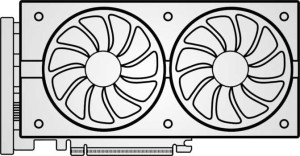
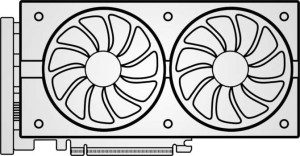
Sharing the same Blackwell architecture, 5nm process node, and PCIe 5.0 interface, these two cards are clearly cut from the same generational cloth — but the silicon underneath tells a story of very different scale. The RTX 5090 packs 92,200 million transistors versus the Pro 4500 Blackwell's 45,600 million, meaning Nvidia has essentially placed a die roughly twice the size into the 5090. This transistor gap is the fundamental reason for the performance and memory bandwidth advantages seen across other spec groups — more transistors directly enable more compute units, wider memory buses, and greater parallelism.
The thermal consequences of that larger die are stark. The RTX 5090 carries a 575W TDP — nearly three times the Pro 4500's 200W. In practice, this means the 5090 demands a high-wattage power supply, robust case airflow, and a system built to handle sustained high-power draw. The Pro 4500, at 200W, fits comfortably within workstation and compact system power budgets, generating significantly less heat and placing far fewer demands on cooling infrastructure. Neither card uses air-water hybrid cooling, so both rely entirely on conventional solutions.
Physically, the 5090 is also the larger card at 304 × 137 mm compared to the Pro 4500's more compact 266.7 × 111.8 mm footprint, which can matter in tight workstation chassis. For users where system integration, power envelope, and acoustic profile are priorities, the RTX Pro 4500 Blackwell holds a clear practical advantage in this category. The RTX 5090's profile is justified only when maximum performance is the explicit goal and the system can accommodate its demands.