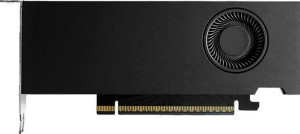
Nvidia RTX Pro 4000 Blackwell SFF Edition
Nvidia RTX Pro 4500 Blackwell

Nvidia RTX Pro 4000 Blackwell SFF Edition Nvidia RTX Pro 4500 Blackwell

Overview

Welcome to our in-depth spec comparison between the Nvidia RTX Pro 4000 Blackwell SFF Edition and the Nvidia RTX Pro 4500 Blackwell. Both cards share the same Blackwell architecture and 5 nm fabrication process, yet they take very different approaches when it comes to raw performance, memory capacity, power consumption, and physical form factor. Read on as we break down every key specification to help you decide which of these professional Blackwell GPUs best suits your workload.

Common Features

  • Both products support Double Precision Floating Point (DPFP).
  • Both products use GDDR7 memory.
  • Both products support ECC memory.
  • Both products support OpenGL version 4.6.
  • Both products support OpenCL version 3.
  • Both products support multi-display technology.
  • Both products support ray tracing.
  • Both products support 3D.
  • Both products support DLSS.
  • Neither product has XeSS (XMX) support.
  • Both products support Intel Resizable BAR.
  • Neither product has an HDMI output.
  • Neither product has USB-C ports.
  • Neither product has DVI outputs.
  • Both products are built on the Blackwell GPU architecture.
  • Both products use PCIe version 5.
  • Both products are manufactured on a 5 nm semiconductor process.
  • Both products contain 45,600 million transistors.
  • Neither product has air-water cooling.

Main Differences

  • GPU clock speed is 790 MHz on Nvidia RTX Pro 4000 Blackwell SFF Edition and 1590 MHz on Nvidia RTX Pro 4500 Blackwell.
  • GPU turbo clock speed is 1337 MHz on Nvidia RTX Pro 4000 Blackwell SFF Edition and 2617 MHz on Nvidia RTX Pro 4500 Blackwell.
  • Pixel rate is 128.4 GPixel/s on Nvidia RTX Pro 4000 Blackwell SFF Edition and 293.1 GPixel/s on Nvidia RTX Pro 4500 Blackwell.
  • Floating-point performance is 23.96 TFLOPS on Nvidia RTX Pro 4000 Blackwell SFF Edition and 54.94 TFLOPS on Nvidia RTX Pro 4500 Blackwell.
  • Texture rate is 374.4 GTexels/s on Nvidia RTX Pro 4000 Blackwell SFF Edition and 858.4 GTexels/s on Nvidia RTX Pro 4500 Blackwell.
  • GPU memory speed is 1125 MHz on Nvidia RTX Pro 4000 Blackwell SFF Edition and 1750 MHz on Nvidia RTX Pro 4500 Blackwell.
  • Shading units total 8960 on Nvidia RTX Pro 4000 Blackwell SFF Edition and 10496 on Nvidia RTX Pro 4500 Blackwell.
  • Texture mapping units (TMUs) number 280 on Nvidia RTX Pro 4000 Blackwell SFF Edition and 328 on Nvidia RTX Pro 4500 Blackwell.
  • Render output units (ROPs) number 96 on Nvidia RTX Pro 4000 Blackwell SFF Edition and 112 on Nvidia RTX Pro 4500 Blackwell.
  • Effective memory speed is 18000 MHz on Nvidia RTX Pro 4000 Blackwell SFF Edition and 28000 MHz on Nvidia RTX Pro 4500 Blackwell.
  • Maximum memory bandwidth is 432 GB/s on Nvidia RTX Pro 4000 Blackwell SFF Edition and 896 GB/s on Nvidia RTX Pro 4500 Blackwell.
  • VRAM is 24GB on Nvidia RTX Pro 4000 Blackwell SFF Edition and 32GB on Nvidia RTX Pro 4500 Blackwell.
  • Memory bus width is 192-bit on Nvidia RTX Pro 4000 Blackwell SFF Edition and 256-bit on Nvidia RTX Pro 4500 Blackwell.
  • DirectX 12 Ultimate support is present on Nvidia RTX Pro 4000 Blackwell SFF Edition, while Nvidia RTX Pro 4500 Blackwell supports DirectX 12.
  • DisplayPort outputs number 0 on Nvidia RTX Pro 4000 Blackwell SFF Edition and 4 on Nvidia RTX Pro 4500 Blackwell.
  • Mini DisplayPort outputs number 4 on Nvidia RTX Pro 4000 Blackwell SFF Edition and 0 on Nvidia RTX Pro 4500 Blackwell.
  • Thermal Design Power (TDP) is 70W on Nvidia RTX Pro 4000 Blackwell SFF Edition and 200W on Nvidia RTX Pro 4500 Blackwell.
  • Width is 167.6 mm on Nvidia RTX Pro 4000 Blackwell SFF Edition and 266.7 mm on Nvidia RTX Pro 4500 Blackwell.
  • Height is 68.6 mm on Nvidia RTX Pro 4000 Blackwell SFF Edition and 111.8 mm on Nvidia RTX Pro 4500 Blackwell.
Specs Comparison
Nvidia RTX Pro 4000 Blackwell SFF Edition

Nvidia RTX Pro 4000 Blackwell SFF Edition

Nvidia RTX Pro 4500 Blackwell

Nvidia RTX Pro 4500 Blackwell

Performance:
GPU clock speed 790 MHz 1590 MHz
GPU turbo 1337 MHz 2617 MHz
pixel rate 128.4 GPixel/s 293.1 GPixel/s
floating-point performance 23.96 TFLOPS 54.94 TFLOPS
texture rate 374.4 GTexels/s 858.4 GTexels/s
GPU memory speed 1125 MHz 1750 MHz
shading units 8960 10496
texture mapping units (TMUs) 280 328
render output units (ROPs) 96 112
Has Double Precision Floating Point (DPFP)

The most striking gap between these two cards lies in their clock speeds and raw compute throughput. The RTX Pro 4500 Blackwell runs at a base of 1590 MHz and boosts to 2617 MHz, roughly double the 790 MHz / 1337 MHz of the RTX Pro 4000 Blackwell SFF Edition. This is not a marginal difference — it directly drives the floating-point performance gap: 54.94 TFLOPS versus 23.96 TFLOPS, meaning the 4500 delivers more than twice the compute throughput for shader-heavy workloads like 3D rendering, simulation, and AI inferencing tasks that saturate the GPU.

The rasterization pipeline tells a similar story. With 293.1 GPixel/s pixel fill rate and 858.4 GTexels/s texture throughput, the RTX Pro 4500 vastly outpaces the 4000 SFF's 128.4 GPixel/s and 374.4 GTexels/s. In practice, this translates to smoother handling of complex, high-resolution scenes with dense geometry and large texture sets — workloads typical in CAD visualization, VFX, and real-time rendering. The 4500 also holds an advantage in memory bandwidth potential, with its 1750 MHz memory speed versus the 4000 SFF's 1125 MHz, reducing the risk of the memory bus becoming a bottleneck under heavy data throughput.

Both cards support Double Precision Floating Point (DPFP), which matters for scientific computing and simulation workflows that require high numerical accuracy. However, for every other performance metric in this group, the RTX Pro 4500 Blackwell holds a decisive and consistent advantage — typically in the range of 2× to 2.3×. The RTX Pro 4000 SFF Edition's lower clocks are almost certainly a thermal and power constraint of its small form-factor design, making it the right choice only where physical space is the primary limiting factor.

Memory:
effective memory speed 18000 MHz 28000 MHz
maximum memory bandwidth 432 GB/s 896 GB/s
VRAM 24GB 32GB
GDDR version GDDR7 GDDR7
memory bus width 192-bit 256-bit
Supports ECC memory

Both cards use GDDR7 memory and support ECC (Error-Correcting Code), the latter being a non-negotiable requirement in professional workstation environments where data integrity under long compute jobs is critical. That shared foundation aside, the RTX Pro 4500 Blackwell pulls significantly ahead on every other memory dimension. Its 256-bit memory bus versus the 4000 SFF's 192-bit bus is the structural reason behind the bandwidth gap — a wider bus means more data can travel between the GPU and its memory per clock cycle, regardless of speed.

The effective memory speeds compound that advantage further: 28000 MHz on the 4500 against 18000 MHz on the 4000 SFF. Combined with the wider bus, this produces a maximum memory bandwidth of 896 GB/s versus 432 GB/s — more than double. For workloads that are memory-bandwidth-bound — think large-scale AI model inference, high-resolution texture streaming, or complex fluid simulations — this is not a subtle edge. The 4500 can feed its shader cores far more data per second, which directly prevents the GPU from stalling while waiting on memory.

The 32GB of VRAM on the RTX Pro 4500 versus 24GB on the 4000 SFF also matters practically: larger scene files, bigger AI model contexts, and higher-resolution render targets all consume VRAM quickly, and running out forces costly data swapping that kills performance. On memory, the RTX Pro 4500 Blackwell holds a clear and meaningful advantage across capacity, speed, and bandwidth — with the only common ground being the GDDR7 standard and ECC support.

Features:
DirectX version DirectX 12 Ultimate DirectX 12
OpenGL version 4.6 4.6
OpenCL version 3 3
Supports multi-display technology
supports ray tracing
Supports 3D
supports DLSS
has XeSS (XMX)
AMD SAM / Intel Resizable BAR Intel Resizable BAR Intel Resizable BAR
has LHR
has RGB lighting

Across nearly every feature in this group, these two cards are identical — both support ray tracing, DLSS, multi-display output, OpenGL 4.6, OpenCL 3, and Intel Resizable BAR. The one concrete differentiator is the DirectX version: the RTX Pro 4000 Blackwell SFF Edition lists DirectX 12 Ultimate, while the RTX Pro 4500 Blackwell lists DirectX 12. DirectX 12 Ultimate is a superset of DirectX 12, adding formal support for features like mesh shaders, sampler feedback, and variable rate shading at the API level — capabilities relevant to advanced real-time rendering pipelines.

In practice, for the professional workstation use cases these cards are designed for, this distinction is unlikely to be a day-to-day differentiator. The workflows that drive purchasing decisions in this segment — CAD, simulation, rendering, AI compute — rely far more on raw performance and driver-level features than on DirectX 12 Ultimate compliance. Neither card supports XeSS or carries LHR restrictions, and the absence of RGB lighting on both is consistent with their professional positioning.

On features alone, this group is essentially a near-tie, with a narrow technical edge going to the RTX Pro 4000 SFF Edition solely due to its DirectX 12 Ultimate designation. However, this advantage is unlikely to translate into a meaningful real-world difference for the intended professional audience of either card.

Ports:
has an HDMI output
DisplayPort outputs 0 4
USB-C ports 0 0
DVI outputs 0 0
mini DisplayPort outputs 4 0

The display output count is identical — four ports on each card — but the connector types diverge completely. The RTX Pro 4500 Blackwell uses 4x full-size DisplayPort outputs, while the RTX Pro 4000 Blackwell SFF Edition relies on 4x Mini DisplayPort. Neither card offers HDMI, USB-C, or DVI connectivity.

The practical implication is straightforward: full-size DisplayPort is the more universally compatible connector in professional multi-monitor setups, natively supported by the vast majority of modern workstation displays without any adapter. Mini DisplayPort, while functionally equivalent in terms of the signal it carries, typically requires passive or active adapters to connect to standard DisplayPort or HDMI monitors — adding cable management complexity and potential points of failure in a multi-screen deployment. The 4000 SFF's use of Mini DisplayPort is almost certainly a physical space constraint imposed by its small form-factor bracket.

For users building a clean, adapter-free workstation with four displays, the RTX Pro 4500 Blackwell holds a convenience edge thanks to its full-size DisplayPort outputs. The 4000 SFF Edition is not at a functional disadvantage per se — signal quality is unaffected — but the reliance on Mini DisplayPort connectors introduces additional setup friction that full-size ports avoid entirely.

General info:
GPU architecture Blackwell Blackwell
release date August 2025 March 2025
Thermal Design Power (TDP) 70W 200W
PCI Express (PCIe) version 5 5
semiconductor size 5 nm 5 nm
number of transistors 45600 million 45600 million
Has air-water cooling
width 167.6 mm 266.7 mm
height 68.6 mm 111.8 mm

Sharing the same Blackwell architecture, 5nm process node, 45,600 million transistors, and PCIe 5.0 interface, these two cards are built from identical silicon at the foundry level. What differentiates them is how that silicon is configured, cooled, and packaged — and the TDP figures tell that story plainly. The RTX Pro 4000 Blackwell SFF Edition is rated at just 70W, while the RTX Pro 4500 Blackwell draws up to 200W. That nearly 3× power gap is the direct explanation for the substantial performance differences seen in compute and memory throughput: the 4500 runs its shared silicon at much higher sustained clocks because it has the thermal and power headroom to do so.

The physical dimensions reinforce this. The 4000 SFF Edition measures 167.6 × 68.6 mm — a compact, low-profile card designed to fit in small form-factor workstations where slot space and PSU capacity are constrained. The RTX Pro 4500 is considerably larger at 266.7 × 111.8 mm, occupying a standard dual-slot or larger footprint in a full-size tower. Neither card uses air-water hybrid cooling, so both rely on conventional air cooling within their respective thermal envelopes.

There is no outright winner in this group — the two cards are engineered for different deployment contexts. The RTX Pro 4000 SFF Edition is the right choice where space and power are constrained, accepting lower performance as the trade-off. The RTX Pro 4500 Blackwell is built for full-size systems where that same silicon can be pushed to its performance ceiling. Understanding this distinction is arguably the most important framing for the entire comparison.

Comparison Summary & Verdict

After examining every specification, it is clear that these two Blackwell-based workstation GPUs serve distinct professional audiences. The Nvidia RTX Pro 4500 Blackwell holds a commanding lead in nearly every performance metric, offering higher clock speeds, 54.94 TFLOPS of floating-point performance, a wider 256-bit memory bus, 32 GB of GDDR7 VRAM, and up to 896 GB/s of memory bandwidth — making it the go-to choice for the most demanding rendering, simulation, and AI workloads. By contrast, the Nvidia RTX Pro 4000 Blackwell SFF Edition makes a compelling case through its dramatically lower 70 W TDP and compact dimensions, fitting into small-form-factor workstations where the full-size card simply cannot go. Both cards support ray tracing, DLSS, ECC memory, and PCIe 5, so the core feature set is solid across the board. Your decision ultimately comes down to whether you need maximum throughput or maximum efficiency in a tight space.

Nvidia RTX Pro 4000 Blackwell SFF Edition
Buy Nvidia RTX Pro 4000 Blackwell SFF Edition if...

Choose the Nvidia RTX Pro 4000 Blackwell SFF Edition if you need a capable Blackwell workstation GPU that fits into a compact or small-form-factor system and operates within a strict 70 W power budget.

Nvidia RTX Pro 4500 Blackwell
Buy Nvidia RTX Pro 4500 Blackwell if...

Choose the Nvidia RTX Pro 4500 Blackwell if you demand maximum professional performance, with significantly higher clock speeds, 32 GB of GDDR7 VRAM, 896 GB/s of memory bandwidth, and 54.94 TFLOPS for the most intensive rendering and compute workloads.