Nvidia RTX Pro 4000 Blackwell
Nvidia RTX Pro 4000 Blackwell SFF Edition

Nvidia RTX Pro 4000 Blackwell Nvidia RTX Pro 4000 Blackwell SFF Edition

Overview

In this head-to-head comparison between the Nvidia RTX Pro 4000 Blackwell and the Nvidia RTX Pro 4000 Blackwell SFF Edition, we put two professional Blackwell-architecture workstation cards under the microscope. Both cards share the same core GPU foundation, VRAM capacity, and feature support, yet they diverge in meaningful ways across clock speeds, memory bandwidth, power consumption, and physical dimensions. Whether you are building a full-size workstation or need a compact solution, this comparison will help you navigate the key trade-offs.

Common Features

  • Both cards have 8960 shading units.
  • Both cards have 280 texture mapping units (TMUs).
  • Both cards have 96 render output units (ROPs).
  • Double Precision Floating Point (DPFP) is supported on both cards.
  • Both cards come with 24GB of VRAM.
  • Both cards use GDDR7 memory.
  • Both cards feature a 192-bit memory bus width.
  • ECC memory is supported on both cards.
  • Both cards support OpenGL version 4.6.
  • Both cards support OpenCL version 3.
  • Multi-display technology is supported on both cards.
  • Ray tracing is supported on both cards.
  • 3D support is available on both cards.
  • DLSS is supported on both cards.
  • XeSS (XMX) is not available on either card.
  • Both cards support Intel Resizable BAR.
  • Both cards are built on the Blackwell GPU architecture.
  • Both cards use PCIe version 5.
  • Both cards are manufactured on a 5 nm semiconductor process.
  • Both cards feature 45,600 million transistors.
  • Neither card has air-water cooling.
  • Neither card has an HDMI output.
  • Neither card has USB-C ports.
  • Neither card has DVI outputs.

Main Differences

  • GPU base clock speed is 1590 MHz on Nvidia RTX Pro 4000 Blackwell and 790 MHz on Nvidia RTX Pro 4000 Blackwell SFF Edition.
  • GPU turbo clock speed is 2617 MHz on Nvidia RTX Pro 4000 Blackwell and 1337 MHz on Nvidia RTX Pro 4000 Blackwell SFF Edition.
  • Pixel rate is 251.2 GPixel/s on Nvidia RTX Pro 4000 Blackwell and 128.4 GPixel/s on Nvidia RTX Pro 4000 Blackwell SFF Edition.
  • Floating-point performance is 46.9 TFLOPS on Nvidia RTX Pro 4000 Blackwell and 23.96 TFLOPS on Nvidia RTX Pro 4000 Blackwell SFF Edition.
  • Texture rate is 732.8 GTexels/s on Nvidia RTX Pro 4000 Blackwell and 374.4 GTexels/s on Nvidia RTX Pro 4000 Blackwell SFF Edition.
  • GPU memory speed is 1750 MHz on Nvidia RTX Pro 4000 Blackwell and 1125 MHz on Nvidia RTX Pro 4000 Blackwell SFF Edition.
  • Effective memory speed is 28000 MHz on Nvidia RTX Pro 4000 Blackwell and 18000 MHz on Nvidia RTX Pro 4000 Blackwell SFF Edition.
  • Maximum memory bandwidth is 672 GB/s on Nvidia RTX Pro 4000 Blackwell and 432 GB/s on Nvidia RTX Pro 4000 Blackwell SFF Edition.
  • DirectX 12 is supported on Nvidia RTX Pro 4000 Blackwell, while DirectX 12 Ultimate is supported on Nvidia RTX Pro 4000 Blackwell SFF Edition.
  • Nvidia RTX Pro 4000 Blackwell has 4 full-size DisplayPort outputs, whereas Nvidia RTX Pro 4000 Blackwell SFF Edition has none.
  • Nvidia RTX Pro 4000 Blackwell SFF Edition has 4 mini DisplayPort outputs, whereas Nvidia RTX Pro 4000 Blackwell has none.
  • Thermal Design Power (TDP) is 140W on Nvidia RTX Pro 4000 Blackwell and 70W on Nvidia RTX Pro 4000 Blackwell SFF Edition.
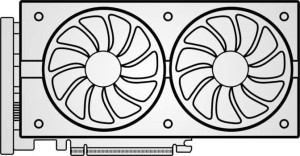
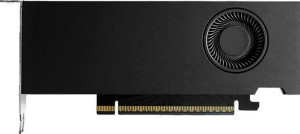
  • Card width is 241.3 mm on Nvidia RTX Pro 4000 Blackwell and 167.6 mm on Nvidia RTX Pro 4000 Blackwell SFF Edition.
  • Card height is 111.8 mm on Nvidia RTX Pro 4000 Blackwell and 68.6 mm on Nvidia RTX Pro 4000 Blackwell SFF Edition.
Specs Comparison
Nvidia RTX Pro 4000 Blackwell

Nvidia RTX Pro 4000 Blackwell

Nvidia RTX Pro 4000 Blackwell SFF Edition

Nvidia RTX Pro 4000 Blackwell SFF Edition

Performance:
GPU clock speed 1590 MHz 790 MHz
GPU turbo 2617 MHz 1337 MHz
pixel rate 251.2 GPixel/s 128.4 GPixel/s
floating-point performance 46.9 TFLOPS 23.96 TFLOPS
texture rate 732.8 GTexels/s 374.4 GTexels/s
GPU memory speed 1750 MHz 1125 MHz
shading units 8960 8960
texture mapping units (TMUs) 280 280
render output units (ROPs) 96 96
Has Double Precision Floating Point (DPFP)

Both the RTX Pro 4000 Blackwell and its SFF Edition share an identical rendering pipeline — the same 8960 shading units, 280 TMUs, and 96 ROPs — which means the underlying GPU silicon is the same. The critical divergence lies entirely in clock speeds, a direct consequence of the thermal and power constraints imposed by the small form factor chassis. The standard model runs a base clock of 1590 MHz versus the SFF Edition's 790 MHz, and the gap holds at boost: 2617 MHz versus 1337 MHz. Memory is similarly throttled, running at 1750 MHz on the standard card against 1125 MHz on the SFF.

These clock differences translate directly and proportionally into every throughput metric. Floating-point performance lands at 46.9 TFLOPS on the standard card compared to 23.96 TFLOPS on the SFF Edition — a gap of nearly — with pixel rate and texture rate following the same ratio. In practice, this means the standard RTX Pro 4000 Blackwell will complete GPU-bound workloads such as 3D rendering, simulation, and AI inference roughly twice as fast. Both cards support Double Precision Floating Point, so neither holds an exclusive advantage for scientific or engineering computation that requires FP64.

The standard RTX Pro 4000 Blackwell holds a clear and substantial performance edge across every measured throughput metric in this group. The SFF Edition trades roughly half its compute performance for a smaller physical footprint — a worthwhile compromise only when chassis size is a hard constraint. For workstation users without that limitation, the standard model is the unambiguous choice for raw GPU performance.

Memory:
effective memory speed 28000 MHz 18000 MHz
maximum memory bandwidth 672 GB/s 432 GB/s
VRAM 24GB 24GB
GDDR version GDDR7 GDDR7
memory bus width 192-bit 192-bit
Supports ECC memory

On paper, the two cards share a surprisingly strong common foundation: both carry 24GB of GDDR7 VRAM across a 192-bit bus, and both support ECC memory — the error-correcting capability that is essential for professional workloads in CAD, simulation, and machine learning where silent data corruption is unacceptable. For users whose primary concern is how much data fits in the frame buffer, these cards are identical.

Where they diverge meaningfully is memory speed. The standard RTX Pro 4000 Blackwell operates at an effective speed of 28000 MHz, delivering 672 GB/s of bandwidth, while the SFF Edition runs at 18000 MHz for 432 GB/s — a difference of roughly 56% more bandwidth on the standard card. Memory bandwidth is the pipeline that feeds the GPU's compute units with data; starve it, and even a fully capable shader array sits idle waiting. This matters acutely in bandwidth-hungry tasks like high-resolution texture rendering, large model AI inference, and real-time ray tracing where data must be streamed continuously to and from VRAM.

The standard RTX Pro 4000 Blackwell holds a clear bandwidth advantage in this group. Both cards offer the same capacity and error correction, so for workloads that are primarily VRAM-capacity-limited — such as loading very large datasets or textures — they will perform on equal footing. However, for tasks that demand sustained throughput, the standard model's significantly higher bandwidth will translate into faster, more consistent performance.

Features:
DirectX version DirectX 12 DirectX 12 Ultimate
OpenGL version 4.6 4.6
OpenCL version 3 3
Supports multi-display technology
supports ray tracing
Supports 3D
supports DLSS
has XeSS (XMX)
AMD SAM / Intel Resizable BAR Intel Resizable BAR Intel Resizable BAR
has LHR
has RGB lighting

Across nearly every feature in this group, the two cards are identical: both support ray tracing, DLSS, multi-display, 3D output, OpenGL 4.6, OpenCL 3, and Intel Resizable BAR. For professional workstation users, this parity is largely what matters — the capabilities that drive real-world rendering, compute, and display workflows are shared without exception.

The one notable divergence is the DirectX version. The SFF Edition lists DirectX 12 Ultimate, while the standard RTX Pro 4000 Blackwell is listed at DirectX 12. DirectX 12 Ultimate is a certification tier built on top of DirectX 12 that formally guarantees support for features such as hardware-accelerated ray tracing, mesh shaders, variable rate shading, and sampler feedback. In practice, both cards already support ray tracing and are built on modern Blackwell architecture, so the real-world gap this version difference creates for professional applications is likely minimal — but on the spec sheet, the SFF Edition holds the more complete API certification.

Based strictly on the provided data, the SFF Edition has a narrow edge in this group solely due to its DirectX 12 Ultimate designation. For users who exclusively run professional creative or compute workloads, this distinction will rarely surface. It becomes more relevant only if the card is also used with games or applications that explicitly target DirectX 12 Ultimate feature tiers.

Ports:
has an HDMI output
DisplayPort outputs 4 0
USB-C ports 0 0
DVI outputs 0 0
mini DisplayPort outputs 0 4

Display output count is equal — both cards drive up to four monitors simultaneously — but the connector format differs entirely. The standard RTX Pro 4000 Blackwell provides 4 full-size DisplayPort outputs, while the SFF Edition replaces these with 4 mini DisplayPort outputs. Neither card offers HDMI, USB-C, or DVI connectivity.

The practical implications come down to the user's existing display setup and physical workspace. Full-size DisplayPort is the dominant connector on professional monitors, and the standard card will plug directly into most modern workstation displays without any adapter. Mini DisplayPort carries the same signal capabilities and maximum resolution support, but requires either native mini DisplayPort cables or passive adapters to connect to standard DisplayPort or HDMI monitors — an additional procurement step that can matter in managed enterprise environments or time-sensitive deployments.

Neither card holds an inherent advantage in terms of display capability or maximum resolution throughput — the connector type does not limit the signal. However, for users with existing full-size DisplayPort monitor infrastructure, the standard RTX Pro 4000 Blackwell offers a more convenient out-of-the-box experience. The SFF Edition's mini DisplayPort outputs are a direct consequence of its compact bracket design, and users comfortable with adapters or who already own mini DisplayPort cables will find no functional difference.

General info:
GPU architecture Blackwell Blackwell
release date March 2025 August 2025
Thermal Design Power (TDP) 140W 70W
PCI Express (PCIe) version 5 5
semiconductor size 5 nm 5 nm
number of transistors 45600 million 45600 million
Has air-water cooling
width 241.3 mm 167.6 mm
height 111.8 mm 68.6 mm

Strip away the clock speed and performance differences, and these two cards reveal a shared engineering core: identical Blackwell architecture, the same 5nm manufacturing process, the same 45.6 billion transistors, and the same PCIe 5 interface. They are, fundamentally, the same silicon — the SFF Edition is not a cut-down or rebinned chip, but the full die configured to operate within tighter physical and thermal boundaries.

Those boundaries are defined most starkly by TDP. The standard card draws 140W; the SFF Edition is rated at 70W — exactly half. This halving of power budget is the single engineering decision that cascades into every performance difference seen across the other spec groups. It also has direct system-level implications: the SFF Edition places far lower demands on the workstation's power supply and cooling infrastructure, making it viable in compact, thermally constrained chassis where a 140W card would simply not fit or would throttle under sustained load. Physical dimensions reinforce this: the standard card measures 241.3 × 111.8 mm against the SFF Edition's 167.6 × 68.6 mm, making the latter substantially smaller in both length and height.

There is no single winner in this group — the right card depends entirely on the deployment context. The standard RTX Pro 4000 Blackwell suits full-size workstations where power and space are not constraints. The SFF Edition is the purposeful choice for small form factor systems, offering the same architecture and transistor count in a package that is significantly more compact and power-efficient, at the cost of the thermal headroom that enables higher sustained performance.

Comparison Summary & Verdict

After examining all available specifications, the choice between these two cards comes down to your workstation environment and performance priorities. The Nvidia RTX Pro 4000 Blackwell delivers substantially higher throughput with a 2617 MHz turbo clock, 46.9 TFLOPS of floating-point performance, and 672 GB/s of memory bandwidth, making it the stronger pick for demanding, compute-heavy professional workloads in full-size tower systems. The Nvidia RTX Pro 4000 Blackwell SFF Edition, on the other hand, halves the 70W TDP and shrinks the card footprint considerably, offering a practical fit for small form factor builds where space and power constraints are the primary concern. It also steps up to DirectX 12 Ultimate and uses mini DisplayPort outputs. Both cards share identical VRAM, architecture, ray tracing, and DLSS support, so neither compromises on feature breadth. Choose based on chassis size and how much raw performance headroom your workflow demands.

Nvidia RTX Pro 4000 Blackwell
Buy Nvidia RTX Pro 4000 Blackwell if...

Buy the Nvidia RTX Pro 4000 Blackwell if you need maximum compute performance, higher memory bandwidth, and are building in a full-size workstation tower where power and space are not limiting factors.

Nvidia RTX Pro 4000 Blackwell SFF Edition
Buy Nvidia RTX Pro 4000 Blackwell SFF Edition if...

Buy the Nvidia RTX Pro 4000 Blackwell SFF Edition if you are working within a small form factor chassis that requires a lower 70W TDP and a more compact card footprint without sacrificing core feature support.