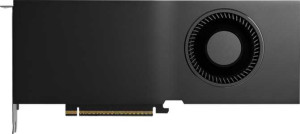
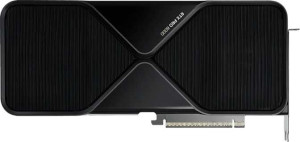
Across the vast majority of feature specifications, these two cards are identical — both support ray tracing, DLSS, 3D output, multi-display configurations of up to 4 displays, and share the same OpenGL 4.6, OpenCL 3, and Intel Resizable BAR support. For most professional workflows, this feature parity means the choice between them will be driven by performance and memory rather than capability gaps.
The one meaningful differentiator in this group is the DirectX version: the RTX Pro 5000 supports DirectX 12, while the RTX Pro 6000 Workstation Edition supports DirectX 12 Ultimate. The ″Ultimate″ designation is not merely cosmetic — it formally certifies support for a complete set of advanced graphics features including hardware-accelerated ray tracing, mesh shaders, variable-rate shading, and sampler feedback. While DirectX 12 supports some of these features depending on driver implementation, DirectX 12 Ultimate guarantees full compliance across all of them, which matters for developers and applications that explicitly target the Ultimate feature tier.
In practice, for purely professional compute, simulation, or rendering workloads, this distinction may be inconsequential. But for hybrid use cases that include real-time visualization, game engine previews, or forward-looking graphics pipelines, the RTX Pro 6000 Workstation Edition holds a narrow but real edge in this group. Otherwise, the feature sets are effectively a tie.