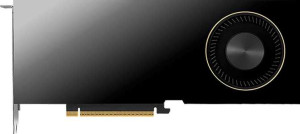
Across this feature set, the two cards are functionally identical in almost every respect — both support ray tracing, DLSS, multi-display output, Intel Resizable BAR, and share the same OpenGL 4.6 and OpenCL 3 API coverage. For professional workloads, the shared DLSS support is worth noting: it enables AI-accelerated upscaling that can meaningfully reduce rendering times in compatible applications without sacrificing output quality.
The single concrete differentiator is the DirectX version. The Max-Q Workstation Edition supports DirectX 12, while the Server Edition supports DirectX 12 Ultimate. This is not a trivial marketing distinction — DirectX 12 Ultimate is a strict superset that mandates hardware support for advanced features including mesh shaders, sampler feedback, and variable rate shading at a level that base DirectX 12 does not guarantee. In practice, this means the Server Edition is better positioned for next-generation graphics pipelines and any application that explicitly targets DX12 Ultimate feature tiers.
That said, the real-world impact depends heavily on use case. These are professional workstation and server cards, and the vast majority of compute, AI, and CAD workloads are agnostic to DirectX feature levels — they operate through CUDA, OpenCL, or vendor-specific APIs instead. Where the DX12 Ultimate advantage becomes tangible is in visualization, real-time rendering engines, and any hybrid GPU workflow that leverages the graphics pipeline alongside compute. For those scenarios, the Server Edition holds a clear features edge; for pure compute deployments, the distinction is largely academic.