Nvidia RTX Pro 6000 Blackwell Server Edition
Nvidia RTX Pro 6000 Blackwell Workstation Edition

Nvidia RTX Pro 6000 Blackwell Server Edition Nvidia RTX Pro 6000 Blackwell Workstation Edition

Overview

The Nvidia RTX Pro 6000 Blackwell lineup presents two professionally oriented variants built for demanding workloads: the Server Edition and the Workstation Edition. Both cards share the same Blackwell architecture, 96GB of GDDR7 VRAM, and a 600W TDP, making them closely matched on paper. Yet meaningful differences emerge in areas such as maximum memory bandwidth, floating-point throughput, and physical dimensions. This side-by-side comparison examines every specification to help professionals identify which variant aligns best with their specific deployment environment.

Common Features

  • Both products have a GPU clock speed of 1590 MHz.
  • Both products have a GPU turbo speed of 2617 MHz.
  • Both products deliver a pixel rate of 502.5 GPixel/s.
  • Both products deliver a texture rate of 1968 GTexels/s.
  • Both products have a GPU memory speed of 1750 MHz.
  • Both products have 24064 shading units.
  • Both products have 752 texture mapping units (TMUs).
  • Both products have 192 render output units (ROPs).
  • Both products have an effective memory speed of 28000 MHz.
  • Both products feature 96GB of VRAM.
  • Both products use GDDR7 memory.
  • Both products have a 512-bit memory bus width.
  • ECC memory is supported on both products.
  • Both products support DirectX 12 Ultimate.
  • Both products support OpenGL version 4.6.
  • Both products support OpenCL version 3.
  • Multi-display technology is supported on both products.
  • Ray tracing is supported on both products.
  • 3D support is available on both products.
  • DLSS is supported on both products.
  • XeSS (XMX) support is not available on either product.
  • Neither product has an HDMI output.
  • Both products have 4 DisplayPort outputs.
  • Neither product has USB-C ports.
  • Neither product has DVI outputs.
  • Neither product has mini DisplayPort outputs.
  • Both products are built on the Blackwell GPU architecture.
  • Both products have a Thermal Design Power (TDP) of 600W.
  • Both products use PCIe version 5.
  • Both products are manufactured on a 5 nm semiconductor process.
  • Both products contain 92200 million transistors.
  • Air-water cooling is not available on either product.

Main Differences

  • Floating-point performance is 126 TFLOPS on the Nvidia RTX Pro 6000 Blackwell Server Edition and 125 TFLOPS on the Nvidia RTX Pro 6000 Blackwell Workstation Edition.
  • Maximum memory bandwidth is 1600 GB/s on the Nvidia RTX Pro 6000 Blackwell Server Edition and 1792 GB/s on the Nvidia RTX Pro 6000 Blackwell Workstation Edition.
  • Width is 266.7 mm on the Nvidia RTX Pro 6000 Blackwell Server Edition and 304.8 mm on the Nvidia RTX Pro 6000 Blackwell Workstation Edition.
  • Height is 111.8 mm on the Nvidia RTX Pro 6000 Blackwell Server Edition and 137.2 mm on the Nvidia RTX Pro 6000 Blackwell Workstation Edition.
Specs Comparison
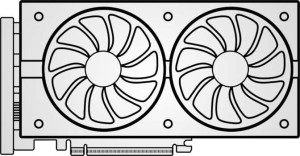
Nvidia RTX Pro 6000 Blackwell Server Edition

Nvidia RTX Pro 6000 Blackwell Server Edition

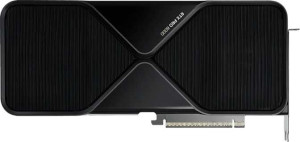
Nvidia RTX Pro 6000 Blackwell Workstation Edition

Nvidia RTX Pro 6000 Blackwell Workstation Edition

Performance:
GPU clock speed 1590 MHz 1590 MHz
GPU turbo 2617 MHz 2617 MHz
pixel rate 502.5 GPixel/s 502.5 GPixel/s
floating-point performance 126 TFLOPS 125 TFLOPS
texture rate 1968 GTexels/s 1968 GTexels/s
GPU memory speed 1750 MHz 1750 MHz
shading units 24064 24064
texture mapping units (TMUs) 752 752
render output units (ROPs) 192 192
Has Double Precision Floating Point (DPFP)

From a raw performance standpoint, the RTX Pro 6000 Blackwell Server Edition and the RTX Pro 6000 Blackwell Workstation Edition are remarkably close siblings. Both cards share an identical base clock of 1590 MHz and a boost clock of 2617 MHz, meaning neither has a frequency advantage out of the box or under sustained load. Supporting metrics — pixel rate (502.5 GPixel/s), texture rate (1968 GTexels/s), shader unit count, TMUs, ROPs, and memory speed — are carbon copies across both SKUs. In practice, this means identical throughput for rasterization, texture sampling, and geometry processing in any workload that exercises those pipelines.

The sole numerical differentiator is floating-point performance: the Server Edition is rated at 126 TFLOPS versus 125 TFLOPS for the Workstation Edition. A 1 TFLOP gap on a ~126 TFLOP card represents less than a 1% difference — effectively within measurement noise and entirely imperceptible in any real-world compute, rendering, or AI inference task. Both cards also support Double Precision Floating Point (DPFP), which matters for scientific simulation and engineering workloads that require 64-bit numerical accuracy; neither variant has an edge here.

In conclusion, on the Performance dimension alone, these two cards are for all practical purposes tied. The 1 TFLOP delta in FP32 throughput is statistically negligible and should carry zero weight in a purchasing decision. The meaningful differences between these SKUs, if any, lie elsewhere — in connectivity, cooling, form-factor certifications, or memory configuration — not in raw compute performance.
Memory:
effective memory speed 28000 MHz 28000 MHz
maximum memory bandwidth 1600 GB/s 1792 GB/s
VRAM 96GB 96GB
GDDR version GDDR7 GDDR7
memory bus width 512-bit 512-bit
Supports ECC memory

Both cards share a strong memory foundation: 96GB of GDDR7 across a 512-bit bus at an effective speed of 28000 MHz, with full ECC support. The 96GB capacity is a decisive asset for workloads that are memory-bound by dataset size — think large language model inference, high-resolution simulation meshes, or multi-layer compositing pipelines where running out of VRAM forces costly system-RAM fallbacks. ECC (Error-Correcting Code) memory is equally important in both server and professional workstation contexts, catching single-bit errors silently and making both cards suitable for mission-critical or long-running compute jobs.

The standout divergence — and a genuinely surprising one given the product naming — is in maximum memory bandwidth. The Workstation Edition delivers 1792 GB/s, while the Server Edition is rated at 1600 GB/s, a difference of 192 GB/s or roughly 12%. Bandwidth is the rate at which the GPU can feed data to its shader cores, and in memory-bandwidth-bound workloads — which include most AI training passes, large matrix multiplications, and high-resolution texture streaming — a 12% bandwidth advantage translates directly into proportionally faster throughput. This is not a rounding-error gap; it is a meaningful architectural distinction.

On memory specifications, the Workstation Edition holds a clear edge purely by the numbers provided. Despite sharing the same capacity, bus width, and memory type, its superior bandwidth makes it the stronger performer for any task where data movement — rather than raw compute — is the bottleneck. Users who assumed the Server Edition would be the higher-spec card should take careful note of this reversal.

Features:
DirectX version DirectX 12 Ultimate DirectX 12 Ultimate
OpenGL version 4.6 4.6
OpenCL version 3 3
Supports multi-display technology
supports ray tracing
Supports 3D
supports DLSS
has XeSS (XMX)
AMD SAM / Intel Resizable BAR Intel Resizable BAR Intel Resizable BAR
has LHR
has RGB lighting

Across every feature listed, the Server Edition and Workstation Edition are in complete lockstep. Both run DirectX 12 Ultimate, which ensures access to the full suite of modern graphics features including hardware-accelerated ray tracing, mesh shaders, and variable-rate shading — capabilities that matter in professional visualization and real-time rendering pipelines, not just gaming. OpenGL 4.6 and OpenCL 3 support rounds out a broad API compatibility profile, keeping both cards usable across legacy and modern compute applications alike.

On the AI and rendering acceleration front, both cards support DLSS — Nvidia's deep learning super sampling technology — while neither supports Intel's competing XeSS, which is expected for Nvidia hardware. Ray tracing support is present on both, and Intel Resizable BAR is enabled, allowing the CPU to access the full GPU frame buffer at once rather than in smaller chunks, which can improve performance in data-transfer-heavy workloads. Neither card carries an LHR (Lite Hash Rate) limiter, though this is largely irrelevant in a professional context.

There is no differentiator to call out here: every feature flag is identical between the two SKUs. For this specification group, the verdict is a complete tie, and feature support should play no role in choosing between them. The decision will need to rest on other specification groups — particularly memory bandwidth or physical form-factor considerations.

Ports:
has an HDMI output
DisplayPort outputs 4 4
USB-C ports 0 0
DVI outputs 0 0
mini DisplayPort outputs 0 0

Port configuration is straightforward and identical on both cards: four DisplayPort outputs, with no HDMI, no USB-C, no DVI, and no mini DisplayPort. For professional workstation and server use cases, this is a sensible layout — DisplayPort handles high-resolution, high-refresh-rate displays natively and is the de facto standard in multi-monitor professional setups. Four outputs means both cards can drive a quad-display configuration directly without any adapters or splitters.

The absence of HDMI and USB-C is worth noting for users who expected those connectors. HDMI is common on consumer cards but less critical in enterprise and workstation environments where DisplayPort dominates. The lack of USB-C means neither card offers direct connectivity to USB-C or Thunderbolt monitors without an active adapter — a consideration for users whose display hardware relies on those interfaces.

Since the port layouts are perfectly mirrored, this group is a complete tie. Neither the Server Edition nor the Workstation Edition offers any connectivity advantage over the other, and display setup flexibility will be identical for both.

General info:
GPU architecture Blackwell Blackwell
release date March 2025 March 2025
Thermal Design Power (TDP) 600W 600W
PCI Express (PCIe) version 5 5
semiconductor size 5 nm 5 nm
number of transistors 92200 million 92200 million
Has air-water cooling
width 266.7 mm 304.8 mm
height 111.8 mm 137.2 mm

At the architectural level, these two cards are cut from the same cloth. Both are built on the Blackwell architecture using a 5nm process node with 92.2 billion transistors, connected via PCIe 5.0, and rated at a 600W TDP. That power envelope is substantial — on par with the most demanding professional GPUs on the market — and means both cards will require robust power delivery and chassis airflow regardless of deployment context. Neither offers air-water hybrid cooling, so thermal management falls entirely on the host system.

Where this group produces a genuine differentiator is physical size. The Server Edition measures 266.7 mm × 111.8 mm, while the Workstation Edition is noticeably larger at 304.8 mm × 137.2 mm — about 38mm longer and 25mm taller. That size gap is meaningful in practice: server chassis and rackmount enclosures often have strict slot length and height constraints, and the more compact Server Edition footprint is clearly optimized with those environments in mind. The Workstation Edition's larger PCB may accommodate different cooling or board-level component layouts suited to tower workstation cases with more generous clearances.

On general specifications, the Server Edition holds a practical advantage for space-constrained deployments purely by virtue of its smaller form factor. For users targeting rackmount servers or dense compute enclosures, this distinction could be decisive. In a standard workstation tower where clearance is rarely an issue, the size difference carries less weight, and the two cards remain otherwise equivalent across all other general attributes in this group.

Comparison Summary & Verdict

After a thorough review of the specifications, both cards prove to be remarkably similar at their core, sharing the same Blackwell GPU architecture, 96GB of GDDR7 VRAM on a 512-bit bus, ECC memory support, and an identical 600W TDP. The distinction lies in the details. The Nvidia RTX Pro 6000 Blackwell Server Edition edges ahead with a marginally higher floating-point performance of 126 TFLOPS and a more compact physical footprint of 266.7 x 111.8 mm, making it better suited for space-constrained rack deployments. Conversely, the Nvidia RTX Pro 6000 Blackwell Workstation Edition delivers a notably higher maximum memory bandwidth of 1792 GB/s versus 1600 GB/s, which can be a decisive advantage for memory-intensive professional workloads on a full-sized workstation platform. Choose according to your infrastructure and bandwidth priorities.

Nvidia RTX Pro 6000 Blackwell Server Edition
Buy Nvidia RTX Pro 6000 Blackwell Server Edition if...

Choose the Nvidia RTX Pro 6000 Blackwell Server Edition if you need a more compact card for space-constrained server or rack deployments and can accept a slightly lower maximum memory bandwidth in exchange for a smaller physical footprint.

Nvidia RTX Pro 6000 Blackwell Workstation Edition
Buy Nvidia RTX Pro 6000 Blackwell Workstation Edition if...

Choose the Nvidia RTX Pro 6000 Blackwell Workstation Edition if maximizing memory bandwidth is a priority for your workloads, as its 1792 GB/s throughput offers a clear advantage over the Server Edition for data-intensive professional applications on a full-sized workstation.