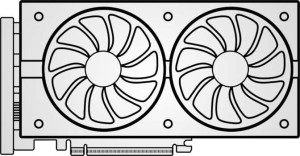
Nvidia RTX Pro 6000 Blackwell Server Edition
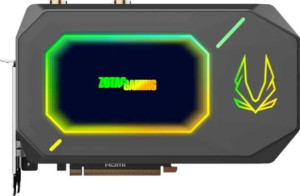
Zotac Gaming GeForce RTX 5090 ArcticStorm AIO

Nvidia RTX Pro 6000 Blackwell Server Edition Zotac Gaming GeForce RTX 5090 ArcticStorm AIO

Overview

Welcome to our in-depth specification comparison between the Nvidia RTX Pro 6000 Blackwell Server Edition and the Zotac Gaming GeForce RTX 5090 ArcticStorm AIO. Both cards share the same Blackwell architecture and 5 nm manufacturing process, yet they take remarkably different approaches to their target audiences. In this comparison, we examine key battlegrounds including raw compute performance, VRAM capacity, memory bandwidth, cooling design, and connectivity to help you decide which GPU truly fits your needs.

Common Features

  • Both GPUs share a memory speed of 1750 MHz.
  • Double Precision Floating Point (DPFP) is supported on both products.
  • Both GPUs use an effective memory speed of 28000 MHz.
  • Both products use GDDR7 memory.
  • Both GPUs feature a 512-bit memory bus width.
  • ECC memory is supported on both products.
  • Both products support DirectX 12 Ultimate.
  • Both GPUs support OpenGL version 4.6.
  • Both products support OpenCL version 3.
  • Multi-display technology is supported on both products.
  • Ray tracing is supported on both products.
  • 3D support is available on both products.
  • DLSS is supported on both products.
  • XeSS (XMX) support is not available on either product.
  • Neither product has USB-C ports.
  • Neither product has DVI outputs.
  • Neither product has mini DisplayPort outputs.
  • Both GPUs are built on the Blackwell architecture.
  • Both products use PCIe version 5.
  • Both GPUs are manufactured on a 5 nm semiconductor process and contain 92200 million transistors.

Main Differences

  • GPU clock speed is 1590 MHz on Nvidia RTX Pro 6000 Blackwell Server Edition and 2017 MHz on Zotac Gaming GeForce RTX 5090 ArcticStorm AIO.
  • GPU turbo clock is 2617 MHz on Nvidia RTX Pro 6000 Blackwell Server Edition and 2437 MHz on Zotac Gaming GeForce RTX 5090 ArcticStorm AIO.
  • Pixel rate is 502.5 GPixel/s on Nvidia RTX Pro 6000 Blackwell Server Edition and 428.9 GPixel/s on Zotac Gaming GeForce RTX 5090 ArcticStorm AIO.
  • Floating-point performance is 126 TFLOPS on Nvidia RTX Pro 6000 Blackwell Server Edition and 106.1 TFLOPS on Zotac Gaming GeForce RTX 5090 ArcticStorm AIO.
  • Texture rate is 1968 GTexels/s on Nvidia RTX Pro 6000 Blackwell Server Edition and 1657.2 GTexels/s on Zotac Gaming GeForce RTX 5090 ArcticStorm AIO.
  • Shading units number 24064 on Nvidia RTX Pro 6000 Blackwell Server Edition and 21760 on Zotac Gaming GeForce RTX 5090 ArcticStorm AIO.
  • Texture mapping units (TMUs) total 752 on Nvidia RTX Pro 6000 Blackwell Server Edition and 680 on Zotac Gaming GeForce RTX 5090 ArcticStorm AIO.
  • Render output units (ROPs) number 192 on Nvidia RTX Pro 6000 Blackwell Server Edition and 176 on Zotac Gaming GeForce RTX 5090 ArcticStorm AIO.
  • Maximum memory bandwidth is 1600 GB/s on Nvidia RTX Pro 6000 Blackwell Server Edition and 1790 GB/s on Zotac Gaming GeForce RTX 5090 ArcticStorm AIO.
  • VRAM is 96 GB on Nvidia RTX Pro 6000 Blackwell Server Edition and 32 GB on Zotac Gaming GeForce RTX 5090 ArcticStorm AIO.
  • RGB lighting is present on Zotac Gaming GeForce RTX 5090 ArcticStorm AIO but not available on Nvidia RTX Pro 6000 Blackwell Server Edition.
  • An HDMI output is present on Zotac Gaming GeForce RTX 5090 ArcticStorm AIO but not available on Nvidia RTX Pro 6000 Blackwell Server Edition.
  • DisplayPort outputs number 4 on Nvidia RTX Pro 6000 Blackwell Server Edition and 3 on Zotac Gaming GeForce RTX 5090 ArcticStorm AIO.
  • Thermal Design Power (TDP) is 600W on Nvidia RTX Pro 6000 Blackwell Server Edition and 575W on Zotac Gaming GeForce RTX 5090 ArcticStorm AIO.
  • Air-water cooling is present on Zotac Gaming GeForce RTX 5090 ArcticStorm AIO but not available on Nvidia RTX Pro 6000 Blackwell Server Edition.
  • Width is 266.7 mm on Nvidia RTX Pro 6000 Blackwell Server Edition and 251.6 mm on Zotac Gaming GeForce RTX 5090 ArcticStorm AIO.
  • Height is 111.8 mm on Nvidia RTX Pro 6000 Blackwell Server Edition and 160.1 mm on Zotac Gaming GeForce RTX 5090 ArcticStorm AIO.
Specs Comparison
Nvidia RTX Pro 6000 Blackwell Server Edition

Nvidia RTX Pro 6000 Blackwell Server Edition

Zotac Gaming GeForce RTX 5090 ArcticStorm AIO

Zotac Gaming GeForce RTX 5090 ArcticStorm AIO

Performance:
GPU clock speed 1590 MHz 2017 MHz
GPU turbo 2617 MHz 2437 MHz
pixel rate 502.5 GPixel/s 428.9 GPixel/s
floating-point performance 126 TFLOPS 106.1 TFLOPS
texture rate 1968 GTexels/s 1657.2 GTexels/s
GPU memory speed 1750 MHz 1750 MHz
shading units 24064 21760
texture mapping units (TMUs) 752 680
render output units (ROPs) 192 176
Has Double Precision Floating Point (DPFP)

At first glance, the Zotac RTX 5090 ArcticStorm appears faster thanks to its higher base clock of 2017 MHz versus the RTX Pro 6000's 1590 MHz. However, clock speed alone is a misleading metric when the underlying silicon differs in scale. The RTX Pro 6000 Blackwell Server Edition counters with a significantly higher boost clock of 2617 MHz and, more importantly, a substantially larger array of compute resources: 24,064 shading units and 752 TMUs compared to the 5090's 21,760 and 680 respectively. This means the Pro 6000 is running more parallel work per clock cycle, not just faster clocks.

That hardware advantage translates directly into throughput metrics. The Pro 6000 delivers 126 TFLOPS of floating-point performance versus 106.1 TFLOPS on the 5090 — roughly an 18.7% lead in raw compute. Its texture fill rate of 1968 GTexels/s and pixel rate of 502.5 GPixel/s similarly outpace the 5090's 1657.2 GTexels/s and 428.9 GPixel/s. In real-world terms, higher texture and pixel rates mean the GPU can resolve more geometry detail and shade more pixels per second — critical for high-resolution rendering, raytracing workloads, and compute-heavy tasks. Both cards share the same 1750 MHz memory speed and both support Double Precision Floating Point, so neither has an edge in memory bandwidth efficiency or FP64 compute capability on paper.

Overall, the Nvidia RTX Pro 6000 Blackwell Server Edition holds a clear and consistent performance advantage across every throughput metric in this group. Despite the 5090 ArcticStorm's higher base clock, the Pro 6000's broader compute architecture — more shading units, TMUs, and ROPs — results in meaningfully superior raw performance. Users prioritizing peak throughput for rendering, AI inference, or professional compute workloads will find the Pro 6000 the stronger performer based strictly on these specifications.
Memory:
effective memory speed 28000 MHz 28000 MHz
maximum memory bandwidth 1600 GB/s 1790 GB/s
VRAM 96GB 32GB
GDDR version GDDR7 GDDR7
memory bus width 512-bit 512-bit
Supports ECC memory

Both cards share the same GDDR7 memory type, 512-bit bus width, and identical effective memory speeds of 28000 MHz — so the foundation is equal. Where they diverge sharply is in capacity and, interestingly, peak bandwidth. The RTX Pro 6000 Blackwell Server Edition carries a massive 96GB of VRAM, triple the 32GB found on the Zotac RTX 5090 ArcticStorm. For memory-bound workloads — large language model inference, high-resolution scene rendering, or multi-stream video processing — VRAM capacity is often the hard ceiling that determines whether a task fits on the GPU at all.

The bandwidth story is more nuanced. Despite the same bus width and memory speed, the RTX 5090 ArcticStorm achieves a higher peak bandwidth of 1790 GB/s versus 1600 GB/s on the Pro 6000. This suggests the 5090's memory subsystem is tuned for throughput efficiency, which benefits workloads that are heavily bandwidth-sensitive, such as certain deep learning training passes or fast texture streaming in gaming. That said, a ~11.9% bandwidth advantage is meaningful but unlikely to overcome the Pro 6000's 3x VRAM lead in professional scenarios where dataset size matters most.

Both cards support ECC memory, which is significant for professional and scientific computing environments where silent data corruption is unacceptable — neither holds an edge there. Ultimately, the right winner depends on the use case: the RTX 5090 ArcticStorm edges ahead in raw bandwidth, but the RTX Pro 6000 dominates in capacity, making it the clear choice for workloads where fitting large models or datasets into VRAM is the primary constraint.

Features:
DirectX version DirectX 12 Ultimate DirectX 12 Ultimate
OpenGL version 4.6 4.6
OpenCL version 3 3
Supports multi-display technology
supports ray tracing
Supports 3D
supports DLSS
has XeSS (XMX)
AMD SAM / Intel Resizable BAR Intel Resizable BAR Intel Resizable BAR
has LHR
has RGB lighting

From a feature standpoint, these two cards are remarkably aligned. Both support DirectX 12 Ultimate, OpenGL 4.6, and OpenCL 3 — meaning developers and users get the same breadth of API compatibility regardless of which card they choose. Critically, both also support ray tracing and DLSS, ensuring access to Nvidia's core rendering enhancement technologies that are now central to modern gaming and real-time visualization pipelines.

The feature parity extends further: multi-display support, 3D output, and Intel Resizable BAR are present on both cards. Resizable BAR allows the CPU to access the full GPU framebuffer at once rather than in smaller chunks, which can improve performance in CPU-bottlenecked scenarios — and neither card has an advantage here since both implement it identically. The absence of LHR (Lite Hash Rate) on both is also noteworthy for users who engage in GPU compute tasks beyond gaming.

The sole differentiator in this group is RGB lighting, which the Zotac RTX 5090 ArcticStorm has and the RTX Pro 6000 Blackwell Server Edition does not. This is a purely aesthetic distinction with no functional impact on performance or compatibility, and is unsurprising given the Pro 6000's server-oriented positioning. For users who care about system aesthetics, the Zotac holds a minor edge; for everyone else, this group is effectively a tie.

Ports:
has an HDMI output
DisplayPort outputs 4 3
USB-C ports 0 0
DVI outputs 0 0
mini DisplayPort outputs 0 0

The display output configurations here reflect the fundamentally different audiences these cards serve. The RTX Pro 6000 Blackwell Server Edition offers 4 DisplayPort outputs and no HDMI, while the Zotac RTX 5090 ArcticStorm provides 3 DisplayPort outputs plus an HDMI port. Neither card includes DVI, mini-DisplayPort, or USB-C outputs, so those are non-factors.

The Pro 6000's four DisplayPort outputs make it well-suited for professional multi-monitor workstation deployments — think four high-resolution displays driven simultaneously without any adapters. The Zotac's trade-off of one DisplayPort slot for an HDMI output is a practical concession to consumer and gaming use cases, where TVs, AV receivers, and many monitors still rely on HDMI as their primary connection. For users in that ecosystem, having native HDMI eliminates the need for an adapter entirely.

Choosing a winner depends squarely on the intended setup. Users running multiple professional displays will prefer the RTX Pro 6000's extra DisplayPort, while those connecting to HDMI-native screens will find the Zotac RTX 5090 ArcticStorm more convenient out of the box. Neither card holds a universal advantage — the edge belongs to whichever port selection better matches the user's display environment.

General info:
GPU architecture Blackwell Blackwell
release date March 2025 July 2025
Thermal Design Power (TDP) 600W 575W
PCI Express (PCIe) version 5 5
semiconductor size 5 nm 5 nm
number of transistors 92200 million 92200 million
Has air-water cooling
width 266.7 mm 251.6 mm
height 111.8 mm 160.1 mm

Under the hood, these two cards are built on identical silicon: the same Blackwell architecture, the same 5nm process node, the same 92.2 billion transistors, and the same PCIe 5.0 interface. This confirms they are fundamentally cut from the same die, which means any performance or feature differences between them stem from configuration choices rather than generational or architectural gaps.

Where they diverge is in thermal design and physical form factor. The RTX Pro 6000 Blackwell Server Edition carries a slightly higher 600W TDP versus the Zotac's 575W — a modest 25W gap that likely reflects the Pro 6000's higher boost clocks and expanded compute configuration seen in its performance specs. More consequentially, the Zotac RTX 5090 ArcticStorm features integrated air-water (AIO) cooling, which is a significant practical advantage. Moving heat via liquid rather than air alone allows the card to sustain its thermal envelope more quietly and consistently, particularly in compact or thermally challenged cases.

The physical dimensions tell an interesting story too: the Pro 6000 is wider at 266.7 mm while the Zotac is taller at 160.1 mm, reflecting their different cooling architectures — the AIO radiator on the Zotac redistributes the thermal footprint vertically. For builders, case compatibility planning will differ between the two. Overall, the Zotac ArcticStorm holds a meaningful edge in this group thanks to its AIO cooling solution and marginally lower TDP, making it easier to manage thermally without sacrificing the same underlying silicon foundation.

Comparison Summary & Verdict

After reviewing all the evidence, these two GPUs serve clearly distinct purposes despite sharing the same architectural foundation. The Nvidia RTX Pro 6000 Blackwell Server Edition stands out with its massive 96 GB of VRAM, superior floating-point performance at 126 TFLOPS, higher texture and pixel rates, and four DisplayPort outputs, making it the obvious choice for professional workloads, server deployments, and compute-intensive tasks. The Zotac Gaming GeForce RTX 5090 ArcticStorm AIO, on the other hand, counters with a higher base clock, greater memory bandwidth at 1790 GB/s, an integrated air-water AIO cooling solution, RGB lighting, and HDMI output, positioning it as a premium option for enthusiast gamers and content creators who value thermal performance and display flexibility in a desktop environment.

Nvidia RTX Pro 6000 Blackwell Server Edition
Buy Nvidia RTX Pro 6000 Blackwell Server Edition if...

Buy the Nvidia RTX Pro 6000 Blackwell Server Edition if you need massive VRAM capacity (96 GB), higher overall compute throughput, and a greater number of DisplayPort outputs for professional or server-grade workloads.

Zotac Gaming GeForce RTX 5090 ArcticStorm AIO
Buy Zotac Gaming GeForce RTX 5090 ArcticStorm AIO if...

Buy the Zotac Gaming GeForce RTX 5090 ArcticStorm AIO if you prioritize higher memory bandwidth, a higher base GPU clock, built-in AIO water cooling, and HDMI connectivity for an enthusiast gaming or desktop setup.