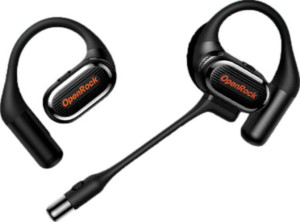
OneOdio OpenRock Link 20
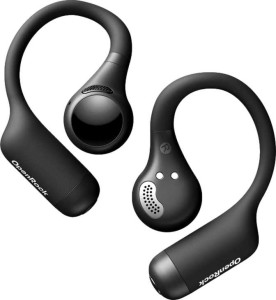
OpenRock S2

OneOdio OpenRock Link 20 OpenRock S2

Overview

Welcome to our in-depth spec comparison between the OneOdio OpenRock Link 20 and the OpenRock S2 — two open-ear wireless earbuds that share a surprising amount of DNA. Both are wire-free, water resistant, and built for multipoint connectivity, yet they diverge in meaningful ways when it comes to battery endurance, audio codec support, and overall feature set. Read on to discover which one fits your lifestyle best.

Common Features

  • Both products use an open-ear fit design.
  • Both products are water resistant.
  • Both products are completely wireless with no cables.
  • Neither product is a neckband earbud style.
  • Both products include wingtips.
  • Neither product features RGB lighting.
  • Both products have stereo speakers.
  • Neither product includes a UV light.
  • Neither product has active noise cancellation.
  • Neither product has passive noise reduction.
  • Both products have a lowest frequency of 20 Hz and a highest frequency of 20000 Hz.
  • Neither product supports Dolby Atmos or Dirac Virtuo.
  • Both products have a charge time of 1.5 hours.
  • Neither product supports wireless charging.
  • Both products have a battery level indicator and a rechargeable battery.
  • Neither product supports solar power.
  • Both products use Bluetooth version 6.
  • Neither product supports fast pairing, LDHC, Bluetooth LE Audio, aptX Adaptive, aptX Low Latency, or aptX HD.
  • Both products have a USB Type-C port.
  • Neither product has an ambient sound mode or in-ear detection.
  • Both products support fast charging and multipoint connection for up to 2 devices simultaneously.
  • Neither product can read notifications or has a built-in translator.
  • Both products have a mute function and can be used as a headset.
  • Both products feature a noise-canceling microphone.

Main Differences

  • The Ingress Protection rating is IPX7 and IP55 on the OneOdio OpenRock Link 20, while the OpenRock S2 is rated IPX5.
  • The weight is 18 g on the OneOdio OpenRock Link 20 and 14 g on the OpenRock S2.
  • Spatial audio support is present on the OpenRock S2 but not available on the OneOdio OpenRock Link 20.
  • A neodymium magnet is featured in the OneOdio OpenRock Link 20 but is not present in the OpenRock S2.
  • Battery life is 13 hours on the OneOdio OpenRock Link 20 and 8 hours on the OpenRock S2.
  • The charging case battery life is 39 hours on the OneOdio OpenRock Link 20 and 24 hours on the OpenRock S2.
  • LDAC support is present on the OpenRock S2 but not available on the OneOdio OpenRock Link 20.
  • AAC support is present on the OpenRock S2 but not available on the OneOdio OpenRock Link 20.
  • The maximum Bluetooth range is 15 m on the OneOdio OpenRock Link 20 and 10 m on the OpenRock S2.
  • A find device feature is available on the OpenRock S2 but not present on the OneOdio OpenRock Link 20.
  • The number of microphones is 5 on the OneOdio OpenRock Link 20 and 4 on the OpenRock S2.
Specs Comparison
OneOdio OpenRock Link 20

OneOdio OpenRock Link 20

OpenRock S2

OpenRock S2

Design:
Fit Open-ear Open-ear
Ingress Protection (IP) rating IPX7, IP55 IPX5
water resistance Water resistant Water resistant
weight 18 g 14 g
has no wires or cables
are neckband earbuds
wingtips included
has RGB lighting
has stereo speakers
has UV light
Has a display

Both the OneOdio OpenRock Link 20 and the OpenRock S2 share the same open-ear, truly wireless form factor — no cables, no neckband, wingtips included for a secure fit, and stereo speakers on both sides. For users who care about the fundamentals of how these earbuds sit and stay in place, the two products are essentially identical in concept.

Where they diverge meaningfully is in weight and water resistance. The S2 comes in at a lighter 14 g versus the Link 20's 18 g — a 22% difference that, while small in absolute terms, can translate to noticeably less ear fatigue during extended wear with open-ear designs, which rely more on physical contact than a sealed canal fit. On protection, the Link 20 holds a clear edge: its dual IPX7 and IP55 rating means it can withstand immersion in water up to 1 meter for 30 minutes, in addition to resisting dust and directional water jets. The S2's IPX5 rating covers only splashing and sweat, making it less suitable for swimming or heavy rain exposure.

The Link 20 wins on durability with its superior ingress protection, making it the better choice for active or outdoor use in wet conditions. However, if comfort during long listening sessions is the priority and extreme water exposure isn't a concern, the S2's lighter build gives it a tangible everyday advantage.

Sound quality:
has active noise cancellation (ANC)
has passive noise reduction
lowest frequency 20 Hz 20 Hz
highest frequency 20000 Hz 20000 Hz
supports spatial audio
has Dolby Atmos
has Dirac Virtuo
has a neodymium magnet

At the foundation, these two earbuds are acoustically matched in several ways: neither offers active noise cancellation or passive noise reduction — expected for open-ear designs — and both cover the full standard audible spectrum of 20 Hz to 20,000 Hz. For most listeners, that frequency range is perfectly adequate, but the raw numbers alone don't tell the whole story of how each pair actually sounds.

The real split comes down to two opposing strengths. The Link 20 uses a neodymium magnet in its driver, which typically allows for stronger magnetic flux, greater driver sensitivity, and more precise transient response — translating to tighter bass and cleaner high-frequency detail. The S2, by contrast, forgoes that driver advantage but adds spatial audio support, which can create a wider, more immersive soundstage by processing audio into a simulated three-dimensional field — particularly noticeable with compatible content like movies or games.

The edge here depends on use case. For pure music listening where driver quality and tonal accuracy matter most, the Link 20's neodymium magnet gives it a hardware-level advantage. For users who consume a lot of multimedia content and value an expansive, immersive sound experience, the S2's spatial audio support is a meaningful differentiator. Neither product dominates outright — they optimize for different listener priorities.

Power:
Battery life 13 hours 8 hours
Battery life of charging case 39 hours 24 hours
charge time 1.5 hours 1.5 hours
has wireless charging
Has a solar power battery
has a battery level indicator
has a rechargeable battery

Battery life is where the Link 20 pulls ahead most decisively. Its 13-hour earbud runtime versus the S2's 8 hours represents a 62% advantage — enough to mean the difference between making it through a full workday without a top-up and needing to reach for the case mid-afternoon. That gap compounds at the case level too: the Link 20 delivers 39 hours of total battery versus 24 hours for the S2, giving the Link 20 roughly three full recharges from its case compared to about three for the S2 as well, but with each cycle lasting significantly longer.

The two products are evenly matched where it matters for daily convenience: both recharge in an identical 1.5 hours, neither supports wireless charging, and both include a battery level indicator so users aren't caught off guard by a dying earbud. The absence of wireless charging on either model is a minor limitation for users with Qi charging pads, but it's a shared constraint that doesn't differentiate them.

For power, the Link 20 wins clearly and without caveat. Whether for long commutes, travel, or all-day wear, its superior earbud and case endurance make it the stronger choice for anyone who wants to charge less frequently.

Connectivity:
has fast pairing
Has USB Type-C
Bluetooth version 6 6
has LDAC
has LDHC
has Bluetooth LE Audio
has aptX Adaptive
has aptX Low Latency
has aptX HD
has aptX
has aptX Lossless
has aptX Voice
has Auracast
maximum Bluetooth range 15 m 10 m
supports Bluetooth pairing using NFC
Can be used wirelessly
has AAC

Sharing the same Bluetooth 6 foundation and USB-C charging, these two earbuds start from an identical connectivity baseline. The newer Bluetooth version brings improved connection stability and efficiency over previous generations, and both products benefit equally from that. The meaningful divergence, however, lies in audio codec support and wireless range.

The S2 supports both LDAC and AAC — two codecs that matter in different ecosystems. LDAC, developed by Sony, transmits audio at up to three times the bitrate of standard Bluetooth SBC, making it the go-to choice for Android users who want near-lossless wireless audio quality. AAC, meanwhile, is the preferred codec for Apple devices, ensuring efficient, high-quality transmission to iPhones and iPads. The Link 20 supports neither, which means it falls back to the baseline SBC codec regardless of the source device — a real limitation for listeners who prioritize audio fidelity. On the flip side, the Link 20 offers a longer maximum wireless range of 15 m compared to the S2's 10 m, which can be useful in scenarios where the source device isn't always close at hand.

The S2 takes a clear edge in connectivity overall. The range difference is relatively minor in everyday use — most listeners stay within 10 meters of their device — but the codec advantage is significant and practical. For Android audiophiles, LDAC support alone justifies the S2's lead; for Apple users, AAC support ensures a cleaner wireless link. The Link 20's broader range is a niche benefit that doesn't compensate for its lack of high-quality codec options.
Features:
release date September 2025 July 2025
has ambient sound mode
has in/on-ear detection
has find device feature
Supports fast charging
multipoint count 2 2
can read notifications
Has a built-in translator
has a mute function
can be used as a headset
control panel placed on a device
Has voice prompts
travel bag is included
Has an in-line control panel
Has a temperature sensor
Has a built-in camera remote control function

Functionally, these two earbuds are nearly identical in their feature sets. Both support multipoint connection to 2 devices simultaneously — useful for anyone switching between a laptop and a phone — and both include fast charging, on-device controls, voice prompts, a mute function, headset capability for calls, and even a travel bag. For the vast majority of daily use scenarios, a buyer would experience no practical difference between the two.

The one feature that separates them is the S2's inclusion of a find device function, which allows users to locate misplaced earbuds via a companion app. For open-ear earbuds that are worn without a full ear seal and can be easier to set down and forget, this is a genuinely useful safety net — particularly for users who travel frequently or use their earbuds across multiple environments.

The S2 holds a narrow but real edge in this category solely due to its find device feature. It's not a transformative differentiator, but in a group where everything else is evenly matched, it stands as the only practical advantage — and one that could save a frustrating search more than once.

Microphone:
number of microphones 5 4
has a noise-canceling microphone

Call and voice performance is an area where both earbuds share a critical capability — noise-canceling microphones — but differ in the resources dedicated to it. The Link 20 arrays 5 microphones against the S2's 4, a difference that matters more than it might initially appear.

In open-ear earbuds, environmental noise isolation is inherently limited since the ear canal remains open. This places a heavier burden on the microphone system to actively filter out background sound during calls. More microphones enable more sophisticated beamforming and noise-suppression algorithms, giving the system more spatial reference points to distinguish the user's voice from ambient noise — wind, crowd chatter, office hum, and so on. The extra microphone on the Link 20 suggests its array is better equipped to handle noisy real-world call environments.

For users who take frequent calls outdoors or in loud settings, the Link 20's 5-microphone setup gives it a meaningful edge in this category. The S2 is no slouch with 4 noise-canceling mics, but on microphone hardware alone, the Link 20 has the advantage.

Comparison Summary & Verdict

After reviewing every specification, the two earbuds emerge as distinct tools for different priorities. The OneOdio OpenRock Link 20 stands out with its exceptional battery life of 13 hours (39 hours combined with the case), stronger IP55 and IPX7 protection, a higher microphone count of 5, and a greater Bluetooth range of 15 m — making it the clear pick for endurance-focused users and outdoor enthusiasts. The OpenRock S2, on the other hand, wins with its spatial audio support, LDAC and AAC codec compatibility, lighter 14 g build, and handy find-device feature, appealing to listeners who prioritize audio quality and everyday convenience over raw battery stamina. Neither product supports ANC, wireless charging, or aptX variants, so neither has an edge there. Choose based on what you value most: longevity and durability, or audio fidelity and portability.

OneOdio OpenRock Link 20
Buy OneOdio OpenRock Link 20 if...

Buy the OneOdio OpenRock Link 20 if you need maximum battery endurance, stronger water and dust resistance, or a wider Bluetooth range for outdoor and active use.

OpenRock S2
Buy OpenRock S2 if...

Buy the OpenRock S2 if you prioritize spatial audio, high-quality LDAC and AAC codec support, or want a lighter earbud with a convenient find-device feature.