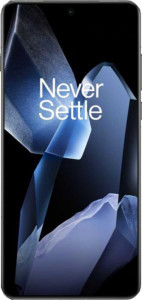
OnePlus 13R
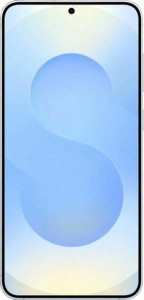
Samsung Galaxy S25

OnePlus 13R Samsung Galaxy S25

Overview

Welcome to our in-depth spec comparison between the OnePlus 13R and the Samsung Galaxy S25. These two Android flagships take notably different approaches across key battlegrounds: from battery capacity and charging speed to raw processing power, camera versatility, and everyday portability. Whether you prioritize endurance, performance, or a compact premium experience, this side-by-side breakdown covers everything you need to make a confident, informed decision.

Common Features

  • Neither the OnePlus 13R nor the Samsung Galaxy S25 has a rugged build.
  • Neither phone can be folded.
  • Both phones feature an OLED/AMOLED display.
  • Both phones support a 120Hz refresh rate.
  • Both phones have branded damage-resistant glass.
  • HDR10 support is available on both products.
  • HDR10+ support is available on both products.
  • Always-On Display is available on both products.
  • Neither phone has a secondary screen.
  • Both phones have a touch screen.
  • Both phones come with 12GB of RAM.
  • Both phones have integrated LTE.
  • Both phones support 64-bit processing.
  • Both phones use big.LITTLE technology.
  • Both phones have a multi-lens main camera with built-in optical image stabilization.
  • Both phones have phase-detection autofocus for photos and continuous autofocus when recording.
  • Slow-motion video recording is supported on both phones.
  • Both phones run Android 15.
  • Fast charging is supported on both phones.
  • Neither phone has a removable battery.
  • Both phones have stereo speakers and no 3.5mm audio jack.
  • Both phones support aptX and LDAC audio codecs.
  • Both phones support 5G, Bluetooth 5.4, NFC, and USB Type-C.
  • Both phones support Wi-Fi 7 (802.11be).
  • Neither phone has an external memory slot.
  • Both phones have a fingerprint scanner.
  • Download speed is 10000 MBits/s and upload speed is 3500 MBits/s on both phones.
  • Both phones have a video light but no sapphire glass, curved display, or e-paper display.

Main Differences

  • Water resistance is rated as water resistant (IP65) on the OnePlus 13R and waterproof (IP68) on the Samsung Galaxy S25.
  • Weight is 206g on the OnePlus 13R and 162g on the Samsung Galaxy S25.
  • Thickness is 8mm on the OnePlus 13R and 7.2mm on the Samsung Galaxy S25.
  • Width is 75.8mm on the OnePlus 13R and 70.5mm on the Samsung Galaxy S25.
  • Height is 161.7mm on the OnePlus 13R and 146.9mm on the Samsung Galaxy S25.
  • Screen size is 6.78″ on the OnePlus 13R and 6.2″ on the Samsung Galaxy S25.
  • Pixel density is 450 ppi on the OnePlus 13R and 416 ppi on the Samsung Galaxy S25.
  • Resolution is 1264 x 2780 px on the OnePlus 13R and 1080 x 2340 px on the Samsung Galaxy S25.
  • Typical brightness is 1600 nits on the OnePlus 13R and 2600 nits on the Samsung Galaxy S25.
  • The OnePlus 13R uses Gorilla Glass 7i while the Samsung Galaxy S25 uses Gorilla Glass Victus 2.
  • Dolby Vision display support is present on the OnePlus 13R but not available on the Samsung Galaxy S25.
  • Internal storage is 256GB on the OnePlus 13R and 512GB on the Samsung Galaxy S25.
  • The AnTuTu benchmark score is 2,121,100 on the OnePlus 13R and 3,050,000 on the Samsung Galaxy S25.
  • The chipset is Qualcomm Snapdragon 8 Gen 3 on the OnePlus 13R and Qualcomm Snapdragon 8 Elite on the Samsung Galaxy S25.
  • The GPU is Adreno 750 on the OnePlus 13R and Adreno 830 on the Samsung Galaxy S25.
  • Geekbench 6 multi-core score is 7325 on the OnePlus 13R and 10050 on the Samsung Galaxy S25.
  • Geekbench 6 single-core score is 2213 on the OnePlus 13R and 3175 on the Samsung Galaxy S25.
  • Semiconductor size is 4nm on the OnePlus 13R and 3nm on the Samsung Galaxy S25.
  • Main camera megapixels are 50 & 50 & 8 MP on the OnePlus 13R and 50 & 12 & 10 MP on the Samsung Galaxy S25.
  • Video recording resolution is 2160p at 60fps on the OnePlus 13R and 4320p at 30fps on the Samsung Galaxy S25.
  • Optical zoom is 2x on the OnePlus 13R and 3x on the Samsung Galaxy S25.
  • A BSI sensor is present on the Samsung Galaxy S25 but not on the OnePlus 13R.
  • A dual-tone LED flash is present on the Samsung Galaxy S25 but not on the OnePlus 13R.
  • Manual shutter speed is available on the Samsung Galaxy S25 but not on the OnePlus 13R.
  • Dolby Vision video recording is supported on the OnePlus 13R but not on the Samsung Galaxy S25.
  • Front camera resolution is 16MP on the OnePlus 13R and 12MP on the Samsung Galaxy S25.
  • The ability to be used as a PC is available on the Samsung Galaxy S25 but not on the OnePlus 13R.
  • Battery capacity is 6000 mAh on the OnePlus 13R and 4000 mAh on the Samsung Galaxy S25.
  • Wireless charging is available on the Samsung Galaxy S25 but not on the OnePlus 13R.
  • Wired charging speed is 80W on the OnePlus 13R and 25W on the Samsung Galaxy S25.
  • A charger is included in the box with the OnePlus 13R but not with the Samsung Galaxy S25.
  • aptX HD support is present on the OnePlus 13R but not on the Samsung Galaxy S25.
  • aptX Adaptive support is present on the Samsung Galaxy S25 but not on the OnePlus 13R.
  • aptX Lossless support is present on the Samsung Galaxy S25 but not on the OnePlus 13R.
  • Wi-Fi 6E (802.11ax) support is present on the Samsung Galaxy S25 but not on the OnePlus 13R.
  • SIM card support is dual SIM only on the OnePlus 13R, while the Samsung Galaxy S25 supports dual SIM plus 2 eSIMs.
  • USB version is 2.0 on the OnePlus 13R and 3.2 on the Samsung Galaxy S25.
  • ANT+ support is present on the Samsung Galaxy S25 but not on the OnePlus 13R.
  • An infrared sensor is present on the OnePlus 13R but not on the Samsung Galaxy S25.
  • A barometer is present on the Samsung Galaxy S25 but not on the OnePlus 13R.
Specs Comparison
OnePlus 13R

OnePlus 13R

Samsung Galaxy S25

Samsung Galaxy S25

Design:
water resistance Water resistant Waterproof
weight 206 g 162 g
thickness 8 mm 7.2 mm
width 75.8 mm 70.5 mm
height 161.7 mm 146.9 mm
volume 98.05488 cm³ 74.56644 cm³
Ingress Protection (IP) rating IP65 IP68
has a rugged build
can be folded

The most consequential difference in this group is water protection. The Samsung Galaxy S25 carries an IP68 rating, meaning it can be fully submerged in water — a meaningful real-world advantage for accidental drops in sinks, pools, or rain. The OnePlus 13R is rated IP65, which covers dust and water jets but offers no protection against submersion. For most everyday scenarios this gap won't matter, but for users who are near water frequently, the S25's rating provides substantially greater peace of mind.

Form factor is the other major differentiator. At 162 g, the Galaxy S25 is dramatically lighter than the OnePlus 13R's 206 g — a 44 g difference that is clearly perceptible during extended one-handed use or when carrying the phone in a pocket all day. The S25 is also slimmer (7.2 mm vs 8 mm) and considerably more compact overall, with a volume of roughly 74.6 cm³ compared to the 13R's 98.1 cm³. This makes the S25 notably easier to handle and pocket, particularly for users with smaller hands.

Neither phone offers a rugged build or a foldable form factor, so those are non-factors here. Overall, the Samsung Galaxy S25 holds a clear edge in this group: it is lighter, more compact, thinner, and better protected against water ingress — a combination that points to a more refined and versatile physical design.

Display:
Display type OLED/AMOLED OLED/AMOLED
screen size 6.78" 6.2"
pixel density 450 ppi 416 ppi
resolution 1264 x 2780 px 1080 x 2340 px
refresh rate 120Hz 120Hz
brightness (typical) 1600 nits 2600 nits
has branded damage-resistant glass
Gorilla Glass version Gorilla Glass 7i Gorilla Glass Victus 2
supports HDR10
supports HDR10+
Always-On Display
supports Dolby Vision
Has a secondary screen
has a touch screen

Both phones use OLED/AMOLED panels with a 120Hz refresh rate, HDR10+ support, and Always-On Display — solid foundations that put them on equal footing for everyday smoothness and content compatibility. Where they diverge sharply is brightness: the Samsung Galaxy S25 reaches a typical 2600 nits, versus 1600 nits on the OnePlus 13R. That 1000-nit gap is not marginal — it translates directly to far superior legibility in bright sunlight, which is one of the most practically impactful display qualities for daily use.

The OnePlus 13R counters with a larger 6.78″ screen and a higher pixel density of 450 ppi at a sharper 1264 x 2780 resolution, compared to the S25's 6.2″ panel at 416 ppi. The 13R's display is objectively more expansive and slightly crisper — advantages that matter for media consumption, reading, and multitasking. It also supports Dolby Vision, which the S25 does not, giving it an edge for streaming content from platforms that use that format. The S25's Gorilla Glass Victus 2, however, is a more advanced protection tier than the 13R's Gorilla Glass 7i, offering better scratch and drop resistance.

This group doesn't have a single clear winner — it comes down to priorities. Users who spend time outdoors or in variable lighting conditions will strongly prefer the S25's superior brightness. Those who prioritize screen real estate, raw sharpness, and Dolby Vision streaming will find the 13R's display more compelling. On balance, the brightness advantage of the S25 is the harder spec to compensate for in daily use, giving it a slight practical edge overall.

Performance:
internal storage 256GB 512GB
RAM 12GB 12GB
AnTuTu benchmark score 2121100 3050000
Chipset (SoC) name Qualcomm Snapdragon 8 Gen 3 Qualcomm Snapdragon 8 Elite
GPU name Adreno 750 Adreno 830
CPU speed 3 x 3.15 & 2 x 2.96 & 2 x 2.26 & 1 x 3.3 GHz 2 x 4.47 & 6 x 3.53 GHz
Geekbench 6 result (multi) 7325 10050
Geekbench 6 result (single) 2213 3175
GPU clock speed 900 MHz 1200 MHz
Has integrated LTE
RAM speed 4800 MHz 5300 MHz
semiconductor size 4 nm 3 nm
Supports 64-bit
DirectX version DirectX 12 DirectX 12
Has integrated graphics
OpenGL version 3.2 3.2
OpenGL ES version 3.2 3.2
Uses big.LITTLE technology
CPU threads 8 threads 8 threads
Uses HMP
Has TrustZone
maximum memory bandwidth 76.6 GB/s 85.1 GB/s
OpenCL version 2 3
memory channels 2 2
L2 cache 1 MB 12 MB
maximum memory amount 24GB 24GB
uses multithreading
Thermal Design Power (TDP) 12.5W 8.2W
DDR memory version 5 5
supported displays 1 2
L3 cache 12 MB 8 MB

The chipset gap here is significant. The Samsung Galaxy S25 runs on the Snapdragon 8 Elite — Qualcomm's latest generation — while the OnePlus 13R uses the Snapdragon 8 Gen 3, its predecessor. Benchmark scores make the performance delta concrete: the S25 scores around 3,050,000 on AnTuTu versus the 13R's 2,121,100, and in Geekbench 6 single-core — the metric most reflective of everyday app responsiveness — the S25 scores 3175 against the 13R's 2213. That is roughly a 43% single-core advantage, which manifests as snappier app launches, faster UI rendering, and smoother performance under sustained load.

The efficiency story is equally telling. The S25's Snapdragon 8 Elite is built on a 3 nm process versus the 13R's 4 nm, and its TDP of 8.2W is notably lower than the 13R's 12.5W. Doing more work while consuming less power is a meaningful real-world advantage — it points to better sustained performance without thermal throttling, and contributes to longer battery life under load. The S25 also benefits from faster RAM at 5300 MHz versus 4800 MHz, and its Adreno 830 GPU clocks in at 1200 MHz compared to the 13R's Adreno 750 at 900 MHz, reinforcing its advantage in graphics-intensive tasks like gaming.

Storage is another differentiator worth noting: the S25 ships with 512GB of internal storage versus the 13R's 256GB — double the capacity at the same price tier. Both phones share 12GB of RAM and an 8-thread CPU architecture, so for routine multitasking they feel comparable on paper, but the raw benchmark data and architectural advantages leave little ambiguity. The Samsung Galaxy S25 holds a clear and decisive performance edge in this group across virtually every metric that matters.

Cameras:
megapixels (main camera) 50 & 50 & 8 MP 50 & 12 & 10 MP
wide aperture (main camera) 1.8 & 2 & 2.2f 1.8 & 2.2 & 2.4f
Has a dual-lens (or multi-lens) main camera
megapixels (front camera) 16MP 12MP
has built-in optical image stabilization
video recording (main camera) 2160 x 60 fps 4320 x 30 fps
Has a dual-tone LED flash
number of flash LEDs 1 2
has a BSI sensor
has a CMOS sensor
has continuous autofocus when recording movies
Has phase-detection autofocus for photos
supports slow-motion video recording
has a built-in HDR mode
has manual exposure
has a flash
optical zoom 2x 3x
has manual ISO
has a serial shot mode
has manual focus
has a front camera
Has laser autofocus
Shoots 360° panorama
has manual white balance
shoots raw
has touch autofocus
has manual shutter speed
can create panoramas in-camera
wide aperture (front camera) 2.4f 2.2f
Has timelapse function
Has a front-facing LED flash
has a dual-lens (or multi-lens) front camera
supports HDR10 recording
supports Dolby Vision recording
has a front-facing camera under the display
Has a RGB LED flash
has 3D photo/video recording capabilities

Zoom range and video ceiling are the sharpest points of divergence here. The Samsung Galaxy S25 offers 3x optical zoom versus the OnePlus 13R's 2x — a meaningful difference for portrait and distant subject photography where lossless magnification matters. On video, the S25 goes all the way to 8K at 30fps (4320p), while the 13R tops out at 4K at 60fps. Whether 8K is practically useful today is debatable, but for future-proofing footage or heavy post-production cropping, the S25 has a clear ceiling advantage. The 13R counters with a higher-resolution secondary camera — its ultra-wide lens is a full 50MP compared to the S25's 12MP ultra-wide — which means noticeably more detail when shooting wide-angle shots intended for cropping or large prints.

Sensor technology also splits them. The S25 includes a BSI (Back-Side Illuminated) sensor, which improves light capture efficiency — particularly relevant in low-light conditions. The 13R lacks this. However, the 13R uniquely supports Dolby Vision recording, while the S25 does not, giving the 13R an edge for videographers targeting HDR-compatible streaming platforms. The S25 adds manual shutter speed control that the 13R omits, rounding out a slightly more complete pro-level manual control set. Its dual-tone dual-LED flash also provides more accurate color rendering in flash photography compared to the 13R's single LED.

For selfies, the 13R's 16MP front camera outresolves the S25's 12MP sensor, though the S25's front aperture of f/2.2 is wider than the 13R's f/2.4, admitting more light. On balance, the Samsung Galaxy S25 holds the overall camera edge — its superior zoom, higher video resolution ceiling, BSI sensor, and broader manual controls outweigh the 13R's ultra-wide megapixel advantage. The 13R remains competitive for wide-angle shooters and Dolby Vision videographers, but the S25 is the more versatile camera system by the provided specs.

Operating system:
Android version Android 15 Android 15
has clipboard warnings
has location privacy options
has camera/microphone privacy options
has Mail Privacy Protection
has theme customization
can block app tracking
blocks cross-site tracking
has on-device machine learning
has notification permissions
has media picker
Can play games while they download
has dark mode
has Wi-Fi password sharing
has battery health check
has an extra dim mode
has focus modes
has dynamic theming
can offload apps
Has customizable notifications
has Live Text
has full-page screenshots
supports split screen
gets direct OS updates
has PiP
Can be used as a PC
Has sharing intents
has a child lock
Supports widgets
Is free and open source
Has offline voice recognition
has voice commands
Tracks the current position of a mobile device
is a multi-user system
has Quick Start

Rarely does a spec group reveal this degree of parity. Both phones run Android 15 and share an identical feature set across privacy controls, productivity tools, and OS capabilities — including on-device machine learning, dynamic theming, split-screen multitasking, Picture-in-Picture, offline voice recognition, and customizable notifications. For users trying to differentiate the two on software grounds, the list of shared features is essentially exhaustive.

Scanning the entire dataset, only one distinction emerges: the Samsung Galaxy S25 supports use as a PC, while the OnePlus 13R does not. This refers to the ability to connect the phone to an external display and use it in a desktop-like environment — a feature that can meaningfully expand the device's utility for users who want a single device to serve both mobile and light desktop workflows. It is a niche capability, but for the right user, it removes the need for a separate computer in low-demand scenarios.

With that one exception, this group is a near-complete tie. The Samsung Galaxy S25 claims a narrow edge solely due to its PC mode support — but for the vast majority of users who will never use that feature, the operating system experience these two phones deliver is, by the provided specs, indistinguishable.

Battery:
battery power 6000 mAh 4000 mAh
has wireless charging
Supports fast charging
charging speed 80W 25W
comes with a charger
has a removable battery
Has an ultra power-saving mode
has a battery level indicator
has a rechargeable battery

Battery capacity is where the OnePlus 13R asserts its most commanding advantage in this entire comparison. Its 6000 mAh cell is 50% larger than the Samsung Galaxy S25's 4000 mAh battery — a gap that, all else being equal, translates directly into significantly more screen-on time before needing to reach for a charger. For heavy users, travelers, or anyone regularly away from a power source, this difference is hard to overlook.

Charging speed compounds that lead further. The 13R supports 80W wired fast charging, meaning its larger battery can be replenished in a fraction of the time it takes the S25 at just 25W. The 13R also comes with a charger in the box, whereas the S25 does not — an added cost consideration for buyers. The S25 does hit back with one exclusive: wireless charging, which the 13R entirely lacks. For users embedded in a wireless charging ecosystem — bedside pads, desk chargers, car mounts — this is a genuine convenience advantage that partially offsets the S25's slower wired speed.

Taken together, this group goes decisively to the OnePlus 13R. A 50% larger battery paired with charging speeds more than three times faster gives it a substantial real-world endurance and recovery advantage. The S25's wireless charging is a useful perk, but it does not close the gap against the 13R's raw capacity and charging efficiency lead — particularly since the 13R also ships ready to use out of the box.

Audio:
has a socket for a 3.5 mm audio jack
has stereo speakers
has aptX
has LDAC
has aptX HD
has aptX Adaptive
has aptX Lossless
Has a radio

Both phones share the same audio foundation — stereo speakers, no 3.5mm headphone jack, and support for both aptX and LDAC — so the real story here is in the Bluetooth codec details that separate them. The OnePlus 13R supports aptX HD, which delivers high-resolution audio over Bluetooth at up to 576 kbps. The Samsung Galaxy S25 skips aptX HD but adds aptX Adaptive and aptX Lossless — two newer, more advanced codecs. aptX Adaptive dynamically adjusts bitrate for lower latency and better connection stability, while aptX Lossless is capable of transmitting CD-quality audio without compression when conditions allow. In the codec hierarchy, the S25's suite represents a more forward-looking standard.

For wireless audio enthusiasts, the practical impact depends on their headphone ecosystem. LDAC — supported by both — is already capable of very high-quality wireless transmission and is widely available on premium headphones. aptX Lossless and aptX Adaptive require compatible hardware to unlock their benefits, so users without supporting earphones or headphones won't notice a difference in daily use. The 13R's aptX HD, while technically outclassed by aptX Adaptive, remains a capable codec for compatible devices.

This group is close, but the edge goes to the Samsung Galaxy S25. Its support for aptX Adaptive and aptX Lossless positions it better for next-generation wireless audio hardware, and aptX Adaptive's low-latency benefits are relevant beyond just music — they improve gaming and video synchronization as well. For users invested in cutting-edge Bluetooth audio, the S25 offers the more capable and future-ready codec set.

Connectivity & Features:
release date January 2025 January 2025
has 5G support
Wi-Fi version Wi-Fi 4 (802.11n), Wi-Fi 5 (802.11ac), Wi-Fi 6 (802.11ax), Wi-Fi 7 (802.11be) Wi-Fi 4 (802.11n), Wi-Fi 6 (802.11ax), Wi-Fi 5 (802.11ac), Wi-Fi 7 (802.11be), Wi-Fi 6E (802.11ax)
SIM cards 2 SIM 2 SIM, 2 eSIM
Bluetooth version 5.4 5.4
has an external memory slot
Has USB Type-C
USB version 2 3.2
has NFC
download speed 10000 MBits/s 10000 MBits/s
upload speed 3500 MBits/s 3500 MBits/s
Has a fingerprint scanner
has emergency SOS via satellite
has crash detection
is DLNA-certified
has a gyroscope
supports ANT+
Has a heart rate monitor
has GPS
has a compass
supports Wi-Fi
Has an infrared sensor
has an accelerometer
has a cellular module
Has a barometer
has an HDMI output
Uses 3D facial recognition
Has an iris scanner
Stylus included
supports Galileo
Has motion tracking
Has optical tracking
Has a built-in projector

Underneath the shared connectivity basics — 5G, Bluetooth 5.4, NFC, Wi-Fi 7, and identical peak download and upload speeds — several meaningful distinctions emerge. The most practically significant is USB version: the Samsung Galaxy S25 uses USB 3.2, while the OnePlus 13R is limited to USB 2.0. For anyone who regularly transfers large files — videos, backups, or RAW photos — to a computer via cable, the S25's connection is dramatically faster. The S25 also adds Wi-Fi 6E support, extending into the less congested 6GHz band for lower latency and better throughput in dense wireless environments, while the 13R tops out at Wi-Fi 7 without 6E access.

SIM flexibility is another area where the S25 pulls ahead. It supports 2 physical SIMs plus 2 eSIMs, versus the 13R's 2 physical SIMs only. For frequent travelers or users managing separate personal and work lines, the S25's eSIM support offers considerably more flexibility without requiring a physical card swap. The S25 also includes a barometer and ANT+ support — the latter enabling connectivity with fitness accessories like heart rate straps and cycling sensors — making it a stronger choice for health and outdoor activity tracking.

The 13R isn't without its own exclusive: an infrared sensor that can function as a universal remote for TVs and home appliances — a niche but genuinely useful feature the S25 lacks. On aggregate, however, the Samsung Galaxy S25 holds the clearer advantage in this group. Its USB 3.2 port, eSIM support, Wi-Fi 6E capability, and ANT+ connectivity represent more broadly impactful upgrades than the 13R's IR blaster, giving the S25 a stronger overall connectivity profile.
Miscellaneous:
has a video light
Has sapphire glass display
Has a curved display
Has an e-paper display

This group presents a complete tie. The OnePlus 13R and Samsung Galaxy S25 match identically across every provided specification: both have a video light, neither features sapphire glass, a curved display, or an e-paper display. There is no differentiator to analyze here, and declaring an edge for either product would not be supported by the data.

Comparison Summary & Verdict

After examining every specification, it is clear that both phones serve distinct audiences. The OnePlus 13R stands out for users who demand exceptional battery endurance, thanks to its massive 6000 mAh battery and rapid 80W wired charging — and it even includes a charger in the box. Its larger display and Dolby Vision support also make it appealing for media consumption. The Samsung Galaxy S25, on the other hand, excels in raw performance with the Snapdragon 8 Elite chipset, superior waterproofing (IP68), wireless charging, a more versatile camera system with 3x optical zoom, and the added convenience of eSIM support and DeX-style PC mode. Choose the OnePlus 13R for battery-first, media-heavy use; choose the Galaxy S25 if you want top-tier performance and a more compact, feature-rich flagship experience.

OnePlus 13R
Buy OnePlus 13R if...

Buy the OnePlus 13R if you prioritize long battery life and fast wired charging, want a larger display with Dolby Vision support, and appreciate getting a charger included in the box.

Samsung Galaxy S25
Buy Samsung Galaxy S25 if...

Buy the Samsung Galaxy S25 if you want class-leading performance, superior waterproofing, wireless charging, a more versatile camera with greater optical zoom, and a compact premium design.