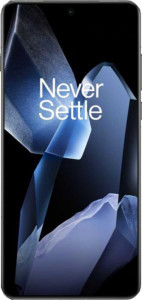
OnePlus 13R
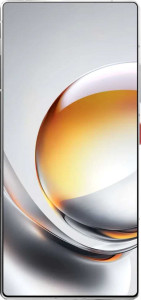
ZTE Nubia Z80 Ultra

OnePlus 13R ZTE Nubia Z80 Ultra

Overview

When choosing between the OnePlus 13R and the ZTE Nubia Z80 Ultra, buyers face a fascinating clash of priorities spanning raw performance, camera capability, battery endurance, and build quality. Both devices share a strong OLED display, 5G connectivity, and dual-SIM support, yet they diverge sharply in chipset power, storage capacity, and water resistance. In this detailed comparison, we examine every major specification battleground to help you determine which smartphone truly fits your needs.

Common Features

  • Neither product has a rugged build.
  • Neither product can be folded.
  • Both products feature an OLED/AMOLED display.
  • HDR10 support is available on both products.
  • HDR10+ support is available on both products.
  • Always-On Display is available on both products.
  • Neither product has a secondary screen.
  • Both products have a touch screen.
  • Both products have integrated LTE.
  • Both products support 64-bit processing.
  • Both products use DirectX 12.
  • Both products have integrated graphics.
  • Both products use big.LITTLE technology.
  • Both products have 8 CPU threads.
  • Both products feature a dual-lens or multi-lens main camera.
  • Both products have a 16MP front camera.
  • Both products have built-in optical image stabilization.
  • Neither product has a BSI sensor.
  • Both products have a CMOS sensor.
  • Both products support continuous autofocus when recording movies.
  • Both products have phase-detection autofocus for photos.
  • Both products support slow-motion video recording.
  • Both products show clipboard warnings.
  • Both products offer location privacy options.
  • Both products offer camera and microphone privacy options.
  • Neither product has Mail Privacy Protection.
  • Both products support theme customization.
  • Both products can block app tracking.
  • Neither product blocks cross-site tracking.
  • Both products have on-device machine learning.
  • Both products support fast charging.
  • Neither product has a removable battery.
  • Both products have a battery level indicator.
  • Both products have a rechargeable battery.
  • Neither product has a 3.5mm audio jack.
  • Both products have stereo speakers.
  • Both products support aptX.
  • Both products support aptX HD.
  • Neither product supports aptX Lossless.
  • Neither product has a radio.
  • Both products support 5G.
  • Both products support dual SIM.
  • Both products have Bluetooth version 5.4.
  • Neither product has an external memory slot.
  • Both products have USB Type-C.
  • Both products have NFC.
  • Both products have a download speed of 10000 MBits/s.
  • Both products have an upload speed of 3500 MBits/s.
  • Both products have a video light.
  • Neither product has a sapphire glass display.
  • Neither product has a curved display.
  • Neither product has an e-paper display.
  • OpenGL version 3.2 is shared by both products.
  • OpenGL ES version 3.2 is shared by both products.

Main Differences

  • Water resistance is rated as water resistant on OnePlus 13R and waterproof on ZTE Nubia Z80 Ultra.
  • Weight is 206g on OnePlus 13R and 227g on ZTE Nubia Z80 Ultra.
  • Thickness is 8mm on OnePlus 13R and 8.6mm on ZTE Nubia Z80 Ultra.
  • Width is 75.8mm on OnePlus 13R and 77.2mm on ZTE Nubia Z80 Ultra.
  • Height is 161.7mm on OnePlus 13R and 164.5mm on ZTE Nubia Z80 Ultra.
  • Volume is 98.05cm³ on OnePlus 13R and 109.21cm³ on ZTE Nubia Z80 Ultra.
  • IP rating is IP65 on OnePlus 13R and IP68 on ZTE Nubia Z80 Ultra.
  • Screen size is 6.78″ on OnePlus 13R and 6.85″ on ZTE Nubia Z80 Ultra.
  • Pixel density is 450 ppi on OnePlus 13R and 431 ppi on ZTE Nubia Z80 Ultra.
  • Resolution is 1264 x 2780 px on OnePlus 13R and 1216 x 2688 px on ZTE Nubia Z80 Ultra.
  • Refresh rate is 120Hz on OnePlus 13R and 144Hz on ZTE Nubia Z80 Ultra.
  • Dolby Vision support is present on OnePlus 13R but not available on ZTE Nubia Z80 Ultra.
  • Internal storage is 256GB on OnePlus 13R and 1024GB on ZTE Nubia Z80 Ultra.
  • RAM is 12GB on OnePlus 13R and 16GB on ZTE Nubia Z80 Ultra.
  • Chipset is Qualcomm Snapdragon 8 Gen 3 on OnePlus 13R and Qualcomm Snapdragon 8 Elite Gen 5 on ZTE Nubia Z80 Ultra.
  • GPU is Adreno 750 on OnePlus 13R and Adreno 830 on ZTE Nubia Z80 Ultra.
  • Geekbench 6 multi-core score is 7325 on OnePlus 13R and 10059 on ZTE Nubia Z80 Ultra.
  • Geekbench 6 single-core score is 2213 on OnePlus 13R and 3234 on ZTE Nubia Z80 Ultra.
  • GPU clock speed is 900 MHz on OnePlus 13R and 1200 MHz on ZTE Nubia Z80 Ultra.
  • RAM speed is 4800 MHz on OnePlus 13R and 5300 MHz on ZTE Nubia Z80 Ultra.
  • Semiconductor size is 4nm on OnePlus 13R and 3nm on ZTE Nubia Z80 Ultra.
  • Maximum memory bandwidth is 76.6 GB/s on OnePlus 13R and 85.1 GB/s on ZTE Nubia Z80 Ultra.
  • OpenCL version is 2 on OnePlus 13R and 3 on ZTE Nubia Z80 Ultra.
  • Main camera megapixels are 50 & 50 & 8 MP on OnePlus 13R and 64 & 50 & 50 MP on ZTE Nubia Z80 Ultra.
  • Main camera wide aperture is f/1.8, f/2, f/2.2 on OnePlus 13R and f/2.4, f/1.7, f/1.8 on ZTE Nubia Z80 Ultra.
  • Main camera video recording reaches 2160p at 60fps on OnePlus 13R and 4320p at 30fps on ZTE Nubia Z80 Ultra.
  • Dual-tone LED flash is absent on OnePlus 13R but present on ZTE Nubia Z80 Ultra.
  • Number of flash LEDs is 1 on OnePlus 13R and 2 on ZTE Nubia Z80 Ultra.
  • Optical zoom is 2x on OnePlus 13R and 2.7x on ZTE Nubia Z80 Ultra.
  • Laser autofocus is absent on OnePlus 13R but present on ZTE Nubia Z80 Ultra.
  • Front camera wide aperture is f/2.4 on OnePlus 13R and f/2 on ZTE Nubia Z80 Ultra.
  • Dolby Vision recording is supported on OnePlus 13R but not available on ZTE Nubia Z80 Ultra.
  • Android version is Android 15 on OnePlus 13R and Android 16 on ZTE Nubia Z80 Ultra.
  • Battery capacity is 6000 mAh on OnePlus 13R and 7200 mAh on ZTE Nubia Z80 Ultra.
  • Wireless charging is absent on OnePlus 13R but present on ZTE Nubia Z80 Ultra.
  • Charging speed is 80W on OnePlus 13R and 90W on ZTE Nubia Z80 Ultra.
  • aptX Adaptive support is absent on OnePlus 13R but present on ZTE Nubia Z80 Ultra.
  • Wi-Fi support includes Wi-Fi 4, 5, 6, and 7 on OnePlus 13R, while ZTE Nubia Z80 Ultra also adds Wi-Fi 6E.
  • USB version is 2.0 on OnePlus 13R and 3.2 on ZTE Nubia Z80 Ultra.
Specs Comparison
OnePlus 13R

OnePlus 13R

ZTE Nubia Z80 Ultra

ZTE Nubia Z80 Ultra

Design:
water resistance Water resistant Waterproof
weight 206 g 227 g
thickness 8 mm 8.6 mm
width 75.8 mm 77.2 mm
height 161.7 mm 164.5 mm
volume 98.05488 cm³ 109.21484 cm³
Ingress Protection (IP) rating IP65 IP68
has a rugged build
can be folded

In terms of physical form, the OnePlus 13R is the more compact and lighter device. At 206 g and 8 mm thick, it is noticeably slimmer and 21 grams lighter than the ZTE Nubia Z80 Ultra, which weighs 227 g and measures 8.6 mm in thickness. That weight difference is meaningful in daily use — a heavier phone becomes more noticeable during extended one-handed sessions or prolonged calls, giving the OnePlus 13R a tangible ergonomic advantage for users who prioritize handling comfort.

The most significant differentiator in this group, however, is water protection. The OnePlus 13R carries an IP65 rating, which means it is fully dust-tight and can withstand low-pressure water jets — suitable for rain, splashes, and accidental spills. The Nubia Z80 Ultra steps this up considerably with an IP68 rating, meaning it can be submerged in water beyond the surface level, offering genuine immersion protection. This is a meaningful real-world upgrade for users who swim, work near water, or simply want peace of mind in wet environments.

Neither phone has a rugged build or foldable form factor, so they are comparable in those respects. Overall, the choice here depends on priorities: the OnePlus 13R has the edge in portability and everyday comfort due to its lighter, slimmer profile, while the Nubia Z80 Ultra holds a clear advantage in water protection with its superior IP68 rating.

Display:
Display type OLED/AMOLED OLED/AMOLED
screen size 6.78" 6.85"
pixel density 450 ppi 431 ppi
resolution 1264 x 2780 px 1216 x 2688 px
refresh rate 120Hz 144Hz
supports HDR10
supports HDR10+
Always-On Display
supports Dolby Vision
Has a secondary screen
has a touch screen

Both phones use OLED/AMOLED panels and share a strong feature set — HDR10, HDR10+, Always-On Display, and touchscreen support — so the real story here lies in the finer distinctions. The OnePlus 13R packs a slightly sharper image with 450 ppi pixel density versus the Nubia Z80 Ultra's 431 ppi, a difference that is subtle but can be perceptible when reading fine text or viewing detailed imagery up close. The Nubia Z80 Ultra compensates with a marginally larger 6.85″ screen, though at a slightly lower resolution of 1216 x 2688 px compared to the 13R's 1264 x 2780 px.

Where the Nubia Z80 Ultra pulls ahead is in motion fluidity — its 144Hz refresh rate versus the OnePlus 13R's 120Hz means smoother scrolling and more responsive gaming. While the jump from 120Hz to 144Hz is less dramatic than going from 60Hz to 120Hz, competitive mobile gamers and users sensitive to display smoothness will notice the difference in fast-moving content. On the other hand, the OnePlus 13R exclusively supports Dolby Vision, a premium HDR format with dynamic metadata that enables more precise scene-by-scene color and brightness calibration — a meaningful advantage for streaming HDR content on compatible platforms.

The two displays ultimately trade blows: the Nubia Z80 Ultra wins on refresh rate for fluidity, while the OnePlus 13R wins on pixel sharpness and Dolby Vision support for content quality. Users who prioritize gaming and smooth motion will prefer the Nubia; those focused on crisp visuals and premium streaming will lean toward the OnePlus 13R.

Performance:
internal storage 256GB 1024GB
RAM 12GB 16GB
Chipset (SoC) name Qualcomm Snapdragon 8 Gen 3 Qualcomm Snapdragon 8 Elite Gen 5
GPU name Adreno 750 Adreno 830
CPU speed 3 x 3.15 & 2 x 2.96 & 2 x 2.26 & 1 x 3.3 GHz 2 x 4.6 & 6 x 3.62 GHz
Geekbench 6 result (multi) 7325 10059
Geekbench 6 result (single) 2213 3234
GPU clock speed 900 MHz 1200 MHz
Has integrated LTE
RAM speed 4800 MHz 5300 MHz
semiconductor size 4 nm 3 nm
Supports 64-bit
DirectX version DirectX 12 DirectX 12
Has integrated graphics
OpenGL version 3.2 3.2
OpenGL ES version 3.2 3.2
Uses big.LITTLE technology
CPU threads 8 threads 8 threads
Uses HMP
Has TrustZone
maximum memory bandwidth 76.6 GB/s 85.1 GB/s
OpenCL version 2 3
memory channels 2 2
L2 cache 1 MB 12 MB
maximum memory amount 24GB 24GB
uses multithreading
Thermal Design Power (TDP) 12.5W 8.2W
DDR memory version 5 5
supported displays 1 2
L3 cache 12 MB 8 MB

The performance gap between these two phones is substantial. The Nubia Z80 Ultra runs on the Snapdragon 8 Elite Gen 5 built on a 3 nm process, while the OnePlus 13R uses the older Snapdragon 8 Gen 3 on 4 nm. This generational difference translates directly into benchmark results: the Z80 Ultra scores 10,059 in Geekbench 6 multi-core versus the 13R's 7,325 — roughly a 37% advantage — and the single-core gap is even wider at 3,234 versus 2,213. In practice, this means faster app launches, snappier multitasking, and a more capable experience under sustained heavy loads like gaming or video rendering.

The GPU story follows the same pattern. The Z80 Ultra's Adreno 830 clocks at 1,200 MHz compared to the 13R's Adreno 750 at 900 MHz, and the Z80 Ultra also benefits from a dramatically larger L2 cache of 12 MB versus just 1 MB on the 13R — a difference that meaningfully reduces latency in compute-intensive tasks. Paired with 16 GB of RAM at 5,300 MHz and 1 TB of internal storage, the Z80 Ultra is configured for power users, while the 13R's 12 GB of RAM and 256 GB storage position it as a solid but more modest performer.

What makes the Z80 Ultra's advantage even more compelling is its TDP of 8.2W versus the 13R's 12.5W — the newer chip delivers dramatically higher performance while consuming less power, a hallmark of the smaller process node. The Nubia Z80 Ultra holds a clear and comprehensive edge in this category across raw speed, memory configuration, GPU power, and efficiency.

Cameras:
megapixels (main camera) 50 & 50 & 8 MP 64 & 50 & 50 MP
wide aperture (main camera) 1.8 & 2 & 2.2f 2.4 & 1.7 & 1.8f
Has a dual-lens (or multi-lens) main camera
megapixels (front camera) 16MP 16MP
has built-in optical image stabilization
video recording (main camera) 2160 x 60 fps 4320 x 30 fps
Has a dual-tone LED flash
number of flash LEDs 1 2
has a BSI sensor
has a CMOS sensor
has continuous autofocus when recording movies
Has phase-detection autofocus for photos
supports slow-motion video recording
has a built-in HDR mode
has manual exposure
has a flash
optical zoom 2x 2.7x
has manual ISO
has a serial shot mode
has manual focus
has a front camera
Has laser autofocus
Shoots 360° panorama
has manual white balance
shoots raw
has touch autofocus
has manual shutter speed
can create panoramas in-camera
wide aperture (front camera) 2.4f 2f
Has timelapse function
Has a front-facing LED flash
has a dual-lens (or multi-lens) front camera
supports HDR10 recording
supports Dolby Vision recording
has a front-facing camera under the display
Has a RGB LED flash
has 3D photo/video recording capabilities

The camera hardware on these two phones diverges in meaningful ways. The Nubia Z80 Ultra leads with a high-resolution primary shooter at 64 MP paired with two additional 50 MP lenses, while the OnePlus 13R offers a 50 & 50 & 8 MP triple setup — the Z80 Ultra's third lens maintaining full 50 MP resolution is a notable advantage for versatility and cropping headroom. The Z80 Ultra also edges ahead on optical zoom at 2.7x versus the 13R's 2x, and its main lens aperture of f/1.7 is wider than the 13R's f/1.8, giving it a slight light-gathering advantage in low-light scenarios.

Video capability is another area where the Z80 Ultra pulls ahead decisively — it supports 8K recording at 30 fps (4320p), while the OnePlus 13R tops out at 4K at 60 fps (2160p). For most users, 4K60 is more than sufficient, but content creators who need maximum resolution footage will find the Z80 Ultra's ceiling significantly higher. The 13R counters with Dolby Vision recording, a premium HDR video format not supported by the Z80 Ultra, which is a worthwhile trade-off for users heavily invested in Apple or Dolby-compatible ecosystems. The Z80 Ultra additionally includes laser autofocus and a dual-tone LED flash — two practical hardware additions that improve focus speed in low light and produce more natural flash-lit colors.

The front cameras are evenly matched at 16 MP on both devices. Overall, the Nubia Z80 Ultra holds a clear advantage in the camera department, driven by its higher-resolution sensor array, greater optical zoom, wider aperture, 8K video support, and laser autofocus. The OnePlus 13R's Dolby Vision recording is a genuine differentiator for a specific audience, but it does not offset the Z80 Ultra's broader and deeper camera capabilities.

Operating system:
Android version Android 15 Android 16
has clipboard warnings
has location privacy options
has camera/microphone privacy options
has Mail Privacy Protection
has theme customization
can block app tracking
blocks cross-site tracking
has on-device machine learning
has notification permissions
has media picker
Can play games while they download
has dark mode
has Wi-Fi password sharing
has battery health check
has an extra dim mode
has focus modes
has dynamic theming
can offload apps
Has customizable notifications
has Live Text
has full-page screenshots
supports split screen
gets direct OS updates
has PiP
Can be used as a PC
Has sharing intents
has a child lock
Supports widgets
Is free and open source
Has offline voice recognition
has voice commands
Tracks the current position of a mobile device
is a multi-user system
has Quick Start

The software comparison here is remarkably straightforward. Every single feature listed in the specs is identical across both phones — the only differentiator is the Android version: the Nubia Z80 Ultra ships with Android 16, while the OnePlus 13R runs Android 15. That one-generation gap means the Z80 Ultra arrives with the latest platform-level improvements, security patches, and any new user-facing features introduced in Android 16 out of the box.

Beyond the version number, the two phones share an extensive and identical feature set — including privacy controls, dynamic theming, split-screen multitasking, Picture-in-Picture, on-device machine learning, and offline voice recognition, among others. Neither device gets direct OS updates from Google, meaning both rely on their respective manufacturers for future software support, which introduces a degree of uncertainty about long-term update cadence regardless of which version they start on.

Given the data provided, the Nubia Z80 Ultra has a narrow but factual edge by virtue of launching on the newer Android 16. However, since the OnePlus 13R is expected to eventually receive the same update and both phones are otherwise software-identical in this spec set, this advantage is modest and may be temporary for most users.

Battery:
battery power 6000 mAh 7200 mAh
has wireless charging
Supports fast charging
charging speed 80W 90W
has a removable battery
has a battery level indicator
has a rechargeable battery

Battery capacity is one area where the Nubia Z80 Ultra makes a strong statement. Its 7,200 mAh cell is 20% larger than the OnePlus 13R's already-generous 6,000 mAh, and in practical terms, that gap is significant — users who regularly stretch their phone through heavy workdays, travel, or media consumption will feel the difference in hours of additional screen-on time before needing to reach for a charger.

Charging speeds are competitive on both sides, with the Z80 Ultra at 90W and the 13R at 80W — close enough that real-world charge times will feel similar. The more impactful distinction is that the Z80 Ultra also supports wireless charging, a convenience feature entirely absent on the OnePlus 13R. For users who have invested in wireless charging pads at home or on a desk, this adds meaningful day-to-day flexibility without needing to plug in a cable.

The Nubia Z80 Ultra wins this category on both fronts — it carries more capacity for longer endurance and adds wireless charging that the 13R simply lacks. The OnePlus 13R's 6,000 mAh battery is far from inadequate, but when stacked directly against the Z80 Ultra's combination of a larger cell and broader charging options, there is no ambiguity about which phone has the more capable battery setup.

Audio:
has a socket for a 3.5 mm audio jack
has stereo speakers
has aptX
has aptX HD
has aptX Adaptive
has aptX Lossless
Has a radio

Audio hardware is nearly identical between these two phones, and the shared foundation is solid — both drop the 3.5mm headphone jack, offer stereo speakers, and support both aptX and aptX HD for high-quality Bluetooth audio over compatible wireless headphones. Neither device includes a radio, so the comparison really narrows down to one differentiating codec.

That differentiator is aptX Adaptive, which the Nubia Z80 Ultra supports and the OnePlus 13R does not. aptX Adaptive is the most advanced codec in the aptX family, dynamically adjusting bitrate between 276 kbps and 420 kbps — or higher in some implementations — based on connection conditions. The practical result is lower latency, more stable connections, and higher audio quality ceiling compared to aptX HD, which operates at a fixed bitrate. For users with aptX Adaptive-compatible headphones, this translates to a noticeably more resilient and higher-fidelity wireless audio experience.

The Nubia Z80 Ultra holds a narrow but real edge here solely due to aptX Adaptive support. For casual listeners, the difference will be imperceptible since both phones handle standard aptX and aptX HD equally well. However, audiophiles or users who own premium Bluetooth headphones built around aptX Adaptive will get meaningfully more out of the Z80 Ultra's wireless audio capabilities.

Connectivity & Features:
release date January 2025 October 2025
has 5G support
Wi-Fi version Wi-Fi 4 (802.11n), Wi-Fi 5 (802.11ac), Wi-Fi 6 (802.11ax), Wi-Fi 7 (802.11be) Wi-Fi 4 (802.11n), Wi-Fi 6E (802.11ax), Wi-Fi 5 (802.11ac), Wi-Fi 6 (802.11ax), Wi-Fi 7 (802.11be)
SIM cards 2 SIM 2 SIM
Bluetooth version 5.4 5.4
has an external memory slot
Has USB Type-C
USB version 2 3.2
has NFC
download speed 10000 MBits/s 10000 MBits/s
upload speed 3500 MBits/s 3500 MBits/s
Has a fingerprint scanner
has emergency SOS via satellite
has crash detection
is DLNA-certified
has a gyroscope
supports ANT+
Has a heart rate monitor
has GPS
has a compass
supports Wi-Fi
Has an infrared sensor
has an accelerometer
has a cellular module
Has a barometer
has an HDMI output
Uses 3D facial recognition
Has an iris scanner
Stylus included
supports Galileo
Has motion tracking
Has optical tracking
Has a built-in projector

Connectivity is broadly well-matched across these two phones, with both supporting 5G, Wi-Fi 7, Bluetooth 5.4, NFC, dual SIM, USB Type-C, GPS, Galileo, infrared, and an identical set of sensors. For most users, day-to-day wireless performance will feel indistinguishable. The meaningful differences, however, surface in two specific areas that matter to more demanding users.

The first is USB. The Nubia Z80 Ultra uses USB 3.2, while the OnePlus 13R is limited to USB 2.0 — a significant gap for anyone who transfers large files, uses the phone as a webcam, or connects it to external storage or displays. USB 3.2 offers substantially higher data transfer speeds, making the Z80 Ultra a more capable tethered device. The second distinction is Wi-Fi: the Z80 Ultra adds Wi-Fi 6E support, which unlocks access to the 6 GHz band alongside the standard 2.4 GHz and 5 GHz bands. In congested environments like apartments or offices, the 6 GHz band offers less interference and lower latency — a practical benefit as Wi-Fi 6E routers become more widespread.

The Nubia Z80 Ultra takes a clear edge in this category. Neither difference is critical for casual users, but the combination of faster wired data transfer via USB 3.2 and broader wireless coverage through Wi-Fi 6E makes it the more future-proof and capable device for power users who push the boundaries of what their phone can connect to.

Miscellaneous:
has a video light
Has sapphire glass display
Has a curved display
Has an e-paper display

The miscellaneous specs for these two phones are completely identical — both feature a video light, and neither carries a sapphire glass display, a curved display, or an e-paper display. There is nothing in this data set that differentiates the OnePlus 13R from the Nubia Z80 Ultra in any meaningful way.

This is a clear tie. Based strictly on the provided specs, neither phone holds any advantage over the other in this category.

Comparison Summary & Verdict

After examining every specification, a clear picture emerges for each device. The OnePlus 13R stands out for users who value a lighter, more compact form factor, a sharper pixel density of 450 ppi, and Dolby Vision support for premium media consumption, all at a presumably lower price point. On the other hand, the ZTE Nubia Z80 Ultra is the unambiguous choice for power users who demand the fastest performance via the Snapdragon 8 Elite Gen 5, far greater storage at 1TB, a larger 7200 mAh battery, wireless charging, an IP68 waterproof rating, and 8K video recording. If versatility and raw capability are your top priorities, the Nubia Z80 Ultra delivers across the board, while the OnePlus 13R remains a well-rounded, more pocketable daily companion.

OnePlus 13R
Buy OnePlus 13R if...

Buy the OnePlus 13R if you prefer a lighter, more compact device with a sharper display, Dolby Vision support, and a more manageable size for everyday use.

ZTE Nubia Z80 Ultra
Buy ZTE Nubia Z80 Ultra if...

Buy the ZTE Nubia Z80 Ultra if you need maximum performance, vastly more storage, a larger battery with wireless charging, a superior IP68 waterproof rating, and 8K video recording capability.