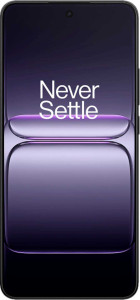
OnePlus Nord 5
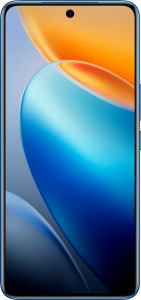
Vivo T4 Pro

OnePlus Nord 5 Vivo T4 Pro

Overview

When comparing the OnePlus Nord 5 and the Vivo T4 Pro, two compelling mid-to-upper-range Android smartphones come face to face. Both devices share a strong foundation — OLED displays, fast charging, 12 GB of RAM, and Android 15 — yet they diverge sharply when it comes to performance headroom, water resistance, battery capacity, and camera versatility. Whether raw processing power or endurance matters more to you, this comparison will help you decide which phone fits your lifestyle best.

Common Features

  • Both phones share the same width of 77 mm.
  • Neither phone has a rugged build.
  • Neither phone can be folded.
  • Both phones feature an OLED/AMOLED display.
  • Both phones have branded damage-resistant glass.
  • HDR10 support is available on both phones.
  • HDR10+ support is available on both phones.
  • Dolby Vision support is not available on either phone.
  • Neither phone has a secondary screen.
  • Both phones have a touchscreen.
  • Both phones come with 12 GB of RAM.
  • Both phones have integrated LTE.
  • Both phones use a 4 nm semiconductor.
  • Both phones support 64-bit processing.
  • Both phones run DirectX 12.
  • Both phones have integrated graphics.
  • Both phones use big.LITTLE technology.
  • Both phones have a dual-lens or multi-lens main camera.
  • Both phones have built-in optical image stabilization.
  • A dual-tone LED flash is not present on either phone.
  • Both phones use a CMOS sensor.
  • Both phones support continuous autofocus when recording video.
  • Both phones have phase-detection autofocus for photos.
  • Both phones support slow-motion video recording.
  • Both phones run Android 15.
  • Both phones have clipboard warnings.
  • Both phones include location privacy options.
  • Both phones include camera and microphone privacy options.
  • Mail Privacy Protection is not available on either phone.
  • Both phones support theme customization.
  • Both phones can block app tracking.
  • Cross-site tracking blocking is not available on either phone.
  • Neither phone supports wireless charging.
  • Both phones support fast charging.
  • Both phones come with a charger in the box.
  • Neither phone has a removable battery.
  • Both phones have a battery level indicator.
  • Both phones have a rechargeable battery.
  • Neither phone has a 3.5 mm audio jack.
  • Both phones have stereo speakers.
  • aptX Adaptive support is not available on either phone.
  • aptX Lossless support is not available on either phone.
  • Neither phone has a radio.
  • Both phones support 5G.
  • Both phones have dual SIM card slots.
  • Both phones use Bluetooth 5.4.
  • Neither phone has an external memory slot.
  • Both phones have USB Type-C.
  • Both phones use USB version 2.
  • Both phones have NFC.
  • Both phones have a fingerprint scanner.
  • Both phones have a video light.
  • Neither phone has a sapphire glass display.
  • Neither phone has a curved display.
  • Neither phone has an e-paper display.

Main Differences

  • Water resistance is rated as water resistant on OnePlus Nord 5 and waterproof on Vivo T4 Pro.
  • Weight is 211 g on OnePlus Nord 5 and 192 g on Vivo T4 Pro.
  • Thickness is 8.1 mm on OnePlus Nord 5 and 7.5 mm on Vivo T4 Pro.
  • Height is 163.4 mm on OnePlus Nord 5 and 163.5 mm on Vivo T4 Pro.
  • Volume is 101.91 cm³ on OnePlus Nord 5 and 94.42 cm³ on Vivo T4 Pro.
  • IP rating is IP65 on OnePlus Nord 5 and IP68 on Vivo T4 Pro.
  • Screen size is 6.83″ on OnePlus Nord 5 and 6.77″ on Vivo T4 Pro.
  • Pixel density is 450 ppi on OnePlus Nord 5 and 388 ppi on Vivo T4 Pro.
  • Resolution is 1272 x 2800 px on OnePlus Nord 5 and 1080 x 2392 px on Vivo T4 Pro.
  • Refresh rate is 144 Hz on OnePlus Nord 5 and 120 Hz on Vivo T4 Pro.
  • Always-On Display is available on OnePlus Nord 5 but not on Vivo T4 Pro.
  • Internal storage is 512 GB on OnePlus Nord 5 and 256 GB on Vivo T4 Pro.
  • The chipset is Qualcomm Snapdragon 8s Gen 3 on OnePlus Nord 5 and Qualcomm Snapdragon 7 Gen 4 on Vivo T4 Pro.
  • CPU speed is 1 x 3 & 4 x 2.8 & 3 x 2 GHz on OnePlus Nord 5 and 1 x 2.8 & 4 x 2.4 & 3 x 1.8 GHz on Vivo T4 Pro.
  • GPU clock speed is 1100 MHz on OnePlus Nord 5 and 1000 MHz on Vivo T4 Pro.
  • RAM speed is 4800 MHz on OnePlus Nord 5 and 4200 MHz on Vivo T4 Pro.
  • Maximum memory bandwidth is 64 GB/s on OnePlus Nord 5 and 33.6 GB/s on Vivo T4 Pro.
  • Thermal Design Power (TDP) is 12.5 W on OnePlus Nord 5 and 6 W on Vivo T4 Pro.
  • Main camera megapixels are 50 & 8 MP on OnePlus Nord 5 and 50 & 50 & 2 MP on Vivo T4 Pro.
  • Main camera wide aperture is f/2.2 & f/1.8 on OnePlus Nord 5 and f/1.8 & f/2.7 & f/2.4 on Vivo T4 Pro.
  • Front camera megapixels are 50 MP on OnePlus Nord 5 and 32 MP on Vivo T4 Pro.
  • Main camera video recording goes up to 2160p at 60 fps on OnePlus Nord 5 and 2160p at 30 fps on Vivo T4 Pro.
  • Number of flash LEDs is 2 on OnePlus Nord 5 and 1 on Vivo T4 Pro.
  • Optical zoom is 0x on OnePlus Nord 5 and 3x on Vivo T4 Pro.
  • Front camera wide aperture is f/2 on OnePlus Nord 5 and f/2.5 on Vivo T4 Pro.
  • Battery capacity is 5200 mAh on OnePlus Nord 5 and 6500 mAh on Vivo T4 Pro.
  • Charging speed is 80 W on OnePlus Nord 5 and 90 W on Vivo T4 Pro.
  • aptX support is present on OnePlus Nord 5 but not available on Vivo T4 Pro.
  • LDAC support is present on OnePlus Nord 5 but not available on Vivo T4 Pro.
  • aptX HD support is present on OnePlus Nord 5 but not available on Vivo T4 Pro.
Specs Comparison
OnePlus Nord 5

OnePlus Nord 5

Vivo T4 Pro

Vivo T4 Pro

Design:
water resistance Water resistant Waterproof
weight 211 g 192 g
thickness 8.1 mm 7.5 mm
width 77 mm 77 mm
height 163.4 mm 163.5 mm
volume 101.91258 cm³ 94.42125 cm³
Ingress Protection (IP) rating IP65 IP68
has a rugged build
can be folded

Both the OnePlus Nord 5 and the Vivo T4 Pro share virtually identical footprints — the same 77 mm width and nearly the same height (~163 mm) — so in your hand or pocket, they occupy the same lateral space. The real differences emerge in how much mass and depth each phone carries. The T4 Pro comes in at 192 g versus the Nord 5's 211 g, a difference of 19 grams that is genuinely perceptible during prolonged one-handed use or long calls. Paired with a slimmer 7.5 mm profile (versus 8.1 mm), the T4 Pro also has a meaningfully smaller volume — roughly 94.4 cm³ versus 101.9 cm³ — which translates to a more svelte, premium-feeling device despite no difference in screen real estate.

The more consequential divergence is in water protection. The Nord 5 carries an IP65 rating, meaning it is sealed against low-pressure water jets but is not rated for submersion. The T4 Pro steps up to IP68, which certifies it for sustained immersion — typically 1.5 meters for up to 30 minutes. In practice, IP65 handles splashes, rain, and accidental sink exposure just fine, but IP68 provides genuine peace of mind if the phone is dropped in a puddle, pool, or toilet. Neither device has a rugged build or foldable form factor, so these ratings represent the full extent of their durability story.

The Vivo T4 Pro holds a clear design edge in this group. It is lighter, thinner, and meaningfully better protected against water ingress — three practical advantages that compound in everyday use without sacrificing any screen size.

Display:
Display type OLED/AMOLED OLED/AMOLED
screen size 6.83" 6.77"
pixel density 450 ppi 388 ppi
resolution 1272 x 2800 px 1080 x 2392 px
refresh rate 144Hz 120Hz
has branded damage-resistant glass
supports HDR10
supports HDR10+
Always-On Display
supports Dolby Vision
Has a secondary screen
has a touch screen

Both phones use OLED/AMOLED panels, so the baseline display quality — deep blacks, vibrant colors, and solid contrast — is shared. Where they diverge is in resolution and sharpness. The OnePlus Nord 5 pushes a 1272 x 2800 px resolution across its 6.83″ screen, yielding a pixel density of 450 ppi. The Vivo T4 Pro runs a 1080 x 2392 px panel at 388 ppi on a slightly smaller 6.77″ screen. That 62 ppi gap is visible — fine text, detailed UI elements, and high-resolution photos will render noticeably crisper on the Nord 5, particularly for users who hold their phone close.

The refresh rate gap also favors the Nord 5: its 144 Hz panel versus the T4 Pro's 120 Hz produces marginally smoother scrolling and animations, though the practical difference is subtle during casual use. More meaningful in daily life is the Nord 5's Always-On Display support, which the T4 Pro lacks — a genuine convenience feature for at-a-glance time, notifications, and widgets without fully waking the screen. HDR10+ and damage-resistant glass are shared by both, so those bases are covered equally.

The OnePlus Nord 5 holds a clear display advantage. The higher pixel density and Always-On Display are the two differentiators that matter most in practice, making the Nord 5 the stronger choice for users who prioritize screen quality and daily usability.

Performance:
internal storage 512GB 256GB
RAM 12GB 12GB
Chipset (SoC) name Qualcomm Snapdragon 8s Gen 3 Qualcomm Snapdragon 7 Gen 4
CPU speed 1 x 3 & 4 x 2.8 & 3 x 2 GHz 1 x 2.8 & 4 x 2.4 & 3 x 1.8 GHz
GPU clock speed 1100 MHz 1000 MHz
Has integrated LTE
RAM speed 4800 MHz 4200 MHz
semiconductor size 4 nm 4 nm
Supports 64-bit
DirectX version DirectX 12 DirectX 12
Has integrated graphics
OpenGL ES version 3.2 3.2
Uses big.LITTLE technology
Has TrustZone
maximum memory bandwidth 64 GB/s 33.6 GB/s
OpenCL version 2 2
uses multithreading
Thermal Design Power (TDP) 12.5W 6W
DDR memory version 5 5

The chipset gap here is significant. The OnePlus Nord 5 runs on the Snapdragon 8s Gen 3, Qualcomm's upper-tier silicon, while the Vivo T4 Pro uses the Snapdragon 7 Gen 4, a capable but clearly lower-tier chip. This hierarchy shows up clearly in the numbers: the Nord 5's prime CPU core clocks in at 3 GHz versus 2.8 GHz on the T4 Pro, its GPU runs at 1100 MHz versus 1000 MHz, and — most strikingly — its memory bandwidth nearly doubles the competition at 64 GB/s versus 33.6 GB/s. Higher memory bandwidth directly accelerates GPU-intensive workloads, AI tasks, and anything that moves large amounts of data quickly, such as gaming at high settings or computational photography.

Storage is another point of divergence. The Nord 5 ships with 512 GB of internal storage compared to the T4 Pro's 256 GB — a meaningful difference for users who store large media libraries or avoid cloud dependency. RAM is matched at 12 GB on both, but the Nord 5's faster 4800 MHz RAM versus 4200 MHz on the T4 Pro complements its higher overall bandwidth. One tradeoff worth noting: the Nord 5's 12.5 W TDP versus the T4 Pro's 6 W means the more powerful chip generates more heat and will draw more power under sustained load.

The OnePlus Nord 5 wins this category decisively. Across CPU speed, GPU clock, memory bandwidth, and storage capacity, it outpaces the T4 Pro at every turn — the only cost being higher thermal output, which is a standard tradeoff for this tier of performance.

Cameras:
megapixels (main camera) 50 & 8 MP 50 & 50 & 2 MP
wide aperture (main camera) 2.2 & 1.8f 1.8 & 2.7 & 2.4f
Has a dual-lens (or multi-lens) main camera
megapixels (front camera) 50MP 32MP
has built-in optical image stabilization
video recording (main camera) 2160 x 60 fps 2160 x 30 fps
Has a dual-tone LED flash
number of flash LEDs 2 1
has a BSI sensor
has a CMOS sensor
has continuous autofocus when recording movies
Has phase-detection autofocus for photos
supports slow-motion video recording
has a built-in HDR mode
has manual exposure
has a flash
optical zoom 0x 3x
has manual ISO
has a serial shot mode
has manual focus
has a front camera
Has laser autofocus
Shoots 360° panorama
has manual white balance
shoots raw
has touch autofocus
has manual shutter speed
can create panoramas in-camera
wide aperture (front camera) 2f 2.5f
Has timelapse function
Has a front-facing LED flash
has a dual-lens (or multi-lens) front camera
supports HDR10 recording
supports Dolby Vision recording
has a front-facing camera under the display
Has a RGB LED flash
has 3D photo/video recording capabilities

The most consequential difference in this camera comparison is zoom capability. The Vivo T4 Pro fields a triple-lens rear system — 50 MP + 50 MP + 2 MP — and crucially includes 3x optical zoom, while the OnePlus Nord 5's dual-lens setup offers 0x optical zoom, meaning any telephoto reach on the Nord 5 is purely digital. Optical zoom preserves image quality at longer distances in a way digital zoom simply cannot; for portrait shots, distant subjects, or travel photography, the T4 Pro has a meaningful real-world edge here.

Flip to video, though, and the advantage reverses sharply. The Nord 5 captures 4K footage at 60 fps versus the T4 Pro's cap of 4K at 30 fps — double the frame rate, which translates to dramatically smoother motion in fast-moving scenes and more usable slow-motion source material. On the selfie side, the Nord 5 also pulls ahead with a 50 MP front camera against the T4 Pro's 32 MP, offering more detail and greater cropping flexibility. Both phones share OIS, phase-detection autofocus, and a nearly identical manual controls feature set, so the fundamentals are well-matched.

This category ends in a genuine split depending on use case. The T4 Pro is the stronger all-round photography device thanks to its optical zoom and extra lens versatility. The Nord 5 is the clear choice for videographers and selfie-focused users. Neither product holds an outright advantage across the full camera package.

Operating system:
Android version Android 15 Android 15
has clipboard warnings
has location privacy options
has camera/microphone privacy options
has Mail Privacy Protection
has theme customization
can block app tracking
blocks cross-site tracking
has on-device machine learning
has notification permissions
has media picker
Can play games while they download
has dark mode
has Wi-Fi password sharing
has battery health check
has an extra dim mode
has focus modes
has dynamic theming
can offload apps
Has customizable notifications
has Live Text
has full-page screenshots
supports split screen
gets direct OS updates
has PiP
Can be used as a PC
Has sharing intents
has a child lock
Supports widgets
Is free and open source
Has offline voice recognition
has voice commands
Tracks the current position of a mobile device
is a multi-user system
has Quick Start

Rarely does a spec group produce a result this clear-cut: the OnePlus Nord 5 and the Vivo T4 Pro run identical software feature sets across every single data point provided. Both launch on Android 15, and the feature parity extends through privacy controls, productivity tools, and customization options without a single deviation.

On the privacy front, both offer location controls, camera and microphone permission management, app tracking blocks, and clipboard warnings — a solid modern baseline. For daily usability, shared highlights include dynamic theming, split-screen multitasking, Picture-in-Picture, widgets, customizable notifications, and on-device machine learning. Neither phone gets direct OS updates from Google, and neither supports cross-site tracking blocks or Wi-Fi password sharing — limitations that apply equally to both.

This category is an absolute tie. Based strictly on the provided specifications, there is no software feature that distinguishes one device from the other. A buyer's decision here should rest entirely on the differences found in other spec groups.

Battery:
battery power 5200 mAh 6500 mAh
has wireless charging
Supports fast charging
charging speed 80W 90W
comes with a charger
has a removable battery
has a battery level indicator
has a rechargeable battery

Battery capacity is where the Vivo T4 Pro makes one of its strongest arguments. Its 6500 mAh cell outpaces the OnePlus Nord 5's 5200 mAh by a substantial 1300 mAh — a 25% larger reservoir. In practical terms, that margin typically translates to several additional hours of screen-on time, making the T4 Pro notably more suitable for heavy users, travelers, or anyone who regularly finishes a day with an anxious eye on the battery percentage.

Charging speed nearly closes the gap, but not quite. The T4 Pro supports 90W fast charging versus the Nord 5's 80W — a modest 10W difference that will shave only a minute or two off a full charge cycle in real use. Both phones ship with a charger in the box, and neither offers wireless charging, so the cable-only constraint applies equally to both.

The Vivo T4 Pro wins this category. A 6500 mAh battery is a genuinely impactful advantage for endurance-focused users, and the marginally faster charging speed means the larger cell doesn't come at any meaningful replenishment penalty.

Audio:
has a socket for a 3.5 mm audio jack
has stereo speakers
has aptX
has LDAC
has aptX HD
has aptX Adaptive
has aptX Lossless
Has a radio

Wired audio is off the table for both phones — neither includes a 3.5 mm headphone jack — and both feature stereo speakers, so the speaker experience is matched on paper. The meaningful split emerges entirely in wireless audio codec support. The OnePlus Nord 5 supports aptX, aptX HD, and LDAC, while the Vivo T4 Pro supports none of these codecs.

That gap matters significantly for anyone using high-quality Bluetooth headphones or earbuds. LDAC, developed by Sony, transmits up to three times more data than standard SBC Bluetooth, preserving far more audio detail when streaming to compatible headphones. aptX and aptX HD serve a similar purpose for a broad ecosystem of Qualcomm-certified audio devices. Without any of these codecs, the T4 Pro is limited to lower-quality Bluetooth transmission regardless of how good the headphones it's paired with are — the bottleneck sits in the phone itself.

The OnePlus Nord 5 wins this category clearly. For casual listeners using budget earbuds the difference may be negligible, but for anyone invested in quality wireless audio gear, the Nord 5's LDAC and aptX HD support represents a genuine and practical advantage the T4 Pro simply cannot match.

Connectivity & Features:
release date July 2025 August 2025
has 5G support
Wi-Fi version Wi-Fi 4 (802.11n), Wi-Fi 6 (802.11ax), Wi-Fi 5 (802.11ac) Wi-Fi 4 (802.11n), Wi-Fi 5 (802.11ac), Wi-Fi 6 (802.11ax)
SIM cards 2 SIM 2 SIM
Bluetooth version 5.4 5.4
has an external memory slot
Has USB Type-C
USB version 2 2
has NFC
Has a fingerprint scanner
has emergency SOS via satellite
has crash detection
is DLNA-certified
has a gyroscope
supports ANT+
Has a heart rate monitor
has GPS
has a compass
supports Wi-Fi
Has an infrared sensor
has an accelerometer
has a cellular module
Has a barometer
has an HDMI output
Uses 3D facial recognition
Has an iris scanner
Stylus included
supports Galileo
Has motion tracking
Has optical tracking
Has a built-in projector

Across the full breadth of connectivity and features, these two phones are remarkably well-matched. Both support 5G, Wi-Fi 6, Bluetooth 5.4, NFC, and dual SIM — covering every modern connectivity standard a user would realistically need. Bluetooth 5.4 in particular brings improved connection stability and lower latency compared to older versions, and it is equally available on both devices.

The sensor and feature loadout is equally uniform: both include a fingerprint scanner, gyroscope, accelerometer, compass, GPS with Galileo support, and an infrared sensor — the last of which is a useful but increasingly rare addition that allows the phone to function as a universal remote. Neither phone offers expandable storage, a barometer, or satellite SOS, and both are capped at USB 2.0 despite using Type-C connectors — a shared limitation worth noting for anyone who transfers large files by cable regularly.

This category is a complete tie. The provided specifications show no difference whatsoever between the OnePlus Nord 5 and the Vivo T4 Pro in connectivity or features. A buyer's preference here will have to be decided by the results of other spec groups.

Miscellaneous:
has a video light
Has sapphire glass display
Has a curved display
Has an e-paper display

The miscellaneous spec group offers very little to differentiate these two devices. Every data point provided — video light availability, the absence of sapphire glass, flat display design, and no e-paper panel — is identical across the OnePlus Nord 5 and the Vivo T4 Pro. Both phones include a video light, which is a practical addition for recording in low-light conditions, but since it is shared, it confers no advantage to either side.

This is a complete tie. The provided specifications give no basis for preferring one device over the other in this category, and buyers should weigh the outcomes from the more substantive spec groups — performance, display, battery, and audio — when making their final decision.

Comparison Summary & Verdict

After examining every specification, these two phones clearly target slightly different priorities. The OnePlus Nord 5 stands out with its more powerful Snapdragon 8s Gen 3 chipset, sharper 450 ppi 144 Hz display, higher-resolution 50 MP front camera, superior audio codec support (aptX, aptX HD, LDAC), and double the internal storage at 512 GB — making it the better pick for power users, content creators, and audiophiles. The Vivo T4 Pro, on the other hand, counters with a significantly larger 6500 mAh battery, a superior IP68 waterproof rating, a lighter and slimmer build, a triple-camera setup with 3x optical zoom, and a slightly faster 90 W charging speed — making it the smarter choice for users who demand all-day endurance, outdoor durability, and versatile zoom photography without compromise.

OnePlus Nord 5
Buy OnePlus Nord 5 if...

Buy the OnePlus Nord 5 if you want a more powerful processor, a sharper high-refresh display, superior audio codec support, and double the internal storage for demanding daily use.

Vivo T4 Pro
Buy Vivo T4 Pro if...

Buy the Vivo T4 Pro if you prioritize a larger battery, a full IP68 waterproof rating, a lighter design, and a versatile triple-camera system with 3x optical zoom.