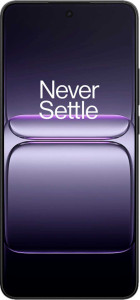
OnePlus Nord CE5 (256GB / 8GB RAM)
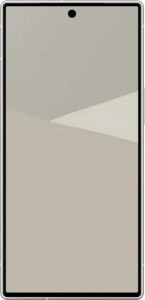
Sharp Aquos R10

OnePlus Nord CE5 (256GB / 8GB RAM) Sharp Aquos R10

Overview

Welcome to our in-depth comparison between the OnePlus Nord CE5 (256GB / 8GB RAM) and the Sharp Aquos R10 — two compelling Android 15 smartphones that share a surprising amount of common ground yet differ sharply where it counts. From their contrasting approaches to battery capacity and charging speed to their very different priorities in display refresh rate and camera versatility, this head-to-head breaks down every key specification to help you make the most informed choice possible.

Common Features

  • Neither product has a rugged build.
  • Neither product can be folded.
  • Both products feature an OLED/AMOLED display type.
  • HDR10 support is available on both products.
  • HDR10+ support is available on both products.
  • Dolby Vision support is not available on either product.
  • Neither product has a secondary screen.
  • Both products have a touch screen.
  • Both products have integrated LTE.
  • Both products are built on a 4 nm semiconductor size.
  • Both products support 64-bit processing.
  • Both products use DirectX 12.
  • Both products have integrated graphics.
  • Both products use big.LITTLE technology.
  • Both products have 8 CPU threads.
  • Both products have TrustZone support.
  • Both products have a dual-lens or multi-lens main camera.
  • Both products have built-in optical image stabilization.
  • Neither product has a dual-tone LED flash.
  • Neither product has a BSI sensor.
  • Both products have a CMOS sensor.
  • Both products support continuous autofocus when recording movies.
  • Both products have phase-detection autofocus for photos.
  • Both products support slow-motion video recording.
  • Both products run Android 15.
  • Both products have clipboard warnings.
  • Both products have location privacy options.
  • Both products have camera and microphone privacy options.
  • Mail Privacy Protection is not available on either product.
  • Both products support theme customization.
  • Both products can block app tracking.
  • Cross-site tracking blocking is not available on either product.
  • Neither product supports wireless charging.
  • Both products support fast charging.
  • Neither product has a removable battery.
  • Both products have a battery level indicator.
  • Both products have a rechargeable battery.
  • Neither product has a 3.5 mm audio jack.
  • Both products support aptX.
  • Both products support aptX HD.
  • aptX Lossless support is not available on either product.
  • Neither product has a radio.
  • Both products have 5G support.
  • Both products have dual SIM card slots.
  • Both products have Bluetooth version 5.4.
  • Both products have an external memory slot.
  • Both products have USB Type-C.
  • Both products have NFC.
  • Both products have a fingerprint scanner.
  • Emergency SOS via satellite is not available on either product.
  • Both products have a video light.
  • Neither product has a sapphire glass display.
  • Neither product has a curved display.
  • Neither product has an e-paper display.

Main Differences

  • Water resistance is rated as water resistant on OnePlus Nord CE5 (256GB / 8GB RAM) and waterproof on Sharp Aquos R10.
  • Weight is 199 g on OnePlus Nord CE5 (256GB / 8GB RAM) and 197 g on Sharp Aquos R10.
  • Thickness is 8.2 mm on OnePlus Nord CE5 (256GB / 8GB RAM) and 8.9 mm on Sharp Aquos R10.
  • Width is 76 mm on OnePlus Nord CE5 (256GB / 8GB RAM) and 75 mm on Sharp Aquos R10.
  • Height is 163.6 mm on OnePlus Nord CE5 (256GB / 8GB RAM) and 156 mm on Sharp Aquos R10.
  • Volume is 101.95552 cm³ on OnePlus Nord CE5 (256GB / 8GB RAM) and 104.13 cm³ on Sharp Aquos R10.
  • IP rating is IP65 on OnePlus Nord CE5 (256GB / 8GB RAM) and IP68 on Sharp Aquos R10.
  • Screen size is 6.77″ on OnePlus Nord CE5 (256GB / 8GB RAM) and 6.5″ on Sharp Aquos R10.
  • Pixel density is 387 ppi on OnePlus Nord CE5 (256GB / 8GB RAM) and 396 ppi on Sharp Aquos R10.
  • Resolution is 1080 x 2392 px on OnePlus Nord CE5 (256GB / 8GB RAM) and 1080 x 2340 px on Sharp Aquos R10.
  • Refresh rate is 120Hz on OnePlus Nord CE5 (256GB / 8GB RAM) and 240Hz on Sharp Aquos R10.
  • Branded damage-resistant glass is present on Sharp Aquos R10 but not available on OnePlus Nord CE5 (256GB / 8GB RAM).
  • Always-On Display is available on OnePlus Nord CE5 (256GB / 8GB RAM) but not on Sharp Aquos R10.
  • Internal storage is 256GB on OnePlus Nord CE5 (256GB / 8GB RAM) and 512GB on Sharp Aquos R10.
  • RAM is 8GB on OnePlus Nord CE5 (256GB / 8GB RAM) and 12GB on Sharp Aquos R10.
  • The chipset is MediaTek Dimensity 8350 on OnePlus Nord CE5 (256GB / 8GB RAM) and Qualcomm Snapdragon 7 Plus Gen 3 on Sharp Aquos R10.
  • The GPU is Mali G615 MC6 on OnePlus Nord CE5 (256GB / 8GB RAM) and Adreno 732 on Sharp Aquos R10.
  • CPU speed is 1 x 3.35 & 3 x 3.2 & 4 x 2.2 GHz on OnePlus Nord CE5 (256GB / 8GB RAM) and 1 x 2.8 & 3 x 2.6 & 4 x 1.9 GHz on Sharp Aquos R10.
  • Geekbench 6 multi-core result is 4700 on OnePlus Nord CE5 (256GB / 8GB RAM) and 5098 on Sharp Aquos R10.
  • Geekbench 6 single-core result is 1536 on OnePlus Nord CE5 (256GB / 8GB RAM) and 1913 on Sharp Aquos R10.
  • GPU clock speed is 1400 MHz on OnePlus Nord CE5 (256GB / 8GB RAM) and 950 MHz on Sharp Aquos R10.
  • RAM speed is 8533 MHz on OnePlus Nord CE5 (256GB / 8GB RAM) and 4200 MHz on Sharp Aquos R10.
  • Maximum memory bandwidth is 68.2 GB/s on OnePlus Nord CE5 (256GB / 8GB RAM) and 64 GB/s on Sharp Aquos R10.
  • Main camera resolution is 50 & 8 MP on OnePlus Nord CE5 (256GB / 8GB RAM) and 50.3 & 50.3 MP on Sharp Aquos R10.
  • Main camera wide aperture is f/2.2 & f/1.8 on OnePlus Nord CE5 (256GB / 8GB RAM) and f/2.2 & f/1.9 on Sharp Aquos R10.
  • Front camera resolution is 16MP on OnePlus Nord CE5 (256GB / 8GB RAM) and 50.3MP on Sharp Aquos R10.
  • Main camera video recording goes up to 2160p at 60 fps on OnePlus Nord CE5 (256GB / 8GB RAM) and 2160p at 30 fps on Sharp Aquos R10.
  • Optical zoom is 0x on OnePlus Nord CE5 (256GB / 8GB RAM) and 2.8x on Sharp Aquos R10.
  • Front camera wide aperture is f/1 on OnePlus Nord CE5 (256GB / 8GB RAM) and f/2.2 on Sharp Aquos R10.
  • Battery power is 7100 mAh on OnePlus Nord CE5 (256GB / 8GB RAM) and 5000 mAh on Sharp Aquos R10.
  • Charging speed is 80W on OnePlus Nord CE5 (256GB / 8GB RAM) and 36W on Sharp Aquos R10.
  • Stereo speakers are present on Sharp Aquos R10 but not available on OnePlus Nord CE5 (256GB / 8GB RAM).
  • LDAC support is present on OnePlus Nord CE5 (256GB / 8GB RAM) but not available on Sharp Aquos R10.
  • aptX Adaptive support is present on Sharp Aquos R10 but not available on OnePlus Nord CE5 (256GB / 8GB RAM).
  • Wi-Fi 7 (802.11be) support is present on Sharp Aquos R10 but not available on OnePlus Nord CE5 (256GB / 8GB RAM).
  • USB version is 2 on OnePlus Nord CE5 (256GB / 8GB RAM) and 3.2 on Sharp Aquos R10.
  • An infrared sensor is present on OnePlus Nord CE5 (256GB / 8GB RAM) but not available on Sharp Aquos R10.
Specs Comparison
OnePlus Nord CE5 (256GB / 8GB RAM)

OnePlus Nord CE5 (256GB / 8GB RAM)

Sharp Aquos R10

Sharp Aquos R10

Design:
water resistance Water resistant Waterproof
weight 199 g 197 g
thickness 8.2 mm 8.9 mm
width 76 mm 75 mm
height 163.6 mm 156 mm
volume 101.95552 cm³ 104.13 cm³
Ingress Protection (IP) rating IP65 IP68
has a rugged build
can be folded

The most significant differentiator in this group is water protection. The Sharp Aquos R10 carries an IP68 rating, meaning it can withstand full submersion in water — typically up to 1.5 meters for 30 minutes. The OnePlus Nord CE5 holds an IP65 rating, which guarantees protection against low-pressure water jets and dust, but offers no protection against submersion. In practical terms, an accidental drop in a sink or puddle is recoverable with the Aquos R10, while the Nord CE5 is better described as splash-resistant rather than truly waterproof. For users who frequently use their phone near water or in unpredictable conditions, this is a meaningful real-world gap.

In terms of form factor, the two phones take different approaches. The Nord CE5 is noticeably taller at 163.6 mm versus the Aquos R10's 156 mm, which can affect one-handed usability and pocket comfort. The Aquos R10 compensates with a slightly greater thickness of 8.9 mm compared to the Nord CE5's slimmer 8.2 mm profile. Weight is essentially a wash — 199 g versus 197 g — a 2-gram difference that is imperceptible in daily use. Neither device has a rugged build or folding mechanism, so both sit firmly in the standard candy-bar smartphone category.

Overall, the Sharp Aquos R10 holds a clear edge in this design group, driven entirely by its superior IP68 water protection. The Nord CE5's slimmer and shorter-but-taller profile may appeal to users who prioritize ergonomics, but from a durability and environmental resilience standpoint, the Aquos R10 is the stronger choice.

Display:
Display type OLED/AMOLED OLED/AMOLED
screen size 6.77" 6.5"
pixel density 387 ppi 396 ppi
resolution 1080 x 2392 px 1080 x 2340 px
refresh rate 120Hz 240Hz
has branded damage-resistant glass
supports HDR10
supports HDR10+
Always-On Display
supports Dolby Vision
Has a secondary screen
has a touch screen

Both phones use OLED/AMOLED panels and share the same 1080p base resolution, so color quality and contrast are broadly comparable at the panel technology level. Where they diverge sharply is refresh rate: the Sharp Aquos R10 runs at 240Hz, double the Nord CE5's already-smooth 120Hz. In practice, 240Hz delivers exceptionally fluid scrolling and near-instantaneous touch response — a tangible advantage for gaming and fast-paced content, though diminishing returns mean casual users may not notice the gap over 120Hz in everyday tasks.

Screen size and pixel density tell an interesting story. The Nord CE5 offers a larger 6.77″ canvas, which benefits media consumption and productivity. The Aquos R10's smaller 6.5″ panel is slightly denser at 396 ppi versus 387 ppi, though both figures are well above the threshold where individual pixels become visible — this difference is negligible in real-world use. More practically relevant is the Aquos R10's branded damage-resistant glass, which the Nord CE5 lacks entirely, adding a meaningful layer of scratch and drop protection that affects long-term screen durability.

Each phone holds one exclusive feature worth noting: the Nord CE5 supports Always-On Display, useful for glancing at notifications without fully waking the screen, while the Aquos R10 counters with its superior glass protection. On balance, the Sharp Aquos R10 takes a clear edge here — its 240Hz refresh rate and screen protection glass are more impactful real-world advantages than the Nord CE5's larger screen size, making it the stronger display package overall.

Performance:
internal storage 256GB 512GB
RAM 8GB 12GB
Chipset (SoC) name MediaTek Dimensity 8350 Qualcomm Snapdragon 7 Plus Gen 3
GPU name Mali G615 MC6 Adreno 732
CPU speed 1 x 3.35 & 3 x 3.2 & 4 x 2.2 GHz 1 x 2.8 & 3 x 2.6 & 4 x 1.9 GHz
Geekbench 6 result (multi) 4700 5098
Geekbench 6 result (single) 1536 1913
GPU clock speed 1400 MHz 950 MHz
Has integrated LTE
RAM speed 8533 MHz 4200 MHz
semiconductor size 4 nm 4 nm
Supports 64-bit
DirectX version DirectX 12 DirectX 12
Has integrated graphics
Uses big.LITTLE technology
CPU threads 8 threads 8 threads
Has TrustZone
maximum memory bandwidth 68.2 GB/s 64 GB/s
OpenCL version 2 2
maximum memory amount 24GB 24GB
DDR memory version 5 5

Chipset architecture is where this comparison gets nuanced. The Nord CE5 runs on the MediaTek Dimensity 8350 with peak clock speeds reaching 3.35 GHz, while the Aquos R10 uses the Qualcomm Snapdragon 7 Plus Gen 3, whose top cores are clocked more conservatively at 2.8 GHz. Raw clock speed, however, does not tell the full story — the Geekbench 6 results make this clear: the Aquos R10 scores 1913 single-core and 5098 multi-core, compared to the Nord CE5's 1536 and 4700 respectively. The single-core gap of roughly 25% is particularly meaningful, as most everyday tasks — app launches, UI responsiveness, web browsing — rely heavily on single-core performance.

Memory tells a similarly split story. The Nord CE5 has notably faster RAM at 8533 MHz versus the Aquos R10's 4200 MHz, and a slight edge in maximum memory bandwidth (68.2 GB/s vs 64 GB/s). But the Aquos R10 ships with 12GB of RAM versus 8GB on the Nord CE5 — a more impactful real-world advantage for heavy multitasking, keeping more apps live in memory and reducing reload times. The Aquos R10 also doubles down on storage with 512GB compared to the Nord CE5's 256GB, a significant gap for users who store large media libraries or games locally.

The Sharp Aquos R10 holds a clear performance edge in this group. Despite the Nord CE5's faster RAM clock, the Aquos R10's superior benchmark scores, larger RAM capacity, and doubled storage make it the more capable and future-proof performer by the data provided.

Cameras:
megapixels (main camera) 50 & 8 MP 50.3 & 50.3 MP
wide aperture (main camera) 2.2 & 1.8f 2.2 & 1.9f
Has a dual-lens (or multi-lens) main camera
megapixels (front camera) 16MP 50.3MP
has built-in optical image stabilization
video recording (main camera) 2160 x 60 fps 2160 x 30 fps
Has a dual-tone LED flash
has a BSI sensor
has a CMOS sensor
has continuous autofocus when recording movies
Has phase-detection autofocus for photos
supports slow-motion video recording
has a built-in HDR mode
has manual exposure
has a flash
optical zoom 0x 2.8x
has manual ISO
has a serial shot mode
has manual focus
has a front camera
Has laser autofocus
Shoots 360° panorama
has manual white balance
shoots raw
has touch autofocus
has manual shutter speed
can create panoramas in-camera
wide aperture (front camera) 1f 2.2f
Has timelapse function
Has a front-facing LED flash
has a dual-lens (or multi-lens) front camera
supports HDR10 recording
supports Dolby Vision recording
has a front-facing camera under the display
Has a RGB LED flash
has 3D photo/video recording capabilities

The rear camera systems reveal a fundamental philosophical difference between these two phones. The Nord CE5 pairs a 50MP primary lens with an 8MP secondary shooter, while the Aquos R10 deploys a dual 50.3MP setup — meaning its secondary camera matches the resolution of the primary. More critically, the Aquos R10 offers 2.8x optical zoom against the Nord CE5's 0x — no optical zoom at all. Optical zoom preserves image quality when shooting distant subjects; without it, the Nord CE5 must rely on digital cropping, which degrades sharpness. For users who regularly photograph subjects at a distance, this is a hard limitation.

Video recording flips the advantage. The Nord CE5 supports 4K at 60fps, while the Aquos R10 caps out at 4K at 30fps. The higher frame rate delivers noticeably smoother footage, especially for action, sports, or any fast-moving content — a meaningful win for videographers. On the selfie side, the contrast is stark in a different way: the Aquos R10 packs a 50.3MP front camera versus the Nord CE5's 16MP, offering significantly more detail and cropping flexibility for self-portraits, despite the Nord CE5's wider front aperture providing a low-light edge.

This group has no clean overall winner — it depends on use case. The Sharp Aquos R10 is the stronger still photography device thanks to its 2.8x optical zoom and uniformly high-resolution dual rear cameras. The Nord CE5 counters decisively for video creators with its 4K/60fps capability. Users who prioritize versatile zoom photography should lean toward the Aquos R10; those who shoot a lot of video should favor the Nord CE5.

Operating system:
Android version Android 15 Android 15
has clipboard warnings
has location privacy options
has camera/microphone privacy options
has Mail Privacy Protection
has theme customization
can block app tracking
blocks cross-site tracking
has on-device machine learning
has notification permissions
has media picker
Can play games while they download
has dark mode
has Wi-Fi password sharing
has battery health check
has an extra dim mode
has focus modes
has dynamic theming
can offload apps
Has customizable notifications
has Live Text
has full-page screenshots
supports split screen
gets direct OS updates
has PiP
Can be used as a PC
Has sharing intents
has a child lock
Supports widgets
Is free and open source
Has offline voice recognition
has voice commands
Tracks the current position of a mobile device
is a multi-user system
has Quick Start

Rarely does a spec group produce a result this definitive: every single operating system feature listed is identical across both devices. Both run Android 15 and share the same feature set across privacy controls, productivity tools, and system capabilities — including location and camera/microphone privacy options, on-device machine learning, dynamic theming, split-screen multitasking, and Picture-in-Picture mode, among others.

This is a complete tie. Neither the OnePlus Nord CE5 nor the Sharp Aquos R10 holds any operating system advantage over the other based on the provided data. Users can expect an equivalent software experience from both devices, and OS features should play no role in differentiating these two phones for a prospective buyer.

Battery:
battery power 7100 mAh 5000 mAh
has wireless charging
Supports fast charging
charging speed 80W 36W
has a removable battery
has a battery level indicator
has a rechargeable battery

Battery capacity is where the OnePlus Nord CE5 stakes its most commanding lead of the entire comparison. Its 7100 mAh cell dwarfs the Aquos R10's 5000 mAh — a 42% larger reserve that, all else being equal, translates directly into significantly more screen-on time between charges. For heavy users, travelers, or anyone frequently away from a power outlet, this gap is not marginal; it is the difference between comfortably lasting two days and needing a top-up by evening.

Charging speed reinforces the Nord CE5's advantage. Its 80W fast charging is more than double the Aquos R10's 36W, meaning the Nord CE5 can replenish its much larger battery in a fraction of the time it would take the Aquos R10 to refill its smaller one. In practical terms, a short charging window — say, 20 to 30 minutes — will restore considerably more usable battery on the Nord CE5. Neither phone supports wireless charging, so both users are tethered to a cable regardless.

The OnePlus Nord CE5 wins this group decisively and without qualification. The combination of a 7100 mAh capacity and 80W charging gives it a substantial real-world endurance and convenience advantage over the Aquos R10 on every measurable dimension provided.

Audio:
has a socket for a 3.5 mm audio jack
has stereo speakers
has aptX
has LDAC
has aptX HD
has aptX Adaptive
has aptX Lossless
Has a radio

Neither phone includes a 3.5mm headphone jack, so both users are committed to wireless or USB-C audio. For wireless listening, the two devices diverge in interesting ways. The Nord CE5 supports LDAC, Sony's high-resolution Bluetooth codec capable of transmitting up to three times more data than standard Bluetooth audio — a meaningful advantage for audiophiles using compatible LDAC headphones who want the closest approximation to lossless wireless sound. The Aquos R10 counters with aptX Adaptive, a more modern and versatile codec that dynamically adjusts bitrate based on connection quality, offering both low latency and high-resolution audio in a single codec. Each of these exclusives targets a different kind of audio enthusiast.

For speaker output, the gap is straightforward. The Aquos R10 has stereo speakers; the Nord CE5 does not. Stereo separation creates a noticeably wider, more immersive soundstage for media playback, gaming, and calls — making the Aquos R10 the clear winner for anyone who regularly listens without headphones. Both devices share aptX and aptX HD support as a common baseline for quality Bluetooth audio.

This group produces a split verdict depending on use case. The Aquos R10 is the stronger choice for speaker-based listening thanks to its stereo speakers and aptX Adaptive support. The Nord CE5 holds the edge for dedicated headphone users with LDAC-compatible gear. Taken together, the Aquos R10 holds a slight overall advantage here, since stereo speakers benefit all users by default, while LDAC's advantage is conditional on owning compatible hardware.

Connectivity & Features:
release date July 2025 May 2025
has 5G support
Wi-Fi version Wi-Fi 4 (802.11n), Wi-Fi 6 (802.11ax), Wi-Fi 5 (802.11ac) Wi-Fi 4 (802.11n), Wi-Fi 6 (802.11ax), Wi-Fi 5 (802.11ac), Wi-Fi 7 (802.11be)
SIM cards 2 SIM 2 SIM
Bluetooth version 5.4 5.4
has an external memory slot
Has USB Type-C
USB version 2 3.2
has NFC
Has a fingerprint scanner
has emergency SOS via satellite
has crash detection
is DLNA-certified
has a gyroscope
supports ANT+
Has a heart rate monitor
has GPS
has a compass
supports Wi-Fi
Has an infrared sensor
has an accelerometer
has a cellular module
Has a barometer
has an HDMI output
Uses 3D facial recognition
Has an iris scanner
Stylus included
supports Galileo
Has motion tracking
Has optical tracking
Has a built-in projector

The two phones share a strong connectivity foundation — both support 5G, Bluetooth 5.4, NFC, dual SIM, expandable storage, and Wi-Fi 6. The divergences, though few, are consequential. The Sharp Aquos R10 adds Wi-Fi 7 (802.11be) to that shared baseline, a next-generation standard that delivers significantly higher throughput, lower latency, and better performance in congested multi-device environments compared to Wi-Fi 6. For users with a Wi-Fi 7 router — increasingly common in newer home setups — this translates to noticeably faster wireless speeds and more reliable connections.

The USB gap is equally significant. The Aquos R10 features USB 3.2, while the Nord CE5 is limited to USB 2.0 — a standard that is a full generation behind and caps wired data transfer speeds at a fraction of what USB 3.2 can deliver. For transferring large files like 4K video or bulk photo libraries to a computer, the Aquos R10's faster USB connection is a practical, everyday advantage. The Nord CE5 counters with one exclusive: a built-in infrared sensor, which allows the phone to function as a universal remote control for TVs and home appliances — a niche but genuinely useful feature the Aquos R10 lacks entirely.

On balance, the Sharp Aquos R10 holds the edge in this group. Its Wi-Fi 7 support and USB 3.2 are forward-looking connectivity upgrades with broad daily relevance, outweighing the Nord CE5's infrared sensor, which serves a narrower audience.
Miscellaneous:
has a video light
Has sapphire glass display
Has a curved display
Has an e-paper display

The Miscellaneous group offers no differentiation whatsoever between these two devices. Every spec listed — video light, sapphire glass, curved display, and e-paper display — is identical across the OnePlus Nord CE5 and the Sharp Aquos R10. This is a complete tie, and neither phone holds any advantage here. Buyers can disregard this category entirely when weighing one device against the other.

Comparison Summary & Verdict

After examining every specification, the two phones emerge as clear choices for distinct types of users. The OnePlus Nord CE5 (256GB / 8GB RAM) stands out with its massive 7100 mAh battery and 80W fast charging, larger 6.77-inch screen, Always-On Display, infrared sensor, and a higher GPU clock speed — making it an excellent daily driver for power users who hate running low on charge. The Sharp Aquos R10, on the other hand, earns its place with a superior 240Hz refresh rate, a more capable camera system featuring a 50.3MP front camera and 2.8x optical zoom, IP68 waterproofing, Wi-Fi 7, USB 3.2, stereo speakers, and stronger CPU benchmark scores — positioning it firmly as the premium pick for multimedia enthusiasts and photography-focused users willing to trade raw battery size for a more refined, feature-rich experience.

OnePlus Nord CE5 (256GB / 8GB RAM)
Buy OnePlus Nord CE5 (256GB / 8GB RAM) if...

Buy the OnePlus Nord CE5 (256GB / 8GB RAM) if you prioritize an enormous 7100 mAh battery with 80W fast charging and want a larger screen with an Always-On Display for all-day use.

Sharp Aquos R10
Buy Sharp Aquos R10 if...

Buy the Sharp Aquos R10 if you want a superior 240Hz display, stronger CPU performance, IP68 waterproofing, a more versatile camera system with optical zoom, Wi-Fi 7, and USB 3.2.