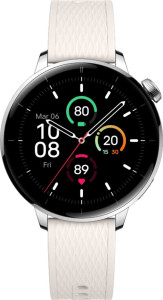
OnePlus Watch 3 43mm
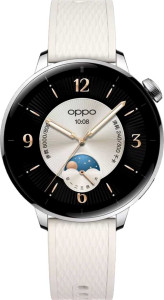
Oppo Watch X2 Mini

OnePlus Watch 3 43mm Oppo Watch X2 Mini

Overview

Welcome to our in-depth specification comparison between the OnePlus Watch 3 43mm and the Oppo Watch X2 Mini. Both smartwatches share a strong foundation — identical screen size, OLED display, and a robust sensor suite — yet they diverge in meaningful ways when it comes to battery endurance, connectivity options, and display protection. Whether you are drawn to advanced health analytics or broader platform compatibility, this comparison will help you find the right fit.

Common Features

  • Both watches feature a 1.32″ screen size.
  • Both use an OLED/AMOLED display type.
  • Both watches are waterproof with a 5 ATM rating.
  • Both carry an IP67 ingress protection rating.
  • Always-On Display is available on both watches.
  • Both share a pixel density of 352 ppi.
  • Both have a resolution of 466 x 466 px.
  • Blood oxygenation level monitoring is available on both watches.
  • A heart rate monitor is present on both watches.
  • GPS is available on both watches.
  • An accelerometer is present on both watches.
  • A temperature sensor is not available on either watch.
  • A compass is present on both watches.
  • A gyroscope is present on both watches.
  • A cadence sensor is not available on either watch.
  • Both watches track sleep and provide sleep reports.
  • Both watches track distance, steps taken, pace, elevation, and routes.
  • Activity auto-detection is available on both watches.
  • Both watches are compatible with Android.
  • Both support Bluetooth 5.2.
  • Both support Wi-Fi 4 (802.11n) hardware.
  • ANT+ support is not available on either watch.
  • NFC is present on both watches.
  • Galileo satellite support is available on both watches.
  • Both watches offer 36 hours of battery life in training mode.
  • Both watches charge in 1 hour.
  • Both offer 168 hours of battery life in power save mode.
  • Wireless charging is not available on either watch.
  • Both have a rechargeable, non-removable battery with no solar power option.
  • VO2 max measurement is available on both watches.
  • Resting heart rate measurement is available on both watches.
  • Fast and slow heart rate notifications are available on both watches.
  • Both watches can be used to answer calls and support call control.
  • Notifications are supported on both watches.
  • Irregular heart rate warnings are not available on either watch.
  • ECG technology is not available on either watch.
  • Both watches provide activity reports, inactivity alerts, and calorie tracking.
  • Goal setting and achievements are available on both watches.
  • A barcode scanner in the app is not available on either watch.
  • Both watches support water intake and weight tracking in the app.
  • A battery level indicator is present on both watches.
  • Neither watch is compatible with Windows or Mac OS X.
  • Neither watch has an external memory slot or a 3.5 mm audio jack.

Main Differences

  • Sapphire glass display is present on Oppo Watch X2 Mini but not available on OnePlus Watch 3 43mm.
  • A barometer is present on Oppo Watch X2 Mini but not available on OnePlus Watch 3 43mm.
  • A cellular module is present on Oppo Watch X2 Mini but not available on OnePlus Watch 3 43mm.
  • iOS compatibility is present on Oppo Watch X2 Mini but not available on OnePlus Watch 3 43mm.
  • Wi-Fi connectivity support is present on Oppo Watch X2 Mini but not available on OnePlus Watch 3 43mm.
  • Battery life is 2.5 days on OnePlus Watch 3 43mm and 16 days on Oppo Watch X2 Mini.
  • Battery power is 354 mAh on OnePlus Watch 3 43mm and 345 mAh on Oppo Watch X2 Mini.
  • HRV tracking is available on OnePlus Watch 3 43mm but not present on Oppo Watch X2 Mini.
  • Readiness level reporting is available on OnePlus Watch 3 43mm but not present on Oppo Watch X2 Mini.
  • Faster GPS acquisition is available on Oppo Watch X2 Mini but not on OnePlus Watch 3 43mm.
Specs Comparison
OnePlus Watch 3 43mm

OnePlus Watch 3 43mm

Oppo Watch X2 Mini

Oppo Watch X2 Mini

Design:
screen size 1.32" 1.32"
Display type OLED/AMOLED OLED/AMOLED
water resistance Waterproof Waterproof
ATM rating 5 ATM 5 ATM
Ingress Protection (IP) rating IP67 IP67
Always-On Display
pixel density 352 ppi 352 ppi
resolution 466 x 466 px 466 x 466 px
Watch band is replaceable
has branded damage-resistant glass
thickness 11 mm 11 mm
weight 37.8 g 37.8 g
height 43.2 mm 43.2 mm
width 43.2 mm 43.2 mm
Has a display
has a touch screen
Has sapphire glass display
volume 20.52864 cm³ 20.52864 cm³
is designed for kids

In terms of Design, the OnePlus Watch 3 43mm and the Oppo Watch X2 Mini are virtually identical across almost every measurable dimension. Both share the same 1.32″ OLED/AMOLED display with a 466 x 466 px resolution at 352 ppi, identical physical dimensions (43.2 × 43.2 × 11 mm), the same 37.8 g weight, and matching 5 ATM / IP67 water resistance. Both also feature Always-On Display, a replaceable band, and a touchscreen. For the user, this means the day-to-day wearing experience — comfort on the wrist, screen sharpness, and durability against water — will feel essentially the same between the two.

The single point of differentiation in this group is that the Oppo Watch X2 Mini features sapphire glass on its display, while the OnePlus Watch 3 does not — and neither watch carries any other branded damage-resistant glass. Sapphire glass is significantly harder than standard glass, sitting just below diamond on the Mohs scale, which translates to meaningfully better resistance against everyday scratches from keys, countertops, and similar surfaces. Over time, this keeps the display looking cleaner without a screen protector.

This gives the Oppo Watch X2 Mini a clear edge in Design, albeit a narrow one. If long-term scratch resistance and display longevity matter to you, the sapphire glass is a genuine, practical advantage. In every other design dimension, the two watches are indistinguishable.

Sensors:
Monitors blood oxygenation levels
Has a heart rate monitor
has GPS
has an accelerometer
Has a temperature sensor
has a compass
Has a barometer
has a gyroscope
Has a cadence sensor
Monitors perspiration

Both the OnePlus Watch 3 and the Oppo Watch X2 Mini share a solid sensor foundation: heart rate monitoring, blood oxygen tracking, GPS, accelerometer, gyroscope, and compass are all present on both devices. This common core covers the needs of most everyday fitness users — from tracking runs and workouts to monitoring resting health metrics passively throughout the day.

The one sensor that sets these two apart is the barometer, which is present on the Oppo Watch X2 Mini but absent on the OnePlus Watch 3. A barometer measures atmospheric pressure, which has two practical applications on a smartwatch: more accurate floor-climbing counts (relevant for step and activity tracking) and altitude estimation during outdoor activities like hiking or trail running. Without it, the OnePlus Watch 3 relies solely on GPS for elevation data, which is notably less precise in real time.

The Oppo Watch X2 Mini takes the edge here on the strength of that single addition. For casual users it may go unnoticed, but for anyone who hikes, cycles on varied terrain, or simply wants more accurate activity data, the barometer is a meaningful and practical advantage.

Activity tracking:
Tracks your sleep
Tracks distance
Tracks steps taken
Measures pace
Provides sleep reports
Detects activities automatically
Has a route tracker
Tracks elevation
Has multi-sport mode
Has exercise tagging
Tracks calorie intake
Designed for diving
Designed for golf

Across every activity tracking specification provided, the OnePlus Watch 3 and the Oppo Watch X2 Mini are a perfect match. Both watches track sleep with full reports, monitor steps, distance, pace, and elevation, offer automatic activity detection, route tracking, exercise tagging, and even calorie intake logging. Neither is designed for diving or golf.

The breadth of shared features is worth noting: automatic activity detection and route tracking together mean both watches can recognize when you start a workout without manual input and map your path via GPS — a combination that suits runners, cyclists, and walkers equally well. Elevation tracking and pace measurement round out a capable outdoor fitness profile on both devices.

This group is a complete tie. There is no differentiator here to guide a purchase decision — any choice between these two watches will need to rest on other specification groups.

Connectivity:
has a cellular module
Is compatible with iOS
Is compatible with Android
Bluetooth version 5.2 5.2
supports Wi-Fi
Wi-Fi version Wi-Fi 4 (802.11n) Wi-Fi 4 (802.11n)
supports ANT+
has NFC
supports Galileo

Connectivity is where these two watches diverge most sharply. The Oppo Watch X2 Mini supports a cellular module, Wi-Fi, and is compatible with both Android and iOS, while the OnePlus Watch 3 lacks all three. On shared ground, both run Bluetooth 5.2 and offer NFC and Galileo satellite support — so for basic pairing and contactless payments, the experience is equivalent.

The practical implications of those gaps are significant. Without cellular, the OnePlus Watch 3 cannot make calls, stream music, or receive notifications independently — it must stay within Bluetooth range of a paired phone at all times. The absence of Wi-Fi further limits its ability to sync data or download updates without a phone nearby. The lack of iOS support also confines it strictly to Android users, cutting out a large portion of potential buyers entirely.

The Oppo Watch X2 Mini holds a decisive edge in Connectivity. Its cellular capability alone represents a fundamentally different and more independent use case, and broader platform compatibility makes it accessible to a wider audience. For users who want a watch that can stand on its own — even occasionally — the OnePlus Watch 3 simply cannot compete in this group.

Battery:
battery life 2.5 days 16 days
battery power 354 mAh 345 mAh
battery life in training mode 36 hours 36 hours
charge time 1 hours 1 hours
battery life in power save mode 168 hours 168 hours
has wireless charging
has a rechargeable battery
Has a solar power battery
has a removable battery

The battery specs here tell a striking story. Despite carrying nearly identical battery capacities — 354 mAh on the OnePlus Watch 3 versus 345 mAh on the Oppo Watch X2 Mini — their rated everyday battery lives are worlds apart: 2.5 days versus 16 days. That gap cannot be explained by raw capacity alone; it points directly to differences in software efficiency, processor power draw, and how aggressively each watch runs background processes like the always-on display and connectivity features.

Where the two watches converge is telling as well. Both deliver identical 36 hours in training mode and 168 hours in power save mode, and both charge in 1 hour. This suggests that under constrained, low-variability conditions the underlying hardware performs similarly — the divergence in everyday life is a function of how each watch manages its full feature load during normal use.

The Oppo Watch X2 Mini wins this group decisively. A 16-day rated battery life means less frequent charging and more confidence when traveling or during busy weeks, while the OnePlus Watch 3's 2.5-day figure demands charging roughly every other day — a meaningful lifestyle difference for most users.

Features:
release date July 2025 April 2025
has HRV tracking
measures VO2 max
measures resting heart rate
has fast/slow heart rate notifications
shows readiness level
Can be used to answer calls
Has call control
Has notifications
has irregular heart rate warnings
Has ECG technology
Has silent alarm
Has vibrating alerts
has fall detection
Has a stopwatch
Has smart alarm
has voice commands
RAM 2GB 2GB
internal storage 32GB 32GB
Acquires GPS faster
has a front camera

Shared hardware resources are identical — both watches carry 2GB RAM and 32GB internal storage, placing them on equal footing for app performance and local media. The broader feature set is also largely mirrored: VO2 max measurement, resting heart rate, call answering, notifications, voice commands, stopwatch, and vibrating alerts all appear on both devices. For the majority of everyday smartwatch use cases, neither watch holds an inherent advantage.

The meaningful divergences cut in opposite directions. The OnePlus Watch 3 adds HRV tracking and a readiness level score — two features that work in tandem to give users a daily snapshot of recovery and physical preparedness, particularly valuable for athletes or anyone managing training load. The Oppo Watch X2 Mini, on the other hand, lacks both of these but gains faster GPS acquisition, which reduces the wait time before outdoor workouts can begin tracking accurately — a practical perk for runners and cyclists who prefer to get moving quickly.

This group results in a narrow edge for the OnePlus Watch 3. HRV tracking combined with a readiness score represents a more substantive addition to health intelligence than faster GPS lock, which is a convenience feature rather than a capability gap. Users focused on recovery-aware training will find the OnePlus Watch 3's feature set more analytically rich in this group.

App & Software:
Provides activity reports
Has inactivity alerts
Counts how many calories you've burned
Has goal setting
Has achievements
Has barcode scanner on app
Tracks water intake
Has weight tracking

App and software features are an exact mirror between these two watches. Both provide activity reports, inactivity alerts, calorie burn tracking, goal setting, and achievements, alongside practical wellness tools like water intake tracking and weight tracking. Neither offers a barcode scanner in the companion app.

The wellness-oriented feature set shared by both is genuinely well-rounded for this category. Water intake and weight tracking alongside calorie counting means both apps support a fairly complete picture of daily health habits — not just exercise. Inactivity alerts and goal setting add a behavioral nudge layer that suits users who want their watch to keep them accountable, not just record what they already do.

This group is a complete tie. Every data point is identical, and no differentiator exists within the provided specs to favor either watch. Decisions between these two will need to be driven by other specification groups.

Miscellaneous:
has a battery level indicator
Is compatible with Windows
has an external memory slot
Is compatible with Mac OS X
has a socket for a 3.5 mm audio jack

The Miscellaneous group offers nothing to distinguish the OnePlus Watch 3 from the Oppo Watch X2 Mini. Every specification here is identical: both display a battery level indicator, neither supports Windows or Mac OS X connectivity, neither has an external memory slot, and neither includes a 3.5mm audio jack — a standard omission for modern smartwatches, which rely on Bluetooth audio instead.

This is a complete tie with no differentiators present in the provided data. Neither watch gains or loses ground here, and this group carries no weight in the overall purchase decision between the two.

Comparison Summary & Verdict

After examining every specification, a clear picture emerges for each watch. The Oppo Watch X2 Mini is the stronger choice for users who need versatility: its 16-day battery life, built-in cellular module, iOS compatibility, sapphire glass display, barometer, and faster GPS acquisition make it a well-rounded companion for both iPhone and Android users who spend extended time away from a charger. The OnePlus Watch 3 43mm, on the other hand, appeals to Android-focused fitness enthusiasts who value deeper health insights, thanks to its HRV tracking and readiness level reporting — features absent on its rival. Both watches are equally matched in activity tracking, core sensors, call handling, and app features, so the decision ultimately comes down to your ecosystem, how long you need the watch to last between charges, and how much you value durability and connectivity on the go.

OnePlus Watch 3 43mm
Buy OnePlus Watch 3 43mm if...

Buy the OnePlus Watch 3 43mm if you are an Android user who prioritizes advanced health analytics, specifically HRV tracking and readiness level reporting, over long battery life and cellular connectivity.

Oppo Watch X2 Mini
Buy Oppo Watch X2 Mini if...

Buy the Oppo Watch X2 Mini if you want a smartwatch with exceptional 16-day battery life, cellular independence, iOS and Android compatibility, and a more durable sapphire glass display.