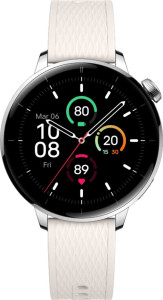
OnePlus Watch 3 43mm
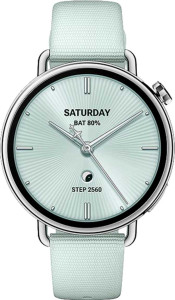
Xiaomi Watch S4 41mm

OnePlus Watch 3 43mm Xiaomi Watch S4 41mm

Overview

Welcome to our in-depth spec comparison between the OnePlus Watch 3 43mm and the Xiaomi Watch S4 41mm — two compelling smartwatches that share a surprising amount of common ground while diverging sharply in key areas. Both sport a 1.32″ AMOLED display, NFC, and a solid fitness-tracking suite, yet they take very different approaches when it comes to battery endurance, sensor depth, and connectivity options. Read on to see which watch fits your lifestyle best.

Common Features

  • Both watches have a 1.32″ screen size.
  • Both use an OLED/AMOLED display type.
  • Both have a resolution of 466 x 466 px.
  • Both are waterproof with a 5 ATM rating.
  • Always-On Display is available on both watches.
  • The watch band is replaceable on both models.
  • Branded damage-resistant glass is not present on either watch.
  • Both watches monitor blood oxygenation levels.
  • Both watches have a heart rate monitor.
  • Both watches have GPS.
  • Both watches include an accelerometer, compass, and gyroscope.
  • A cadence sensor is not available on either watch.
  • Perspiration monitoring is not available on either watch.
  • Both watches track sleep, distance, steps, pace, and elevation.
  • Both watches provide sleep reports and detect activities automatically.
  • Both watches have a route tracker.
  • Both watches are compatible with Android.
  • Wi-Fi and ANT+ are not supported on either watch.
  • NFC and Galileo support are available on both watches.
  • Both watches have a rechargeable battery, with no solar power or removable battery option.
  • Both watches support HRV tracking, VO2 max measurement, and resting heart rate measurement.
  • Fast and slow heart rate notifications are available on both watches.
  • Both watches show a readiness level and can be used to answer calls.
  • Call control and notifications are available on both watches.
  • Both watches provide activity reports, inactivity alerts, and calorie burn tracking.
  • Goal setting, achievements, and water intake tracking are available on both watches.
  • Weight tracking is available on both watches.
  • A barcode scanner on the companion app is not available for either watch.
  • Both watches have a battery level indicator.
  • Neither watch is compatible with Windows or Mac OS X.
  • Neither watch has an external memory slot or a 3.5 mm audio jack socket.

Main Differences

  • Pixel density is 352 ppi on OnePlus Watch 3 43mm and 320 ppi on Xiaomi Watch S4 41mm.
  • Thickness is 11 mm on OnePlus Watch 3 43mm and 9.5 mm on Xiaomi Watch S4 41mm.
  • Weight is 37.8 g on OnePlus Watch 3 43mm and 32 g on Xiaomi Watch S4 41mm.
  • Height is 43.2 mm on OnePlus Watch 3 43mm and 41.2 mm on Xiaomi Watch S4 41mm.
  • Width is 43.2 mm on OnePlus Watch 3 43mm and 41.2 mm on Xiaomi Watch S4 41mm.
  • Volume is 20.52864 cm³ on OnePlus Watch 3 43mm and 16.12568 cm³ on Xiaomi Watch S4 41mm.
  • Sapphire glass display is present on Xiaomi Watch S4 41mm but not available on OnePlus Watch 3 43mm.
  • A temperature sensor is present on Xiaomi Watch S4 41mm but not available on OnePlus Watch 3 43mm.
  • A barometer is present on Xiaomi Watch S4 41mm but not available on OnePlus Watch 3 43mm.
  • A cellular module is present on Xiaomi Watch S4 41mm but not available on OnePlus Watch 3 43mm.
  • iOS compatibility is present on Xiaomi Watch S4 41mm but not available on OnePlus Watch 3 43mm.
  • Bluetooth version is 5.2 on OnePlus Watch 3 43mm and 5.4 on Xiaomi Watch S4 41mm.
  • Battery life is 2.5 days on OnePlus Watch 3 43mm and 8 days on Xiaomi Watch S4 41mm.
  • Battery power is 354 mAh on OnePlus Watch 3 43mm and 320 mAh on Xiaomi Watch S4 41mm.
  • Wireless charging is supported on Xiaomi Watch S4 41mm but not available on OnePlus Watch 3 43mm.
  • Fall detection is present on Xiaomi Watch S4 41mm but not available on OnePlus Watch 3 43mm.
  • Faster GPS acquisition is a feature of Xiaomi Watch S4 41mm but not of OnePlus Watch 3 43mm.
Specs Comparison
OnePlus Watch 3 43mm

OnePlus Watch 3 43mm

Xiaomi Watch S4 41mm

Xiaomi Watch S4 41mm

Design:
screen size 1.32" 1.32"
Display type OLED/AMOLED OLED/AMOLED
water resistance Waterproof Waterproof
ATM rating 5 ATM 5 ATM
Always-On Display
pixel density 352 ppi 320 ppi
resolution 466 x 466 px 466 x 466 px
Watch band is replaceable
has branded damage-resistant glass
thickness 11 mm 9.5 mm
weight 37.8 g 32 g
height 43.2 mm 41.2 mm
width 43.2 mm 41.2 mm
Has a display
has a touch screen
Has sapphire glass display
volume 20.52864 cm³ 16.12568 cm³
is designed for kids

Both watches share the same 1.32″ OLED/AMOLED screen with an identical 466 × 466 px resolution, Always-On Display support, a 5 ATM water resistance rating, and a replaceable band — so on the surface they look like near-identical propositions. The meaningful differences, however, emerge the moment you look at physical dimensions and build choices.

The Xiaomi Watch S4 41mm is the more compact and wearable of the two: at 9.5 mm thick versus 11 mm, and 32 g versus 37.8 g, it is noticeably slimmer and nearly 6 grams lighter. That gap translates directly to all-day comfort, especially during sleep tracking or workouts. Its smaller 41.2 × 41.2 mm footprint (versus 43.2 × 43.2 mm) also makes it a better fit for smaller wrists. Critically, the Xiaomi adds sapphire glass — one of the hardest transparent materials used in watchmaking — giving it substantially better scratch resistance over the OnePlus Watch 3, which lacks any branded damage-resistant glass.

The OnePlus Watch 3 counters with a slightly higher pixel density of 352 ppi compared to 320 ppi on the Xiaomi, which can mean marginally crisper text and fine detail on-screen, though both are sharp enough for practical use. Overall, the Xiaomi Watch S4 holds a clear design edge: it is slimmer, lighter, physically smaller, and better protected against scratches — advantages that matter more day-to-day than the OnePlus's modest pixel density lead.

Sensors:
Monitors blood oxygenation levels
Has a heart rate monitor
has GPS
has an accelerometer
Has a temperature sensor
has a compass
Has a barometer
has a gyroscope
Has a cadence sensor
Monitors perspiration

The sensor foundation shared by both watches is solid: heart rate monitoring, SpO2 tracking, GPS, accelerometer, gyroscope, and compass are all present on both the OnePlus Watch 3 and the Xiaomi Watch S4. For the majority of fitness and health tracking use cases — running, cycling, sleep, step counting, or swim tracking — neither watch leaves you underequipped.

Where the Xiaomi Watch S4 pulls ahead is in two specific additions: a temperature sensor and a barometer. The temperature sensor enables body or ambient temperature readings, useful for wellness monitoring and detecting early signs of fever or physiological stress. The barometer is arguably the more practically impactful of the two — it measures atmospheric pressure to deliver accurate altitude tracking and floor-climb counting, and it also improves GPS elevation accuracy during hikes or trail runs. The OnePlus Watch 3 carries neither, which is a meaningful gap for outdoor enthusiasts or users who want richer health data.

On sensor coverage, the Xiaomi Watch S4 holds a clear advantage. The barometer and temperature sensor are not niche additions — they contribute to more accurate activity tracking and broader health insight. Users who stay primarily on flat terrain or focus on basic fitness metrics will rarely notice the difference, but for anyone into hiking, altitude sports, or detailed wellness monitoring, the Xiaomi's sensor suite is the more capable of the two.

Activity tracking:
Tracks your sleep
Tracks distance
Tracks steps taken
Measures pace
Provides sleep reports
Detects activities automatically
Has a route tracker
Tracks elevation
Has exercise tagging
Tracks calorie intake
Designed for diving

Activity tracking is one area where the OnePlus Watch 3 and Xiaomi Watch S4 are in complete lockstep. Every capability in this group — sleep tracking with reports, step and distance counting, pace measurement, automatic activity detection, route tracking, elevation tracking, exercise tagging, and calorie intake logging — is present on both watches without exception.

The breadth of shared features is genuinely impressive for both devices. Automatic activity detection removes the friction of manually starting a workout, route tracking paired with elevation logging covers the needs of most outdoor athletes, and calorie intake tracking pushes these watches toward a more holistic health management role rather than pure fitness recording. Neither watch is designed for diving, but that is a highly specialized use case unlikely to affect the vast majority of buyers.

This group is a complete tie. Based strictly on the provided specs, there is no differentiator to speak of — both watches deliver an identical activity tracking feature set. Choosing between them on this dimension alone is impossible, and prospective buyers should weigh other spec groups to make their decision.

Connectivity:
has a cellular module
Is compatible with iOS
Is compatible with Android
Bluetooth version 5.2 5.4
supports Wi-Fi
supports ANT+
has NFC
supports Galileo

Connectivity is where the gap between these two watches widens considerably. The Xiaomi Watch S4 carries a cellular module, meaning it can make calls, receive notifications, and stream data independently of a paired smartphone — a fundamental freedom the OnePlus Watch 3 simply cannot offer. Add to that iOS and Android compatibility on the Xiaomi versus Android-only on the OnePlus, and the S4 immediately serves a much broader audience.

On the finer points, the Xiaomi also runs Bluetooth 5.4 against the OnePlus's Bluetooth 5.2. While both are modern and reliable, 5.4 brings incremental improvements in connection stability and energy efficiency. Both watches support NFC for contactless payments and Galileo satellite navigation alongside other GNSS systems, and neither supports Wi-Fi or ANT+ — so those are non-factors in differentiating the two.

The Xiaomi Watch S4 wins this category decisively. Cellular connectivity is a premium feature that redefines how independently a smartwatch can operate, and cross-platform compatibility makes it viable for a far wider user base. iPhone users are outright excluded from the OnePlus Watch 3, which is a hard constraint — not a trade-off.

Battery:
battery life 2.5 days 8 days
battery power 354 mAh 320 mAh
has wireless charging
has a rechargeable battery
Has a solar power battery
has a removable battery

The battery story here is one of the most striking contrasts in this entire comparison. The OnePlus Watch 3 packs a larger 354 mAh cell versus the Xiaomi Watch S4's 320 mAh, yet the Xiaomi delivers a claimed 8 days of battery life against just 2.5 days on the OnePlus. That is a more than threefold difference in endurance from a smaller battery — a result that points squarely to the OnePlus consuming significantly more power, likely driven by its more demanding processing or display configuration.

In practical terms, 2.5 days means the OnePlus Watch 3 needs charging every other day without fail — a routine that many users find disruptive, particularly for uninterrupted sleep tracking. The Xiaomi's 8-day stamina, by contrast, comfortably covers a full week plus buffer, reducing charging anxiety to a once-a-week ritual. The Xiaomi further extends its convenience advantage with wireless charging support, which the OnePlus lacks entirely — a small but appreciated quality-of-life feature that removes the need to carry a proprietary cable.

On battery, the Xiaomi Watch S4 wins by a wide margin. Longer endurance and wireless charging together make it the more practical choice for users who prioritize low-maintenance daily wear, and the fact that it achieves this with a smaller battery only underscores the efficiency gap.

Features:
release date July 2025 June 2025
has HRV tracking
measures VO2 max
measures resting heart rate
has fast/slow heart rate notifications
shows readiness level
Can be used to answer calls
Has call control
Has notifications
has irregular heart rate warnings
Has ECG technology
Has silent alarm
Has vibrating alerts
has fall detection
Has a stopwatch
Has smart alarm
has voice commands
internal storage 32GB 32GB
Has a built-in camera remote control function
Acquires GPS faster
has a front camera

Across the broad feature set, these two watches are remarkably well-matched. Health tools like HRV tracking, VO2 max measurement, readiness scoring, and resting heart rate monitoring are present on both, as are everyday smartwatch staples — call answering, notifications, voice commands, vibrating alerts, stopwatch, and a generous 32GB of internal storage. Neither watch offers ECG, irregular heart rate warnings, or a smart alarm, so those absences are shared equally.

Two features tip the balance toward the Xiaomi Watch S4. First, fall detection — absent on the OnePlus Watch 3 — is a meaningful safety net, particularly for older users or those engaging in high-intensity outdoor activities. It can automatically trigger an alert if a hard fall is detected and the wearer is unresponsive, a capability that goes beyond fitness tracking into genuine personal safety. Second, the Xiaomi is listed as acquiring GPS faster, which in practice means less standing-around time waiting for a signal lock before a run or ride — a small but real convenience for anyone who trains regularly.

The Xiaomi Watch S4 edges ahead in this category. The feature parity is high, but fall detection is not a trivial addition — it adds a layer of safety utility that the OnePlus Watch 3 simply does not provide, and faster GPS acquisition further refines the day-to-day experience for active users.

App & Software:
Provides activity reports
Has inactivity alerts
Counts how many calories you've burned
Has goal setting
Has achievements
Has barcode scanner on app
Tracks water intake
Has weight tracking

When it comes to app and software features, the OnePlus Watch 3 and Xiaomi Watch S4 are mirror images of each other. Both platforms deliver activity reports, calorie burn tracking, inactivity alerts, goal setting, and achievements — covering the core loop of setting targets, monitoring progress, and staying motivated. Wellness-oriented additions like water intake tracking and weight tracking round out an identical feature set on both sides.

The one shared absence worth noting is a barcode scanner in the companion app, which some fitness platforms use to simplify food logging. Neither watch offers it, so calorie and nutrition tracking relies on manual input for both — a limitation that applies equally and does not favor either product.

This group is a complete tie. Every app and software feature listed is present on both watches without exception, and neither holds any advantage over the other. Users should look to other specification groups to differentiate between the two.

Miscellaneous:
has a battery level indicator
Is compatible with Windows
has an external memory slot
Is compatible with Mac OS X
has a socket for a 3.5 mm audio jack

The miscellaneous spec group offers no grounds for differentiation whatsoever. Both the OnePlus Watch 3 and the Xiaomi Watch S4 share an identical profile here: a battery level indicator is present on both, while Windows and Mac OS X compatibility, an external memory slot, and a 3.5mm audio jack are absent from both. These are standard constraints for modern smartwatches, which are designed to pair exclusively with mobile operating systems rather than desktop platforms.

This group is a complete tie. There is not a single spec in this category that distinguishes one watch from the other, and none of the shared absences represent a meaningful disadvantage in the context of how these devices are typically used. Buyers should weigh other specification groups to inform their decision.

Comparison Summary & Verdict

After a thorough look at the specs, it is clear that each watch targets a different kind of user. The OnePlus Watch 3 43mm offers a higher pixel density of 352 ppi and a larger 354 mAh battery capacity, making it appealing to those who value display sharpness. However, the Xiaomi Watch S4 41mm pulls ahead in several meaningful ways: it features a sapphire glass display, a built-in cellular module, iOS compatibility, a temperature sensor, a barometer, fall detection, and a vastly superior battery life of 8 days — nearly three times that of the OnePlus. It also supports wireless charging and has a slimmer, lighter build. For users who want a more complete, independent wearable with broader platform support and longer endurance, the Xiaomi Watch S4 41mm is the stronger all-round choice. The OnePlus Watch 3 43mm suits Android-only users seeking a capable daily companion at what may be a more accessible price point.

OnePlus Watch 3 43mm
Buy OnePlus Watch 3 43mm if...

Buy the OnePlus Watch 3 43mm if you are an Android user who prioritizes a sharper display with 352 ppi and does not need cellular connectivity or extended battery life.

Xiaomi Watch S4 41mm
Buy Xiaomi Watch S4 41mm if...

Buy the Xiaomi Watch S4 41mm if you want a slimmer, lighter smartwatch with an 8-day battery life, sapphire glass protection, cellular independence, iOS compatibility, wireless charging, and a richer sensor set including a barometer and temperature sensor.