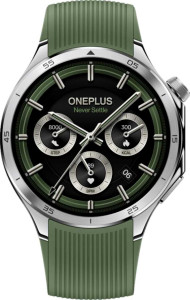
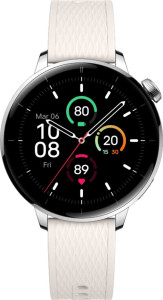
OnePlus Watch 3
OnePlus Watch 3 43mm

OnePlus Watch 3 OnePlus Watch 3 43mm

Overview

Welcome to our detailed spec comparison between the OnePlus Watch 3 and the OnePlus Watch 3 43mm. While both smartwatches share the same core platform, they diverge in meaningful ways across design dimensions, sensor capabilities, battery endurance, and connectivity options. Whether you prioritize a larger, more feature-rich experience or a compact and lightweight daily companion, this comparison will help you identify which model truly fits your lifestyle.

Common Features

  • Both watches feature an OLED/AMOLED display type.
  • Both watches have a resolution of 466 x 466 px.
  • Both watches carry a 5 ATM rating.
  • Always-On Display is available on both watches.
  • The watch band is replaceable on both models.
  • Branded damage-resistant glass is not present on either watch.
  • A touchscreen display is available on both watches.
  • Blood oxygenation level monitoring is available on both watches.
  • A heart rate monitor is present on both watches.
  • GPS is available on both watches.
  • An accelerometer, compass, and gyroscope are present on both watches.
  • Perspiration monitoring is not available on either watch.
  • Both watches track sleep, distance, steps, pace, and elevation.
  • Automatic activity detection and route tracking are available on both watches.
  • Neither watch includes a cellular module.
  • Both watches are compatible with Android but not with iOS.
  • Bluetooth 5.2 is available on both watches.
  • Wi-Fi 4 (802.11n) is supported on both watches.
  • NFC and Galileo support are available on both watches.
  • Both watches have a charge time of 1 hour and support rechargeable but not removable or wireless charging.
  • HRV tracking, VO2 max measurement, resting heart rate measurement, and fast/slow heart rate notifications are available on both watches.
  • Both watches can be used to answer calls and have call control and notifications.
  • Activity reports, inactivity alerts, calorie tracking, goal setting, achievements, water intake tracking, and weight tracking are available on both watches.
  • A barcode scanner in the app is not available on either watch.
  • A battery level indicator is present on both watches.
  • Neither watch is compatible with Windows or Mac OS X.
  • An external memory slot is not available on either watch.
  • A 3.5 mm audio jack socket is not present on either watch.

Main Differences

  • Screen size is 1.5″ on OnePlus Watch 3 and 1.32″ on OnePlus Watch 3 43mm.
  • Water resistance is rated as water resistant on OnePlus Watch 3 and waterproof on OnePlus Watch 3 43mm.
  • Ingress Protection rating is IP68 on OnePlus Watch 3 and IP67 on OnePlus Watch 3 43mm.
  • Pixel density is 439 ppi on OnePlus Watch 3 and 352 ppi on OnePlus Watch 3 43mm.
  • Thickness is 11.8 mm on OnePlus Watch 3 and 11 mm on OnePlus Watch 3 43mm.
  • Weight is 81 g on OnePlus Watch 3 and 37.8 g on OnePlus Watch 3 43mm.
  • Height is 47.6 mm on OnePlus Watch 3 and 43.2 mm on OnePlus Watch 3 43mm.
  • Width is 46.6 mm on OnePlus Watch 3 and 43.2 mm on OnePlus Watch 3 43mm.
  • Sapphire glass display is present on OnePlus Watch 3 but not available on OnePlus Watch 3 43mm.
  • Volume is 26.174288 cm³ on OnePlus Watch 3 and 20.52864 cm³ on OnePlus Watch 3 43mm.
  • A temperature sensor is present on OnePlus Watch 3 but not available on OnePlus Watch 3 43mm.
  • A barometer is present on OnePlus Watch 3 but not available on OnePlus Watch 3 43mm.
  • A cadence sensor is present on OnePlus Watch 3 but not available on OnePlus Watch 3 43mm.
  • Wi-Fi connectivity is supported on OnePlus Watch 3 but not available on OnePlus Watch 3 43mm.
  • Battery life is 5 days on OnePlus Watch 3 and 2.5 days on OnePlus Watch 3 43mm.
  • Battery power is 631 mAh on OnePlus Watch 3 and 354 mAh on OnePlus Watch 3 43mm.
  • Fall detection is present on OnePlus Watch 3 but not available on OnePlus Watch 3 43mm.
  • Faster GPS acquisition is available on OnePlus Watch 3 but not on OnePlus Watch 3 43mm.
Specs Comparison
OnePlus Watch 3

OnePlus Watch 3

OnePlus Watch 3 43mm

OnePlus Watch 3 43mm

Design:
screen size 1.5" 1.32"
Display type OLED/AMOLED OLED/AMOLED
water resistance Water resistant Waterproof
ATM rating 5 ATM 5 ATM
Ingress Protection (IP) rating IP68 IP67
Always-On Display
pixel density 439 ppi 352 ppi
resolution 466 x 466 px 466 x 466 px
Watch band is replaceable
has branded damage-resistant glass
thickness 11.8 mm 11 mm
weight 81 g 37.8 g
height 47.6 mm 43.2 mm
width 46.6 mm 43.2 mm
Has a display
has a touch screen
Has sapphire glass display
volume 26.174288 cm³ 20.52864 cm³
is designed for kids

The most immediately striking difference between these two watches is size and weight. The OnePlus Watch 3 sports a 1.5″ OLED screen on a 47.6 × 46.6 mm case weighing 81 g, while the OnePlus Watch 3 43mm uses a 1.32″ display on a 43.2 × 43.2 mm case at just 37.8 g — less than half the weight. In real-world wear, that weight gap is substantial: the 43mm will feel almost invisible on the wrist during workouts or extended use, whereas the standard Watch 3 sits noticeably heavier, which some users find premium but others find fatiguing over long periods. The 43mm is also slightly thinner at 11 mm vs 11.8 mm, reinforcing its lower-profile character.

Despite sharing the same 466 × 466 px resolution, the larger panel of the Watch 3 results in a significantly sharper image: 439 ppi versus 352 ppi on the 43mm. That roughly 25% density advantage translates to noticeably crisper text and finer detail in watch faces and notifications. The Watch 3 also carries a sapphire glass display, which is meaningfully harder and more scratch-resistant than standard glass — a durability feature absent on the 43mm. On the protection front, the Watch 3 holds an IP68 rating versus the 43mm's IP67, meaning the larger model can withstand deeper and longer water submersion.

Overall, the OnePlus Watch 3 holds a clear design edge for users who prioritize display sharpness, scratch durability, and water resistance, while the 43mm is the better fit for those with smaller wrists or anyone who values a lighter, more discreet form factor above all else. Neither is universally superior — the choice comes down to wrist size and how much the wearer notices weight.

Sensors:
Monitors blood oxygenation levels
Has a heart rate monitor
has GPS
has an accelerometer
Has a temperature sensor
has a compass
Has a barometer
has a gyroscope
Has a cadence sensor
Monitors perspiration

Both watches share a solid health-tracking foundation — heart rate monitor, blood oxygen (SpO2), GPS, accelerometer, gyroscope, and compass are present on each. For everyday fitness tracking and outdoor navigation, this common core means neither watch leaves users short on essential data. However, three sensors separate them in meaningful ways.

The OnePlus Watch 3 adds a temperature sensor, a barometer, and a cadence sensor — none of which appear on the 43mm. The temperature sensor enables body or ambient temperature tracking, useful for health trend monitoring and recovery insights. The barometer is particularly valuable for outdoor athletes: it measures real-time altitude changes and can detect weather shifts, making the Watch 3 a more capable companion for hiking, trail running, or cycling with elevation. The cadence sensor directly counts steps or pedal strokes per minute, giving runners and cyclists a precise training metric that the 43mm simply cannot provide.

For users whose activity goes beyond casual daily tracking, the OnePlus Watch 3 holds a clear sensor advantage. The 43mm covers the basics well, but the absence of a barometer and cadence sensor in particular makes it a less capable tool for serious outdoor or endurance training. If sensor depth matters, the larger Watch 3 is the stronger choice.

Activity tracking:
Tracks your sleep
Tracks distance
Tracks steps taken
Measures pace
Provides sleep reports
Detects activities automatically
Has a route tracker
Tracks elevation
Has multi-sport mode
Has exercise tagging
Tracks calorie intake
Designed for golf

Across every activity tracking specification in this group, the OnePlus Watch 3 and the OnePlus Watch 3 43mm are completely identical. Both cover a well-rounded set of capabilities: sleep tracking with reports, step counting, distance, pace, elevation, route tracking, automatic activity detection, exercise tagging, and calorie intake tracking are all present on each model.

The feature set on offer is genuinely practical for most users. Automatic activity detection removes the friction of manually logging workouts, while the combination of route tracking and elevation tracking makes both watches viable for outdoor activities like hiking and running. The inclusion of calorie intake tracking — not just burn — points to a more holistic approach to health management. Notably, neither watch supports a multi-sport mode, which may matter to triathletes or users who regularly switch between disciplines within a single session.

This is a clear tie. Activity tracking capability is not a differentiating factor between these two models, and the choice between them should rest entirely on the design and sensor differences covered in other groups.

Connectivity:
has a cellular module
Is compatible with iOS
Is compatible with Android
Bluetooth version 5.2 5.2
supports Wi-Fi
Wi-Fi version Wi-Fi 4 (802.11n) Wi-Fi 4 (802.11n)
supports ANT+
has NFC
supports Galileo

Connectivity between these two models is nearly identical, with one notable exception. Both run Bluetooth 5.2, support NFC for contactless payments, are Android-exclusive, and lack a cellular module — meaning neither can operate independently of a paired phone. Galileo satellite support is also shared, complementing GPS for improved location accuracy in challenging environments.

The single differentiator is Wi-Fi: the OnePlus Watch 3 supports it, while the 43mm does not. In practice, Wi-Fi on a smartwatch enables faster firmware updates, independent music or data syncing when the paired phone is out of Bluetooth range but on the same network, and more reliable syncing in general. It is not a feature most users actively think about, but its absence on the 43mm means all data exchange is dependent entirely on maintaining a Bluetooth connection to the phone.

The OnePlus Watch 3 holds a modest but real edge here solely due to its Wi-Fi support. For users who frequently update their watch or want the flexibility of network-based syncing, this matters. For those who keep their phone close at all times, the gap is unlikely to be felt day-to-day.

Battery:
battery life 5 days 2.5 days
battery power 631 mAh 354 mAh
charge time 1 hours 1 hours
has wireless charging
has a rechargeable battery
Has a solar power battery
has a removable battery

Battery life is where the size trade-off between these two models becomes most consequential. The OnePlus Watch 3 packs a 631 mAh battery rated for 5 days, while the 43mm carries a smaller 354 mAh cell with a rated life of just 2.5 days — exactly half. In real-world terms, that gap means the Watch 3 can comfortably last a long weekend trip without a charger, while the 43mm users will need to charge mid-week at minimum, and potentially every night for heavy users with always-on display enabled.

Charging time, however, is identical at 1 hour for both. Given the 43mm's smaller capacity, that same 1-hour window fills a proportionally smaller tank — so while the charge duration is equal, the Watch 3 effectively returns more usable runtime per charge session. Neither model supports wireless charging, so both require their proprietary cable.

The OnePlus Watch 3 has a clear and significant battery advantage. For users who dislike frequent charging or plan to use features like continuous heart rate monitoring, GPS tracking, or always-on display heavily, the doubled battery life of the larger model is a compelling reason to accept its extra size and weight.

Features:
release date February 2025 July 2025
has HRV tracking
measures VO2 max
measures resting heart rate
has fast/slow heart rate notifications
shows readiness level
Can be used to answer calls
Has call control
Has notifications
has irregular heart rate warnings
Has ECG technology
Has silent alarm
Has vibrating alerts
has fall detection
Has a stopwatch
Has smart alarm
has voice commands
RAM 2GB 2GB
internal storage 32GB 32GB
Has a built-in camera remote control function
Acquires GPS faster
has a front camera

Feature parity between these two models is remarkably high. Both carry 2GB RAM and 32GB internal storage, support call answering, voice commands, HRV tracking, VO2 max, readiness scores, camera remote control, and a full suite of alerts. For the vast majority of daily smartwatch use cases, either watch delivers an equivalent experience.

Two features, however, exist exclusively on the OnePlus Watch 3: fall detection and faster GPS acquisition. Fall detection is a meaningful safety feature — it can automatically trigger an alert if the wearer takes a hard fall, making the Watch 3 a more suitable choice for elderly users, solo outdoor athletes, or anyone in physically demanding environments. Faster GPS acquisition, while less dramatic, has real practical value: it reduces the waiting time before a run or ride can be accurately tracked, which matters for users who want to start moving immediately without standing still while satellites lock in.

The OnePlus Watch 3 holds a clear edge in this category. The shared feature base is strong on both models, but fall detection in particular is a safety capability that the 43mm simply cannot replicate, and that difference alone could be decisive for the right user.

App & Software:
Provides activity reports
Has inactivity alerts
Counts how many calories you've burned
Has goal setting
Has achievements
Has barcode scanner on app
Tracks water intake
Has weight tracking

When it comes to app and software capabilities, the OnePlus Watch 3 and the OnePlus Watch 3 43mm are completely identical. Every feature in this category — activity reports, inactivity alerts, calorie burn tracking, goal setting, achievements, water intake logging, and weight tracking — is present on both models. Neither includes a barcode scanner in the companion app.

The software suite on offer is well-rounded for a health-focused user. The combination of water intake and weight tracking alongside calorie burn data positions both watches as tools for broader wellness management, not just fitness tracking. Inactivity alerts and goal setting add a behavioral nudge layer that can help users build consistent habits over time. The absence of a barcode scanner means neither watch's app supports food logging via product scan, which is a gap for users who want detailed nutritional tracking.

This is an unambiguous tie. App and software experience will not differentiate these two models in any way, and the decision between them should be driven entirely by hardware considerations covered in the other specification groups.

Miscellaneous:
has a battery level indicator
Is compatible with Windows
has an external memory slot
Is compatible with Mac OS X
has a socket for a 3.5 mm audio jack

The miscellaneous specifications for the OnePlus Watch 3 and the OnePlus Watch 3 43mm are identical across every data point. Both display a battery level indicator, lack an external memory slot, and are incompatible with Windows and macOS — reinforcing their Android-only ecosystem positioning established in the connectivity specs. Neither includes a 3.5mm audio jack, which is expected for modern smartwatches that handle audio through Bluetooth.

This is a complete tie with no differentiating factors. None of the specs in this group should influence the purchase decision between these two models in any direction.

Comparison Summary & Verdict

After examining every specification, the two watches serve clearly different audiences. The OnePlus Watch 3 is the more capable device overall, boasting a larger 1.5″ sapphire glass display, a longer 5-day battery life backed by a 631 mAh cell, a richer sensor suite including a barometer, temperature sensor, and cadence sensor, plus extras like fall detection, faster GPS acquisition, and Wi-Fi connectivity. It is the obvious choice for users who want a full-featured smartwatch with maximum endurance. The OnePlus Watch 3 43mm, on the other hand, wins on comfort and wearability — at just 37.8 g and 11 mm thick, it is dramatically lighter and slimmer, making it ideal for users with smaller wrists or those who prefer an unobtrusive watch for all-day wear.

OnePlus Watch 3
Buy OnePlus Watch 3 if...

Buy the OnePlus Watch 3 if you want a larger display with sapphire glass protection, a longer 5-day battery life, and a more complete sensor suite including a barometer, temperature sensor, fall detection, and Wi-Fi support.

OnePlus Watch 3 43mm
Buy OnePlus Watch 3 43mm if...

Buy the OnePlus Watch 3 43mm if you prefer a significantly lighter and more compact smartwatch that sits comfortably on smaller wrists without sacrificing core health and activity tracking features.