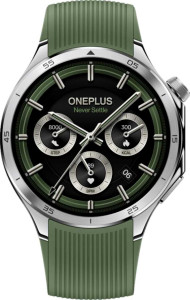
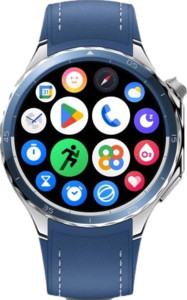
OnePlus Watch 3
Oppo Watch X2

OnePlus Watch 3 Oppo Watch X2

Overview

Welcome to our in-depth specification comparison between the OnePlus Watch 3 and the Oppo Watch X2. Both smartwatches share a strong foundation — identical screen sizes, OLED displays, and comprehensive health-tracking sensors — yet they diverge in meaningful ways across design priorities, health features, and platform compatibility. Read on to discover which of these two capable wearables best matches your lifestyle and daily needs.

Common Features

  • Both watches feature a 1.5″ screen size.
  • Both watches use an OLED/AMOLED display type.
  • Both watches have a 466 x 466 px resolution.
  • Both watches carry a 5 ATM water resistance rating with a depth rating of 50 m.
  • Always-On Display is available on both watches.
  • Watch band is replaceable on both watches.
  • Branded damage-resistant glass is not available on either watch.
  • Blood oxygenation level monitoring is available on both watches.
  • A heart rate monitor is present on both watches.
  • GPS is available on both watches.
  • An accelerometer is present on both watches.
  • A temperature sensor is present on both watches.
  • A compass is present on both watches.
  • A barometer is present on both watches.
  • A gyroscope is present on both watches.
  • Sleep tracking is available on both watches.
  • Distance tracking is available on both watches.
  • Step tracking is available on both watches.
  • Pace measurement is available on both watches.
  • Sleep reports are provided by both watches.
  • Automatic activity detection is available on both watches.
  • Route tracking is available on both watches.
  • Elevation tracking is available on both watches.
  • Neither watch includes a cellular module.
  • Both watches are compatible with Android.
  • Both watches use Bluetooth version 5.2.
  • Wi-Fi support is available on both watches using Wi-Fi 4 (802.11n).
  • ANT+ support is not available on either watch.
  • NFC is available on both watches.
  • Galileo satellite system support is available on both watches.
  • Both watches offer a battery life of 5 days.
  • Wireless charging is not available on either watch.
  • Both watches have a rechargeable battery.
  • Solar power battery is not available on either watch.
  • The battery is not removable on either watch.
  • VO2 max measurement is available on both watches.
  • Resting heart rate measurement is available on both watches.
  • Fast and slow heart rate notifications are available on both watches.
  • Both watches can be used to answer calls.
  • Phone locating functionality is available on both watches.
  • Call control is available on both watches.
  • Notifications are supported on both watches.
  • Irregular heart rate warnings are not available on either watch.
  • Activity reports are provided by both watches.
  • Inactivity alerts are available on both watches.
  • Calorie burn counting is available on both watches.
  • Goal setting is available on both watches.
  • Achievements are available on both watches.
  • The companion app is free on both watches.
  • An exercise diary is available on both watches.
  • The companion app is ad-free on both watches.
  • A battery level indicator is present on both watches.
  • Passcode protection is available on both watches.
  • Neither watch is compatible with Windows.
  • Neither watch has an external memory slot.
  • Neither watch is compatible with Mac OS X.
  • Neither watch has a 3.5 mm audio jack socket.

Main Differences

  • Water resistance classification is listed as water resistant on OnePlus Watch 3 and waterproof on Oppo Watch X2.
  • Ingress Protection rating is IP68 on OnePlus Watch 3 and IP67 on Oppo Watch X2.
  • Pixel density is 439 ppi on OnePlus Watch 3 and 310 ppi on Oppo Watch X2.
  • Weight is 81 g on OnePlus Watch 3 and 49.7 g on Oppo Watch X2.
  • Height is 47.6 mm on OnePlus Watch 3 and 46.6 mm on Oppo Watch X2.
  • Width is 46.6 mm on OnePlus Watch 3 and 47.6 mm on Oppo Watch X2.
  • A cadence sensor is present on OnePlus Watch 3 but not available on Oppo Watch X2.
  • iOS compatibility is available on Oppo Watch X2 but not on OnePlus Watch 3.
  • Battery power is 631 mAh on OnePlus Watch 3 and 648 mAh on Oppo Watch X2.
  • Charge time is 1 hour on OnePlus Watch 3 and 1.3 hours on Oppo Watch X2.
  • HRV tracking is available on OnePlus Watch 3 but not on Oppo Watch X2.
  • Readiness level reporting is available on OnePlus Watch 3 but not on Oppo Watch X2.
  • ECG technology is present on Oppo Watch X2 but not available on OnePlus Watch 3.
  • Fall detection is available on OnePlus Watch 3 but not on Oppo Watch X2.
Specs Comparison
OnePlus Watch 3

OnePlus Watch 3

Oppo Watch X2

Oppo Watch X2

Design:
screen size 1.5" 1.5"
Display type OLED/AMOLED OLED/AMOLED
water resistance Water resistant Waterproof
ATM rating 5 ATM 5 ATM
Ingress Protection (IP) rating IP68 IP67
waterproof depth rating 50 m 50 m
Always-On Display
pixel density 439 ppi 310 ppi
resolution 466 x 466 px 466 x 466 px
Watch band is replaceable
has branded damage-resistant glass
thickness 11.8 mm 11.8 mm
weight 81 g 49.7 g
height 47.6 mm 46.6 mm
width 46.6 mm 47.6 mm
maximum operating temperature 70 °C 70 °C
lowest potential operating temperature -40 °C -40 °C
Has a display
has a touch screen
Has sapphire glass display
volume 26.174288 cm³ 26.174288 cm³
is designed for kids

At a glance, the OnePlus Watch 3 and Oppo Watch X2 share a remarkably similar physical footprint: identical 1.5″ OLED/AMOLED panels, the same 466 × 466 px resolution, identical 11.8 mm thickness, identical volume, and near-identical outer dimensions (the two watches are essentially mirror-swapped at 47.6 × 46.6 mm versus 46.6 × 47.6 mm). Both feature sapphire glass, always-on display, and replaceable bands. For most buyers, the silhouette and form factor will feel interchangeable on paper.

Where the differences become meaningful is in two areas: display sharpness and wrist weight. The OnePlus Watch 3 is rated at 439 ppi versus the Oppo Watch X2′s 310 ppi — a gap that translates to noticeably crisper text, finer detail in watch faces, and smoother-looking graphics in daily use. On the flip side, the Oppo Watch X2 weighs just 49.7 g compared to the OnePlus Watch 3′s 81 g — a difference of over 60%, which is substantial for an always-worn device. A lighter watch reduces wrist fatigue during extended wear and is less intrusive during workouts or sleep tracking. The OnePlus Watch 3 also holds a slight edge in water protection with an IP68 rating versus the Oppo′s IP67, though both are rated to 5 ATM / 50 m, making the practical difference negligible for most users.

Overall, neither product dominates cleanly. The OnePlus Watch 3 has a clear advantage in display pixel density, which matters if you prioritize visual clarity. The Oppo Watch X2 has a decisive edge in wearability comfort due to its significantly lower weight — a spec that directly affects all-day and overnight use. The choice comes down to whether you value a sharper screen or a lighter wrist presence more.

Sensors:
Monitors blood oxygenation levels
Has a heart rate monitor
has GPS
has an accelerometer
Has a temperature sensor
has a compass
Has a barometer
has a gyroscope
Has a cadence sensor
Monitors perspiration

The sensor suites on both watches are nearly identical, covering all the essentials a fitness and health-focused user would expect: heart rate monitoring, SpO2 (blood oxygen), GPS, accelerometer, gyroscope, barometer, compass, and temperature sensor. This shared foundation means both watches are equally capable of tracking workouts, monitoring cardiovascular health, measuring elevation changes, and providing navigation assistance.

The single differentiator in this category is the cadence sensor, which the OnePlus Watch 3 includes and the Oppo Watch X2 does not. Cadence — the number of steps or pedal strokes per minute — is a meaningful metric for runners optimizing their stride efficiency and for cyclists tracking pedaling rhythm. Its absence on the Oppo Watch X2 is a minor but real gap for athletes who train with this data point in mind.

The OnePlus Watch 3 takes a narrow edge here solely due to its cadence sensor. For casual users and general fitness tracking, the two watches are functionally equivalent. But for runners or cyclists who actively use cadence data to refine their performance, the OnePlus Watch 3 is the more complete tool.

Activity tracking:
Tracks your sleep
Tracks distance
Tracks steps taken
Measures pace
Provides sleep reports
Detects activities automatically
Has a route tracker
Tracks elevation
Has multi-sport mode
Has exercise tagging
Tracks calorie intake
Designed for golf

Activity tracking is one area where these two watches are in complete lockstep. Every feature in this category — sleep tracking with reports, step counting, distance, pace, elevation, route tracking, automatic activity detection, and calorie intake logging — is present on both the OnePlus Watch 3 and the Oppo Watch X2. Neither supports a dedicated multi-sport mode or golf features, and both include exercise tagging, which allows users to label and organize workouts for better long-term analysis.

The breadth of shared features is genuinely solid for everyday fitness users. Automatic activity detection removes the friction of manually starting a workout session, while combined sleep and calorie tracking gives a reasonably complete picture of daily health patterns. Route tracking and elevation logging make both watches viable companions for hikers and outdoor runners who want a record of their terrain.

This category is a dead tie. Based strictly on the provided specs, there is no differentiator between the two products here — a buyer should look to other spec groups, such as sensors or design, to break the decision.

Connectivity:
has a cellular module
Is compatible with iOS
Is compatible with Android
Bluetooth version 5.2 5.2
supports Wi-Fi
Wi-Fi version Wi-Fi 4 (802.11n) Wi-Fi 4 (802.11n)
supports ANT+
has NFC
supports Galileo

Connectivity specs are largely identical across these two watches: both run Bluetooth 5.2, support Wi-Fi 4 (802.11n), include NFC for contactless payments, and are compatible with the Galileo satellite system. Neither offers a cellular module, meaning both require a paired phone for full functionality — an important consideration for users who want standalone connectivity during workouts.

The one consequential split in this category is smartphone compatibility. The Oppo Watch X2 works with both Android and iOS, while the OnePlus Watch 3 is limited to Android only. In practice, this means iPhone users are simply locked out of the OnePlus Watch 3 entirely. For Android users, the distinction is irrelevant — but it significantly narrows the OnePlus Watch 3′s potential audience.

The Oppo Watch X2 holds a clear edge here due to its cross-platform compatibility. For anyone in an iPhone household or considering a future switch to iOS, the OnePlus Watch 3 is a non-starter. All other connectivity specs being equal, broader compatibility is a meaningful and practical advantage.

Battery:
battery life 5 days 5 days
battery power 631 mAh 648 mAh
charge time 1 hours 1.3 hours
has wireless charging
has a rechargeable battery
Has a solar power battery
has a removable battery

Battery life is the headline stat most users care about, and here both watches land on exactly the same figure: 5 days. The underlying capacities are also remarkably close — 631 mAh on the OnePlus Watch 3 versus 648 mAh on the Oppo Watch X2 — a gap too small to produce any real-world endurance difference. Neither watch supports wireless or solar charging, so both rely solely on a wired connection to top up.

Where the two diverge is charge time. The OnePlus Watch 3 refills in 1 hour, while the Oppo Watch X2 takes 1.3 hours — roughly 20 minutes longer for a comparable capacity. That difference may seem minor, but for users who charge during a morning routine or a short break, faster charging reduces the window where the watch is off the wrist. It also means the OnePlus Watch 3 recovers more quickly from an unexpected low-battery situation.

Given identical rated battery life, the OnePlus Watch 3 earns a narrow edge in this category purely on the strength of its faster charge time. The Oppo Watch X2 carries a fractionally larger battery but translates that into no additional endurance according to the provided data, making the quicker replenishment of the OnePlus Watch 3 the more practical differentiator here.

Features:
release date February 2025 February 2025
has HRV tracking
measures VO2 max
measures resting heart rate
has fast/slow heart rate notifications
shows readiness level
Can be used to answer calls
Locates your phone
Has call control
Has notifications
has irregular heart rate warnings
Has ECG technology
Has silent alarm
Has vibrating alerts
has fall detection
Has a stopwatch
Has smart alarm
has voice commands
RAM 2GB 2GB
internal storage 32GB 32GB
Acquires GPS faster
warranty period 1 years 1 years
has a front camera

Both watches share a strong common feature set — call handling, notifications, voice commands, VO2 max, resting heart rate tracking, fast GPS acquisition, and matching 2GB RAM / 32GB storage configurations. For everyday smartwatch use and general fitness monitoring, either device covers the fundamentals without compromise.

The meaningful divergence comes down to four health-focused features split across the two products. The OnePlus Watch 3 adds HRV tracking, a readiness score, and fall detection — a combination oriented toward recovery-aware training and personal safety. HRV and readiness scores help users understand how well their body has recovered and whether it is primed for intense effort, which is valuable for athletes following structured training plans. Fall detection, meanwhile, adds a passive safety net particularly relevant for older users or those exercising alone in remote areas. The Oppo Watch X2, by contrast, includes ECG technology — the ability to take an electrocardiogram reading directly from the wrist — which can flag potential atrial fibrillation and is a clinically significant cardiac screening tool that neither HRV nor readiness scores replicate.

Declaring a single winner here depends heavily on the user′s priorities. The OnePlus Watch 3 is better equipped for performance-focused athletes who want recovery insights and an added safety layer. The Oppo Watch X2 has the edge for users with cardiac health concerns, as ECG is a more medically actionable feature than anything the OnePlus Watch 3 offers exclusively. For the broader population, the OnePlus Watch 3′s combination of three unique features gives it a slight overall advantage in this category.

App & Software:
Provides activity reports
Has inactivity alerts
Counts how many calories you've burned
Has goal setting
Has achievements
Free app
Has exercise diary
Ad-free
Has coaching
Has temperature tracking
Supports routes
Syncs with existing calendars
Has music playback
Exports to email
Doesn’t require account
Supports widgets
Can be personalised
Has barcode scanner on app
Tracks water intake
Has weight tracking

The app and software experience for these two watches is, point for point, identical across every provided specification. Both companions are free and ad-free, support calendar sync, music playback, widgets, and personalization, and cover health logging across calories burned, water intake, weight, and temperature. The inclusion of goal setting, achievements, and an exercise diary rounds out a solid holistic wellness package on both platforms.

A few shared limitations are worth noting. Neither app supports route planning, email export, or a barcode scanner for nutrition logging — and an account is required on both. For users who prefer to scan food packaging to log meals or who want a more seamless nutrition-tracking workflow, these absences may nudge them toward pairing either watch with a third-party app. The absence of in-app coaching is similarly consistent across both products.

This category is a complete tie. Every feature and limitation in the provided data is shared equally between the OnePlus Watch 3 and the Oppo Watch X2. Buyers should weigh other spec groups — design, features, or connectivity — to differentiate between the two.

Miscellaneous:
has a battery level indicator
Has passcode
Is compatible with Windows
has an external memory slot
Is compatible with Mac OS X
has a socket for a 3.5 mm audio jack

The miscellaneous specs for these two watches reveal no differences whatsoever. Both feature a battery level indicator and passcode protection, and neither offers Windows or macOS compatibility, external memory expansion, or a 3.5mm audio jack. These are broadly typical constraints for modern smartwatches in this category.

The lack of desktop OS compatibility is worth a brief note: neither watch can sync or interact directly with a Windows PC or Mac, meaning the paired smartphone remains the sole management hub for both devices. The absence of expandable storage is similarly standard practice at this tier, and with 32GB of internal storage already on board (as noted in the Features group), the omission is unlikely to be a practical concern for most users.

This category is a complete tie with no differentiators present in the provided data. As with the App & Software group, buyers should look to the Design, Features, or Connectivity categories to inform their decision between the OnePlus Watch 3 and the Oppo Watch X2.

Comparison Summary & Verdict

After reviewing every specification, it is clear that both the OnePlus Watch 3 and the Oppo Watch X2 are well-rounded smartwatches that share a remarkably similar core feature set. However, their differences reveal two distinct personalities. The OnePlus Watch 3 stands out with its higher pixel density of 439 ppi, a cadence sensor, HRV tracking, fall detection, and a faster one-hour charge time, making it the stronger choice for fitness-focused users who want deeper health insights and quicker top-ups. The Oppo Watch X2, on the other hand, wins on lighter weight at 49.7 g, ECG technology, iOS compatibility, and a slightly larger battery capacity, making it the better pick for iPhone users or those who prioritize a lighter wrist feel and cardiac monitoring. Neither watch offers wireless charging or cellular connectivity, so both sit in a similar market tier overall.

OnePlus Watch 3
Buy OnePlus Watch 3 if...

Buy the OnePlus Watch 3 if you want a sharper display, richer fitness tracking with HRV monitoring and a cadence sensor, fall detection, and faster charging — especially if you use an Android device.

Oppo Watch X2
Buy Oppo Watch X2 if...

Buy the Oppo Watch X2 if you prefer a lighter watch with ECG technology, iOS compatibility, or simply want a more comfortable everyday wearable with solid battery capacity.