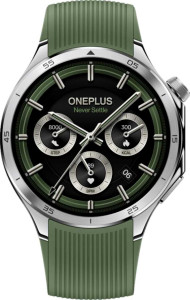
OnePlus Watch 3
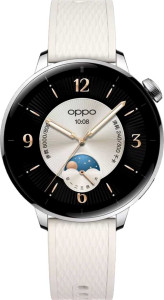
Oppo Watch X2 Mini

OnePlus Watch 3 Oppo Watch X2 Mini

Overview

When choosing between the OnePlus Watch 3 and the Oppo Watch X2 Mini, you are weighing two capable smartwatches that share a strong common foundation yet diverge sharply on key fronts. Both deliver AMOLED displays, comprehensive health sensors, and NFC support, but critical differences in battery life, physical dimensions, sensor depth, and connectivity options mean each watch is built with a very different user in mind. Read on to see how they stack up across every major specification.

Common Features

  • Both watches feature an OLED/AMOLED display type.
  • Both watches share the same resolution of 466 x 466 px.
  • Both watches have a 5 ATM water resistance rating with a waterproof depth of 50 m.
  • Always-On Display is available on both watches.
  • The watch band is replaceable on both watches.
  • Neither watch features branded damage-resistant glass.
  • Both watches have a maximum operating temperature of 70 °C.
  • Blood oxygenation level monitoring is available on both watches.
  • A heart rate monitor is present on both watches.
  • GPS is available on both watches.
  • Both watches include an accelerometer, a compass, a barometer, and a gyroscope.
  • Perspiration monitoring is not available on either watch.
  • Both watches track sleep, distance, steps taken, pace, and elevation.
  • Sleep reports and automatic activity detection are available on both watches.
  • A route tracker is available on both watches.
  • Both watches are compatible with Android and support Bluetooth 5.2.
  • Wi-Fi 4 (802.11n) support is available on both watches.
  • NFC is available on both watches.
  • Galileo satellite system support is available on both watches.
  • ANT+ support is not available on either watch.
  • Both watches have a charge time of 1 hour and do not support wireless or solar charging.
  • The battery is rechargeable and non-removable on both watches.
  • VO2 max measurement, resting heart rate measurement, and fast/slow heart rate notifications are available on both watches.
  • Irregular heart rate warnings are not available on either watch.
  • Both watches can be used to answer calls and have call control and notifications.
  • Phone-locating functionality is available on both watches.
  • Both watches provide activity reports, inactivity alerts, calorie tracking, goal setting, achievements, an exercise diary, and a free ad-free app.
  • A battery level indicator and passcode protection are available on both watches.
  • Neither watch is compatible with Windows or Mac OS X, has an external memory slot, or a 3.5 mm audio jack.

Main Differences

  • Screen size is 1.5″ on OnePlus Watch 3 and 1.32″ on Oppo Watch X2 Mini.
  • Water resistance is rated as water resistant on OnePlus Watch 3, while Oppo Watch X2 Mini is rated as waterproof.
  • Ingress Protection rating is IP68 on OnePlus Watch 3 and IP67 on Oppo Watch X2 Mini.
  • Pixel density is 439 ppi on OnePlus Watch 3 and 352 ppi on Oppo Watch X2 Mini.
  • Thickness is 11.8 mm on OnePlus Watch 3 and 11 mm on Oppo Watch X2 Mini.
  • Weight is 81 g on OnePlus Watch 3 and 37.8 g on Oppo Watch X2 Mini.
  • Height is 47.6 mm on OnePlus Watch 3 and 43.2 mm on Oppo Watch X2 Mini.
  • Width is 46.6 mm on OnePlus Watch 3 and 43.2 mm on Oppo Watch X2 Mini.
  • Volume is 26.174288 cm³ on OnePlus Watch 3 and 20.52864 cm³ on Oppo Watch X2 Mini.
  • A temperature sensor is present on OnePlus Watch 3 but not available on Oppo Watch X2 Mini.
  • A cadence sensor is present on OnePlus Watch 3 but not available on Oppo Watch X2 Mini.
  • A cellular module is present on Oppo Watch X2 Mini but not available on OnePlus Watch 3.
  • iOS compatibility is present on Oppo Watch X2 Mini but not available on OnePlus Watch 3.
  • Battery life is 5 days on OnePlus Watch 3 and 16 days on Oppo Watch X2 Mini.
  • Battery power is 631 mAh on OnePlus Watch 3 and 345 mAh on Oppo Watch X2 Mini.
  • HRV tracking is present on OnePlus Watch 3 but not available on Oppo Watch X2 Mini.
  • Readiness level display is present on OnePlus Watch 3 but not available on Oppo Watch X2 Mini.
  • Fall detection is present on OnePlus Watch 3 but not available on Oppo Watch X2 Mini.
  • Temperature tracking in the app is available on OnePlus Watch 3 but not available on Oppo Watch X2 Mini.
Specs Comparison
OnePlus Watch 3

OnePlus Watch 3

Oppo Watch X2 Mini

Oppo Watch X2 Mini

Design:
screen size 1.5" 1.32"
Display type OLED/AMOLED OLED/AMOLED
water resistance Water resistant Waterproof
ATM rating 5 ATM 5 ATM
Ingress Protection (IP) rating IP68 IP67
waterproof depth rating 50 m 50 m
Always-On Display
pixel density 439 ppi 352 ppi
resolution 466 x 466 px 466 x 466 px
Watch band is replaceable
has branded damage-resistant glass
thickness 11.8 mm 11 mm
weight 81 g 37.8 g
height 47.6 mm 43.2 mm
width 46.6 mm 43.2 mm
maximum operating temperature 70 °C 70 °C
lowest potential operating temperature -40 °C -40 °C
Has a display
has a touch screen
Has sapphire glass display
volume 26.174288 cm³ 20.52864 cm³
is designed for kids

The most striking design difference between these two watches is size and weight. The OnePlus Watch 3 is a noticeably larger wearable at 47.6 × 46.6 mm with an 11.8 mm thickness and a substantial 81 g weight, while the Oppo Watch X2 Mini comes in at 43.2 × 43.2 mm, 11 mm thick, and a remarkably light 37.8 g — less than half the weight of its counterpart. In real-world wear, that weight gap is significant: the Mini will feel almost imperceptible on the wrist during extended use or sleep tracking, whereas the Watch 3 may feel more present, which some users appreciate as a premium, watch-like heft and others find fatiguing overnight.

The display story is where the OnePlus Watch 3 asserts a clear visual advantage. Both watches share the same 466 × 466 px resolution and OLED/AMOLED panel technology, but the Watch 3's larger 1.5″ screen translates to a much higher pixel density of 439 ppi versus the Mini's 352 ppi. That 25% density advantage means noticeably crisper text, sharper icons, and finer detail in watch faces and notifications. Both panels support Always-On Display and sapphire glass, so neither has a durability edge on the screen surface itself.

On water resistance, both carry a 5 ATM / 50 m depth rating, but the Watch 3 adds an IP68 certification compared to the Mini's IP67 — a marginal real-world difference, as both handle swimming and submersion comfortably. Overall, the OnePlus Watch 3 holds a clear edge in display sharpness and screen real estate, while the Oppo Watch X2 Mini wins decisively on comfort and wearability thanks to its dramatically lower weight and more compact footprint. The right choice depends heavily on whether the user prioritizes a vivid, large display or an unobtrusive, lightweight fit.
Sensors:
Monitors blood oxygenation levels
Has a heart rate monitor
has GPS
has an accelerometer
Has a temperature sensor
has a compass
Has a barometer
has a gyroscope
Has a cadence sensor
Monitors perspiration

Both watches share a strong sensor foundation — heart rate monitoring, SpO2 tracking, GPS, accelerometer, compass, barometer, and gyroscope are all present on each device. For the vast majority of fitness and health use cases, from outdoor navigation to sleep tracking and workout intensity monitoring, either watch covers the essentials comfortably.

The differentiation comes down to two sensors exclusive to the OnePlus Watch 3: a temperature sensor and a cadence sensor. Body temperature monitoring adds a meaningful health dimension — it can help detect early signs of illness, track recovery, and for female users, support cycle wellness insights. The cadence sensor, which measures steps or pedal strokes per minute depending on the activity, is particularly valuable for runners looking to optimize their stride efficiency or cyclists monitoring pedaling rhythm. Neither of these sensors is present on the Oppo Watch X2 Mini, which represents a tangible gap for users with serious fitness tracking ambitions.

The OnePlus Watch 3 holds a clear edge in this category. While the Mini's sensor suite is solid and sufficient for general wellness use, the Watch 3's additional temperature and cadence capabilities make it the stronger choice for health-conscious users and dedicated athletes who want deeper physiological insight from their wearable.

Activity tracking:
Tracks your sleep
Tracks distance
Tracks steps taken
Measures pace
Provides sleep reports
Detects activities automatically
Has a route tracker
Tracks elevation
Has multi-sport mode
Has exercise tagging
Tracks calorie intake
Designed for golf

Across every activity tracking capability in this category, the OnePlus Watch 3 and Oppo Watch X2 Mini are in complete lockstep. Both cover the full spectrum of everyday fitness tracking — sleep tracking with reports, step counting, distance, pace, elevation, and calorie intake logging — giving users a well-rounded picture of their daily health and activity without gaps on either side.

A few highlights are worth contextualizing. Automatic activity detection means neither watch requires the user to manually start a workout session, which reduces friction and prevents missed data during spontaneous exercise. Route tracking combined with elevation recording makes both watches genuinely capable companions for hiking and outdoor running, not just gym use. The inclusion of exercise tagging further helps users annotate and organize their workout history meaningfully over time.

Since the spec data is identical across all tracked attributes, this category is a complete tie. Neither the Watch 3 nor the Watch X2 Mini holds any advantage here based on the provided data, and a decision between the two should rest on differentiators found in other specification groups.

Connectivity:
has a cellular module
Is compatible with iOS
Is compatible with Android
Bluetooth version 5.2 5.2
supports Wi-Fi
Wi-Fi version Wi-Fi 4 (802.11n) Wi-Fi 4 (802.11n)
supports ANT+
has NFC
supports Galileo

The shared connectivity groundwork is solid on both watches: Bluetooth 5.2, Wi-Fi 4, NFC, and Galileo satellite support are identical across the board. Bluetooth 5.2 ensures stable, energy-efficient pairing with smartphones and accessories, while NFC enables contactless payments on both devices. These overlapping features mean neither watch is at a disadvantage for day-to-day wireless interactions.

Where the two diverge sharply is in two high-impact areas. The Oppo Watch X2 Mini includes a cellular module, meaning it can make calls, stream data, and receive notifications independently of a paired phone — a meaningful capability for users who want to leave their phone behind during runs or workouts. The Watch X2 Mini is also compatible with iOS, opening it up to iPhone users entirely, whereas the OnePlus Watch 3 is locked to Android only, which is a hard barrier for a significant portion of the market.

The Oppo Watch X2 Mini holds a clear advantage in this category. Cellular independence and cross-platform compatibility are substantial real-world differentiators — not incremental ones — that meaningfully expand who can use the device and how freely they can use it. The OnePlus Watch 3's Android-only limitation and absence of a cellular module make it the more constrained option for connectivity.

Battery:
battery life 5 days 16 days
battery power 631 mAh 345 mAh
charge time 1 hours 1 hours
has wireless charging
has a rechargeable battery
Has a solar power battery
has a removable battery

At first glance, the battery comparison appears counterintuitive: the OnePlus Watch 3 packs a significantly larger 631 mAh cell versus the 345 mAh in the Oppo Watch X2 Mini, yet the Watch 3 delivers only 5 days of battery life while the Mini achieves a remarkable 16 days. This tells an important story about power consumption — the Watch 3's larger display, additional sensors, and richer feature set clearly draw considerably more energy per hour, while the Mini's compact, efficiency-focused design stretches its smaller battery more than three times as far.

In practical terms, the difference is profound. A 5-day battery demands a weekly charging ritual, while 16 days means users can go over two weeks without reaching for a cable — a meaningful distinction for travelers, those who track sleep continuously, or anyone who simply finds charging friction annoying. Both watches share an identical 1-hour charge time, which at least means topping up the Watch 3 is not a slow process when the time comes.

The Oppo Watch X2 Mini wins this category decisively. Despite its smaller physical battery, its vastly superior real-world endurance makes it the more convenient daily companion for users who prioritize low-maintenance wear. The Watch 3's 5-day life is not unusual for a feature-rich smartwatch, but against the Mini's 16-day figure, it is a clear and practical disadvantage.

Features:
release date February 2025 April 2025
has HRV tracking
measures VO2 max
measures resting heart rate
has fast/slow heart rate notifications
shows readiness level
Can be used to answer calls
Locates your phone
Has call control
Has notifications
has irregular heart rate warnings
Has ECG technology
Has silent alarm
Has vibrating alerts
has fall detection
Has a stopwatch
Has smart alarm
has voice commands
RAM 2GB 2GB
internal storage 32GB 32GB
Acquires GPS faster
warranty period 1 years 1 years
has a front camera

The two watches share an extensive common feature set — call handling, notifications, voice commands, VO2 max measurement, resting heart rate, fast/slow heart rate alerts, fall-back GPS acquisition, and identical 2GB RAM with 32GB internal storage. That last point is particularly notable for a smartwatch: 32GB of onboard storage enables offline music storage and richer app experiences without relying on a paired phone.

The meaningful separators here are HRV tracking, readiness level, and fall detection — all present on the OnePlus Watch 3, none on the Oppo Watch X2 Mini. HRV (heart rate variability) tracking is one of the most informative recovery and stress metrics available on a wearable, and when combined with a readiness score, it gives the Watch 3 the ability to synthesize overnight data into actionable daily guidance — telling users whether their body is primed for a hard workout or needs rest. Fall detection, meanwhile, is a genuine safety feature with real value for older users or those engaging in high-risk activities, automatically triggering an alert if a hard fall is detected.

The OnePlus Watch 3 takes a clear edge in this category. While neither watch includes ECG or irregular heart rate warnings, the Watch 3's additions of HRV tracking, readiness insights, and fall detection represent qualitatively meaningful upgrades — not superficial ones — that make it a more capable health and safety companion than the Watch X2 Mini based strictly on the provided data.

App & Software:
Provides activity reports
Has inactivity alerts
Counts how many calories you've burned
Has goal setting
Has achievements
Free app
Has exercise diary
Ad-free
Has coaching
Has temperature tracking
Supports routes
Syncs with existing calendars
Has music playback
Exports to email
Doesn’t require account
Supports widgets
Can be personalised
Has barcode scanner on app
Tracks water intake
Has weight tracking

From a software and app experience standpoint, these two watches are nearly identical. Both companion apps are free and ad-free, require an account, and deliver a comprehensive wellness toolkit — activity reports, goal setting, exercise diary, water and weight tracking, inactivity alerts, calendar sync, music playback, and widget support. That is a generous, well-rounded package on either side, and users of both watches will find the day-to-day app experience functionally equivalent.

The sole differentiator in this category is temperature tracking in the app, available on the OnePlus Watch 3 but absent on the Oppo Watch X2 Mini. This is a direct consequence of the Watch 3 carrying a physical temperature sensor — the app simply has the additional layer to surface and log that data over time, enabling trend analysis that the Mini cannot offer.

This category is effectively a near-tie, with a narrow edge to the OnePlus Watch 3 solely due to temperature tracking support. For users who do not prioritize body temperature monitoring, the two apps are interchangeable in terms of the features covered here — the decision between them should be driven by the stronger differentiators found in other categories like sensors, connectivity, and battery life.

Miscellaneous:
has a battery level indicator
Has passcode
Is compatible with Windows
has an external memory slot
Is compatible with Mac OS X
has a socket for a 3.5 mm audio jack

The miscellaneous spec sheet for these two watches is a perfect mirror image. Both the OnePlus Watch 3 and Oppo Watch X2 Mini include a battery level indicator and passcode protection, and both equally lack Windows and Mac OS X compatibility, an external memory slot, and a 3.5mm audio jack.

The absence of desktop OS compatibility is standard for smartwatches in this category and carries no real-world penalty, since both devices are designed to pair with smartphones rather than computers. The lack of a 3.5mm jack is similarly unsurprising — wired audio output on a wrist-worn device would be impractical, and wireless audio is handled through the Bluetooth connectivity covered in another group.

This category is a complete tie. There is no differentiator here between the two watches, and neither product gains or loses any ground based on the provided miscellaneous specifications.

Comparison Summary & Verdict

After a thorough comparison, both watches prove themselves as solid wearables, but they serve distinct audiences. The OnePlus Watch 3 stands out for users who want a richer health-tracking toolkit, offering a temperature sensor, cadence sensor, HRV tracking, fall detection, and a readiness level indicator — features entirely absent on its rival. Its larger, sharper 1.5″ display at 439 ppi also appeals to those who value screen real estate. The Oppo Watch X2 Mini, on the other hand, wins decisively on battery longevity at 16 days versus just 5, a significantly lighter 37.8 g frame, built-in cellular connectivity, and iOS compatibility — making it the smarter pick for iPhone users or anyone who prioritizes all-day wearability and independence from their phone. Choose the OnePlus Watch 3 for depth of health insights; choose the Oppo Watch X2 Mini for effortless, long-lasting everyday use.

OnePlus Watch 3
Buy OnePlus Watch 3 if...

Buy the OnePlus Watch 3 if you want advanced health monitoring with features like HRV tracking, a temperature sensor, cadence sensor, fall detection, and a readiness level indicator, paired with a larger and sharper display.

Oppo Watch X2 Mini
Buy Oppo Watch X2 Mini if...

Buy the Oppo Watch X2 Mini if you prioritize an exceptionally long 16-day battery life, a lightweight and compact design, cellular connectivity, or compatibility with an iPhone.