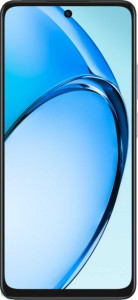
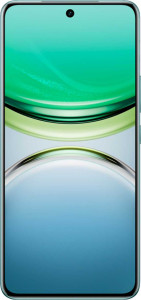
The camera hardware gap here is significant. The Vivo T4 5G leads with a 50 MP primary sensor compared to the Oppo A20's 8 MP main shooter — a difference that directly impacts the level of detail captured, especially when cropping or printing. The Vivo's secondary depth lens at 2 MP also outclasses the Oppo's 0.3 MP equivalent, which is barely functional for anything beyond enabling portrait mode. On the front, the contrast is equally stark: a 32 MP selfie camera on the Vivo versus a modest 5 MP on the Oppo, making the Vivo a considerably stronger choice for video calls and self-portraits.
Video capability is another area where the Vivo pulls decisively ahead. It records at 4K (2160p) at 30 fps, while the Oppo tops out at 1080p at 30 fps. For users who shoot video for social media, travel, or family moments, that 4K ceiling offers meaningfully more detail and future-proofing. Both phones share a solid common feature set — OIS, phase-detection autofocus, continuous autofocus during recording, HDR mode, slow-motion, and a range of manual controls — so the shooting experience infrastructure is comparable.
One minor point in the Oppo's favor is its quad-LED flash array versus the Vivo's single LED, which could yield slightly more even illumination in close-range night shots. However, this is a marginal advantage that does not offset the sensor and resolution gap. Taken as a whole, the Vivo T4 5G holds a clear and comprehensive camera advantage, outperforming the Oppo A20 in resolution, video quality, and selfie capability.