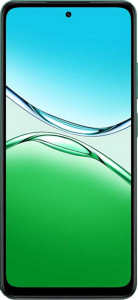
Oppo A5 4G
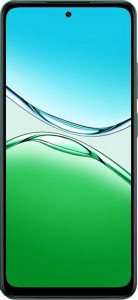
Oppo A5 5G

Oppo A5 4G Oppo A5 5G

Overview

Welcome to our in-depth comparison of the Oppo A5 4G and the Oppo A5 5G — two budget-friendly smartphones that share a surprising amount of DNA yet diverge in some meaningful ways. Both phones pack the same large display, generous 6000 mAh battery, and 256 GB of storage, but key battlegrounds like processor performance, display refresh rate, and connectivity set them apart. Read on to see which one earns a place in your pocket.

Common Features

  • Both phones have an IP65 ingress protection rating and are water resistant.
  • Neither phone has a rugged build or can be folded.
  • Both phones measure 165.7 mm in height, 76.2 mm in width, and 8 mm in thickness.
  • Both phones have a volume of 101.01072 cm³.
  • Both phones feature a 6.67″ LCD IPS display with a resolution of 720 x 1604 px and a pixel density of 264 ppi.
  • Both phones use Gorilla Glass 7i for damage-resistant screen protection.
  • Neither phone supports HDR10 or HDR10+.
  • Both phones come with 256 GB of internal storage and 8 GB of RAM.
  • Both phones support LTE, 64-bit processing, DirectX 12, and big.LITTLE technology, and have an 8-thread CPU.
  • Both phones have integrated graphics.
  • Both phones feature a dual-lens main camera with 50 and 2 MP, apertures of f/2.4 and f/1.8, and record video at 1080p 30 fps.
  • Neither phone has optical image stabilization or a BSI sensor.
  • Both phones run Android 15 and offer clipboard warnings, location privacy options, and camera/microphone privacy options.
  • Both phones support theme customization and can block app tracking, but neither blocks cross-site tracking nor has Mail Privacy Protection.
  • Both phones have a 6000 mAh battery with 45W fast charging, and neither supports wireless charging or has a removable battery.
  • Neither phone has a 3.5 mm audio jack, but both feature stereo speakers.
  • Neither phone supports LDAC, aptX Adaptive, or aptX Lossless, and neither has a radio.
  • Both phones support Wi-Fi 4 and Wi-Fi 5, dual SIM, USB Type-C (USB 2.0), NFC, a fingerprint scanner, and an external memory slot.
  • Neither phone supports emergency SOS via satellite.
  • Both phones have a video light, no sapphire glass display, no curved display, and no e-paper display.

Main Differences

  • Weight is 193 g on the Oppo A5 4G and 194 g on the Oppo A5 5G.
  • The display refresh rate is 90Hz on the Oppo A5 4G and 120Hz on the Oppo A5 5G.
  • The chipset is a Qualcomm Snapdragon 6 Gen 1 on the Oppo A5 4G and a MediaTek Dimensity 6300 on the Oppo A5 5G.
  • The GPU is an Adreno 710 on the Oppo A5 4G and an Arm Mali-G57 MC2 on the Oppo A5 5G.
  • CPU speed is 4 x 2.2 & 4 x 1.8 GHz on the Oppo A5 4G and 2 x 2.4 & 6 x 2 GHz on the Oppo A5 5G.
  • Geekbench 6 multi-core score is 2748 on the Oppo A5 4G and 2012 on the Oppo A5 5G.
  • Geekbench 6 single-core score is 943 on the Oppo A5 4G and 782 on the Oppo A5 5G.
  • GPU clock speed is 800 MHz on the Oppo A5 4G and 950 MHz on the Oppo A5 5G.
  • RAM speed is 2750 MHz on the Oppo A5 4G and 2133 MHz on the Oppo A5 5G.
  • The semiconductor size is 4 nm on the Oppo A5 4G and 6 nm on the Oppo A5 5G.
  • Maximum memory bandwidth is 22 GB/s on the Oppo A5 4G and 17.07 GB/s on the Oppo A5 5G.
  • L2 cache is 2 MB on the Oppo A5 4G and 1 MB on the Oppo A5 5G.
  • L1 cache is 256 KB on the Oppo A5 4G and 512 KB on the Oppo A5 5G.
  • DDR memory version is DDR5 on the Oppo A5 4G and DDR4 on the Oppo A5 5G.
  • The front camera is 5 MP with f/2.2 aperture on the Oppo A5 4G and 8 MP with f/2.0 aperture on the Oppo A5 5G.
  • aptX support is present on the Oppo A5 4G but not available on the Oppo A5 5G.
  • aptX HD support is present on the Oppo A5 5G but not available on the Oppo A5 4G.
  • 5G support is present on the Oppo A5 5G but not available on the Oppo A5 4G.
  • Bluetooth version is 5.0 on the Oppo A5 4G and 5.4 on the Oppo A5 5G.
  • Maximum download speed is 2900 Mbit/s on the Oppo A5 4G and 3300 Mbit/s on the Oppo A5 5G.
Specs Comparison
Oppo A5 4G

Oppo A5 4G

Oppo A5 5G

Oppo A5 5G

Design:
water resistance Water resistant Water resistant
weight 193 g 194 g
thickness 8 mm 8 mm
width 76.2 mm 76.2 mm
height 165.7 mm 165.7 mm
volume 101.01072 cm³ 101.01072 cm³
Ingress Protection (IP) rating IP65 IP65
has a rugged build
can be folded

From a design standpoint, the Oppo A5 4G and Oppo A5 5G are virtually carbon copies of each other. Both share identical dimensions — 165.7 × 76.2 × 8 mm — and the same calculated volume of 101.01 cm³, meaning they will feel indistinguishable in the hand and fit the same cases and pockets.

The only measurable difference is a 1-gram weight gap (193 g vs. 194 g), which is entirely imperceptible in everyday use. Beyond that, both phones carry an IP65 rating, confirming protection against dust ingress and low-pressure water jets — a meaningful real-world benefit that guards against rain, splashes, and dusty environments, even if neither device is rated for submersion.

With neither a rugged build nor a foldable form factor on either model, and with every other design metric being equal, this category is a dead tie. The choice between the two cannot be made on design grounds alone; buyers should look to connectivity, performance, or pricing to differentiate them.

Display:
Display type LCD, IPS LCD, IPS
screen size 6.67" 6.67"
pixel density 264 ppi 264 ppi
resolution 720 x 1604 px 720 x 1604 px
refresh rate 90Hz 120Hz
has branded damage-resistant glass
Gorilla Glass version Gorilla Glass 7i Gorilla Glass 7i
supports HDR10
supports HDR10+
Always-On Display
supports Dolby Vision
Has a secondary screen
has a touch screen

Both the Oppo A5 4G and Oppo A5 5G share the same 6.67″ IPS LCD panel with a 720 x 1604 px resolution and 264 ppi pixel density — meaning colour reproduction, brightness behaviour, and sharpness will look identical side by side. The shared Gorilla Glass 7i coating also puts them on equal footing for scratch and drop resistance.

The single point of divergence is the refresh rate: the A5 4G runs at 90Hz, while the A5 5G steps up to 120Hz. In practice, that extra 30Hz translates to noticeably smoother scrolling, more fluid animations, and a generally more responsive feel during fast-paced interactions — a difference that is easy to perceive once you have used a 120Hz screen regularly.

Neither model supports HDR10, HDR10+, or Dolby Vision, so content quality is capped at standard dynamic range regardless of the source. That narrows the display decision to one factor: the Oppo A5 5G holds a clear edge here purely on account of its higher refresh rate, making it the better choice for users who prioritise display fluidity.

Performance:
internal storage 256GB 256GB
RAM 8GB 8GB
Chipset (SoC) name Qualcomm Snapdragon 6 Gen 1 MediaTek Dimensity 6300
GPU name Adreno 710 Arm Mali-G57 MC2
CPU speed 4 x 2.2 & 4 x 1.8 GHz 2 x 2.4 & 6 x 2 GHz
Geekbench 6 result (multi) 2748 2012
Geekbench 6 result (single) 943 782
GPU clock speed 800 MHz 950 MHz
Has integrated LTE
RAM speed 2750 MHz 2133 MHz
semiconductor size 4 nm 6 nm
Supports 64-bit
DirectX version DirectX 12 DirectX 12
Has integrated graphics
Uses big.LITTLE technology
CPU threads 8 threads 8 threads
Uses HMP
maximum memory bandwidth 22 GB/s 17.07 GB/s
L2 cache 2 MB 1 MB
L1 cache 256 KB 512 KB
maximum memory amount 12GB 12GB
DDR memory version 5 4
L3 cache 2 MB 2 MB

Despite sharing the same 8GB of RAM and 256GB of storage, the two phones are powered by meaningfully different silicon. The Oppo A5 4G runs on Qualcomm's Snapdragon 6 Gen 1, built on a 4nm process, while the A5 5G uses MediaTek's Dimensity 6300, fabbed on a larger 6nm node. Smaller process nodes generally translate to better power efficiency and thermal headroom, giving the A5 4G a structural advantage before even looking at raw scores.

The benchmark data reinforces this gap. The A5 4G posts a Geekbench 6 multi-core score of 2748 versus the A5 5G's 2012 — a roughly 37% lead — and a single-core advantage of 943 to 782. That single-core gap is particularly relevant for everyday responsiveness, since most UI interactions and app launches are single-threaded. Compounding this, the A5 4G also benefits from faster DDR5 memory at 2750 MHz and a higher memory bandwidth of 22 GB/s, compared to the A5 5G's DDR4 at 2133 MHz and 17.07 GB/s — meaning data flows to the CPU and GPU more quickly under load.

The A5 5G's Mali GPU does clock slightly higher at 950 MHz versus the Adreno 710's 800 MHz, but GPU architecture efficiency matters far more than raw clock speed alone, and the broader performance picture is decisive. The Oppo A5 4G holds a clear and consistent performance advantage across CPU throughput, memory subsystem speed, and chip efficiency.

Cameras:
megapixels (main camera) 50 & 2 MP 50 & 2 MP
wide aperture (main camera) 2.4 & 1.8f 2.4 & 1.8f
Has a dual-lens (or multi-lens) main camera
megapixels (front camera) 5MP 8MP
has built-in optical image stabilization
video recording (main camera) 1080 x 30 fps 1080 x 30 fps
Has a dual-tone LED flash
number of flash LEDs 1 1
has a BSI sensor
has a CMOS sensor
has continuous autofocus when recording movies
Has phase-detection autofocus for photos
supports slow-motion video recording
has a built-in HDR mode
has manual exposure
has a flash
optical zoom 0x 0x
has manual ISO
has a serial shot mode
has manual focus
has a front camera
Has laser autofocus
Shoots 360° panorama
has manual white balance
shoots raw
has touch autofocus
has manual shutter speed
can create panoramas in-camera
wide aperture (front camera) 2.2f 2f
Has timelapse function
Has a front-facing LED flash
has a dual-lens (or multi-lens) front camera
supports HDR10 recording
supports Dolby Vision recording
has a front-facing camera under the display
Has a RGB LED flash
has 3D photo/video recording capabilities

On the rear, the two phones are completely identical: both feature a 50 MP + 2 MP dual-camera setup with matching apertures, phase-detection autofocus, continuous autofocus during video, and a video ceiling of 1080p at 30fps. Neither offers optical image stabilisation or optical zoom, so shooting conditions and handling will produce equivalent results on both devices.

The only divergence lies at the front. The Oppo A5 5G comes with an 8MP selfie camera, compared to the 5MP unit on the A5 4G. More megapixels on a front sensor directly enables more detail in selfies and greater flexibility to crop without significant quality loss — a tangible advantage for users who prioritise video calls or self-portraits. The A5 5G also pairs this with a marginally wider aperture of f/2.0 versus the A5 4G's f/2.2, which allows slightly more light in — a modest but real benefit in dim conditions.

The rear camera system being a wash means the front camera becomes the deciding factor in this category, and the Oppo A5 5G takes a clear edge with its higher-resolution, slightly faster-aperture selfie shooter.

Operating system:
Android version Android 15 Android 15
has clipboard warnings
has location privacy options
has camera/microphone privacy options
has Mail Privacy Protection
has theme customization
can block app tracking
blocks cross-site tracking
has on-device machine learning
has notification permissions
has media picker
Can play games while they download
has dark mode
has Wi-Fi password sharing
has battery health check
has an extra dim mode
has focus modes
has dynamic theming
can offload apps
Has customizable notifications
has Live Text
has full-page screenshots
supports split screen
gets direct OS updates
has PiP
Can be used as a PC
Has sharing intents
has a child lock
Supports widgets
Is free and open source
Has offline voice recognition
has voice commands
Tracks the current position of a mobile device
is a multi-user system
has Quick Start

Running Android 15 on both devices, the software experience between the Oppo A5 4G and Oppo A5 5G is completely identical — every single feature flag across the entire spec set matches. Both cover the privacy essentials well, offering camera and microphone controls, location privacy options, clipboard warnings, and app tracking blocking — a solid baseline for security-conscious users.

On the usability side, both support productivity staples like split-screen multitasking, picture-in-picture, dynamic theming, customisable notifications, and offline voice recognition. Neither receives direct OS updates, which means both rely on Oppo's update pipeline rather than guaranteed timely patches — a shared limitation worth noting for long-term software support.

With no divergence across any of the listed software features, this category is an absolute tie. A buyer's OS experience will be identical on either device, and software should play no role in choosing between them.

Battery:
battery power 6000 mAh 6000 mAh
has wireless charging
Supports fast charging
charging speed 45W 45W
has a removable battery
has a battery level indicator
has a rechargeable battery

Battery is another category where the two phones converge entirely. Both the Oppo A5 4G and Oppo A5 5G pack a 6000 mAh cell — a generously large capacity that comfortably positions both devices for multi-day use under moderate workloads, or a full heavy-use day without anxiety about finding a charger.

Replenishing that large cell is equally matched: both support 45W fast charging, which strikes a reasonable balance between charging speed and thermal management at this battery size. Neither model offers wireless charging, so cable-based top-ups are the only option on both.

With every battery specification — capacity, charging speed, and feature set — being identical, this category is a complete tie. Endurance and charging convenience will be indistinguishable between the two devices in real-world use.

Audio:
has a socket for a 3.5 mm audio jack
has stereo speakers
has aptX
has LDAC
has aptX HD
has aptX Adaptive
has aptX Lossless
Has a radio

Wired audio is off the table for both phones — neither the Oppo A5 4G nor the Oppo A5 5G includes a 3.5mm headphone jack, making Bluetooth the primary path for private listening. On the speaker side, both deliver stereo output, so casual media consumption will sound equally spacious on either device.

Where they part ways is in Bluetooth audio codec support. The A5 4G carries standard aptX, while the A5 5G steps up to aptX HD. This is a meaningful distinction for wireless audio quality: aptX HD supports higher-resolution audio transmission at up to 24-bit depth, reducing the compression artefacts that standard aptX introduces. In practice, users pairing either phone with compatible aptX HD headphones or speakers will hear a noticeably cleaner, more detailed sound from the A5 5G.

Neither model supports LDAC or aptX Adaptive, so the gap is bounded — but within the specs provided, the Oppo A5 5G holds a clear audio edge for users who listen through quality Bluetooth headphones and own hardware that can take advantage of aptX HD.

Connectivity & Features:
release date May 2025 May 2025
has 5G support
Wi-Fi version Wi-Fi 4 (802.11n), Wi-Fi 5 (802.11ac) Wi-Fi 4 (802.11n), Wi-Fi 5 (802.11ac)
SIM cards 2 SIM 2 SIM
Bluetooth version 5 5.4
has an external memory slot
Has USB Type-C
USB version 2 2
has NFC
download speed 2900 MBits/s 3300 MBits/s
Has a fingerprint scanner
has emergency SOS via satellite
has crash detection
is DLNA-certified
has a gyroscope
supports ANT+
Has a heart rate monitor
has GPS
has a compass
supports Wi-Fi
Has an infrared sensor
has an accelerometer
has a cellular module
Has a barometer
has an HDMI output
Uses 3D facial recognition
Has an iris scanner
Stylus included
supports Galileo
Has motion tracking
Has optical tracking
Has a built-in projector

The most consequential difference here is right in the name: the Oppo A5 5G supports 5G connectivity, while the A5 4G is capped at 4G LTE. For users in areas with 5G coverage, this translates to substantially faster mobile data speeds and greater future-proofing as 4G networks are gradually deprioritised by carriers. Reinforcing this advantage, the A5 5G also sports a newer Bluetooth 5.4 versus the A5 4G's Bluetooth 5.0 — a more recent revision that brings improvements in connection reliability and efficiency, particularly relevant for users with multiple paired devices.

The theoretical download speed gap follows the same pattern: the A5 5G reaches 3300 Mbits/s compared to 2900 Mbits/s on the A5 4G, consistent with 5G's broader bandwidth ceiling. On shared ground, both phones offer identical Wi-Fi support (up to Wi-Fi 5), dual SIM, NFC, USB Type-C (USB 2.0), expandable storage, a fingerprint scanner, GPS with Galileo, and an accelerometer — a well-rounded baseline for both models.

The sensor and feature parity across everything else means connectivity is where this category is decided, and it is not close. The Oppo A5 5G holds a clear and durable advantage — 5G support alone makes it the stronger long-term investment for anyone on a network that already offers, or is actively rolling out, next-generation coverage.

Miscellaneous:
has a video light
Has sapphire glass display
Has a curved display
Has an e-paper display

The miscellaneous spec set for the Oppo A5 4G and Oppo A5 5G is entirely uniform. Both include a video light — useful for illuminating subjects during video recording in low-light conditions — and neither features a sapphire glass display, curved screen, or e-paper panel, which are all niche characteristics typically found in premium or specialist devices.

With no divergence across any of the four data points, this category is a complete tie and contributes nothing to differentiate the two models. Buyers should weigh the distinctions identified in other spec groups — particularly performance, connectivity, and display refresh rate — when making their final decision.

Comparison Summary & Verdict

After a thorough look at the specs, both phones offer strong value, but they cater to slightly different priorities. The Oppo A5 4G pulls ahead in raw CPU performance, with notably higher Geekbench 6 scores, a more advanced 4 nm Snapdragon 6 Gen 1 chipset, faster RAM, greater memory bandwidth, and DDR5 memory — making it the better pick for users who demand snappier multitasking. The Oppo A5 5G, on the other hand, wins on connectivity with its 5G support and Bluetooth 5.4, offers a smoother 120Hz display, and features a higher-resolution 8 MP front camera — making it ideal for users who value future-proof networking and a better selfie experience. Both share the same solid battery, display quality, and OS, so your choice really comes down to performance versus connectivity.

Oppo A5 4G
Buy Oppo A5 4G if...

Buy the Oppo A5 4G if you prioritize stronger CPU performance and more advanced memory technology, as its Snapdragon 6 Gen 1 chip, DDR5 RAM, and higher Geekbench scores give it a clear edge in raw processing power.

Oppo A5 5G
Buy Oppo A5 5G if...

Buy the Oppo A5 5G if you want future-proof 5G connectivity, a smoother 120Hz display, and a better front camera, along with the latest Bluetooth 5.4 for improved wireless audio options.