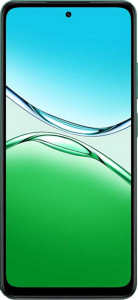
Oppo A5 4G
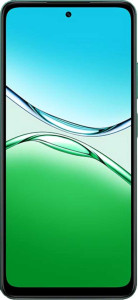
Oppo A5x

Oppo A5 4G Oppo A5x

Overview

Welcome to our detailed spec comparison between the Oppo A5 4G and the Oppo A5x. These two mid-range Android smartphones share a surprisingly large amount of common ground, from their identical displays and chipsets to their equally capable batteries. Yet a closer look reveals meaningful separations in areas like storage capacity, camera configuration, and connectivity features that could make one a clearly better fit for your needs than the other.

Common Features

  • Both phones have an IP65 ingress protection rating and are water resistant.
  • Both phones weigh 193 g and are 8 mm thick.
  • Both phones feature a 6.67″ LCD IPS display with a 90Hz refresh rate.
  • Both phones have a pixel density of 264 ppi and a resolution of 720 x 1604 px.
  • Both phones are protected by Corning Gorilla Glass 7i.
  • HDR10 support is not available on either phone.
  • Both phones are powered by the Qualcomm Snapdragon 6 Gen 1 chipset with an Adreno 710 GPU.
  • Both phones come with 8 GB of RAM.
  • The CPU speed on both phones is 4 x 2.2 & 4 x 1.8 GHz.
  • Both phones achieved a Geekbench 6 multi-core score of 2748 and a single-core score of 943.
  • Both phones have a 5 MP front camera.
  • Optical image stabilization is not available on either phone.
  • Both phones record video at up to 1080p 30 fps.
  • Both phones run Android 15 and support theme customization and app tracking blocking.
  • Both phones have a 6000 mAh battery with 45W fast charging.
  • Neither phone supports wireless charging or has a removable battery.
  • Neither phone has a 3.5 mm audio jack, but both feature stereo speakers and aptX support.
  • Both phones support Wi-Fi 5 (802.11ac), Bluetooth 5.0, dual SIM, USB Type-C (USB 2.0), and have a microSD card slot.
  • 5G support is not available on either phone.
  • Both phones have a download speed of 2900 Mbit/s.

Main Differences

  • Internal storage is 256 GB on the Oppo A5 4G and 128 GB on the Oppo A5x.
  • The Oppo A5 4G has a dual-lens main camera (50 & 2 MP), while the Oppo A5x has a single-lens 32 MP main camera.
  • NFC is present on the Oppo A5 4G but not available on the Oppo A5x.
  • An infrared sensor is present on the Oppo A5x but not available on the Oppo A5 4G.
Specs Comparison
Oppo A5 4G

Oppo A5 4G

Oppo A5x

Oppo A5x

Design:
water resistance Water resistant Water resistant
weight 193 g 193 g
thickness 8 mm 8 mm
width 76.2 mm 76.2 mm
height 165.7 mm 165.7 mm
volume 101.01072 cm³ 101.01072 cm³
Ingress Protection (IP) rating IP65 IP65
has a rugged build
can be folded

When it comes to Design, the Oppo A5 4G and the Oppo A5x are, in every measurable sense, identical twins. Both share the exact same dimensions — 165.7 × 76.2 × 8 mm — the same 193 g weight, and the same calculated volume of 101.01 cm³. In practice, this means users would find both phones equally comfortable (or uncomfortable) to hold, pocket, and use one-handed over extended periods.

On durability, both devices carry an IP65 rating, confirming protection against dust ingress and low-pressure water jets. This is a meaningful real-world advantage — it means both phones can survive splashes, rain, and dusty environments without issue, even though neither is rated for submersion. Neither model features a rugged build or a foldable form factor, so both sit squarely in the category of standard, everyday smartphones.

Given that every single design specification is identical across both phones, this category is an absolute tie. No advantage can be awarded to either the A5 4G or the A5x based on design data alone — a buyer's decision here must rest entirely on other specification groups.

Display:
Display type LCD, IPS LCD, IPS
screen size 6.67" 6.67"
pixel density 264 ppi 264 ppi
resolution 720 x 1604 px 720 x 1604 px
refresh rate 90Hz 90Hz
has branded damage-resistant glass
Gorilla Glass version Gorilla Glass 7i Gorilla Glass 7i
supports HDR10
supports HDR10+
Always-On Display
supports Dolby Vision
Has a secondary screen
has a touch screen

Both the Oppo A5 4G and the Oppo A5x feature a 6.67″ LCD IPS panel running at a 720 x 1604 px resolution, yielding 264 ppi. At this screen size, that pixel density lands in HD+ territory — sharp enough for casual browsing and video, but noticeably softer than the Full HD+ displays found in more premium devices. Text and images will look fine at normal viewing distances, though discerning users may spot a lack of crispness when reading small print or viewing detailed content up close.

The 90Hz refresh rate is the display's most practically valuable feature. Compared to a standard 60Hz panel, scrolling and UI animations feel noticeably smoother — a real, everyday benefit that most users immediately perceive. Equally reassuring is the shared Gorilla Glass 7i protection, one of the more recent and capable variants in Corning's lineup, offering meaningful resistance against drops and scratches for a mid-range device. Neither phone supports HDR10, HDR10+, or Dolby Vision, so neither is suited for high dynamic range content consumption.

As with the Design category, every display specification is perfectly mirrored across both phones, making this another definitive tie. Prospective buyers gain nothing — and lose nothing — on display quality by choosing one over the other.

Performance:
internal storage 256GB 128GB
RAM 8GB 8GB
Chipset (SoC) name Qualcomm Snapdragon 6 Gen 1 Qualcomm Snapdragon 6 Gen 1
GPU name Adreno 710 Adreno 710
CPU speed 4 x 2.2 & 4 x 1.8 GHz 4 x 2.2 & 4 x 1.8 GHz
Geekbench 6 result (multi) 2748 2748
Geekbench 6 result (single) 943 943
GPU clock speed 800 MHz 800 MHz
Has integrated LTE
RAM speed 2750 MHz 2750 MHz
semiconductor size 4 nm 4 nm
Supports 64-bit
DirectX version DirectX 12 DirectX 12
Has integrated graphics
OpenGL ES version 3.2 3.2
Uses big.LITTLE technology
CPU threads 8 threads 8 threads
Uses HMP
Has TrustZone
maximum memory bandwidth 22 GB/s 22 GB/s
OpenCL version 2 2
memory channels 2 2
L2 cache 2 MB 2 MB
eMMC version 5.1 5.1
L1 cache 256 KB 256 KB
maximum memory amount 12GB 12GB
Thermal Design Power (TDP) 7W 7W
DDR memory version 5 5
shading units 128 128
L3 cache 2 MB 2 MB

Under the hood, both the Oppo A5 4G and the Oppo A5x are powered by the Qualcomm Snapdragon 6 Gen 1 — a capable mid-range chipset built on a 4 nm process. The efficiency gains from that node size matter in practice: the chip delivers solid performance while keeping heat and battery drain in check, as reflected in its modest 7W TDP. Benchmark scores of 943 (single-core) and 2748 (multi-core) on Geekbench 6 confirm competent, responsive everyday performance — comfortable for multitasking, streaming, and light gaming, though not class-leading.

Both phones pair that chipset with 8GB of DDR5 RAM running at 2750 MHz and an Adreno 710 GPU clocked at 800 MHz with DirectX 12 and OpenGL ES 3.2 support. The RAM headroom is generous for this tier, enabling smooth app switching and reducing the frequency of background app reloads. GPU performance is adequate for mainstream mobile gaming, though demanding titles at high settings will expose the limits of this hardware tier.

The sole — but meaningful — differentiator is internal storage: the A5 4G ships with 256GB versus the A5x's 128GB. For users who store large photo libraries, downloaded media, or multiple large games locally, that gap is immediately felt. On raw processing power, the two phones are perfectly matched; but on storage capacity, the Oppo A5 4G holds a clear practical edge.

Cameras:
megapixels (main camera) 50 & 2 MP 32 MP
Has a dual-lens (or multi-lens) main camera
megapixels (front camera) 5MP 5MP
has built-in optical image stabilization
video recording (main camera) 1080 x 30 fps 1080 x 30 fps
Has a dual-tone LED flash
number of flash LEDs 1 1
has a BSI sensor
has a CMOS sensor
has continuous autofocus when recording movies
Has phase-detection autofocus for photos
supports slow-motion video recording
has a built-in HDR mode
has manual exposure
has a flash
optical zoom 0x 0x
has manual ISO
has a serial shot mode
has manual focus
has a front camera
Has laser autofocus
Shoots 360° panorama
has manual white balance
shoots raw
has touch autofocus
has manual shutter speed
can create panoramas in-camera
wide aperture (front camera) 2.2f 2.2f
Has timelapse function
Has a front-facing LED flash
has a dual-lens (or multi-lens) front camera
supports HDR10 recording
supports Dolby Vision recording
has a front-facing camera under the display
Has a RGB LED flash
has 3D photo/video recording capabilities

The camera setup is where these two phones finally diverge in a meaningful way. The Oppo A5 4G sports a dual-lens rear system (50 MP + 2 MP), while the Oppo A5x relies on a single 32 MP shooter. The A5 4G's higher-resolution primary sensor captures more detail in well-lit conditions, and the secondary lens — typically used for depth sensing — enables more convincing portrait-mode shots with software-driven background separation. The A5x's single-camera approach is simpler, but sacrifices that added versatility.

Where it matters less is video: both phones cap out at 1080p at 30fps and share an identical feature set — phase-detection autofocus, continuous autofocus during recording, slow-motion, HDR mode, and a solid range of manual controls including ISO, exposure, focus, and white balance. Neither offers optical image stabilization, optical zoom, or RAW capture, which are typical omissions at this price tier. The front camera is also identical — a 5 MP sensor with an f/2.2 aperture on both devices.

On camera hardware, the Oppo A5 4G holds the clear advantage. A higher-resolution primary sensor combined with a dedicated secondary lens gives it more flexibility for portrait photography and finer detail capture, while the A5x's single-camera system offers no compensating advantage based on the available data.

Operating system:
Android version Android 15 Android 15
has clipboard warnings
has location privacy options
has camera/microphone privacy options
has Mail Privacy Protection
has theme customization
can block app tracking
blocks cross-site tracking
has on-device machine learning
has notification permissions
has media picker
Can play games while they download
has dark mode
has Wi-Fi password sharing
has battery health check
has an extra dim mode
has focus modes
has dynamic theming
can offload apps
Has customizable notifications
has Live Text
has full-page screenshots
supports split screen
gets direct OS updates
has PiP
Can be used as a PC
Has sharing intents
has a child lock
Supports widgets
Is free and open source
Has offline voice recognition
has voice commands
Tracks the current position of a mobile device
is a multi-user system
has Quick Start

Running Android 15 on both devices, the software experience is modern and well-equipped. The version matters here — Android 15 brings refined privacy controls, and both phones deliver on that front with granular camera and microphone permissions, location privacy options, and app tracking controls. On-device machine learning further strengthens features like Live Text and offline voice recognition without routing sensitive data to external servers, which is a meaningful privacy win for security-conscious users.

Daily usability features are equally strong across the board: split-screen multitasking, Picture-in-Picture, dynamic theming, customizable notifications, and full-page screenshots are all present. The absence of direct OS updates on both phones is worth noting — it means software upgrades are routed through Oppo's own update pipeline rather than straight from Google, which can introduce delays in receiving security patches and new Android features.

Every single software specification is identical between the Oppo A5 4G and the Oppo A5x, making this category a complete tie. A buyer prioritizing software features, privacy controls, or Android version will find no reason to favor one model over the other based on this data alone.

Battery:
battery power 6000 mAh 6000 mAh
has wireless charging
Supports fast charging
charging speed 45W 45W
has a removable battery
has a battery level indicator
has a rechargeable battery

A 6000 mAh battery is a standout figure at any price point, and both the Oppo A5 4G and the Oppo A5x carry one. Paired with a relatively efficient HD+ display and a power-conscious 4 nm chipset, this capacity translates to exceptional endurance in real-world use — comfortably covering heavy usage days and potentially stretching to two days for moderate users. This is a genuine strength for both devices, particularly for those who travel frequently or have limited access to charging throughout the day.

Replenishing that large cell is handled equally well on both phones, with 45W fast charging support. That speed meaningfully offsets the capacity — a quick top-up session can restore a significant percentage of charge in a short time, reducing the friction that larger batteries can sometimes introduce. Neither device offers wireless charging, which is a common omission at this tier and unlikely to disappoint most buyers in this segment.

Battery life and charging are yet another tie between the A5 4G and the A5x. Every specification — capacity, charging speed, and feature set — is perfectly matched, so neither phone offers any advantage here. For buyers where battery performance is a priority, both devices make an equally strong case.

Audio:
has a socket for a 3.5 mm audio jack
has stereo speakers
has aptX
has LDAC
has aptX HD
has aptX Adaptive
has aptX Lossless
Has a radio

Neither the Oppo A5 4G nor the Oppo A5x includes a 3.5 mm headphone jack, which pushes users toward Bluetooth or USB-C audio solutions. That said, both phones support aptX — Qualcomm's codec for higher-quality wireless audio over Bluetooth — which provides a step up over standard SBC compression and reduces latency noticeably. For users with compatible aptX headphones, this means cleaner, more detailed wireless audio without the artifacts that cheaper codecs introduce.

On the speaker side, stereo speakers on both devices make a real difference for media consumption — whether watching videos, gaming, or listening to music without headphones. Stereo separation creates a wider, more immersive soundstage compared to the mono setups common at this price tier. Neither phone supports higher-tier wireless codecs like LDAC, aptX HD, or aptX Adaptive, so audiophiles seeking lossless or high-resolution wireless audio will need to look elsewhere regardless of which model they choose.

Audio is another category where the two phones are in complete lockstep — every specification matches exactly. This is a straight tie, and neither the A5 4G nor the A5x offers any sonic advantage over the other based on the provided data.

Connectivity & Features:
release date May 2025 May 2025
has 5G support
Wi-Fi version Wi-Fi 4 (802.11n), Wi-Fi 5 (802.11ac) Wi-Fi 4 (802.11n), Wi-Fi 5 (802.11ac)
SIM cards 2 SIM 2 SIM
Bluetooth version 5 5
has an external memory slot
Has USB Type-C
USB version 2 2
has NFC
download speed 2900 MBits/s 2900 MBits/s
upload speed 900 MBits/s 900 MBits/s
Has a fingerprint scanner
has emergency SOS via satellite
has crash detection
is DLNA-certified
has a gyroscope
supports ANT+
Has a heart rate monitor
has GPS
has a compass
supports Wi-Fi
Has an infrared sensor
has an accelerometer
has a cellular module
Has a barometer
has an HDMI output
Uses 3D facial recognition
Has an iris scanner
Stylus included
supports Galileo
Has motion tracking
Has optical tracking
Has a built-in projector

The connectivity foundation is identical across both phones — dual SIM, Wi-Fi 5, Bluetooth 5, USB Type-C, expandable storage, and GPS with Galileo support all feature on the Oppo A5 4G and the Oppo A5x alike. Neither supports 5G, which is expected at this tier, and both cap at USB 2.0 speeds for wired data transfer. For most day-to-day connectivity needs, these shared specs are more than adequate.

The two meaningful divergences cut in opposite directions. The A5 4G includes NFC while the A5x does not — a significant practical difference for users who rely on contactless payments, transit cards, or quick device pairing. Conversely, the A5x features an infrared sensor that the A5 4G lacks, enabling the phone to function as a universal remote control for TVs, air conditioners, and other IR-compatible appliances — a convenience feature with genuine everyday utility for some households.

Which trade-off matters more depends entirely on the user's lifestyle. NFC is arguably the higher-impact feature in urban environments where contactless payments are widespread, giving the Oppo A5 4G a slight practical edge for most users. However, buyers who specifically want remote control functionality will find the Oppo A5x's infrared sensor uniquely appealing. Neither phone dominates this category outright — the advantage shifts based on individual use case.

Miscellaneous:
has a video light
Has sapphire glass display
Has a curved display
Has an e-paper display

The Miscellaneous category offers very little to distinguish the Oppo A5 4G from the Oppo A5x. Both include a video light — meaning the rear flash can be used as a torch during video recording, a small but practical feature for low-light filming. Neither phone features a curved display, sapphire glass, or an e-paper panel, all of which are either premium or niche additions unlikely to be expected at this price point.

With every available data point in this group matching exactly, this is an unambiguous tie. The Miscellaneous specs provide no basis for favoring one model over the other, and buyers should direct their attention to the categories where differences do exist — namely cameras, storage, and connectivity — when making their final decision.

Comparison Summary & Verdict

After examining every spec, the Oppo A5 4G and Oppo A5x emerge as near-identical twins with a few decisive splits. The Oppo A5 4G pulls ahead with 256 GB of internal storage, a versatile dual-lens rear camera system, and NFC support — making it the stronger pick for users who need more space, contactless payments, and greater photographic flexibility. The Oppo A5x counters with a built-in infrared sensor for controlling home appliances, while its 32 MP single-lens camera still delivers solid stills. Both phones share the same fast Snapdragon 6 Gen 1 chip, 6000 mAh battery with 45W charging, and Gorilla Glass 7i display, so everyday performance feels equal. Your choice ultimately comes down to priorities: storage and NFC versus IR blaster convenience.

Oppo A5 4G
Buy Oppo A5 4G if...

Buy the Oppo A5 4G if you want twice the internal storage, a dual-lens camera system, and NFC for contactless payments.

Oppo A5x
Buy Oppo A5x if...

Buy the Oppo A5x if an infrared sensor for controlling home devices matters more to you than extra storage or NFC.