Oppo A5 5G
Oppo A5 Pro (Global)

Oppo A5 5G Oppo A5 Pro (Global)

Overview

Choosing between the Oppo A5 5G and the Oppo A5 Pro (Global) is no simple task — both share the same chipset, display, and camera hardware, yet differ in ways that genuinely matter to everyday users. This comparison digs into the key battlegrounds: water resistance ratings, battery capacity, audio codec support, and build dimensions. Whether durability or battery endurance is your top priority, read on to see how these two mid-range contenders truly stack up.

Common Features

  • Both phones weigh 194 g.
  • Neither phone has a rugged build.
  • Neither phone can be folded.
  • Both phones feature an LCD IPS display with a 6.67″ screen size.
  • Both phones have a pixel density of 264 ppi and a resolution of 720 x 1604 px.
  • Both phones support a 120Hz refresh rate.
  • HDR10 support is not available on either phone.
  • HDR10+ support is not available on either phone.
  • Always-On Display is not available on either phone.
  • Both phones are powered by the MediaTek Dimensity 6300 chipset with 8GB RAM and 256GB internal storage.
  • Both phones share the same CPU speed of 2 x 2.4 & 6 x 2 GHz and GPU (Arm Mali-G57 MC2) clocked at 950 MHz.
  • Both phones achieved a Geekbench 6 multi-core score of 2012 and a single-core score of 782.
  • Both phones have a 50 & 2 MP dual-lens main camera and an 8 MP front camera.
  • Optical image stabilization is not available on either phone.
  • Both phones run Android 15 and support theme customization and app tracking blocking.
  • Both phones support 45W fast charging but do not support wireless charging.
  • Neither phone has a removable battery.
  • Both phones have stereo speakers but do not support aptX, LDAC, aptX Adaptive, or aptX Lossless.
  • Both phones support 5G, NFC, Wi-Fi 5, dual SIM, USB Type-C (USB 2.0), and have an external memory slot.
  • Both phones have a download speed of 3300 MBits/s.

Main Differences

  • Water resistance is rated as water resistant (IP65) on the Oppo A5 5G and waterproof (IP68) on the Oppo A5 Pro (Global).
  • Thickness is 8 mm on the Oppo A5 5G and 7.8 mm on the Oppo A5 Pro (Global).
  • Width is 76.2 mm on the Oppo A5 5G and 75.5 mm on the Oppo A5 Pro (Global).
  • Height is 165.7 mm on the Oppo A5 5G and 164.8 mm on the Oppo A5 Pro (Global).
  • Volume is 101.01072 cm³ on the Oppo A5 5G and 97.05072 cm³ on the Oppo A5 Pro (Global).
  • Damage-resistant glass is present on the Oppo A5 5G but not available on the Oppo A5 Pro (Global).
  • Battery capacity is 6000 mAh on the Oppo A5 5G and 5800 mAh on the Oppo A5 Pro (Global).
  • aptX HD support is available on the Oppo A5 5G but not available on the Oppo A5 Pro (Global).
  • Bluetooth version is 5.4 on the Oppo A5 5G and 5.3 on the Oppo A5 Pro (Global).
Specs Comparison
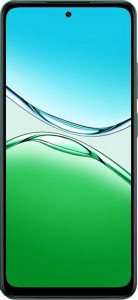
Oppo A5 5G

Oppo A5 5G

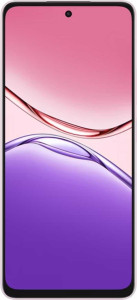
Oppo A5 Pro (Global)

Oppo A5 Pro (Global)

Design:
water resistance Water resistant Waterproof
weight 194 g 194 g
thickness 8 mm 7.8 mm
width 76.2 mm 75.5 mm
height 165.7 mm 164.8 mm
volume 101.01072 cm³ 97.05072 cm³
Ingress Protection (IP) rating IP65 IP68
has a rugged build
can be folded

Both phones share an identical 194 g weight, so neither has an advantage in hand feel from a mass perspective. Where they diverge slightly is in overall footprint: the Oppo A5 Pro is marginally slimmer (7.8 mm vs 8 mm), narrower (75.5 mm vs 76.2 mm), and shorter (164.8 mm vs 165.7 mm), resulting in a meaningfully smaller displaced volume of 97.05 cm³ versus 101.01 cm³. In practice these are subtle differences you might not consciously notice, but the A5 Pro does pack the same mass into a more refined, pocketable shell.

The most consequential design difference is water protection. The Oppo A5 5G carries an IP65 rating, meaning it can handle dust ingress and sustained water jets — fine for rain or splashes, but it is not rated for submersion. The A5 Pro steps up to IP68, which certifies it against full submersion in water — typically up to 1.5 metres for 30 minutes. This is a real-world upgrade that matters if you use your phone near pools, in heavy rain, or in environments where accidental drops into water are a genuine risk. Neither phone is built to a rugged standard, but the A5 Pro's rating offers a meaningful extra layer of confidence.

Overall, the A5 Pro holds a clear edge in this category. The marginally slimmer and more compact chassis is a minor plus, but the jump from IP65 to IP68 is the decisive advantage — it elevates the device from splash-resistant to genuinely waterproof, which is a qualitatively different level of protection for everyday use.
Display:
Display type LCD, IPS LCD, IPS
screen size 6.67" 6.67"
pixel density 264 ppi 264 ppi
resolution 720 x 1604 px 720 x 1604 px
refresh rate 120Hz 120Hz
has branded damage-resistant glass
supports HDR10
supports HDR10+
Always-On Display
supports Dolby Vision
Has a secondary screen
has a touch screen

For the most part, these two phones are mirror images of each other on display hardware. Both feature a 6.67″ IPS LCD panel running at 720 x 1604 px — a resolution that lands at 264 ppi, which is adequate for everyday content but won't satisfy users who pixel-peep text or fine detail. The shared 120 Hz refresh rate is a genuine highlight at this price tier, delivering noticeably smoother scrolling and UI animations compared to the 60 Hz or 90 Hz screens common in budget phones. Neither device supports HDR10, HDR10+, or Dolby Vision, so colour volume and dynamic range are limited to standard output.

The sole differentiator in this category is screen protection: the Oppo A5 5G ships with branded damage-resistant glass, while the A5 Pro does not. This matters more than it might first appear — scratch and crack resistance directly affects the long-term condition of a device used without a screen protector, and the absence of any certified protective glass on the A5 Pro means the panel is more vulnerable to everyday wear.

On display, the verdict is a narrow but clear edge to the A5 5G. The core viewing experience — size, resolution, refresh rate — is identical across both phones, but the addition of damage-resistant glass gives the A5 5G a meaningful durability advantage that compounds over time with daily use.

Performance:
internal storage 256GB 256GB
RAM 8GB 8GB
Chipset (SoC) name MediaTek Dimensity 6300 MediaTek Dimensity 6300
GPU name Arm Mali-G57 MC2 Arm Mali-G57 MC2
CPU speed 2 x 2.4 & 6 x 2 GHz 2 x 2.4 & 6 x 2 GHz
Geekbench 6 result (multi) 2012 2012
Geekbench 6 result (single) 782 782
GPU clock speed 950 MHz 950 MHz
Has integrated LTE
RAM speed 2133 MHz 2133 MHz
semiconductor size 6 nm 6 nm
Supports 64-bit
DirectX version DirectX 12 DirectX 12
Has integrated graphics
Uses big.LITTLE technology
CPU threads 8 threads 8 threads
Uses HMP
maximum memory bandwidth 17.07 GB/s 17.07 GB/s
L2 cache 1 MB 1 MB
L1 cache 512 KB 512 KB
maximum memory amount 12GB 12GB
uses multithreading
DDR memory version 4 4
L3 cache 2 MB 2 MB

Performance is the one category where choosing between these two phones becomes entirely moot. Both are powered by the MediaTek Dimensity 6300 — a 6 nm chip with an octa-core configuration of two performance cores at 2.4 GHz and six efficiency cores at 2.0 GHz — paired with 8 GB of DDR4 RAM and 256 GB of internal storage. Every measurable hardware attribute, from the Arm Mali-G57 MC2 GPU to the memory bandwidth of 17.07 GB/s, is identical across both devices.

The Geekbench 6 scores tell the same story: both phones post 782 single-core and 2012 multi-core results, placing them in the expected range for a mid-range 6 nm chip. In practice, this translates to smooth handling of everyday tasks, social media, and casual gaming, though demanding 3D titles will push the Mali-G57 to its limits. The 6 nm fabrication process also helps the chip run efficiently, which has a positive downstream effect on thermal management and battery endurance.

There is no winner here — this is an absolute tie. Every performance variable provided is carbon-copy identical, meaning real-world speed, responsiveness, and gaming capability will be indistinguishable between the A5 5G and the A5 Pro. Any purchasing decision should rest entirely on the differences found in other specification groups.

Cameras:
megapixels (main camera) 50 & 2 MP 50 & 2 MP
Has a dual-lens (or multi-lens) main camera
megapixels (front camera) 8MP 8MP
has built-in optical image stabilization
Has a dual-tone LED flash
has a BSI sensor
has a CMOS sensor
has continuous autofocus when recording movies
Has phase-detection autofocus for photos
supports slow-motion video recording
has a built-in HDR mode
has manual exposure
has a flash
optical zoom 0x 0x
has manual ISO
has a serial shot mode
has manual focus
has a front camera
Has laser autofocus
Shoots 360° panorama
has manual white balance
shoots raw
has touch autofocus
has manual shutter speed
can create panoramas in-camera
Has a front-facing LED flash
has a dual-lens (or multi-lens) front camera
supports HDR10 recording
supports Dolby Vision recording
has a front-facing camera under the display
Has a RGB LED flash
has 3D photo/video recording capabilities

Camera hardware is another area of complete parity. Both phones field an identical dual rear setup of 50 MP + 2 MP alongside an 8 MP front camera, and the feature set backing those sensors is exactly the same across both devices. Phase-detection autofocus, continuous autofocus during video, slow-motion recording, and a manual controls suite covering ISO, exposure, focus, and white balance are all present on each phone — a reasonable toolkit for a budget-tier shooter.

A few shared limitations are worth flagging for prospective buyers. Neither device includes optical image stabilization, which means handheld low-light shots and video footage will be more susceptible to blur and shake than on phones with OIS. There is also no optical zoom, and neither model can shoot in RAW format — both constraints that cap the ceiling for enthusiast-level photography. The secondary 2 MP lens is a depth sensor rather than a versatile wide or telephoto unit, so the system is effectively a single functional shooter.

As with performance, this category ends in a dead heat. Every camera specification provided is identical between the A5 5G and the A5 Pro, meaning photographic output and video capability will be indistinguishable in practice. Neither phone holds any advantage here.

Operating system:
Android version Android 15 Android 15
has clipboard warnings
has location privacy options
has camera/microphone privacy options
has Mail Privacy Protection
has theme customization
can block app tracking
blocks cross-site tracking
has on-device machine learning
has notification permissions
has media picker
Can play games while they download
has dark mode
has Wi-Fi password sharing
has battery health check
has an extra dim mode
has focus modes
has dynamic theming
can offload apps
Has customizable notifications
has Live Text
has full-page screenshots
supports split screen
gets direct OS updates
has PiP
Can be used as a PC
Has sharing intents
has a child lock
Supports widgets
Is free and open source
Has offline voice recognition
has voice commands
Tracks the current position of a mobile device
is a multi-user system
has Quick Start

Running Android 15 on both devices, the software experience is identical from top to bottom. The shared feature set is reasonably well-rounded for the price tier: dynamic theming, dark mode, split-screen multitasking, Picture-in-Picture, customizable notifications, and on-device machine learning are all present. Privacy-conscious users will find the essentials covered too, with camera and microphone access controls, location privacy options, and app tracking blocks available on each phone.

A couple of shared omissions are worth noting. Neither phone receives direct OS updates — meaning updates are routed through the manufacturer rather than pushed straight from Google — which can introduce delays in receiving security patches and new Android features. Additionally, both lack Wi-Fi password sharing and cross-site tracking protection, minor conveniences that more premium Android devices sometimes include.

Predictably, this group ends as another complete tie. The A5 5G and A5 Pro run the same OS version with an identical feature set and identical limitations. Software experience will not factor into any decision between these two phones.

Battery:
battery power 6000 mAh 5800 mAh
has wireless charging
Supports fast charging
charging speed 45W 45W
has a removable battery
has a battery level indicator
has a rechargeable battery

Battery capacity is where the Oppo A5 5G carves out a tangible, if modest, advantage. Its 6000 mAh cell edges out the A5 Pro's 5800 mAh — a 200 mAh difference that, on its own, is unlikely to translate into dramatically longer screen-on time, but does provide a marginally larger buffer for heavy usage days. Both figures are well above the mainstream smartphone average, firmly placing these phones in the endurance-oriented segment where two-day battery life is a realistic expectation under moderate use.

Where the two phones are perfectly matched is charging: both support 45W fast charging and neither offers wireless charging. The 45W speed is a meaningful figure at this price point, enabling a substantial top-up in roughly an hour from near-empty — a practical convenience that offsets the non-removable battery on both models.

The edge in this category goes to the A5 5G. The capacity gap is small enough that day-to-day differences will be subtle, but all else being equal, more milliamp-hours is an unambiguous advantage for longevity and endurance. Charging speed is a dead tie, so the A5 5G wins this group on capacity alone.

Audio:
has stereo speakers
has aptX
has LDAC
has aptX HD
has aptX Adaptive
has aptX Lossless
Has a radio

Wireless audio quality is where these two phones quietly diverge. Both ship with stereo speakers, putting them on equal footing for built-in playback. However, the Oppo A5 5G supports aptX HD, a Bluetooth audio codec that enables hi-res wireless streaming at up to 576 kbps — a notably higher bitrate than standard SBC or AAC. The A5 Pro carries no equivalent codec support, meaning Bluetooth audio is limited to lower-quality fallback options.

The practical impact of aptX HD depends on the user's ecosystem. It only matters if you own compatible aptX HD headphones or speakers — but for those who do, it delivers perceptibly cleaner, higher-fidelity wireless audio. Users who rely on Bluetooth headphones for music or podcasts will get a more faithful reproduction of their audio on the A5 5G, assuming their accessory supports the codec. Neither phone supports LDAC or aptX Adaptive, so the ceiling is the same in that regard.

The A5 5G takes a clear win in this category. The addition of aptX HD is a meaningful differentiator for wireless audio enthusiasts, and the A5 Pro offers no compensating advantage. For users who prioritize Bluetooth audio quality, this is a straightforward point in the A5 5G's favour.

Connectivity & Features:
release date May 2025 February 2025
has 5G support
Wi-Fi version Wi-Fi 4 (802.11n), Wi-Fi 5 (802.11ac) Wi-Fi 4 (802.11n), Wi-Fi 5 (802.11ac)
SIM cards 2 SIM 2 SIM
Bluetooth version 5.4 5.3
has an external memory slot
Has USB Type-C
USB version 2 2
has NFC
download speed 3300 MBits/s 3300 MBits/s
Has a fingerprint scanner
has emergency SOS via satellite
has crash detection
is DLNA-certified
has a gyroscope
supports ANT+
Has a heart rate monitor
has GPS
has a compass
supports Wi-Fi
Has an infrared sensor
has an accelerometer
has a cellular module
Has a barometer
has an HDMI output
Uses 3D facial recognition
Has an iris scanner
Stylus included
supports Galileo
Has motion tracking
Has optical tracking
Has a built-in projector

Across the broad connectivity landscape, these two phones are largely interchangeable. Both support 5G, dual SIM, NFC, USB Type-C (USB 2.0), expandable storage, and identical Wi-Fi capabilities topping out at Wi-Fi 5 (802.11ac). GPS with Galileo support, a fingerprint scanner, and a peak download speed of 3300 Mbits/s are also shared, rounding out a solid — if unsurprising — mid-range connectivity package. The absence of a gyroscope on both devices is a notable shared gap, as it limits compatibility with certain AR applications and more immersive gaming experiences.

The sole differentiator in this group is Bluetooth version: the A5 5G ships with Bluetooth 5.4 against the A5 Pro's Bluetooth 5.3. Version 5.4 introduced improvements to connection reliability and efficiency over 5.3, though in everyday use — pairing headphones, speakers, or smartwatches — the gap between these two consecutive versions is unlikely to be perceptible to most users. It is a forward-looking advantage rather than a transformative one.

The A5 5G holds a marginal edge here by virtue of its newer Bluetooth 5.4 implementation, but this is the thinnest of margins. The rest of the connectivity spec sheet is a complete tie, and neither phone pulls ahead in any other meaningful way within this group.

Miscellaneous:
has a video light
Has sapphire glass display
Has a curved display
Has an e-paper display

The miscellaneous category offers very little to analyse. Both the Oppo A5 5G and the A5 Pro share the same thin feature set here: each has a video light — useful for recording in dim environments — and neither carries a curved display, sapphire glass, or an e-paper screen. These are all expected absences at this price tier rather than meaningful shortcomings.

This group is a complete tie. With no differentiating data points between the two devices, miscellaneous features play no role in distinguishing one phone from the other.

Comparison Summary & Verdict

After a thorough look at the specs, both phones deliver a near-identical core experience — same processor, display, cameras, and charging speed — but their differences point each device toward a distinct audience. The Oppo A5 Pro (Global) stands out with its superior IP68 waterproof rating, slimmer and more compact body, making it the stronger choice for users who need reliable water protection in daily life. The Oppo A5 5G, on the other hand, counters with a larger 6000 mAh battery, aptX HD audio support, damage-resistant glass on the display, and a slightly newer Bluetooth 5.4 standard. If longevity between charges and audio quality matter most to you, the A5 5G earns its place. If premium durability and a more pocketable form factor are your priorities, the A5 Pro (Global) is the smarter pick.

Oppo A5 5G
Buy Oppo A5 5G if...

Buy the Oppo A5 5G if you want a larger 6000 mAh battery, aptX HD audio support, and damage-resistant glass on the display.

Oppo A5 Pro (Global)
Buy Oppo A5 Pro (Global) if...

Buy the Oppo A5 Pro (Global) if you prioritize superior IP68 waterproofing and a slimmer, more compact design.