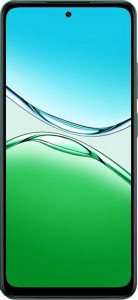
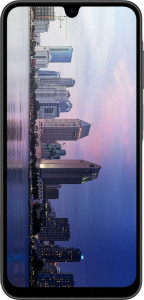
The camera systems diverge in three meaningful ways. First, versatility: the Samsung Galaxy A26 5G sports a triple rear camera (50 MP main, 8 MP ultrawide, 2 MP depth) versus the Oppo A5 5G's dual rear camera (50 MP main, 2 MP depth). The addition of an 8 MP ultrawide lens on the A26 5G meaningfully expands compositional options for landscapes, architecture, and group shots — a capability the A5 5G simply lacks. Second, the A26 5G's main lens offers a wider f/1.8 aperture compared to the A5 5G's f/2.4, which allows more light to reach the sensor and typically yields better results in low-light conditions. Third, and critically, the A26 5G includes optical image stabilization (OIS) while the A5 5G does not — OIS physically compensates for hand movement during capture, producing noticeably sharper handheld shots and smoother video.
Video capability is another clear differentiator. The A26 5G records up to 4K at 30 fps, while the A5 5G tops out at 1080p at 30 fps. For users who care about video quality — whether for social media, travel footage, or archiving memories — this is a significant step up. The front camera follows the same pattern: 13 MP on the A26 5G versus 8 MP on the A5 5G, with the A5 5G actually offering a marginally wider f/2.0 aperture versus f/2.2 on the A26 5G, though the resolution advantage still favors Samsung for selfie detail.
Both phones share a solid baseline of features — phase-detection autofocus, HDR mode, slow-motion, panorama, and manual controls — so neither feels stripped down for casual photography. But the Samsung Galaxy A26 5G holds a decisive advantage in this group, offering more lenses, OIS, a brighter main aperture, and 4K video recording, making it the stronger all-around camera phone of the two.