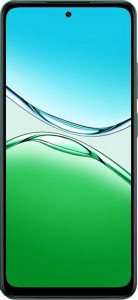
Oppo A5 5G
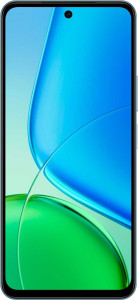
Vivo Y39 5G

Oppo A5 5G Vivo Y39 5G

Overview

Choosing between two capable mid-range 5G smartphones often comes down to the finer details. This head-to-head comparison pits the Oppo A5 5G against the Vivo Y39 5G, two devices that share a surprisingly common foundation yet diverge in ways that could matter greatly depending on your priorities. From chipset architecture and RAM technology to audio versatility and battery endurance, each phone takes its own distinct approach. Read on to explore every major specification category and find out which one is the right fit for you.

Common Features

  • Both phones are water resistant.
  • Both phones share the same height of 165.7 mm.
  • Neither phone has a rugged build.
  • Neither phone can be folded.
  • Both phones feature an LCD IPS display type.
  • Both phones have a pixel density of 264 ppi.
  • Both phones support a 120Hz refresh rate.
  • HDR10 support is not available on either phone.
  • HDR10+ support is not available on either phone.
  • Always-On Display is not available on either phone.
  • Dolby Vision support is not available on either phone.
  • Neither phone has a secondary screen.
  • Both phones come with 256GB of internal storage.
  • Both phones include 8GB of RAM.
  • Both phones support LTE and 64-bit processing.
  • Both phones use DirectX 12 and integrated graphics.
  • Both phones use big.LITTLE CPU technology with 8 threads.
  • Both phones have a dual-lens main camera with 50 and 2 MP sensors.
  • Both phones share the same wide aperture values of f/2.4 and f/1.8 on the main camera.
  • Both phones have an 8MP front camera.
  • Optical image stabilization is not available on either phone.
  • Both phones record main camera video at 1080p 30fps.
  • A dual-tone LED flash is not present on either phone.
  • Neither phone has a BSI sensor.
  • Both phones run Android 15.
  • Both phones have clipboard warnings, location privacy options, and camera/microphone privacy options.
  • Mail Privacy Protection is not available on either phone.
  • Both phones support theme customization and can block app tracking.
  • Cross-site tracking blocking is not available on either phone.
  • Wireless charging is not supported on either phone.
  • Both phones support fast charging.
  • Neither phone has a removable battery.
  • Both phones have a battery level indicator and a rechargeable battery.
  • Neither phone supports aptX, LDAC, aptX Adaptive, or aptX Lossless.
  • Neither phone includes a radio.
  • Both phones support 5G connectivity.
  • Both phones support Wi-Fi 4 (802.11n) and Wi-Fi 5 (802.11ac).
  • Both phones have dual SIM card slots and USB Type-C with USB 2.0.
  • Both phones have NFC and a fingerprint scanner.
  • Emergency SOS via satellite is not available on either phone.
  • Both phones have a video light.
  • Neither phone has a sapphire glass display, curved display, or e-paper display.

Main Differences

  • Weight is 194g on the Oppo A5 5G and 8.1g on the Vivo Y39 5G.
  • Thickness is 8 mm on the Oppo A5 5G and 8.1 mm on the Vivo Y39 5G.
  • Width is 76.2 mm on the Oppo A5 5G and 76.3 mm on the Vivo Y39 5G.
  • Volume is 101.01 cm³ on the Oppo A5 5G and 102.41 cm³ on the Vivo Y39 5G.
  • The IP rating is IP65 on the Oppo A5 5G and IP64 on the Vivo Y39 5G.
  • Screen size is 6.67″ on the Oppo A5 5G and 6.68″ on the Vivo Y39 5G.
  • Resolution is 720 x 1604 px on the Oppo A5 5G and 720 x 1608 px on the Vivo Y39 5G.
  • Damage-resistant glass is present on the Oppo A5 5G but not available on the Vivo Y39 5G.
  • The chipset is MediaTek Dimensity 6300 on the Oppo A5 5G and Qualcomm Snapdragon 4 Gen 2 on the Vivo Y39 5G.
  • The GPU is Arm Mali-G57 MC2 on the Oppo A5 5G and Adreno 613 on the Vivo Y39 5G.
  • CPU speed is 2 x 2.4 and 6 x 2 GHz on the Oppo A5 5G and 2 x 2.3 and 6 x 2 GHz on the Vivo Y39 5G.
  • GPU clock speed is 950 MHz on the Oppo A5 5G and 955 MHz on the Vivo Y39 5G.
  • RAM speed is 2133 MHz on the Oppo A5 5G and 3200 MHz on the Vivo Y39 5G.
  • Semiconductor size is 6 nm on the Oppo A5 5G and 4 nm on the Vivo Y39 5G.
  • Maximum memory is 12GB on the Oppo A5 5G and 16GB on the Vivo Y39 5G.
  • DDR memory version is DDR4 on the Oppo A5 5G and DDR5 on the Vivo Y39 5G.
  • The number of flash LEDs is 1 on the Oppo A5 5G and 2 on the Vivo Y39 5G.
  • Battery capacity is 6000 mAh on the Oppo A5 5G and 6500 mAh on the Vivo Y39 5G.
  • Charging speed is 45W on the Oppo A5 5G and 44W on the Vivo Y39 5G.
  • A 3.5mm audio jack is not present on the Oppo A5 5G but is available on the Vivo Y39 5G.
  • Stereo speakers are present on the Oppo A5 5G but not available on the Vivo Y39 5G.
  • aptX HD support is present on the Oppo A5 5G but not available on the Vivo Y39 5G.
  • Bluetooth version is 5.4 on the Oppo A5 5G and 5.1 on the Vivo Y39 5G.
  • An external memory slot is available on the Oppo A5 5G but not present on the Vivo Y39 5G.
  • Download speed is 3300 Mbits/s on the Oppo A5 5G and 2500 Mbits/s on the Vivo Y39 5G.
  • A gyroscope is not present on the Oppo A5 5G but is available on the Vivo Y39 5G.
Specs Comparison
Oppo A5 5G

Oppo A5 5G

Vivo Y39 5G

Vivo Y39 5G

Design:
water resistance Water resistant Water resistant
weight 194 g 8.1 g
thickness 8 mm 8.1 mm
width 76.2 mm 76.3 mm
height 165.7 mm 165.7 mm
volume 101.01072 cm³ 102.407571 cm³
Ingress Protection (IP) rating IP65 IP64
has a rugged build
can be folded

In terms of physical footprint, the Oppo A5 5G and Vivo Y39 5G are essentially identical twins: both stand at 165.7 mm tall, measure within a millimeter of each other in width (76.2 mm vs 76.3 mm), and share nearly the same thickness (8 mm vs 8.1 mm). The marginal volume difference — 101.01 cm³ versus 102.41 cm³ — is imperceptible in hand. Neither device folds or carries a rugged build, positioning both as standard-form mainstream smartphones.

Where the two diverge in a potentially meaningful way is water resistance. Both phones carry an official IP rating, but the Oppo A5 5G holds an IP65 certification while the Vivo Y39 5G is rated IP64. That single digit difference on the second character matters in practice: a ″6″ prefix confirms full dust ingress protection on both, but the trailing ″5″ on the Oppo means it can withstand low-pressure water jets from any direction, whereas the Vivo's ″4″ suffix only guarantees protection against water splashes. For users who frequently use their phone outdoors, near sinks, or in light rain, the Oppo's slightly more robust water resistance is a tangible, real-world advantage.

Overall, the Oppo A5 5G holds a narrow but clear edge in this category, solely due to its superior IP65 rating. The form factor of both devices is functionally indistinguishable, so the water resistance certification becomes the sole differentiator — and for a spec group centered on durability and design, that distinction is worth noting.

Display:
Display type LCD, IPS LCD, IPS
screen size 6.67" 6.68"
pixel density 264 ppi 264 ppi
resolution 720 x 1604 px 720 x 1608 px
refresh rate 120Hz 120Hz
has branded damage-resistant glass
supports HDR10
supports HDR10+
Always-On Display
supports Dolby Vision
Has a secondary screen
has a touch screen

Both the Oppo A5 5G and Vivo Y39 5G are built around virtually the same display blueprint: a 6.67–6.68″ LCD IPS panel with a 264 ppi pixel density and a 720p resolution. At this pixel density, sharpness is acceptable for everyday use — text and images appear reasonably clear — though it falls noticeably short of the crisper 1080p screens found on more premium devices. The shared 120Hz refresh rate is the real highlight here, delivering smooth scrolling and responsive touch interactions that punch above the typical expectations for this price tier.

Neither phone supports HDR10, HDR10+, or Dolby Vision, meaning neither will unlock enhanced dynamic range on streaming platforms. That is a consistent limitation across both, and users prioritizing media consumption quality should note it. The one specification that separates them is screen protection: the Oppo A5 5G includes branded damage-resistant glass, while the Vivo Y39 5G does not. In practice, this means the Oppo's display is meaningfully better equipped to resist scratches and survive accidental drops without an additional screen protector — a real-world durability advantage that compounds over the lifetime of the device.

The verdict here mirrors the design category: the two phones are near-identical on paper, but the Oppo A5 5G secures a practical edge through its damage-resistant glass. For users who are hard on their phones or prefer to go case-free, that distinction matters. Those indifferent to display protection will find both screens functionally equivalent.

Performance:
internal storage 256GB 256GB
RAM 8GB 8GB
Chipset (SoC) name MediaTek Dimensity 6300 Qualcomm Snapdragon 4 Gen 2
GPU name Arm Mali-G57 MC2 Adreno 613
CPU speed 2 x 2.4 & 6 x 2 GHz 2 x 2.3 & 6 x 2 GHz
GPU clock speed 950 MHz 955 MHz
Has integrated LTE
RAM speed 2133 MHz 3200 MHz
semiconductor size 6 nm 4 nm
Supports 64-bit
DirectX version DirectX 12 DirectX 12
Has integrated graphics
Uses big.LITTLE technology
CPU threads 8 threads 8 threads
maximum memory amount 12GB 16GB
DDR memory version 4 5

On the surface, the Oppo A5 5G and Vivo Y39 5G look evenly matched: both ship with 8GB of RAM and 256GB of storage, run 8-thread big.LITTLE CPU configurations with nearly identical clock speeds, and sport GPU clock speeds within 5 MHz of each other. Day-to-day multitasking and light app usage will feel comparable on both. But digging into the silicon tells a more nuanced story.

The Vivo Y39 5G's Snapdragon 4 Gen 2 is built on a 4 nm process node, compared to the 6 nm Dimensity 6300 powering the Oppo. A smaller node generally translates to better power efficiency and thermal performance — meaning the Vivo is likely to sustain workloads longer without throttling and drain the battery less aggressively under load. Compounding this advantage, the Vivo uses DDR5 RAM at 3200 MHz versus the Oppo's DDR4 at 2133 MHz — a bandwidth gap that benefits memory-intensive tasks like gaming, heavy multitasking, and fast app switching. The Vivo also supports a higher maximum memory ceiling of 16GB (vs 12GB), which matters if either device offers a RAM expansion feature via virtual memory.

The Vivo Y39 5G holds a clear performance edge in this category. While both phones handle everyday tasks competently, the Snapdragon 4 Gen 2's more advanced process node and significantly faster DDR5 memory give the Vivo a structural advantage in efficiency and sustained performance — benefits that become increasingly apparent during prolonged gaming sessions or processor-intensive workloads.

Cameras:
megapixels (main camera) 50 & 2 MP 50 & 2 MP
wide aperture (main camera) 2.4 & 1.8f 2.4 & 1.8f
Has a dual-lens (or multi-lens) main camera
megapixels (front camera) 8MP 8MP
has built-in optical image stabilization
video recording (main camera) 1080 x 30 fps 1080 x 30 fps
Has a dual-tone LED flash
number of flash LEDs 1 2
has a BSI sensor
has a CMOS sensor
has continuous autofocus when recording movies
Has phase-detection autofocus for photos
supports slow-motion video recording
has a built-in HDR mode
has manual exposure
has a flash
optical zoom 0x 0x
has manual ISO
has a serial shot mode
has manual focus
has a front camera
Has laser autofocus
Shoots 360° panorama
has manual white balance
shoots raw
has touch autofocus
has manual shutter speed
can create panoramas in-camera
wide aperture (front camera) 2f 2f
Has timelapse function
Has a front-facing LED flash
has a dual-lens (or multi-lens) front camera
supports HDR10 recording
supports Dolby Vision recording
has a front-facing camera under the display
Has a RGB LED flash
has 3D photo/video recording capabilities

Rarely does a camera comparison yield this level of parity. The Oppo A5 5G and Vivo Y39 5G share an identical rear camera configuration: a 50 MP + 2 MP dual-lens setup with matching apertures, the same 8 MP front camera, and a video ceiling of 1080p at 30fps. The feature set is equally mirrored — both offer phase-detection autofocus, continuous autofocus during recording, slow-motion video, HDR mode, and a solid manual controls suite covering ISO, exposure, focus, and white balance. Neither supports optical zoom, RAW capture, or OIS, which are common omissions at this price tier.

The sole differentiator across the entire camera spec sheet is flash hardware: the Vivo Y39 5G is equipped with 2 flash LEDs, while the Oppo A5 5G has just 1. In practice, dual LEDs can produce more evenly distributed and natural-looking artificial light in low-light shots, reducing harsh shadows and improving color rendering on nearby subjects. It is a modest but real advantage for anyone who frequently shoots in dim environments.

This category is essentially a tie, with a marginal nod to the Vivo Y39 5G for its dual-LED flash. Users who rarely shoot in low light will find no meaningful difference between these two cameras; for everyone else, the Vivo's slightly improved flash setup is the only data-supported reason to favor it here.

Operating system:
Android version Android 15 Android 15
has clipboard warnings
has location privacy options
has camera/microphone privacy options
has Mail Privacy Protection
has theme customization
can block app tracking
blocks cross-site tracking
has on-device machine learning
has notification permissions
has media picker
Can play games while they download
has dark mode
has Wi-Fi password sharing
has battery health check
has an extra dim mode
has focus modes
has dynamic theming
can offload apps
Has customizable notifications
has Live Text
has full-page screenshots
supports split screen
gets direct OS updates
has PiP
Can be used as a PC
Has sharing intents
has a child lock
Supports widgets
Is free and open source
Has offline voice recognition
has voice commands
Tracks the current position of a mobile device
is a multi-user system
has Quick Start

The operating system category produces an outright dead heat. Both the Oppo A5 5G and Vivo Y39 5G run Android 15 and share an identical feature set across every single tracked specification — from privacy controls like location and camera/microphone permissions, to usability features like split-screen, Picture-in-Picture, dynamic theming, and offline voice recognition. Neither receives direct OS updates, and neither supports Wi-Fi password sharing or focus modes.

What this parity means in practice is that a user switching between these two devices would notice no difference in how the operating system behaves, what it can do, or how it handles privacy and multitasking. Key productivity tools like Live Text, full-page screenshots, and widget support are present on both, as are family-friendly features like child lock and multi-user mode. The software experience is, by every available data point, functionally equivalent.

This is a definitive tie. Neither the Oppo A5 5G nor the Vivo Y39 5G holds any advantage in this category — the OS spec sheet is a mirror image across both devices, and software experience should not factor into a purchasing decision between the two.

Battery:
battery power 6000 mAh 6500 mAh
has wireless charging
Supports fast charging
charging speed 45W 44W
has a removable battery
has a battery level indicator
has a rechargeable battery

Battery life is where the Vivo Y39 5G quietly pulls ahead. Its 6500 mAh cell outpaces the Oppo A5 5G's already generous 6000 mAh by 500 mAh — a roughly 8% capacity advantage. Both figures sit well above the mainstream smartphone average, meaning neither phone will struggle to last a full day, but the Vivo's larger reservoir gives it a meaningful cushion for heavy users, extended travel days, or simply longer stretches between charges.

Charging speeds are nearly identical — 45W on the Oppo versus 44W on the Vivo — a difference so small it will be imperceptible in real use. Both phones reach fast-charging territory that can realistically top up the battery in well under two hours. Neither supports wireless charging, which is a common trade-off at this segment. Both also feature non-removable batteries, standard for modern smartphones.

The Vivo Y39 5G takes a clear, if modest, win here. The 500 mAh capacity advantage is real and cumulative — it adds up meaningfully over long days or across use cases like navigation, gaming, or video streaming. Given that charging speeds are functionally equal, the Vivo simply offers more endurance for the same replenishment time, making it the stronger choice for battery-conscious users.

Audio:
has a socket for a 3.5 mm audio jack
has stereo speakers
has aptX
has LDAC
has aptX HD
has aptX Adaptive
has aptX Lossless
Has a radio

Audio is the one category in this comparison where both phones make genuinely different trade-offs rather than simply matching or outpacing each other. The Oppo A5 5G drops the headphone jack entirely but compensates with stereo speakers and support for aptX HD — a high-resolution Bluetooth codec that delivers noticeably better wireless audio quality than standard Bluetooth when paired with compatible headphones. The Vivo Y39 5G takes the opposite approach: it retains the 3.5 mm audio jack, catering to users with wired headphones or legacy audio gear, but offers only a mono speaker setup and no advanced Bluetooth codec support.

These are meaningful real-world differences. Stereo speakers create a wider, more immersive soundstage for media consumption — watching videos or playing games on the Oppo will feel more spatially engaging out loud. Meanwhile, aptX HD on the Oppo raises the ceiling for wireless listening, reducing compression artifacts for users with compatible wireless headphones. The Vivo's headphone jack, on the other hand, is a practical inclusion that many users still value: wired audio typically has lower latency, requires no charging, and is universally compatible with any headphones.

There is no outright winner here — the verdict depends entirely on listening habits. The Oppo A5 5G is the stronger choice for speakerphone use and wireless audio quality, while the Vivo Y39 5G suits users who prefer or rely on wired headphones. Neither phone serves every audio use case equally well, making this the most preference-driven category in the comparison so far.

Connectivity & Features:
release date May 2025 March 2025
has 5G support
Wi-Fi version Wi-Fi 4 (802.11n), Wi-Fi 5 (802.11ac) Wi-Fi 4 (802.11n), Wi-Fi 5 (802.11ac)
SIM cards 2 SIM 2 SIM
Bluetooth version 5.4 5.1
has an external memory slot
Has USB Type-C
USB version 2 2
has NFC
download speed 3300 MBits/s 2500 MBits/s
Has a fingerprint scanner
has emergency SOS via satellite
has crash detection
is DLNA-certified
has a gyroscope
supports ANT+
Has a heart rate monitor
has GPS
has a compass
supports Wi-Fi
Has an infrared sensor
has an accelerometer
has a cellular module
Has a barometer
has an HDMI output
Uses 3D facial recognition
Has an iris scanner
Stylus included
supports Galileo
Has motion tracking
Has optical tracking
Has a built-in projector

A shared foundation of 5G, dual-SIM, NFC, USB Type-C, Wi-Fi 5, and fingerprint scanning means both the Oppo A5 5G and Vivo Y39 5G cover the everyday connectivity essentials without compromise. But several individual specs pull meaningfully in opposite directions. The Oppo holds an edge in wireless communication: its Bluetooth 5.4 is a notably newer version than the Vivo's 5.1, offering improved connection stability, lower power consumption, and better handling of multiple simultaneous audio devices. Its peak 5G download speed of 3300 Mbits/s also outpaces the Vivo's 2500 Mbits/s — a 32% theoretical bandwidth advantage that could translate to faster large file downloads on a capable network.

Storage flexibility is another area where the Oppo differentiates itself: it includes a microSD card slot, allowing users to expand storage beyond the built-in 256GB. The Vivo omits this entirely, making its onboard storage the hard ceiling. On the other side of the ledger, the Vivo Y39 5G is the only one of the two equipped with a gyroscope — a sensor that enables accurate screen rotation, immersive gaming experiences, and AR applications. The Oppo's absence of a gyroscope is a genuine limitation for users who rely on motion-sensitive apps or games.

Weighing these trade-offs, the Oppo A5 5G comes out ahead overall in this category. Its advantages — newer Bluetooth, higher 5G throughput, and expandable storage — affect a wider range of everyday use cases than the Vivo's gyroscope inclusion, which primarily benefits a narrower subset of users. That said, mobile gamers and AR enthusiasts should factor the Vivo's gyroscope in as a meaningful differentiator for their specific needs.
Miscellaneous:
has a video light
Has sapphire glass display
Has a curved display
Has an e-paper display

The miscellaneous category offers little to analyze — every tracked specification is identical across the Oppo A5 5G and Vivo Y39 5G. Both include a video light, and neither features a sapphire glass display, curved screen, or e-paper display. These are all expected absences at this price tier, where such premium or niche hardware is rarely found.

This is a complete tie. The provided specs reveal no differentiator of any kind, and this category should carry no weight in a purchasing decision between the two devices.

Comparison Summary & Verdict

Both the Oppo A5 5G and the Vivo Y39 5G are well-matched mid-range 5G phones running Android 15 with the same base storage and RAM, making the decision hinge on specific priorities. The Oppo A5 5G is the stronger pick for users who care about stereo speakers, aptX HD audio quality, a superior IP65 rating, damage-resistant glass, expandable storage, and faster download speeds. On the other hand, the Vivo Y39 5G is better suited to those who want a larger 6500 mAh battery, the efficiency of a 4 nm Snapdragon 4 Gen 2 chipset, faster DDR5 RAM, a higher 16 GB memory ceiling, a 3.5mm headphone jack, and a built-in gyroscope for motion-sensitive apps. Neither phone is a clear all-round winner; your ideal choice ultimately depends on whether you lean toward richer audio and connectivity features or greater performance headroom and battery endurance.

Oppo A5 5G
Buy Oppo A5 5G if...

Buy the Oppo A5 5G if you want stereo speakers, aptX HD audio, expandable storage, a higher IP65 water resistance rating, and faster download speeds in your next 5G phone.

Vivo Y39 5G
Buy Vivo Y39 5G if...

Buy the Vivo Y39 5G if you prioritize a larger 6500 mAh battery, a more advanced 4 nm Snapdragon chipset with DDR5 RAM, a 3.5mm headphone jack, and a built-in gyroscope.