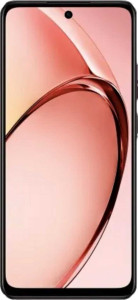
Oppo A5 Energy
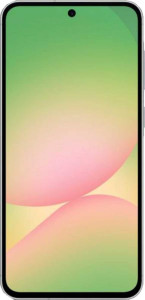
Samsung Galaxy A56 5G

Oppo A5 Energy Samsung Galaxy A56 5G

Overview

Welcome to our in-depth comparison of the Oppo A5 Energy and the Samsung Galaxy A56 5G, two feature-packed smartphones that take very different approaches to what matters most. From display technology and raw performance to battery capacity and camera versatility, these two devices each make a compelling case for different types of users. Read on as we break down every key specification to help you decide which one deserves a place in your pocket.

Common Features

  • Both phones are waterproof and neither has a rugged build or foldable form factor.
  • Both phones run Android 15 as their operating system.
  • Both phones have 12GB of RAM.
  • Both phones support 5G connectivity.
  • Both phones support fast charging at 45W.
  • Neither phone has wireless charging.
  • Neither phone has a removable battery.
  • Both phones have stereo speakers.
  • Neither phone has a 3.5mm audio jack.
  • Both phones have NFC support.
  • Both phones have a fingerprint scanner.
  • Both phones use USB Type-C with USB version 2.
  • Both phones have a dual-lens or multi-lens main camera.
  • Both phones have a CMOS sensor and support phase-detection autofocus for photos.
  • Both phones support slow-motion video recording and continuous autofocus when recording.
  • Both phones have location privacy options and camera/microphone privacy options.
  • Both phones can block app tracking and have clipboard warnings.
  • Both phones have a touchscreen display and neither supports Dolby Vision or has a secondary screen.
  • Neither phone has LDAC, aptX Lossless, or a built-in radio.
  • Both phones support Wi-Fi 4 and Wi-Fi 5 as a minimum, have integrated LTE, and use 8-thread CPUs with big.LITTLE and HMP technology.

Main Differences

  • Weight is 194g on Oppo A5 Energy and 198g on Samsung Galaxy A56 5G.
  • Thickness is 7.9mm on Oppo A5 Energy and 7.4mm on Samsung Galaxy A56 5G.
  • IP rating is IP68 on Oppo A5 Energy and IP67 on Samsung Galaxy A56 5G.
  • Display type is LCD IPS on Oppo A5 Energy and OLED/AMOLED on Samsung Galaxy A56 5G.
  • Pixel density is 264 ppi on Oppo A5 Energy and 385 ppi on Samsung Galaxy A56 5G.
  • Resolution is 720x1604px on Oppo A5 Energy and 1080x2340px on Samsung Galaxy A56 5G.
  • Refresh rate is 90Hz on Oppo A5 Energy and 120Hz on Samsung Galaxy A56 5G.
  • Damage-resistant glass is not present on Oppo A5 Energy but is available on Samsung Galaxy A56 5G.
  • HDR10 and HDR10+ support is absent on Oppo A5 Energy but present on Samsung Galaxy A56 5G.
  • Always-On Display is not available on Oppo A5 Energy but is available on Samsung Galaxy A56 5G.
  • Internal storage is 512GB on Oppo A5 Energy and 256GB on Samsung Galaxy A56 5G.
  • AnTuTu benchmark score is 409,464 on Oppo A5 Energy and 932,578 on Samsung Galaxy A56 5G.
  • The chipset is MediaTek Dimensity 6300 on Oppo A5 Energy and Samsung Exynos 1580 on Samsung Galaxy A56 5G.
  • Geekbench 6 multi-core score is 2,012 on Oppo A5 Energy and 3,893 on Samsung Galaxy A56 5G.
  • Battery capacity is 5,800 mAh on Oppo A5 Energy and 5,000 mAh on Samsung Galaxy A56 5G.
  • Main camera is 50MP and 2MP on Oppo A5 Energy and 50MP, 12MP, and 5MP on Samsung Galaxy A56 5G.
  • Front camera resolution is 8MP on Oppo A5 Energy and 12MP on Samsung Galaxy A56 5G.
  • Optical image stabilization is absent on Oppo A5 Energy but present on Samsung Galaxy A56 5G.
  • Maximum video recording resolution is 1080p at 60fps on Oppo A5 Energy and 4K at 30fps on Samsung Galaxy A56 5G.
  • Wi-Fi 6 support is absent on Oppo A5 Energy but available on Samsung Galaxy A56 5G.
  • A gyroscope is not present on Oppo A5 Energy but is available on Samsung Galaxy A56 5G.
  • External memory card support is available on Oppo A5 Energy but not on Samsung Galaxy A56 5G.
  • eSIM support is absent on Oppo A5 Energy, while Samsung Galaxy A56 5G supports 2 eSIMs in addition to 2 physical SIMs.
  • Maximum download speed is 3,300 Mbits/s on Oppo A5 Energy and 5,100 Mbits/s on Samsung Galaxy A56 5G.
Specs Comparison
Oppo A5 Energy

Oppo A5 Energy

Samsung Galaxy A56 5G

Samsung Galaxy A56 5G

Design:
water resistance Waterproof Waterproof
weight 194 g 198 g
thickness 7.9 mm 7.4 mm
width 75.5 mm 77.5 mm
height 164.8 mm 162.2 mm
volume 98.29496 cm³ 93.0217 cm³
Ingress Protection (IP) rating IP68 IP67
has a rugged build
can be folded

Both phones share a lot of common ground in this category: neither is foldable, neither has a rugged build, and both carry a waterproof rating. That last point, however, is where a meaningful distinction appears. The Oppo A5 Energy holds an IP68 certification, meaning it can withstand submersion in up to 1.5 meters of fresh water for 30 minutes, while the Samsung Galaxy A56 5G is rated IP67, which covers the same depth but is generally considered a slightly less rigorous standard in terms of long-term water exposure. For most users this difference is minor, but if water resilience is a priority, the Oppo has the edge here.

On physical form, the two phones take notably different approaches. The Galaxy A56 5G is the slimmer device at 7.4 mm thick versus the A5 Energy's 7.9 mm, and despite being slightly wider (77.5 mm vs 75.5 mm), it has a smaller overall volume (93.02 cm³ vs 98.29 cm³). This means the A56 5G will feel more compact and pocket-friendly in daily use. The Oppo, on the other hand, is marginally lighter at 194 g compared to the Samsung's 198 g — a difference so small it is essentially imperceptible in hand.

In summary, the design category is closely contested. The Galaxy A56 5G has the advantage in slimness and overall compactness, which matters for ergonomics and portability. The Oppo A5 Energy counters with a superior IP68 water resistance rating. Which edge matters more depends on the user's priorities, but neither phone holds a dominant, across-the-board lead in this category.

Display:
Display type LCD, IPS OLED/AMOLED
screen size 6.67" 6.7"
pixel density 264 ppi 385 ppi
resolution 720 x 1604 px 1080 x 2340 px
refresh rate 90Hz 120Hz
has branded damage-resistant glass
supports HDR10
supports HDR10+
Always-On Display
supports Dolby Vision
Has a secondary screen
has a touch screen

The display gap between these two phones is substantial. The Samsung Galaxy A56 5G uses an OLED/AMOLED panel, which delivers true blacks, richer contrast, and more vibrant colors by lighting each pixel individually — a fundamentally different technology from the LCD IPS screen on the Oppo A5 Energy. For media consumption, browsing, or any scenario involving dark themes, the AMOLED experience is noticeably more immersive. The A56 5G also supports HDR10 and HDR10+, meaning compatible streaming content will display a wider dynamic range of brightness and color — a feature the Oppo entirely lacks.

Sharpness is another area where the gap is hard to ignore. The A56 5G resolves at 1080 x 2340 px with a pixel density of 385 ppi, producing crisp, detailed imagery where individual pixels are invisible to the naked eye. The Oppo A5 Energy, at 720 x 1604 px and 264 ppi, is a noticeably softer display — fine for basic tasks, but the difference becomes apparent when reading small text or viewing detailed photos. Paired with a 120Hz refresh rate on the Samsung versus 90Hz on the Oppo, scrolling and animations also feel smoother on the A56 5G.

The Samsung further adds branded damage-resistant glass and an Always-On Display — practical features the Oppo does not offer. Taken together, the Galaxy A56 5G holds a clear and comprehensive advantage in this category across panel technology, resolution, refresh rate, and durability. The Oppo A5 Energy's display is functional, but it competes in a different league.

Performance:
internal storage 512GB 256GB
RAM 12GB 12GB
AnTuTu benchmark score 409464 932578
Chipset (SoC) name MediaTek Dimensity 6300 Samsung Exynos 1580
GPU name Arm Mali-G57 MC2 Xclipse 530
CPU speed 2 x 2.4 & 6 x 2 GHz 1 x 2.9 & 3 x 2.6 & 4 x 1.95 GHz
Geekbench 6 result (multi) 2012 3893
Geekbench 6 result (single) 782 1360
GPU clock speed 950 MHz 1300 MHz
Has integrated LTE
RAM speed 2133 MHz 3200 MHz
semiconductor size 6 nm 4 nm
Supports 64-bit
DirectX version DirectX 12 DirectX 12
Has integrated graphics
Uses big.LITTLE technology
CPU threads 8 threads 8 threads
Uses HMP
maximum memory bandwidth 17.07 GB/s 51.2 GB/s
maximum memory amount 12GB 12GB
uses multithreading
DDR memory version 4 5
L3 cache 2 MB 4 MB

The raw benchmark numbers tell a decisive story here. The Samsung Galaxy A56 5G, powered by the Exynos 1580 built on a 4 nm process, scores 932,578 on AnTuTu — more than double the 409,464 posted by the Oppo A5 Energy and its MediaTek Dimensity 6300 on a 6 nm node. The Geekbench 6 results reinforce this: the A56 5G nearly doubles the Oppo in both single-core (1360 vs 782) and multi-core (3893 vs 2012) tests. A smaller semiconductor node generally means greater power efficiency alongside higher performance, so the Samsung is not just faster — it achieves that speed with a more modern, efficient architecture.

Beyond raw speed, the memory subsystem differences compound the A56 5G's advantage. Its DDR5 RAM runs at 3200 MHz with a maximum bandwidth of 51.2 GB/s, compared to the Oppo's DDR4 at 2133 MHz and just 17.07 GB/s. In practice, this means the Samsung can shuffle data between the processor and memory far more rapidly, benefiting multitasking, gaming, and any workload that is memory-intensive. The A56 5G also carries a larger 4 MB L3 cache versus the Oppo's 2 MB, reducing how often the CPU must reach out to slower main memory. The GPU clock speed gap — 1300 MHz on the Samsung versus 950 MHz on the Oppo — further signals a stronger graphics capability for gaming and GPU-accelerated tasks.

The one area where the Oppo A5 Energy holds an edge is storage: it ships with 512 GB of internal storage compared to the A56 5G's 256 GB. For users who store large volumes of media locally, that is a meaningful advantage. However, in terms of processing power, memory architecture, and overall computational capability, the Galaxy A56 5G holds a commanding and unambiguous lead across every relevant metric in this category.

Cameras:
megapixels (main camera) 50 & 2 MP 50 & 12 & 5 MP
wide aperture (main camera) 2.4 & 1.8f 1.8 & 2.2 & 2.4f
Has a dual-lens (or multi-lens) main camera
megapixels (front camera) 8MP 12MP
has built-in optical image stabilization
video recording (main camera) 1080 x 60 fps 2160 x 30 fps
Has a dual-tone LED flash
number of flash LEDs 1 1
has a BSI sensor
has a CMOS sensor
has continuous autofocus when recording movies
Has phase-detection autofocus for photos
supports slow-motion video recording
has a built-in HDR mode
has manual exposure
has a flash
optical zoom 0x 0x
has manual ISO
has a serial shot mode
has manual focus
has a front camera
Has laser autofocus
Shoots 360° panorama
has manual white balance
shoots raw
has touch autofocus
has manual shutter speed
can create panoramas in-camera
wide aperture (front camera) 2f 2.2f
Has timelapse function
Has a front-facing LED flash
has a dual-lens (or multi-lens) front camera
supports HDR10 recording
supports Dolby Vision recording
has a front-facing camera under the display
Has a RGB LED flash
has 3D photo/video recording capabilities

The camera systems on these two phones diverge significantly in versatility. The Oppo A5 Energy has a dual rear camera setup — a 50 MP primary lens paired with a 2 MP depth sensor — which is a fairly limited configuration. The Samsung Galaxy A56 5G, by contrast, fields a proper triple camera system: a 50 MP main, a 12 MP ultra-wide, and a 5 MP macro lens. The presence of a genuine ultra-wide camera is a practical, everyday advantage — it allows the A56 5G to capture architecture, landscapes, and tight spaces that simply cannot fit in a standard frame. The Oppo's 2 MP depth sensor, meanwhile, contributes little beyond assisted portrait mode bokeh.

Two other differences carry real weight. The A56 5G is equipped with optical image stabilization (OIS), which physically compensates for hand movement during shots — a meaningful asset in low-light photography and video. The Oppo lacks OIS entirely. On the video side, the Samsung records at up to 4K (2160p) at 30 fps, while the Oppo tops out at 1080p at 60 fps — a full resolution tier lower. For users who care about video quality, that gap is substantial. The front camera also favors the Samsung, offering 12 MP versus the Oppo's 8 MP, with a slightly wider aperture on the Oppo (f/2.0 vs f/2.2) being the sole counterpoint.

Where shooting modes and manual controls are concerned, the two phones are nearly identical — both support phase-detection autofocus, slow motion, HDR, timelapse, panorama, and manual ISO and focus. These shared features ensure the Oppo is not without capability, but the structural advantages of the A56 5G — the extra lens, OIS, and 4K video — give the Galaxy A56 5G a clear and well-rounded edge in this category.
Operating system:
Android version Android 15 Android 15
has clipboard warnings
has location privacy options
has camera/microphone privacy options
has Mail Privacy Protection
has theme customization
can block app tracking
blocks cross-site tracking
has on-device machine learning
has notification permissions
has media picker
Can play games while they download
has dark mode
has Wi-Fi password sharing
has battery health check
has an extra dim mode
has focus modes
has dynamic theming
can offload apps
Has customizable notifications
has Live Text
has full-page screenshots
supports split screen
gets direct OS updates
has PiP
Can be used as a PC
Has sharing intents
has a child lock
Supports widgets
Is free and open source
Has offline voice recognition
has voice commands
Tracks the current position of a mobile device
is a multi-user system
has Quick Start

Across every single data point in this category, the Oppo A5 Energy and the Samsung Galaxy A56 5G are identical — both run Android 15 and share the exact same feature set as provided. This covers everything from privacy controls (location, camera, and microphone permissions, app tracking blocking) to usability features like dark mode, dynamic theming, split-screen, Picture-in-Picture, widgets, and offline voice recognition. Neither phone receives direct OS updates, and neither supports Wi-Fi password sharing, focus modes, or PC desktop mode.

The breadth of shared features is worth acknowledging: both devices arrive with a modern, well-equipped software experience out of the box. Privacy-conscious users get app tracking controls and granular permission management on either device. Power users benefit from split-screen multitasking, customizable notifications, and on-device machine learning on both. The parity here is complete — there is not a single differentiating flag in the provided data.

This category is an unambiguous tie. Based strictly on the specs provided, neither the Oppo A5 Energy nor the Galaxy A56 5G holds any software feature advantage over the other. A user's preference between the two should therefore rest entirely on the differences found in other spec groups.

Battery:
battery power 5800 mAh 5000 mAh
has wireless charging
Supports fast charging
charging speed 45W 45W
has a removable battery
has a battery level indicator
has a rechargeable battery

Battery capacity is the one area where the Oppo A5 Energy holds a straightforward, quantifiable advantage. Its 5800 mAh cell is 16% larger than the 5000 mAh unit in the Samsung Galaxy A56 5G. All else being equal, a larger battery directly translates to more time between charges — for a typical user, that gap could mean the difference between comfortably reaching the end of a second day and needing a top-up. Given that the Oppo's name explicitly markets its energy capacity, this is clearly a deliberate design priority.

Where charging is concerned, the two phones are perfectly matched: both support 45W fast charging and neither offers wireless charging. At 45W, both devices can replenish their batteries at the same rate, meaning the Oppo's larger cell will actually take somewhat longer to charge from empty — a minor trade-off for the added capacity. The absence of wireless charging on both is a shared limitation worth noting for users who rely on charging pads.

Overall, the Oppo A5 Energy has a clear edge in this category purely on battery size. However, the real-world longevity advantage depends on usage patterns and how efficiently each phone's hardware draws power — and the A56 5G's more efficient 4 nm chipset (noted in the Performance category) may partially offset the raw capacity deficit in practice. Based strictly on the specs provided here, though, the Oppo wins on battery endurance potential.

Audio:
has a socket for a 3.5 mm audio jack
has stereo speakers
has LDAC
has aptX Lossless
Has a radio

Audio is a category where these two phones offer exactly the same specification across every provided data point. Both the Oppo A5 Energy and the Samsung Galaxy A56 5G feature stereo speakers, omit a 3.5 mm headphone jack, lack both LDAC and aptX Lossless Bluetooth audio codecs, and include no FM radio. There is simply no differentiator to be found in the provided data.

The shared stereo speaker setup is worth highlighting as a positive for both: stereo output produces a noticeably wider soundstage than a single mono speaker, making media consumption more immersive. The absence of a headphone jack on both devices means wired headphone users will need a USB-C adapter on either phone — a shared inconvenience rather than a competitive disadvantage for either one.

This category is a complete tie. Neither phone offers an audio hardware advantage over the other based on the specs provided, and the choice between them should be driven by differences in other categories.

Connectivity & Features:
release date March 2025 March 2025
has 5G support
Wi-Fi version Wi-Fi 4 (802.11n), Wi-Fi 5 (802.11ac) Wi-Fi 4 (802.11n), Wi-Fi 5 (802.11ac), Wi-Fi 6 (802.11ax)
SIM cards 2 SIM 2 SIM, 2 eSIM
Bluetooth version 5.4 5.3
has an external memory slot
Has USB Type-C
USB version 2 2
has NFC
download speed 3300 MBits/s 5100 MBits/s
Has a fingerprint scanner
has emergency SOS via satellite
has crash detection
is DLNA-certified
has a gyroscope
supports ANT+
Has a heart rate monitor
has GPS
has a compass
supports Wi-Fi
Has an infrared sensor
has an accelerometer
has a cellular module
Has a barometer
has an HDMI output
Uses 3D facial recognition
Has an iris scanner
Stylus included
supports Galileo
Has motion tracking
Has optical tracking
Has a built-in projector

Wireless connectivity is where the Samsung Galaxy A56 5G pulls ahead in a few meaningful ways. Most notably, it supports Wi-Fi 6 (802.11ax) in addition to Wi-Fi 4 and 5, while the Oppo A5 Energy tops out at Wi-Fi 5. Wi-Fi 6 delivers faster throughput, lower latency, and better performance in congested environments — such as busy households with many connected devices. This advantage is also reflected in the cellular download speed: the A56 5G supports up to 5100 Mbps versus the Oppo's 3300 Mbps, giving it a significantly higher ceiling for 5G data throughput.

SIM flexibility is another area where the Samsung has more to offer. It supports 2 physical SIMs plus 2 eSIMs, whereas the Oppo is limited to 2 physical SIMs only. For frequent travelers or users who want to maintain separate personal and work lines without carrying a second phone, eSIM support is a genuinely practical advantage. The Oppo counters with a microSD card slot for expandable storage — a feature the A56 5G lacks entirely — and a marginally newer Bluetooth 5.4 versus the Samsung's 5.3, though the real-world difference between those two versions is negligible. The A56 5G also includes a gyroscope, which the Oppo omits; this sensor matters for augmented reality apps, gaming with motion controls, and more accurate navigation.

On the fundamentals — 5G, NFC, USB-C, GPS, fingerprint scanner — both phones are evenly matched. But taken as a whole, the Galaxy A56 5G holds the broader connectivity edge through Wi-Fi 6, higher download speeds, eSIM support, and a gyroscope. The Oppo's expandable storage slot is a meaningful practical counterpoint, but it does not outweigh the Samsung's cumulative advantages in this category.

Miscellaneous:
has a video light
Has sapphire glass display
Has a curved display
Has an e-paper display

The Miscellaneous category offers no grounds for differentiation whatsoever. The Oppo A5 Energy and the Samsung Galaxy A56 5G share an identical profile across all four provided specs: both have a video light, and neither features sapphire glass, a curved display, or an e-paper display. This is a complete tie by every available measure.

With so few data points and no divergence between them, this category carries no weight in the overall comparison between the two devices. Any decision between these phones should be based entirely on the more substantive differences found in other specification groups.

Comparison Summary & Verdict

After examining every specification, it is clear that these two phones serve distinct audiences. The Oppo A5 Energy stands out with its larger 5,800 mAh battery, higher base storage of 512GB, expandable memory support, and a superior IP68 water resistance rating, making it an excellent choice for users who prioritize endurance and storage flexibility. The Samsung Galaxy A56 5G, on the other hand, dominates in nearly every performance and display metric: its OLED screen with 120Hz refresh rate, significantly higher AnTuTu and Geekbench scores, 4K video recording, optical image stabilization, Wi-Fi 6, and a more versatile triple-lens camera system make it the stronger all-rounder for users who demand a premium, well-rounded experience.

Oppo A5 Energy
Buy Oppo A5 Energy if...

Buy the Oppo A5 Energy if you want a larger 5,800 mAh battery for maximum endurance, a higher 512GB base storage with expandable memory support, and a stronger IP68 water resistance rating at a likely lower price point.

Samsung Galaxy A56 5G
Buy Samsung Galaxy A56 5G if...

Buy the Samsung Galaxy A56 5G if you want a superior OLED display with 120Hz refresh rate, significantly faster performance, 4K video recording with optical image stabilization, Wi-Fi 6 support, and a more versatile triple-lens camera system.