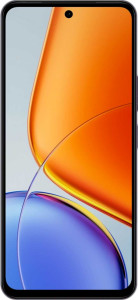
Oppo A5 Pro 4G 128GB
Vivo T4x 5G

Oppo A5 Pro 4G 128GB Vivo T4x 5G

Overview

Welcome to our in-depth specification comparison between the Oppo A5 Pro 4G 128GB and the Vivo T4x 5G. These two mid-range contenders take notably different approaches across key areas including display technology, connectivity, battery performance, and audio capabilities. Whether you prioritize a more refined build or cutting-edge network support, this breakdown will help you understand exactly where each device excels and where it falls short.

Common Features

  • Neither product has a rugged build.
  • Neither product can be folded.
  • Both products do not support HDR10.
  • Both products do not support HDR10+.
  • Neither product has an Always-On Display.
  • Neither product supports Dolby Vision.
  • Neither product has a secondary screen.
  • Both products have a touch screen.
  • Both products have integrated LTE.
  • Both products support 64-bit processing.
  • Both products use DirectX 12.
  • Both products have integrated graphics.
  • Both products use big.LITTLE technology.
  • Both products have 8 CPU threads.
  • Both products use HMP technology.
  • Both main cameras share 50 & 2 MP resolution and dual-lens setup.
  • Neither product has built-in optical image stabilization.
  • Both products record video at 2160 x 30 fps on the main camera.
  • Both products run Android 15.
  • Both products have clipboard warnings.
  • Both products have location privacy options.
  • Both products have camera and microphone privacy options.
  • Neither product has Mail Privacy Protection.
  • Both products have theme customization.
  • Both products can block app tracking.
  • Neither product blocks cross-site tracking.
  • Neither product supports wireless charging.
  • Both products support fast charging.
  • Neither product has a removable battery.
  • Both products have a battery level indicator and rechargeable battery.
  • Neither product has a 3.5 mm audio jack.
  • Both products have stereo speakers.
  • Neither product has aptX Adaptive or aptX Lossless.
  • Neither product has a radio.
  • Both products support dual SIM cards.
  • Neither product has an external memory slot.
  • Both products have USB Type-C with USB version 2.
  • Both products have a fingerprint scanner.
  • Neither product has emergency SOS via satellite.
  • Neither product has crash detection.
  • Neither product is DLNA-certified.
  • Both products have a video light.
  • Neither product has a sapphire glass display.
  • Neither product has a curved display.
  • Neither product has an e-paper display.

Main Differences

  • Water resistance is rated as Waterproof on Oppo A5 Pro 4G 128GB and Water resistant on Vivo T4x 5G.
  • IP rating is IP68 on Oppo A5 Pro 4G 128GB and IP64 on Vivo T4x 5G.
  • Weight is 186 g on Oppo A5 Pro 4G 128GB and 204 g on Vivo T4x 5G.
  • Thickness is 7.6 mm on Oppo A5 Pro 4G 128GB and 8.1 mm on Vivo T4x 5G.
  • Width is 74.9 mm on Oppo A5 Pro 4G 128GB and 76.3 mm on Vivo T4x 5G.
  • Height is 161.5 mm on Oppo A5 Pro 4G 128GB and 165.7 mm on Vivo T4x 5G.
  • Volume is 91.93 cm³ on Oppo A5 Pro 4G 128GB and 102.41 cm³ on Vivo T4x 5G.
  • Display type is OLED/AMOLED on Oppo A5 Pro 4G 128GB and LCD IPS on Vivo T4x 5G.
  • Screen size is 6.7″ on Oppo A5 Pro 4G 128GB and 6.72″ on Vivo T4x 5G.
  • Refresh rate is 90Hz on Oppo A5 Pro 4G 128GB and 120Hz on Vivo T4x 5G.
  • Damage-resistant glass is present on Oppo A5 Pro 4G 128GB but not available on Vivo T4x 5G.
  • Internal storage is 128GB on Oppo A5 Pro 4G 128GB and 256GB on Vivo T4x 5G.
  • RAM is 12GB on Oppo A5 Pro 4G 128GB and 8GB on Vivo T4x 5G.
  • Chipset is Qualcomm Snapdragon 6s Gen 3 on Oppo A5 Pro 4G 128GB and MediaTek Dimensity 7300 on Vivo T4x 5G.
  • GPU is Adreno 619 on Oppo A5 Pro 4G 128GB and Mali G615 MC2 on Vivo T4x 5G.
  • Semiconductor size is 6 nm on Oppo A5 Pro 4G 128GB and 4 nm on Vivo T4x 5G.
  • RAM speed is 2133 MHz on Oppo A5 Pro 4G 128GB and 6400 MHz on Vivo T4x 5G.
  • DDR memory version is DDR4 on Oppo A5 Pro 4G 128GB and DDR5 on Vivo T4x 5G.
  • Maximum memory amount is 8GB on Oppo A5 Pro 4G 128GB and 16GB on Vivo T4x 5G.
  • Front camera resolution is 16MP on Oppo A5 Pro 4G 128GB and 8MP on Vivo T4x 5G.
  • Front camera aperture is 2.4f on Oppo A5 Pro 4G 128GB and 2.1f on Vivo T4x 5G.
  • Battery capacity is 6000 mAh on Oppo A5 Pro 4G 128GB and 6500 mAh on Vivo T4x 5G.
  • Charging speed is 80W on Oppo A5 Pro 4G 128GB and 44W on Vivo T4x 5G.
  • aptX support is present on Oppo A5 Pro 4G 128GB but not available on Vivo T4x 5G.
  • aptX HD support is present on Oppo A5 Pro 4G 128GB but not available on Vivo T4x 5G.
  • LDAC support is present on Oppo A5 Pro 4G 128GB but not available on Vivo T4x 5G.
  • 5G support is available on Vivo T4x 5G but not present on Oppo A5 Pro 4G 128GB.
  • Wi-Fi version includes Wi-Fi 6 (802.11ax) on Vivo T4x 5G while Oppo A5 Pro 4G 128GB supports only Wi-Fi 4 and Wi-Fi 5.
  • Bluetooth version is 5.0 on Oppo A5 Pro 4G 128GB and 5.4 on Vivo T4x 5G.
  • NFC is present on Oppo A5 Pro 4G 128GB but not available on Vivo T4x 5G.
  • Download speed is 2500 Mbits/s on Oppo A5 Pro 4G 128GB and 3270 Mbits/s on Vivo T4x 5G.
  • Upload speed is 1500 Mbits/s on Oppo A5 Pro 4G 128GB and 3270 Mbits/s on Vivo T4x 5G.
  • An infrared sensor is present on Vivo T4x 5G but not available on Oppo A5 Pro 4G 128GB.
Specs Comparison
Oppo A5 Pro 4G 128GB

Oppo A5 Pro 4G 128GB

Vivo T4x 5G

Vivo T4x 5G

Design:
water resistance Waterproof Water resistant
weight 186 g 204 g
thickness 7.6 mm 8.1 mm
width 74.9 mm 76.3 mm
height 161.5 mm 165.7 mm
volume 91.93226 cm³ 102.407571 cm³
Ingress Protection (IP) rating IP68 IP64
has a rugged build
can be folded

The most significant differentiator in this group is water protection. The Oppo A5 Pro 4G carries an IP68 rating, meaning it is fully waterproof and can withstand submersion in water — a level of protection typically found on premium devices. The Vivo T4x 5G, by contrast, holds an IP64 rating, which only guards against water splashes from any direction, not immersion. In practical terms, the Oppo can survive an accidental drop in a sink or pool, while the Vivo cannot. This is a clear and meaningful real-world advantage for the Oppo.

Form factor also separates these two devices noticeably. The Oppo A5 Pro is both slimmer (7.6 mm vs 8.1 mm) and lighter (186 g vs 204 g), and its smaller overall footprint — roughly 92 cm³ versus the Vivo's 102 cm³ — makes it more pocket-friendly and comfortable during extended one-handed use. An 18-gram difference is perceptible over a full day of carry, and the Oppo's thinner profile gives it a more refined feel in the hand.

Neither device has a rugged build or a foldable form factor, so both target the same conventional smartphone audience. Overall, the Oppo A5 Pro 4G holds a clear design edge: it offers superior water protection and a more compact, lighter build — two attributes that matter daily to most users.

Display:
Display type OLED/AMOLED LCD, IPS
screen size 6.7" 6.72"
pixel density 394 ppi 393 ppi
resolution 1080 x 2412 px 1080 x 2408 px
refresh rate 90Hz 120Hz
has branded damage-resistant glass
supports HDR10
supports HDR10+
Always-On Display
supports Dolby Vision
Has a secondary screen
has a touch screen

Display technology is where these two phones diverge most meaningfully. The Oppo A5 Pro 4G uses an OLED/AMOLED panel, which delivers true blacks, higher contrast, and more vibrant colors by lighting each pixel individually. The Vivo T4x 5G relies on an LCD IPS panel — a technology that requires a backlight and cannot match OLED for contrast or color depth. For everyday use like watching videos, scrolling social media, or viewing photos, the Oppo's display will look noticeably richer and punchier.

The Vivo strikes back with a 120Hz refresh rate versus the Oppo's 90Hz. That higher rate translates to smoother scrolling and more fluid animations — a difference that is genuinely perceptible when navigating the UI or playing games. Meanwhile, screen size, resolution, and pixel density are essentially identical between the two at roughly 6.7 inches and 393–394 ppi, so sharpness is a non-factor in this comparison.

One additional detail tips the scales further: the Oppo includes branded damage-resistant glass, offering meaningful scratch and impact protection that the Vivo lacks. On balance, the Oppo A5 Pro 4G holds the display edge — its OLED panel is a more fundamental quality upgrade than the 30Hz refresh rate advantage the Vivo holds, and the added glass protection is a practical bonus.

Performance:
internal storage 128GB 256GB
RAM 12GB 8GB
Chipset (SoC) name Qualcomm Snapdragon 6s Gen 3 MediaTek Dimensity 7300
GPU name Adreno 619 Mali G615 MC2
CPU speed 2 x 2.3 & 6 x 2 GHz 4 x 2.5 & 4 x 2 GHz
GPU clock speed 950 MHz 1047 MHz
Has integrated LTE
RAM speed 2133 MHz 6400 MHz
semiconductor size 6 nm 4 nm
Supports 64-bit
DirectX version DirectX 12 DirectX 12
Has integrated graphics
Uses big.LITTLE technology
CPU threads 8 threads 8 threads
Uses HMP
maximum memory amount 8GB 16GB
DDR memory version 4 5

At the heart of this comparison lies a generational chip gap. The Vivo T4x 5G runs on the MediaTek Dimensity 7300 built on a 4nm process, while the Oppo A5 Pro 4G uses the Qualcomm Snapdragon 6s Gen 3 on a 6nm node. A smaller manufacturing process generally means better power efficiency and thermal performance — the Vivo's chip can do more work while generating less heat. The Vivo also has faster CPU performance cores (4 x 2.5 GHz vs the Oppo's 2 x 2.3 GHz), which matters for demanding tasks like gaming or heavy multitasking.

The memory story is split. The Oppo ships with 12GB of RAM versus the Vivo's 8GB, which gives the Oppo an immediate advantage in keeping more apps active in the background. However, the Vivo's RAM operates on DDR5 at 6400 MHz — dramatically faster than the Oppo's DDR4 at 2133 MHz — meaning data moves to and from the Vivo's processor far more efficiently. The Vivo also supports a higher maximum memory ceiling (16GB vs 8GB), indicating more headroom for future configurations. On storage, the Vivo doubles the Oppo with 256GB versus 128GB at base.

Taken together, the Vivo T4x 5G holds the stronger performance foundation: its newer, more efficient chip, faster CPU cores, significantly quicker memory bus, and double the base storage outweigh the Oppo's current RAM advantage. The Oppo's 12GB RAM is a practical perk today, but the Vivo's platform is more capable and future-ready overall.

Cameras:
megapixels (main camera) 50 & 2 MP 50 & 2 MP
wide aperture (main camera) 2.4 & 1.8f 2.4 & 1.8f
Has a dual-lens (or multi-lens) main camera
megapixels (front camera) 16MP 8MP
has built-in optical image stabilization
video recording (main camera) 2160 x 30 fps 2160 x 30 fps
Has a dual-tone LED flash
number of flash LEDs 1 1
has a BSI sensor
has a CMOS sensor
has continuous autofocus when recording movies
Has phase-detection autofocus for photos
supports slow-motion video recording
has a built-in HDR mode
has manual exposure
has a flash
optical zoom 0x 0x
has manual ISO
has a serial shot mode
has manual focus
has a front camera
Has laser autofocus
Shoots 360° panorama
has manual white balance
shoots raw
has touch autofocus
has manual shutter speed
can create panoramas in-camera
wide aperture (front camera) 2.4f 2.1f
Has timelapse function
Has a front-facing LED flash
has a dual-lens (or multi-lens) front camera
supports HDR10 recording
supports Dolby Vision recording
has a front-facing camera under the display
Has a RGB LED flash
has 3D photo/video recording capabilities

Rarely does a camera comparison come down to a single differentiator, but that is precisely the case here. Both the Oppo A5 Pro 4G and the Vivo T4x 5G share an identical rear camera setup: a 50 MP + 2 MP dual-lens system with matching apertures, the same 4K/30fps video ceiling, and an equivalent feature set covering phase-detection autofocus, continuous autofocus during recording, slow-motion, HDR, and a full suite of manual controls. Neither offers optical image stabilization or optical zoom, so both are on equal footing for rear photography in every measurable way.

The only meaningful split comes from the front camera. The Oppo equips a 16 MP selfie shooter, while the Vivo offers just 8 MP — half the resolution. More megapixels on a front camera means more detail in selfies and greater flexibility to crop without losing sharpness, which matters for users who frequently share portraits or video call in high quality. The Vivo's front lens does have a slightly wider aperture (f/2.1 vs f/2.4), which admits more light and can help in lower-light selfie situations, but that advantage does not fully compensate for the resolution gap.

For rear photography, this is a dead heat. For selfies, the Oppo A5 Pro 4G holds a clear edge purely on resolution, making it the stronger choice for users who prioritize front-facing image quality.

Operating system:
Android version Android 15 Android 15
has clipboard warnings
has location privacy options
has camera/microphone privacy options
has Mail Privacy Protection
has theme customization
can block app tracking
blocks cross-site tracking
has on-device machine learning
has notification permissions
has media picker
Can play games while they download
has dark mode
has Wi-Fi password sharing
has battery health check
has an extra dim mode
has focus modes
has dynamic theming
can offload apps
Has customizable notifications
has Live Text
has full-page screenshots
supports split screen
gets direct OS updates
has PiP
Can be used as a PC
Has sharing intents
has a child lock
Supports widgets
Is free and open source
Has offline voice recognition
has voice commands
Tracks the current position of a mobile device
is a multi-user system
has Quick Start

This is the cleanest possible tie in any spec group: the Oppo A5 Pro 4G and the Vivo T4x 5G run identical software configurations across every single measured attribute. Both ship with Android 15 and match on every privacy feature, productivity tool, and system capability listed — from split-screen and picture-in-picture to on-device machine learning, dynamic theming, and offline voice recognition.

A few shared traits are worth highlighting for buyers evaluating the platform as a whole. Neither device receives direct OS updates — meaning software upgrades are filtered through the manufacturer rather than delivered straight from Google, which can introduce delays. Both also lack Wi-Fi password sharing and cross-site tracking protection, which are minor but notable omissions in the current Android ecosystem. On the positive side, both cover the essentials well: robust privacy controls, customizable notifications, dark mode, battery health monitoring, and multi-user support are all present.

With no divergence across any data point in this group, the operating system comparison is a complete draw. A buyer's OS experience on either device will be functionally identical at launch, and neither holds any software advantage over the other based on the provided specifications.

Battery:
battery power 6000 mAh 6500 mAh
has wireless charging
Supports fast charging
charging speed 80W 44W
has a removable battery
has a battery level indicator
has a rechargeable battery

Two large batteries, two different philosophies. The Vivo T4x 5G packs a 6500 mAh cell against the Oppo A5 Pro 4G's 6000 mAh — a 500 mAh gap that, in practice, translates to a modest but real extension in screen-on time before needing a charge. For heavy users who regularly push through a full day and into a second, that extra capacity can be the difference between reaching a charger comfortably or not.

Where the Oppo reclaims ground is charging speed. Its 80W fast charging is nearly double the Vivo's 44W, meaning the Oppo can replenish its battery significantly faster when plugged in. A rough real-world implication: the Oppo could go from low battery to a substantial charge in a short break, while the Vivo would take considerably longer to reach the same level. For users with unpredictable schedules who rely on quick top-ups, that speed advantage is genuinely valuable.

Neither phone supports wireless charging, so the decision here hinges on usage pattern. Users who rarely charge during the day and prioritize maximum endurance will lean toward the Vivo T4x and its larger cell. Those who charge opportunistically and value getting back to full power quickly will find the Oppo A5 Pro 4G's 80W charging more practical. On raw specs, this group is a deliberate trade-off with no outright winner.

Audio:
has a socket for a 3.5 mm audio jack
has stereo speakers
has aptX
has LDAC
has aptX HD
has aptX Adaptive
has aptX Lossless
Has a radio

Both phones drop the headphone jack and offer stereo speakers, so wired audio and speaker output are level ground. The real divergence emerges in wireless audio codec support — and it is one-sided. The Oppo A5 Pro 4G supports aptX, aptX HD, and LDAC, while the Vivo T4x 5G supports none of them.

That gap matters meaningfully for anyone using Bluetooth headphones or earbuds. Standard Bluetooth audio compresses sound in ways that can affect clarity and dynamic range. Codecs like aptX HD and especially LDAC transmit audio at significantly higher bitrates, preserving more detail and delivering a listening experience much closer to the original source — particularly noticeable with high-quality streaming services or locally stored lossless files. Without any of these codecs, the Vivo is limited to standard Bluetooth compression regardless of how good the headphones connected to it are.

For casual listeners who use budget earbuds or primarily rely on the built-in speakers, the Vivo's omission is unlikely to be noticed day-to-day. But for anyone invested in quality wireless audio gear, the Oppo A5 Pro 4G holds a clear and unambiguous advantage in this group.

Connectivity & Features:
release date March 2025 March 2025
has 5G support
Wi-Fi version Wi-Fi 4 (802.11n), Wi-Fi 5 (802.11ac) Wi-Fi 4 (802.11n), Wi-Fi 6 (802.11ax), Wi-Fi 5 (802.11ac)
SIM cards 2 SIM 2 SIM
Bluetooth version 5 5.4
has an external memory slot
Has USB Type-C
USB version 2 2
has NFC
download speed 2500 MBits/s 3270 MBits/s
upload speed 1500 MBits/s 3270 MBits/s
Has a fingerprint scanner
has emergency SOS via satellite
has crash detection
is DLNA-certified
has a gyroscope
supports ANT+
Has a heart rate monitor
has GPS
has a compass
supports Wi-Fi
Has an infrared sensor
has an accelerometer
has a cellular module
Has a barometer
has an HDMI output
Uses 3D facial recognition
Has an iris scanner
Stylus included
supports Galileo
Has motion tracking
Has optical tracking
Has a built-in projector

Cellular and wireless connectivity is where the Vivo T4x 5G pulls ahead most visibly. It supports 5G, while the Oppo A5 Pro 4G is limited to 4G LTE — a fundamental difference in network capability that affects not just current speeds but long-term relevance as 5G infrastructure continues to expand. Alongside that, the Vivo supports Wi-Fi 6 (802.11ax) in addition to Wi-Fi 5 and 4, whereas the Oppo tops out at Wi-Fi 5. Wi-Fi 6 delivers better performance in congested environments like offices or public spaces, with improved throughput and lower latency. The Vivo's theoretical download and upload speeds (3270 Mbits/s both ways) also substantially exceed the Oppo's figures, reflecting its more capable modem.

The Vivo further adds Bluetooth 5.4 against the Oppo's Bluetooth 5.0 — a newer version that brings improvements in connection reliability and efficiency — and includes an infrared sensor, which allows the phone to function as a universal remote for TVs and appliances. On the flip side, the Oppo A5 Pro 4G has NFC while the Vivo does not. NFC enables contactless payments, quick Bluetooth pairing, and transit card functionality — features that are deeply integrated into daily routines for many users.

The result is a meaningful but nuanced split. The Vivo T4x dominates on raw wireless capability — 5G, Wi-Fi 6, and faster Bluetooth — making it the stronger platform for future-proofing and network performance. However, the Oppo's NFC support is a daily-use feature that many users will miss on the Vivo. Buyers who prioritize mobile payments and smart device pairing should weigh that omission carefully against the Vivo's otherwise superior connectivity stack.

Miscellaneous:
has a video light
Has sapphire glass display
Has a curved display
Has an e-paper display

The miscellaneous category offers no differentiation between these two devices whatsoever. The Oppo A5 Pro 4G and the Vivo T4x 5G match identically across every attribute: both include a video light, and neither features a sapphire glass display, a curved screen, or an e-paper panel. This is a complete tie with no advantage to either side.

Comparison Summary & Verdict

After a thorough look at the specs, both devices serve distinct types of users. The Oppo A5 Pro 4G 128GB stands out with its superior IP68 waterproof rating, vibrant OLED/AMOLED display, faster 80W charging, higher-tier Bluetooth audio support (aptX, aptX HD, LDAC), and NFC — making it ideal for users who value build quality, display richness, and fast top-ups. On the other hand, the Vivo T4x 5G earns its place with a 120Hz refresh rate, a more advanced 4nm chipset, DDR5 RAM, larger 256GB storage, 5G connectivity, Wi-Fi 6 support, and a bigger 6500 mAh battery — a compelling package for users who prioritize future-proof connectivity and sustained performance over time.

Oppo A5 Pro 4G 128GB
Buy Oppo A5 Pro 4G 128GB if...

Buy the Oppo A5 Pro 4G 128GB if you want a lighter, waterproof (IP68) phone with an OLED display, faster 80W charging, NFC, and premium Bluetooth audio codecs like LDAC and aptX HD.

Vivo T4x 5G
Buy Vivo T4x 5G if...

Buy the Vivo T4x 5G if you prioritize 5G connectivity, a smoother 120Hz display, a larger battery, more internal storage, and a more advanced 4nm chipset with DDR5 RAM.