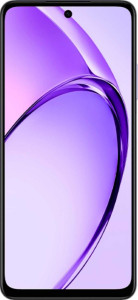
The most consequential difference in this category is cellular connectivity: the Vivo Y19s 5G supports 5G, while the Oppo A5i is limited to 4G LTE. For users in areas with 5G coverage, this translates to significantly faster mobile data speeds and better network future-proofing — a phone purchased today will likely be in use for several years, and 5G availability will only expand during that window. The Vivo also reflects this in its peak download speed of 3300 Mbits/s versus the Oppo's 2900 Mbits/s. Beyond cellular, the Vivo carries a newer Bluetooth 5.4 versus the Oppo's Bluetooth 5.0, which brings incremental improvements in connection stability and efficiency, and it also supports expandable storage via a microSD slot — a notable advantage given that neither phone allows the base 128 GB to be upgraded otherwise.
The Oppo A5i is not without its own connectivity wins. It includes a gyroscope that the Vivo Y19s 5G lacks entirely. A gyroscope enables accurate motion-based orientation detection, which matters for augmented reality apps, immersive gaming, and certain navigation features — its absence on the Vivo is a real functional gap for users who rely on those applications. Both phones share an identical Wi-Fi stack (Wi-Fi 4 and 5), USB Type-C 2.0, NFC, dual SIM, GPS with Galileo, and a fingerprint scanner, so neither holds an edge across those shared foundations.
On balance, the Vivo Y19s 5G holds the broader connectivity advantage — 5G alone is a compelling differentiator for network longevity, and expandable storage adds practical flexibility. However, users who depend on gyroscope-reliant apps should note that the Oppo A5i is the only option here that covers that use case.