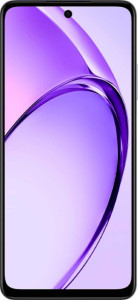
The Vivo Y19s 5G holds a significant structural advantage in cellular connectivity: it supports 5G, while the Oppo A5i is limited to 4G. For users in areas with 5G coverage, this means substantially faster mobile data speeds and greater future-proofing as 5G networks continue to expand. Paired with a higher peak download speed of 3300 Mbits/s versus the A5i's 3300 Mbits/s, the Y19s is the stronger pick for anyone who relies heavily on mobile data. The Y19s also carries a newer Bluetooth 5.4 implementation compared to the A5i's Bluetooth 5.0, which brings incremental improvements in connection stability and efficiency. Additionally, the Y19s includes a microSD card slot — absent on the A5i — allowing storage expansion beyond the base 128GB, which adds meaningful flexibility.
The Oppo A5i answers with one notable hardware sensor advantage: it includes a gyroscope, which the Y19s lacks. A gyroscope enables accurate motion-based features such as screen auto-rotate based on orientation, augmented reality applications, and more precise in-game controls. Its absence on the Y19s is a quiet but real limitation for users who rely on these functions. Both phones are otherwise well-matched on the fundamentals — dual SIM, USB-C, NFC, GPS with Galileo support, Wi-Fi 5, fingerprint scanner, and accelerometer are all present on each device.
Weighing the full picture, the Vivo Y19s 5G has the broader connectivity edge. 5G support, a newer Bluetooth version, and expandable storage are collectively more impactful advantages than the A5i's gyroscope for the majority of users. That said, buyers who depend on motion-sensing features or AR apps should factor the missing gyroscope on the Y19s into their decision.