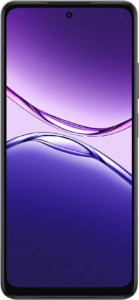
Connectivity fundamentals are well matched: both phones support 5G, dual SIM, Wi-Fi 5, USB Type-C, GPS, and a fingerprint scanner. The cellular download speed and Wi-Fi standards are identical, so raw network performance should be comparable in everyday use. The meaningful differences, however, emerge in a handful of specific features that can noticeably affect the user experience.
The A5i Pro 5G gains three notable advantages: it includes NFC, supports Bluetooth 5.4, and has a gyroscope. NFC enables contactless payments and quick device pairing — a convenience increasingly expected in modern smartphones. Bluetooth 5.4 over the A5x 5G's 5.1 brings improvements in connection stability and efficiency. The gyroscope, absent on the A5x 5G, is essential for augmented reality apps, immersive gaming, and accurate screen rotation in all orientations. The A5x 5G counters with one exclusive feature: an external memory card slot, which is a practical advantage for users who need affordable storage expansion beyond the base 128 GB — particularly relevant given its more limited internal storage compared to the A5i Pro 5G.
On balance, the A5i Pro 5G has the stronger connectivity and features profile. NFC alone is a frequently used daily feature, and the gyroscope adds meaningful functionality for gaming and AR. The A5x 5G's expandable storage is a useful trade-off, but it compensates for a hardware limitation rather than adding capability, leaving the A5i Pro 5G ahead in this category overall.