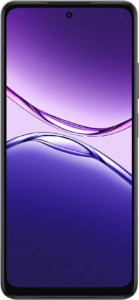
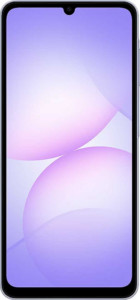
At a glance, these two phones share the same panel technology — both use an LCD IPS display at nearly identical screen sizes (6.67″ vs. 6.7″), and neither supports HDR10, HDR10+, Dolby Vision, or an Always-On Display. For most users, the panel type and size difference will be completely imperceptible in day-to-day use.
Where the gap becomes meaningful is sharpness and motion smoothness. The Oppo A5i Pro renders at a pixel density of 394 ppi, compared to just 262 ppi on the Samsung A07 — a difference of over 130 pixels per inch. At typical viewing distances, text and fine detail will appear noticeably crisper on the Oppo, while the A07's lower density can result in slightly softer edges on small fonts and icons. On top of that, the Oppo drives its display at 120Hz versus the A07's 90Hz, meaning scrolling, animations, and general navigation feel more fluid and responsive on the Oppo — a difference that is immediately felt during everyday use rather than just visible in benchmarks.
The Oppo A5i Pro also includes branded damage-resistant glass, adding a layer of scratch protection that the A07 lacks entirely. Taken together — sharper pixel density, higher refresh rate, and protective glass — the Oppo A5i Pro holds a clear and well-rounded advantage in this category. The Samsung A07 offers a competent screen for basic tasks, but across every meaningful display differentiator here, the Oppo comes out ahead.