Oppo A5i Pro 5G
Xiaomi Redmi 15 5G

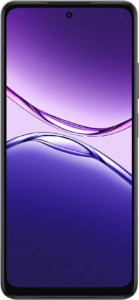
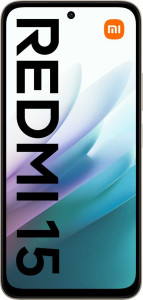
Oppo A5i Pro 5G Xiaomi Redmi 15 5G

Overview

Welcome to our in-depth comparison of the Oppo A5i Pro 5G and the Xiaomi Redmi 15 5G, two 5G mid-range contenders that take notably different approaches to what matters most in a daily smartphone. From display sharpness versus screen size to battery capacity and audio features, these two devices each make compelling arguments for your attention. Read on as we break down every specification side by side to help you decide which one truly fits your lifestyle.

Common Features

  • Both phones are water resistant.
  • Neither phone has a rugged build.
  • Neither phone can be folded.
  • Both phones feature an LCD IPS display type.
  • Both displays use branded damage-resistant glass.
  • HDR10 support is not available on either phone.
  • HDR10+ support is not available on either phone.
  • Always-On Display is not available on either phone.
  • Dolby Vision support is not available on either phone.
  • Neither phone has a secondary screen.
  • Both phones have a touchscreen.
  • Both phones come with 256GB internal storage and 8GB RAM.
  • Both phones have a GPU clock speed of 950 MHz.
  • Both phones have integrated LTE.
  • Both phones use a 6 nm semiconductor.
  • Both phones support 64-bit processing.
  • Both phones support DirectX 12.
  • Neither phone has a dual-tone LED flash.
  • Both phones have a CMOS sensor.
  • Both phones support continuous autofocus when recording video.
  • Both phones have phase-detection autofocus for photos.
  • Both phones support slow-motion video recording.
  • Both phones have a built-in HDR mode.
  • Both phones run on Android.
  • Both phones include clipboard warnings.
  • Both phones have location privacy options.
  • Both phones have camera and microphone privacy options.
  • Mail Privacy Protection is not available on either phone.
  • Both phones support theme customization.
  • Both phones can block app tracking.
  • Cross-site tracking blocking is not available on either phone.
  • Both phones have on-device machine learning.
  • Neither phone supports wireless charging.
  • Both phones support fast charging.
  • Neither phone supports reverse wireless charging.
  • Neither phone has a removable battery.
  • Both phones have a battery level indicator.
  • Both phones have a rechargeable battery.
  • Both phones support 5G.
  • Both phones support Wi-Fi 4 and Wi-Fi 5.
  • Both phones have dual SIM support.
  • Neither phone has an external memory slot.
  • Both phones have USB Type-C with USB 2.0.
  • Both phones have NFC.
  • Both phones have a fingerprint scanner.
  • Both phones have a video light.
  • Neither phone has a sapphire glass display.
  • Neither phone has a curved display.
  • Neither phone has an e-paper display.

Main Differences

  • Weight is 194 g on Oppo A5i Pro 5G and 224 g on Xiaomi Redmi 15 5G.
  • Thickness is 8 mm on Oppo A5i Pro 5G and 8.6 mm on Xiaomi Redmi 15 5G.
  • Width is 76.2 mm on Oppo A5i Pro 5G and 82.1 mm on Xiaomi Redmi 15 5G.
  • Height is 165.7 mm on Oppo A5i Pro 5G and 171.1 mm on Xiaomi Redmi 15 5G.
  • Volume is 101.01 cm³ on Oppo A5i Pro 5G and 120.81 cm³ on Xiaomi Redmi 15 5G.
  • IP rating is IP65 on Oppo A5i Pro 5G and IP64 on Xiaomi Redmi 15 5G.
  • Screen size is 6.67″ on Oppo A5i Pro 5G and 6.9″ on Xiaomi Redmi 15 5G.
  • Pixel density is 394 ppi on Oppo A5i Pro 5G and 254 ppi on Xiaomi Redmi 15 5G.
  • Resolution is 720 x 1604 px on Oppo A5i Pro 5G and 1080 x 2340 px on Xiaomi Redmi 15 5G.
  • Refresh rate is 120Hz on Oppo A5i Pro 5G and 144Hz on Xiaomi Redmi 15 5G.
  • Gorilla Glass version is 7i on Oppo A5i Pro 5G and Gorilla Glass 3 on Xiaomi Redmi 15 5G.
  • The chipset is MediaTek Dimensity 6300 on Oppo A5i Pro 5G and Qualcomm Snapdragon 6s Gen 3 on Xiaomi Redmi 15 5G.
  • The GPU is Arm Mali-G57 MC2 on Oppo A5i Pro 5G and Adreno 619 on Xiaomi Redmi 15 5G.
  • CPU speed is 2 x 2.4 & 6 x 2 GHz on Oppo A5i Pro 5G and 2 x 2.3 & 6 x 2 GHz on Xiaomi Redmi 15 5G.
  • Maximum memory bandwidth is 17.07 GB/s on Oppo A5i Pro 5G and 17 GB/s on Xiaomi Redmi 15 5G.
  • Maximum supported RAM is 12GB on Oppo A5i Pro 5G and 8GB on Xiaomi Redmi 15 5G.
  • Multithreading is supported on Oppo A5i Pro 5G but not on Xiaomi Redmi 15 5G.
  • Main camera resolution is 50 & 2 MP on Oppo A5i Pro 5G and 50 MP on Xiaomi Redmi 15 5G.
  • A dual-lens main camera is present on Oppo A5i Pro 5G but not on Xiaomi Redmi 15 5G.
  • Front camera resolution is 5MP on Oppo A5i Pro 5G and 8MP on Xiaomi Redmi 15 5G.
  • Optical image stabilization is available on Oppo A5i Pro 5G but not on Xiaomi Redmi 15 5G.
  • Main camera video recording is up to 1080p at 60 fps on Oppo A5i Pro 5G and 1080p at 30 fps on Xiaomi Redmi 15 5G.
  • Front camera aperture is f/2.2 on Oppo A5i Pro 5G and f/2 on Xiaomi Redmi 15 5G.
  • Android version is Android 16 on Oppo A5i Pro 5G and Android 15 on Xiaomi Redmi 15 5G.
  • Battery capacity is 6000 mAh on Oppo A5i Pro 5G and 7000 mAh on Xiaomi Redmi 15 5G.
  • Charging speed is 45W on Oppo A5i Pro 5G and 33W on Xiaomi Redmi 15 5G.
  • A 3.5mm audio jack is absent on Oppo A5i Pro 5G but present on Xiaomi Redmi 15 5G.
  • Stereo speakers are available on Oppo A5i Pro 5G but not on Xiaomi Redmi 15 5G.
  • aptX support is available on Oppo A5i Pro 5G but not on Xiaomi Redmi 15 5G.
  • LDAC support is available on Oppo A5i Pro 5G but not on Xiaomi Redmi 15 5G.
  • aptX HD support is available on Oppo A5i Pro 5G but not on Xiaomi Redmi 15 5G.
  • A built-in radio is absent on Oppo A5i Pro 5G but present on Xiaomi Redmi 15 5G.
  • Bluetooth version is 5.4 on Oppo A5i Pro 5G and 5.1 on Xiaomi Redmi 15 5G.
  • Download speed is 3300 Mbit/s on Oppo A5i Pro 5G and 2500 Mbit/s on Xiaomi Redmi 15 5G.
  • A gyroscope is present on Oppo A5i Pro 5G but absent on Xiaomi Redmi 15 5G.
Specs Comparison
Oppo A5i Pro 5G

Oppo A5i Pro 5G

Xiaomi Redmi 15 5G

Xiaomi Redmi 15 5G

Design:
water resistance Water resistant Water resistant
weight 194 g 224 g
thickness 8 mm 8.6 mm
width 76.2 mm 82.1 mm
height 165.7 mm 171.1 mm
volume 101.01072 cm³ 120.806866 cm³
Ingress Protection (IP) rating IP65 IP64
has a rugged build
can be folded

In terms of physical form, the Oppo A5i Pro 5G is meaningfully more compact across every dimension — shorter, narrower, thinner (8 mm vs 8.6 mm), and lighter at 194 g compared to the Redmi 15 5G's 224 g. That 30-gram difference is noticeable during extended single-handed use or when carrying the phone in a pocket all day, and the smaller overall volume (101 cm³ vs 121 cm³) reinforces that the Oppo simply takes up less space in the hand and bag.

On water and dust protection, both phones are rated water resistant, but the Oppo holds a slight edge with an IP65 rating versus the Redmi's IP64. The distinction is that IP65 adds protection against low-pressure water jets from any direction, whereas IP64 only covers water splashes. More practically, the ″5″ in IP65 also certifies resistance to dust ingress entirely, while IP64's ″4″ dust rating offers only limited protection. For users in dusty environments or who frequently expose their phone to directed water (rain, kitchen splashes), this gap matters.

Neither device features a rugged build or a foldable form factor, so both target the same mainstream segment. That said, the Oppo A5i Pro 5G has a clear advantage in this group: it is lighter, slimmer, more pocketable, and carries a higher IP rating — making it the better pick for users who prioritize handling comfort and slightly more robust environmental protection.

Display:
Display type LCD, IPS LCD, IPS
screen size 6.67" 6.9"
pixel density 394 ppi 254 ppi
resolution 720 x 1604 px 1080 x 2340 px
refresh rate 120Hz 144Hz
has branded damage-resistant glass
Gorilla Glass version Gorilla Glass 7i Gorilla Glass 3
supports HDR10
supports HDR10+
Always-On Display
supports Dolby Vision
Has a secondary screen
has a touch screen

Both phones use an LCD IPS panel, so neither has an inherent advantage in color depth or contrast from display technology alone. Where they diverge sharply is pixel density: the Oppo A5i Pro 5G delivers 394 ppi versus the Redmi 15 5G's 254 ppi. Despite the Redmi carrying a higher raw resolution (1080 x 2340 px vs 720 x 1604 px), its larger 6.9″ screen spreads those pixels thinner, resulting in noticeably less sharp text and fine detail in everyday use. The Oppo's display, by contrast, sits well above the 300 ppi threshold where sharpness becomes difficult to perceive — meaning icons, fonts, and images will look crisper on the smaller screen.

The Redmi does reclaim some ground with a 144Hz refresh rate against the Oppo's 120Hz, which can produce marginally smoother scrolling and animations. However, at this end of the market, the practical difference between 120 and 144Hz is subtle and most users would not notice it in daily tasks. More meaningful is the glass protection gap: the Oppo uses Gorilla Glass 7i while the Redmi relies on the significantly older Gorilla Glass 3. Gorilla Glass 7i is engineered to survive drops onto rough surfaces far more reliably, which is a tangible real-world durability advantage.

Neither display supports HDR10, HDR10+, Dolby Vision, or an Always-On Display, so those are non-factors. Overall, the Oppo A5i Pro 5G holds the stronger display package for most users — its substantially higher pixel density means a visibly sharper image, and its newer protective glass adds meaningful drop resilience. The Redmi's refresh rate lead is real but too narrow to offset those advantages.

Performance:
internal storage 256GB 256GB
RAM 8GB 8GB
Chipset (SoC) name MediaTek Dimensity 6300 Qualcomm Snapdragon 6s Gen 3
GPU name Arm Mali-G57 MC2 Adreno 619
CPU speed 2 x 2.4 & 6 x 2 GHz 2 x 2.3 & 6 x 2 GHz
GPU clock speed 950 MHz 950 MHz
Has integrated LTE
RAM speed 2133 MHz 2133 MHz
semiconductor size 6 nm 6 nm
Supports 64-bit
DirectX version DirectX 12 DirectX 12
Has integrated graphics
Uses big.LITTLE technology
CPU threads 8 threads 8 threads
Uses HMP
maximum memory bandwidth 17.07 GB/s 17 GB/s
maximum memory amount 12GB 8GB
uses multithreading
DDR memory version 4 4

At a glance, these two phones look nearly identical on paper — same 256 GB storage, same 8 GB RAM, same 6 nm fabrication, and matching RAM speed, memory bandwidth, and thread count. The real separation comes from two less obvious data points. First, the Oppo A5i Pro 5G's performance CPU cores clock at 2.4 GHz versus the Redmi 15 5G's 2.3 GHz — a marginal edge, but one that compounds in sustained workloads. More significantly, the Oppo's MediaTek Dimensity 6300 platform supports a maximum memory configuration of 12 GB, compared to the Redmi's 8 GB ceiling on its Snapdragon 6s Gen 3. This matters if either device offers virtual RAM expansion, as the Oppo has more headroom to leverage it.

The GPU matchup is also worth unpacking. Both run at the same 950 MHz GPU clock and support DirectX 12, but the Oppo pairs its SoC with an Arm Mali-G57 MC2 while the Redmi uses an Adreno 619. The data provided does not rank these GPUs against each other, so no performance conclusion can be drawn there beyond the shared clock speed. One notable flag: the Redmi is listed as not supporting multithreading, while the Oppo does — which, if accurate, could limit the Redmi's efficiency in multi-threaded tasks like background processing or certain gaming scenarios.

Taken together, the Oppo A5i Pro 5G holds a measurable edge in this group. Its higher maximum memory capacity and multithreading support give it more ceiling for demanding use cases, and its CPU clock advantage, while slim, is real. The Redmi is competitive for everyday tasks, but the Oppo is the stronger performer based strictly on the specs provided.
Cameras:
megapixels (main camera) 50 & 2 MP 50 MP
wide aperture (main camera) 2.4 & 1.8f 1.8f
Has a dual-lens (or multi-lens) main camera
megapixels (front camera) 5MP 8MP
has built-in optical image stabilization
video recording (main camera) 1080 x 60 fps 1080 x 30 fps
Has a dual-tone LED flash
number of flash LEDs 1 1
has a BSI sensor
has a CMOS sensor
has continuous autofocus when recording movies
Has phase-detection autofocus for photos
supports slow-motion video recording
has a built-in HDR mode
has manual exposure
has a flash
optical zoom 0x 0x
has manual ISO
has a serial shot mode
has manual focus
has a front camera
Has laser autofocus
Shoots 360° panorama
has manual white balance
shoots raw
has touch autofocus
has manual shutter speed
can create panoramas in-camera
wide aperture (front camera) 2.2f 2f
Has timelapse function
Has a front-facing LED flash
has a dual-lens (or multi-lens) front camera
supports HDR10 recording
supports Dolby Vision recording
has a front-facing camera under the display
Has a RGB LED flash
has 3D photo/video recording capabilities

The rear camera story splits in two directions. The Redmi 15 5G has a wider main lens aperture at f/1.8 versus the Oppo A5i Pro 5G's f/2.4 primary sensor, which means the Redmi lets in more light through its main shooter — a real advantage in low-light conditions. However, the Oppo counters with a dual-lens rear system (50 MP + 2 MP) and, more importantly, optical image stabilization (OIS), which the Redmi entirely lacks. OIS physically compensates for hand movement during capture, producing sharper photos in dim environments and dramatically steadier video — an advantage that often outweighs a half-stop aperture difference in everyday shooting.

The video gap reinforces this further. The Oppo records at 1080p at 60 fps while the Redmi tops out at 1080p at 30 fps. For anyone who shoots video of moving subjects — kids, sports, travel — 60 fps delivers noticeably smoother, more lifelike footage and also provides more flexibility when editing for slow-motion. On the selfie side, the Redmi regains some ground with an 8 MP front camera against the Oppo's 5 MP, and its slightly wider front aperture (f/2.0 vs f/2.2) means marginally better low-light selfies. For users who prioritize front-facing photography, this is a genuine edge.

Across the remaining feature set — autofocus, HDR, manual controls, panorama, timelapse — both phones are evenly matched. The verdict ultimately depends on use case: the Redmi's higher front camera resolution makes it a better selfie device, but the Oppo A5i Pro 5G is the stronger all-around camera phone, with OIS and 60 fps video recording making a tangible, practical difference for rear camera use.

Operating system:
Android version Android 16 Android 15
has clipboard warnings
has location privacy options
has camera/microphone privacy options
has Mail Privacy Protection
has theme customization
can block app tracking
blocks cross-site tracking
has on-device machine learning
has notification permissions
has media picker
Can play games while they download
has dark mode
has Wi-Fi password sharing
has battery health check
has an extra dim mode
has focus modes
has dynamic theming
can offload apps
Has customizable notifications
has Live Text
has full-page screenshots
supports split screen
gets direct OS updates
has PiP
Can be used as a PC
Has sharing intents
has a child lock
Supports widgets
Is free and open source
Has offline voice recognition
has voice commands
Tracks the current position of a mobile device
is a multi-user system
has Quick Start

Across the entire feature set provided, these two phones are virtually identical — every privacy control, productivity feature, and system capability listed is shared by both. The sole differentiator in this group is the Android version: the Oppo A5i Pro 5G ships with Android 16, while the Redmi 15 5G runs Android 15. That one-generation gap means the Oppo launches with access to the latest platform improvements, security patches, and any API-level enhancements introduced in Android 16, giving it a modest but real head start in software currency.

Neither phone receives direct OS updates from Google, meaning both rely on their respective manufacturers for software support. This makes the out-of-box version more consequential than it might otherwise be — the Oppo starts one generation ahead, and that gap may persist depending on how quickly each brand delivers future updates. For users who keep a phone for two or more years, starting on a newer Android version provides a longer effective software support runway before the device falls behind.

The Oppo A5i Pro 5G has the edge in this group purely by virtue of its newer Android version. Everything else is a tie, but launching on Android 16 is a meaningful advantage for longevity-conscious buyers.

Battery:
battery power 6000 mAh 7000 mAh
has wireless charging
Supports fast charging
charging speed 45W 33W
has reverse wireless charging
has a removable battery
has a battery level indicator
has a rechargeable battery

Battery capacity is where the Xiaomi Redmi 15 5G makes its strongest case in this comparison. Its 7000 mAh cell is a full 1000 mAh larger than the Oppo A5i Pro 5G's 6000 mAh — a 17% difference that, all else being equal, translates directly into more screen-on time before needing a charge. For heavy users, travellers, or anyone in situations where access to a charger is limited, that extra capacity is a genuine, day-to-day advantage.

The charging speed dynamic runs in the opposite direction. The Oppo supports 45W fast charging versus the Redmi's 33W, meaning the Oppo will replenish its battery significantly faster when plugged in. A roughly 36% wattage advantage suggests a noticeably shorter time from low battery to ready-to-go, which matters in the morning rush or between meetings. Neither phone offers wireless or reverse wireless charging, so the wired speed gap is the only charging differentiator.

This is ultimately a usage-style trade-off. The Redmi 15 5G is the better pick for users who prioritise raw endurance and want to charge as infrequently as possible. The Oppo A5i Pro 5G suits those who do not mind plugging in more often but want the session back quickly when they do. On capacity alone the Redmi has the edge, but the Oppo's faster charging partially compensates — making this group a split decision rather than a clean win for either side.

Audio:
has a socket for a 3.5 mm audio jack
has stereo speakers
has aptX
has LDAC
has aptX HD
has aptX Adaptive
has aptX Lossless
Has a radio

These two phones take almost opposite approaches to audio. The Oppo A5i Pro 5G drops the headphone jack but compensates with stereo speakers and a strong Bluetooth audio codec stack — aptX, aptX HD, and LDAC are all present. LDAC in particular is Sony's high-resolution wireless codec, capable of transmitting up to three times more audio data than standard Bluetooth, making a real difference when paired with compatible wireless headphones. For wireless listeners who care about audio fidelity, the Oppo is clearly the better-equipped device.

The Redmi 15 5G goes the other way: it retains the 3.5 mm headphone jack and includes an FM radio, but has no aptX or LDAC support and only a single speaker. The headphone jack is still valued by users with wired earphones or headphones, and it eliminates the need for a dongle. The FM radio is a niche but genuine advantage for users in regions where it remains a practical feature. However, without stereo output or high-quality wireless codec support, the Redmi's overall audio experience is more limited.

The winner here depends squarely on listening habits. Wired headphone users and radio listeners will find the Redmi 15 5G more accommodating. But for media consumption through speakers or wireless earbuds, the Oppo A5i Pro 5G has a clear advantage — stereo speakers and a premium wireless codec suite deliver a substantially richer audio experience for the majority of modern use cases.

Connectivity & Features:
release date June 2025 August 2025
has 5G support
Wi-Fi version Wi-Fi 4 (802.11n), Wi-Fi 5 (802.11ac) Wi-Fi 4 (802.11n), Wi-Fi 5 (802.11ac)
SIM cards 2 SIM 2 SIM
Bluetooth version 5.4 5.1
has an external memory slot
Has USB Type-C
USB version 2 2
has NFC
download speed 3300 MBits/s 2500 MBits/s
Has a fingerprint scanner
has emergency SOS via satellite
has crash detection
is DLNA-certified
has a gyroscope
supports ANT+
Has a heart rate monitor
has GPS
has a compass
supports Wi-Fi
Has an infrared sensor
has an accelerometer
has a cellular module
Has a barometer
has an HDMI output
Uses 3D facial recognition
Has an iris scanner
Stylus included
supports Galileo
Has motion tracking
Has optical tracking
Has a built-in projector

Much of the connectivity foundation is shared: both phones support 5G, dual SIM, Wi-Fi 5, NFC, USB Type-C, GPS with Galileo, and a fingerprint scanner. Where the Oppo A5i Pro 5G pulls ahead is in two meaningful areas. Its Bluetooth 5.4 is a notable step up from the Redmi 15 5G's 5.1, bringing improvements in connection stability, energy efficiency, and interference handling — particularly relevant for wireless audio and peripherals. Its peak download speed of 3300 Mbps also outpaces the Redmi's 2500 Mbps, a 32% advantage that benefits users in congested networks or those who frequently download large files over cellular.

The Oppo also includes a gyroscope, which the Redmi lacks entirely. This sensor is essential for augmented reality apps, immersive gaming, and accurate screen rotation — its absence on the Redmi is a quiet but real limitation for users who rely on those capabilities. Every other sensor in the list — accelerometer, compass, GPS — is present on both devices.

Taken together, the Oppo A5i Pro 5G holds a clear advantage in this group. Its newer Bluetooth version, higher cellular download speed, and additional gyroscope sensor each address distinct real-world use cases, and their combined effect makes the Oppo the more capable and future-ready device on connectivity and features.

Miscellaneous:
has a video light
Has sapphire glass display
Has a curved display
Has an e-paper display

The Miscellaneous group offers no differentiation between these two devices. Every data point — video light, sapphire glass, curved display, and e-paper display — returns the same value for both the Oppo A5i Pro 5G and the Xiaomi Redmi 15 5G. Both include a video light and neither features sapphire glass, a curved screen, or an e-paper panel.

This is a complete tie based on the provided specs. Neither phone holds any advantage or disadvantage in this category, and the group does not factor into differentiating one device from the other.

Comparison Summary & Verdict

After examining every specification, it is clear that both phones serve distinct types of users. The Oppo A5i Pro 5G stands out with its lighter and more compact build, superior pixel density of 394 ppi, faster 45W charging, optical image stabilization, stereo speakers, higher Bluetooth version, and the newer Android 16 — making it the stronger pick for users who value portability, audio quality, and camera versatility. On the other hand, the Xiaomi Redmi 15 5G appeals to those who prefer a larger display with a higher 144Hz refresh rate, a bigger 7000 mAh battery for extended endurance, a sharper 1080p resolution, an 8MP front camera, and the convenience of a 3.5mm headphone jack and built-in radio. Choose the Oppo if you want a nimbler, feature-rich device; choose the Xiaomi if raw battery life and a larger screen are your top priorities.

Oppo A5i Pro 5G
Buy Oppo A5i Pro 5G if...

Buy the Oppo A5i Pro 5G if you want a lighter, more compact phone with faster 45W charging, optical image stabilization, stereo speakers, and a sharper display.

Xiaomi Redmi 15 5G
Buy Xiaomi Redmi 15 5G if...

Buy the Xiaomi Redmi 15 5G if you prioritize a larger screen with a 144Hz refresh rate, a bigger 7000 mAh battery, and the convenience of a headphone jack.