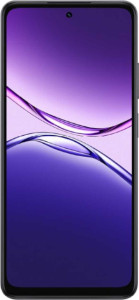
Oppo A5i Pro
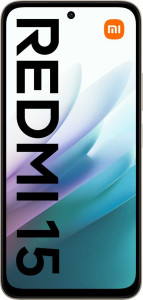
Xiaomi Redmi 15 5G

Oppo A5i Pro Xiaomi Redmi 15 5G

Overview

Welcome to our in-depth spec comparison between the Oppo A5i Pro and the Xiaomi Redmi 15 5G. These two mid-range contenders share a solid foundation — both offering LCD IPS displays, NFC, fast charging, and a dual-SIM setup — yet they diverge sharply in areas like display resolution, chipset architecture, connectivity, and overall form factor. Read on to see how every specification stacks up before you decide which phone fits your needs.

Common Features

  • Both phones are water resistant.
  • Neither phone has a rugged build.
  • Neither phone can be folded.
  • Both phones feature an LCD IPS display type.
  • Both phones have branded damage-resistant glass.
  • Neither phone supports HDR10.
  • Neither phone supports HDR10+.
  • Neither phone has an Always-On Display.
  • Neither phone supports Dolby Vision.
  • Both phones have a touchscreen.
  • Both phones come with 8GB of RAM.
  • Both phones have integrated LTE.
  • Both phones support 64-bit processing.
  • Both phones use DirectX 12.
  • Both phones have integrated graphics.
  • Both phones use big.LITTLE technology.
  • Both phones have an 8-thread CPU.
  • Main camera video recording is 1080p at 30 fps on both phones.
  • Neither phone has a dual-tone LED flash.
  • Both phones have a single LED flash.
  • Neither phone has a BSI sensor.
  • Both phones have a CMOS sensor.
  • Both phones support continuous autofocus when recording movies.
  • Both phones have phase-detection autofocus for photos.
  • Both phones support slow-motion video recording.
  • Both phones have clipboard warnings.
  • Both phones have location privacy options.
  • Both phones have camera and microphone privacy options.
  • Neither phone has Mail Privacy Protection.
  • Both phones support theme customization.
  • Both phones can block app tracking.
  • Neither phone blocks cross-site tracking.
  • Both phones have on-device machine learning.
  • Neither phone supports wireless charging.
  • Both phones support fast charging.
  • Neither phone supports reverse wireless charging.
  • Neither phone has a removable battery.
  • Both phones have a battery level indicator.
  • Both phones have a rechargeable battery.
  • Both phones have a 3.5mm audio jack.
  • Neither phone has stereo speakers.
  • Neither phone supports LDAC.
  • Neither phone supports aptX HD.
  • Neither phone supports aptX Adaptive.
  • Neither phone supports aptX Lossless.
  • Both phones support Wi-Fi 4 and Wi-Fi 5.
  • Both phones have dual SIM card slots.
  • Neither phone has an external memory slot.
  • Both phones have USB Type-C.
  • Both phones use USB version 2.
  • Both phones have NFC.
  • Both phones have a fingerprint scanner.
  • Neither phone supports emergency SOS via satellite.
  • Both phones have a video light.
  • Neither phone has a sapphire glass display.
  • Neither phone has a curved display.
  • Neither phone has an e-paper display.

Main Differences

  • Weight is 193g on Oppo A5i Pro and 224g on Xiaomi Redmi 15 5G.
  • Thickness is 8mm on Oppo A5i Pro and 8.6mm on Xiaomi Redmi 15 5G.
  • Width is 76.2mm on Oppo A5i Pro and 82.1mm on Xiaomi Redmi 15 5G.
  • Height is 165.7mm on Oppo A5i Pro and 171.1mm on Xiaomi Redmi 15 5G.
  • Volume is 101.01 cm³ on Oppo A5i Pro and 120.81 cm³ on Xiaomi Redmi 15 5G.
  • IP rating is IP65 on Oppo A5i Pro and IP64 on Xiaomi Redmi 15 5G.
  • Screen size is 6.67″ on Oppo A5i Pro and 6.9″ on Xiaomi Redmi 15 5G.
  • Pixel density is 264 ppi on Oppo A5i Pro and 254 ppi on Xiaomi Redmi 15 5G.
  • Resolution is 720x1604px on Oppo A5i Pro and 1080x2340px on Xiaomi Redmi 15 5G.
  • Refresh rate is 90Hz on Oppo A5i Pro and 144Hz on Xiaomi Redmi 15 5G.
  • Gorilla Glass version is 7i on Oppo A5i Pro and version 3 on Xiaomi Redmi 15 5G.
  • Internal storage is 128GB on Oppo A5i Pro and 256GB on Xiaomi Redmi 15 5G.
  • Chipset is Qualcomm Snapdragon 6 Gen 1 on Oppo A5i Pro and Qualcomm Snapdragon 6s Gen 3 on Xiaomi Redmi 15 5G.
  • GPU is Adreno 710 on Oppo A5i Pro and Adreno 619 on Xiaomi Redmi 15 5G.
  • CPU speed is 4x2.2GHz and 4x1.8GHz on Oppo A5i Pro and 2x2.3GHz and 6x2GHz on Xiaomi Redmi 15 5G.
  • GPU clock speed is 800MHz on Oppo A5i Pro and 950MHz on Xiaomi Redmi 15 5G.
  • RAM speed is 2750MHz on Oppo A5i Pro and 2133MHz on Xiaomi Redmi 15 5G.
  • Semiconductor size is 4nm on Oppo A5i Pro and 6nm on Xiaomi Redmi 15 5G.
  • Maximum memory bandwidth is 22GB/s on Oppo A5i Pro and 17GB/s on Xiaomi Redmi 15 5G.
  • Maximum memory amount is 12GB on Oppo A5i Pro and 8GB on Xiaomi Redmi 15 5G.
  • Thermal Design Power is 7W on Oppo A5i Pro and 4W on Xiaomi Redmi 15 5G.
  • DDR memory version is DDR5 on Oppo A5i Pro and DDR4 on Xiaomi Redmi 15 5G.
  • Main camera resolution is 50MP and 2MP on Oppo A5i Pro and 50MP on Xiaomi Redmi 15 5G.
  • A dual-lens main camera is present on Oppo A5i Pro but not on Xiaomi Redmi 15 5G.
  • Front camera resolution is 5MP on Oppo A5i Pro and 8MP on Xiaomi Redmi 15 5G.
  • Optical image stabilization is present on Oppo A5i Pro but not available on Xiaomi Redmi 15 5G.
  • Front camera aperture is f/2.2 on Oppo A5i Pro and f/2.0 on Xiaomi Redmi 15 5G.
  • Main camera wide aperture is f/2.4 and f/1.8 on Oppo A5i Pro and f/1.8 on Xiaomi Redmi 15 5G.
  • Android version is Android 16 on Oppo A5i Pro and Android 15 on Xiaomi Redmi 15 5G.
  • Battery capacity is 6000mAh on Oppo A5i Pro and 7000mAh on Xiaomi Redmi 15 5G.
  • Charging speed is 45W on Oppo A5i Pro and 33W on Xiaomi Redmi 15 5G.
  • aptX support is present on Oppo A5i Pro but not available on Xiaomi Redmi 15 5G.
  • A built-in radio is available on Xiaomi Redmi 15 5G but not on Oppo A5i Pro.
  • 5G support is present on Xiaomi Redmi 15 5G but not available on Oppo A5i Pro.
  • Bluetooth version is 5.0 on Oppo A5i Pro and 5.1 on Xiaomi Redmi 15 5G.
  • Download speed is 2900 Mbit/s on Oppo A5i Pro and 2500 Mbit/s on Xiaomi Redmi 15 5G.
  • Upload speed is 900 Mbit/s on Oppo A5i Pro and 1500 Mbit/s on Xiaomi Redmi 15 5G.
  • A gyroscope is present on Oppo A5i Pro but not available on Xiaomi Redmi 15 5G.
Specs Comparison
Oppo A5i Pro

Oppo A5i Pro

Xiaomi Redmi 15 5G

Xiaomi Redmi 15 5G

Design:
water resistance Water resistant Water resistant
weight 193 g 224 g
thickness 8 mm 8.6 mm
width 76.2 mm 82.1 mm
height 165.7 mm 171.1 mm
volume 101.01072 cm³ 120.806866 cm³
Ingress Protection (IP) rating IP65 IP64
has a rugged build
can be folded

In terms of form factor, the Oppo A5i Pro is the more compact and lighter of the two. It weighs 193 g compared to the Redmi 15 5G's 224 g — a 31-gram gap that is noticeable during prolonged one-handed use or when the phone sits in a pocket all day. Its slimmer profile (8 mm vs 8.6 mm) and narrower footprint (76.2 mm wide, 165.7 mm tall) further reinforce that ergonomic advantage, making it the easier phone to handle for users with smaller hands or those who prioritize a less bulky device.

On water resistance, both phones carry an IP65 and IP64 rating respectively. While both are dust-tight, IP65 offers protection against low-pressure water jets from any direction, whereas IP64 only covers water splashes. In practice, the difference is marginal for everyday use — both will survive rain or accidental spills — but the Oppo's IP65 rating does represent a slight edge in resilience. Neither device has a rugged build or a foldable form factor, so they occupy the same conventional smartphone category in that regard.

Overall, the Oppo A5i Pro holds a clear design advantage: it is lighter, thinner, more compact, and carries a marginally superior IP rating. For users who value comfort in hand and portability, the Oppo is the stronger choice here. The Xiaomi Redmi 15 5G's larger volume is simply the trade-off of its bigger chassis, which may benefit display size or battery capacity — but on design specs alone, the Oppo wins this round.

Display:
Display type LCD, IPS LCD, IPS
screen size 6.67" 6.9"
pixel density 264 ppi 254 ppi
resolution 720 x 1604 px 1080 x 2340 px
refresh rate 90Hz 144Hz
has branded damage-resistant glass
Gorilla Glass version Gorilla Glass 7i Gorilla Glass 3
supports HDR10
supports HDR10+
Always-On Display
supports Dolby Vision
Has a secondary screen
has a touch screen

Both phones use an LCD IPS panel, so neither offers the deep blacks or vivid contrast of AMOLED technology — that is a shared limitation. Where they diverge meaningfully is resolution and refresh rate. The Xiaomi Redmi 15 5G sports a 1080 x 2340 px display versus the Oppo A5i Pro's 720 x 1604 px — a substantial gap. Despite the Oppo technically edging out in pixel density (264 ppi vs 254 ppi), this is a statistical artifact of its smaller screen compressing fewer pixels; the Redmi's full HD panel simply renders sharper text, finer detail in images, and a cleaner overall picture at any viewing distance that matters.

The refresh rate gap is equally significant. The Redmi 15 5G's 144Hz panel versus the Oppo's 90Hz translates to visibly smoother scrolling, more fluid animations, and a more responsive feel during gaming. For users who spend hours consuming content or playing games, this difference is tangible, not theoretical. The Redmi also offers a larger 6.9″ canvas compared to the Oppo's 6.67″, which compounds the advantage for media consumption.

The one area where the Oppo punches back is screen protection: its Gorilla Glass 7i is a significantly newer and more resilient generation than the Redmi's Gorilla Glass 3, offering better resistance to drops and scratches. That is a genuine long-term durability edge. Nevertheless, on display quality as a whole — sharpness, smoothness, and screen real estate — the Xiaomi Redmi 15 5G wins this category decisively.

Performance:
internal storage 128GB 256GB
RAM 8GB 8GB
Chipset (SoC) name Qualcomm Snapdragon 6 Gen 1 Qualcomm Snapdragon 6s Gen 3
GPU name Adreno 710 Adreno 619
CPU speed 4 x 2.2 & 4 x 1.8 GHz 2 x 2.3 & 6 x 2 GHz
GPU clock speed 800 MHz 950 MHz
Has integrated LTE
RAM speed 2750 MHz 2133 MHz
semiconductor size 4 nm 6 nm
Supports 64-bit
DirectX version DirectX 12 DirectX 12
Has integrated graphics
OpenGL ES version 3.2 3.2
Uses big.LITTLE technology
CPU threads 8 threads 8 threads
Uses HMP
Has TrustZone
maximum memory bandwidth 22 GB/s 17 GB/s
OpenCL version 2 2
memory channels 2 2
eMMC version 5.1 5.1
maximum memory amount 12GB 8GB
Thermal Design Power (TDP) 7W 4W
DDR memory version 5 4

The chipset matchup here is deceptively close-sounding on paper but reveals a clear gap on closer inspection. The Oppo A5i Pro runs on the Snapdragon 6 Gen 1, built on a 4nm process, while the Redmi 15 5G uses the Snapdragon 6s Gen 3 — the ″s″ designation indicating a more modest, power-conscious variant — fabricated on a larger 6nm node. A smaller process node generally means better energy efficiency and thermal performance, giving the Oppo's chip a structural advantage in sustained workloads. The GPU tells a similar story: the Oppo's Adreno 710 is a higher-tier graphics unit than the Redmi's Adreno 619, and while the Redmi's GPU runs at a higher clock speed (950 MHz vs 800 MHz), raw clock speed alone does not overcome an architectural gap between GPU generations.

Memory performance also tilts toward the Oppo. Its DDR5 RAM running at 2750 MHz with a maximum bandwidth of 22 GB/s outpaces the Redmi's DDR4 at 2133 MHz and 17 GB/s — a difference that shows up in multitasking responsiveness and data-heavy operations. The Oppo also supports up to 12GB of RAM in higher configurations versus the Redmi's 8GB ceiling, offering more headroom for future-proofing. The Redmi does counter with 256GB of base storage versus the Oppo's 128GB, which is a meaningful practical advantage for users who store a lot of media without relying on cloud services.

Taken together, the Oppo A5i Pro holds the stronger performance profile: a more advanced chip architecture, a more capable GPU, faster RAM, and greater memory bandwidth. The Redmi 15 5G compensates with double the base storage and a lower 4W TDP suggesting more conservative thermal behavior, but on outright processing and graphics capability, the Oppo leads this category.

Cameras:
megapixels (main camera) 50 & 2 MP 50 MP
wide aperture (main camera) 2.4 & 1.8f 1.8f
Has a dual-lens (or multi-lens) main camera
megapixels (front camera) 5MP 8MP
has built-in optical image stabilization
video recording (main camera) 1080 x 30 fps 1080 x 30 fps
Has a dual-tone LED flash
number of flash LEDs 1 1
has a BSI sensor
has a CMOS sensor
has continuous autofocus when recording movies
Has phase-detection autofocus for photos
supports slow-motion video recording
has a built-in HDR mode
has manual exposure
has a flash
optical zoom 0x 0x
has manual ISO
has a serial shot mode
has manual focus
has a front camera
Has laser autofocus
Shoots 360° panorama
has manual white balance
shoots raw
has touch autofocus
has manual shutter speed
can create panoramas in-camera
wide aperture (front camera) 2.2f 2f
Has timelapse function
Has a front-facing LED flash
has a dual-lens (or multi-lens) front camera
supports HDR10 recording
supports Dolby Vision recording
has a front-facing camera under the display
Has a RGB LED flash
has 3D photo/video recording capabilities

The rear camera systems share a 50 MP primary sensor, but diverge in two important ways. The Oppo A5i Pro adds a secondary 2 MP depth lens, enabling dedicated portrait mode with hardware-assisted background separation — the Redmi 15 5G relies solely on its single lens for such effects. More significantly, the Oppo includes optical image stabilization (OIS), which the Redmi lacks entirely. OIS is one of the most impactful camera features for everyday users: it physically compensates for hand tremor, producing sharper stills in low light and smoother handheld video. For a phone capped at 1080p 30fps on both devices, OIS becomes the primary differentiator for video quality.

The front camera flips the dynamic. The Redmi 15 5G offers an 8 MP selfie shooter with a wider f/2.0 aperture, compared to the Oppo's 5 MP at f/2.2. More megapixels combined with a wider aperture means the Redmi captures more detail and performs better in lower light for selfies — a meaningful edge for users who prioritize the front camera for video calls or social media.

The rest of the feature set — phase-detection autofocus, HDR mode, slow-motion, timelapse, and manual controls — is identical across both phones. This makes the verdict a trade-off rather than a clean sweep: the Oppo A5i Pro is the stronger choice for rear photography and video thanks to OIS, while the Redmi 15 5G has the upper hand for selfies. Users who shoot more with the main camera — especially in motion or dim conditions — will find the Oppo more capable overall.

Operating system:
Android version Android 16 Android 15
has clipboard warnings
has location privacy options
has camera/microphone privacy options
has Mail Privacy Protection
has theme customization
can block app tracking
blocks cross-site tracking
has on-device machine learning
has notification permissions
has media picker
Can play games while they download
has dark mode
has Wi-Fi password sharing
has battery health check
has an extra dim mode
has focus modes
has dynamic theming
can offload apps
Has customizable notifications
has Live Text
has full-page screenshots
supports split screen
gets direct OS updates
has PiP
Can be used as a PC
Has sharing intents
has a child lock
Supports widgets
Is free and open source
Has offline voice recognition
has voice commands
Tracks the current position of a mobile device
is a multi-user system
has Quick Start

Strip away the brand names and this is essentially a mirror image — every single feature across privacy controls, productivity tools, accessibility options, and system capabilities is identical between the two phones. Dark mode, dynamic theming, split-screen, Picture-in-Picture, offline voice recognition, on-device machine learning, and the full suite of Android privacy permissions are present on both. Neither gets direct OS updates, and neither supports Quick Start or PC mode. For a user evaluating these phones on software features alone, the list offers no meaningful differentiation.

The sole distinguishing data point is the Android version: the Oppo A5i Pro ships with Android 16, while the Xiaomi Redmi 15 5G launches on Android 15. A full version ahead at launch matters in practice — Android 16 brings newer security patches, potential under-the-hood performance refinements, and a longer runway before the device falls behind on OS support. It also means the Oppo starts its lifecycle one step closer to the current software standard, which can influence how long the phone remains eligible for future updates.

Given that every other software feature is a dead tie, the Oppo A5i Pro takes a narrow but real edge in this category purely on the strength of its newer Android version. It is not a dramatic advantage, but for users who care about software longevity and security currency, starting on the latest Android release is a tangible head start.

Battery:
battery power 6000 mAh 7000 mAh
has wireless charging
Supports fast charging
charging speed 45W 33W
has reverse wireless charging
has a removable battery
has a battery level indicator
has a rechargeable battery

Capacity and charging speed pull in opposite directions here, making this a genuine trade-off. The Xiaomi Redmi 15 5G packs a 7000 mAh battery — a full 1000 mAh more than the Oppo A5i Pro's already-generous 6000 mAh. That extra headroom translates directly into longer time between charges, particularly relevant for heavy users who stream, game, or navigate for extended periods. Both phones clear the bar for all-day battery life comfortably, but the Redmi has a meaningful buffer for a second day of light use that the Oppo may not always match.

Flip the coin, and the Oppo strikes back on charging speed. Its 45W fast charging is notably quicker than the Redmi's 33W, meaning less time tethered to a wall when you do need to top up. The practical gap depends on usage habits: users who charge overnight will never notice the difference, but those who rely on short top-up sessions throughout the day will appreciate the Oppo's faster replenishment rate. Neither phone supports wireless or reverse wireless charging, so wired speed is the only dimension that matters here.

Ultimately, this comes down to use case. The Redmi 15 5G wins on raw endurance — a bigger tank is a bigger tank — while the Oppo A5i Pro wins on recharge convenience. For users who prioritize going longer between charges, the Redmi holds the edge. For those who charge frequently and want to minimize downtime, the Oppo's faster wired charging is the practical advantage.

Audio:
has a socket for a 3.5 mm audio jack
has stereo speakers
has aptX
has LDAC
has aptX HD
has aptX Adaptive
has aptX Lossless
Has a radio

Audio is a modest category for both phones, and the shared limitations are worth acknowledging upfront. Neither device offers stereo speakers — both are confined to a single-speaker output — and neither supports high-resolution Bluetooth codecs like LDAC, aptX HD, or aptX Adaptive. For wired listening, both retain the increasingly rare 3.5mm headphone jack, which remains a genuine convenience for users who prefer traditional earphones without adapters or Bluetooth pairing.

The two meaningful differentiators split one feature each. The Oppo A5i Pro supports aptX, Qualcomm's standard wireless audio codec that delivers better Bluetooth audio quality and lower latency compared to the baseline SBC codec — a tangible benefit when using compatible wireless headphones for music or media. The Redmi 15 5G counters with a built-in FM radio, a feature that has largely disappeared from modern smartphones but still holds practical value in regions with strong terrestrial radio coverage, or for users who want broadcast audio without consuming mobile data.

Neither phone dominates this category, and the verdict hinges entirely on personal use. Wireless headphone users who want cleaner Bluetooth audio will prefer the Oppo A5i Pro for its aptX support. Those who value offline, data-free listening through broadcast radio will find the Redmi 15 5G more useful. For the majority of users, this group is effectively a draw.

Connectivity & Features:
release date June 2025 August 2025
has 5G support
Wi-Fi version Wi-Fi 4 (802.11n), Wi-Fi 5 (802.11ac) Wi-Fi 4 (802.11n), Wi-Fi 5 (802.11ac)
SIM cards 2 SIM 2 SIM
Bluetooth version 5 5.1
has an external memory slot
Has USB Type-C
USB version 2 2
has NFC
download speed 2900 MBits/s 2500 MBits/s
upload speed 900 MBits/s 1500 MBits/s
Has a fingerprint scanner
has emergency SOS via satellite
has crash detection
is DLNA-certified
has a gyroscope
supports ANT+
Has a heart rate monitor
has GPS
has a compass
supports Wi-Fi
Has an infrared sensor
has an accelerometer
has a cellular module
Has a barometer
has an HDMI output
Uses 3D facial recognition
Has an iris scanner
Stylus included
supports Galileo
Has motion tracking
Has optical tracking
Has a built-in projector

The headline difference in this category is cellular connectivity: the Xiaomi Redmi 15 5G supports 5G, while the Oppo A5i Pro is limited to 4G LTE. This is a significant long-term consideration. As 5G networks expand globally, a 4G-only device will increasingly be left behind in terms of peak speeds and network prioritization — making the Redmi the more future-proof choice for anyone planning to keep their phone for two or more years in a region with 5G coverage. The Redmi also edges ahead on Bluetooth, offering version 5.1 versus the Oppo's 5.0, bringing marginally improved connection stability and direction-finding capability, though this is a minor real-world difference.

The Oppo counters with a couple of notable advantages of its own. It includes a gyroscope — absent on the Redmi — which is essential for augmented reality applications, immersive gaming, and accurate motion-based navigation. It also posts a higher peak download speed of 2900 Mbits/s versus the Redmi's 2500 Mbits/s, though the Redmi offers a significantly higher upload speed of 1500 Mbits/s compared to the Oppo's 900 Mbits/s — a meaningful edge for users who frequently upload large files, stream live video, or use cloud backup intensively. Both phones share identical Wi-Fi standards, USB 2.0 Type-C, dual SIM, NFC, GPS with Galileo support, fingerprint scanner, and accelerometer.

Weighing it all up, the Redmi 15 5G holds the stronger hand in this category. The 5G advantage alone is a compelling reason to favor it for connectivity longevity, and the higher upload speed adds further practical value. The Oppo's gyroscope is a meaningful omission on the Redmi for specific use cases, but for the majority of users, 5G readiness is the more broadly impactful feature.
Miscellaneous:
has a video light
Has sapphire glass display
Has a curved display
Has an e-paper display

The Miscellaneous category offers no differentiation whatsoever between these two phones. Every data point — the presence of a video light, the absence of sapphire glass, a curved display, and an e-paper display — is identical across both the Oppo A5i Pro and the Xiaomi Redmi 15 5G. This is a complete tie, and no purchasing decision should be influenced by this spec group.

Comparison Summary & Verdict

After examining every specification, both phones serve distinct audiences. The Oppo A5i Pro stands out with its more compact and lighter build, a newer 4nm chipset, higher RAM ceiling of 12GB, optical image stabilization, faster 45W charging, a more recent Android 16, and aptX audio support — making it a compelling pick for users who value processing efficiency and camera stability. The Xiaomi Redmi 15 5G, on the other hand, counters with a sharper 1080p 144Hz display, a larger 7000mAh battery, 5G connectivity, 256GB base storage, a higher-resolution front camera, and a built-in FM radio — positioning it as the better choice for media consumption, everyday endurance, and future-proof network support. Neither phone is an outright winner; your ideal pick hinges on what matters most to you.

Oppo A5i Pro
Buy Oppo A5i Pro if...

Buy the Oppo A5i Pro if you prefer a lighter, more compact phone with a newer chipset, optical image stabilization, faster 45W charging, and Android 16 out of the box.

Xiaomi Redmi 15 5G
Buy Xiaomi Redmi 15 5G if...

Buy the Xiaomi Redmi 15 5G if you prioritize a sharper 1080p 144Hz display, a larger 7000mAh battery, 5G connectivity, and more base storage at 256GB.